in this article
Scientists are used to not knowing all the answers. Every piece of data that answers one question often poses several more. But with COVID-19, those unanswered questions are too numerous to count — especially when it comes to the virus’s interaction with our own immune systems, already among the most complicated and poorly understood parts of the body.
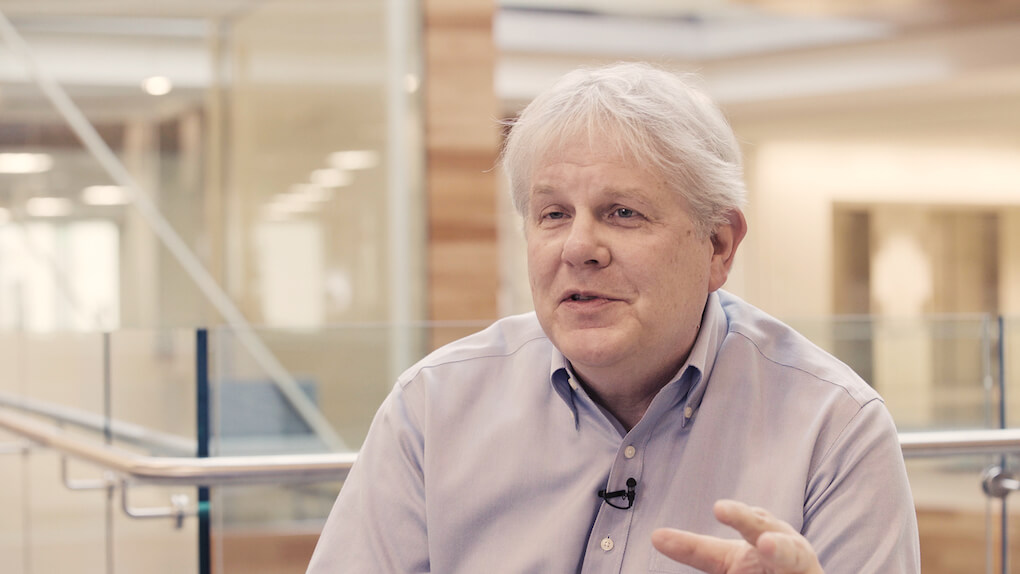
“One year into this pandemic, and there’s so much we still don’t know,” said Tom Bumol, Ph.D., Executive Vice President and Director of the Allen Institute for Immunology, a division of the Allen Institute. “We’re still in preschool when it comes to the human immune system. These questions are so huge; we’re going to be studying this disease for a long time to come.”
As the world was thrown back on its heels by SARS-CoV2 early last year, scientists — and society — scrambled to catch up. With tens of thousands of scientific publications and preprints on the novel coronavirus in less than a year of study, we now know more than we once did. We know that the virus is airborne. We know that people can spread it before even showing symptoms, and that certain events and people seem to be “super-spreaders” of infection while most infected people transmit more rarely. We know that the disease can kill in a variety of ways — by disrupting breathing, through blood clots, over-exuberant immune responses and even heart disease — and that it can have a variety of disruptive and lasting effects even for those who survive.
We have a vague sense of which populations are likely to get the sickest if infected, but the key word there is vague. We still know relatively little about which of the millions of infected people are likely to die and who will recover with only the mildest of symptoms.
Solving that puzzle will mean understanding far more about the human immune system and all its many variations than we do today.
What’s different about those who get really sick?
One of the most important mysteries of COVID-19 is its variability, said Aarthi Talla, a computational biologist at the Allen Institute for Immunology. “The same virus is impacting different people very differently,” said Talla, who is analyzing the large amounts of data from a study tracking the details of people’s immune responses over time to SARS-CoV2 infection.
In that study, launched last summer as a collaboration between the Allen Institute and Fred Hutchinson Cancer Research Center, scientists are studying people with mild or moderate symptoms, who make up approximately 80% of those infected. Scientists understand some of the risk factors for severe disease, but not the underlying mechanisms. We know that men, smokers, the elderly, people with other health conditions like obesity, diabetes or heart disease, and people of certain races and ethnicities are all more likely to die from COVID-19 if infected, but we don’t understand why — with the exception of the racial disparities in death rates, which are largely due to poor access to quality healthcare.
Even among high-risk groups, there are huge variations. Some otherwise healthy people in their 60s and 70s (or even in their 30s and 40s) get incredibly sick or die from the virus, while others have just mild symptoms.
“It’s like playing Russian Roulette with an infectious disease,” Bumol said. “No one really understands if they get the virus, whether they’re going to have a good outcome or bad.”
Researchers believe some of this variability could be due to differences in the innate immune system, our bodies’ first line of defense against infection. Some people seem to have a delayed innate immune response to the novel coronavirus, and that might allow the virus to gain more of a foothold.
“That variability component is really missing in a lot of the published studies so far,” Talla said. “We know that we are not all the same. Even identical twins have different immune systems.”
Pinning down the details of underlying differences in patients’ immune systems could prevent severe disease. If scientists could describe a successful or dysfunctional immune response to SARS-CoV2, they might be able to identify the smaller groups of people who need to be especially careful about infection, possibly prioritizing them first for vaccines or making sure they take extra precautions against catching the virus in the meantime.
What does immunity to SARS-CoV2 look like?
Just as there are different outcomes among people with COVID-19, Bumol and his colleagues are starting to believe there may be different pathways to protection. While rare cases of reinfection grabbed the headlines in 2020, we know that most survivors’ immune systems can remember and protect against the virus, at least in the short term. But questions remain about what kind of immune response matters.
Early reports showed that in some people, antibodies to the virus waned over time. That sounds worrisome, but scientists know that persistence of antibodies is only one way that the immune system maintains protection against the virus. Memory B cells, the type of immune cell that manufactures antibodies to a past invader, stick around after the antibodies themselves fade away.
And there are other types of potentially protective immune responses that could be triggered by a vaccine or infection. T cells, another large class of immune cells, also fight infections, but their action against SARS-CoV2 remains largely mysterious. It’s also not known what kind of immune response the currently approved vaccines elicit that block (most) infections.
“It’s most likely a combination of things,” said Greg Szeto, Ph.D., an immunologist and investigator at the Allen Institute for Immunology. “People have been using the Swiss cheese analogy for public health, where no one strategy is perfect to prevent infection but if you use enough, you can block more of the holes. That also applies to your immune system; there are different layers of defense.”
What about the next pandemic?
Will successful vaccines and treatments for COVID-19 help us with the next as-yet-unnamed pandemic? It’s possible. In terms of the logistics of speedy vaccine development, we learned a lot from recent, smaller epidemics like Ebola.
“But look how long we’ve tried to work on an HIV vaccine, and that still hasn’t been successful. So it doesn’t mean that everything’s going to be solvable,” Bumol said. “And we don’t know how many novel viruses there are that could cross from animals to humans. The question is, for the next one, and the next one, and the one after that, how do we prepare for the eventuality?”
Unless the next global pandemic is a related coronavirus (which is certainly possible), studying the details of COVID-19 might not help much in the face of another new deadly virus. But better understanding our own immune systems could give us a leg up. If scientists can pin down what happens in someone’s immune system when they fight off a deadly virus, or what goes wrong when someone gets severe illness or if a vaccine fails to work, those principles might apply more broadly.
In that case, can you correct the failures? Can researchers fix a faulty immune system in someone with a chronic disease or in the elderly? We’re still a long way from answering those questions, Bumol said.
Approved vaccines a huge success — and opportunity
When discussing what we still don’t know about COVID-19, we have to acknowledge what we do know — and what science has managed to accomplish in such a short time. Namely, two highly effective and FDA-approved vaccines in the U.S., with more likely on the horizon.
“The vaccine story in and of itself is a clear homerun. I don’t think anyone has seen anything like that in the history of science,” Szeto said. “This will be one for the record books. In many ways, this shows what we do know and what we can do.”
And even though this is not the deadliest pandemic in modern history, the virus and the vaccine are poised to be “one of the most widespread, if not the most widespread, immune perturbations of our lifetimes,” Szeto said. Meaning, SARS-CoV2 (and the vaccines which bear instructions for a piece of its genome) are so different from anything most humans alive today have ever been exposed to before, the cumulative infections and vaccinations will represent a grand immunological experiment. That’s different from the 1918 flu pandemic, which, while much deadlier than the current pandemic, was caused by a flu variant that was relatively similar to the strains already circulating every year. The vaccines will also bring the possibility to answer some basic questions about human immunology.
“People will be vaccinated all across the globe, people from diverse populations, diverse genetic backgrounds, diverse environmental histories,” Szeto said.
It’s a learning opportunity on a massive scale for scientists to understand more about the differences in our immune systems, the variations that keep us healthy, the factors that enable vaccines to work — and what goes wrong with the immune system in disease.
Citations
about the allen institute
The Allen Institute is an independent, 501(c)(3) nonprofit research organization founded by philanthropist and visionary, the late Paul G. Allen. The Allen Institute is dedicated to answering some of the biggest questions in bioscience and accelerating research worldwide. The Institute is a recognized leader in large-scale research with a commitment to an open science model. For more information, visit alleninstitute.org.