impact
about
our story
explore our impact
careers and opportunities
join us
open science
sharing science to speed discovery
open science week
celebrating open science
team science
people & teams
discovery is a team effort
allenites
the people who make our work possible
advisors
their input shapes our science
board of directors
they help us fulfill our mission
shanahan foundation fellowship
at the interface of data and neuroscience
next generation leaders
fostering emerging leaders in bioscience
research
overview
our approach
science at the scale of greatest impact
publications
explore our publications
open science
sharing science to speed discovery
science accelerators
brain science
building a blueprint of the brain
cell science
understanding how cells become organs
neural dynamics
revealing the brain’s hidden algorithms
immunology
creating the ultimate immune system reference
synthetic biology
seattle hub for synthetic biology
education
overview
science education
science is for everyone
open science
sharing science speeds discovery
engagement
education resources
real science. real skills.
field trips
experience science where it happens
educator development
empowering educators
news
overview
all news
explore the latest news
podcast
the human stories behind discovery
sign up for our newsletter
stay connected to our science
events
overview
all events
public engagement, workshops, seminars and more
conferences
connect with us
science resources
science resources
allencell.org
allenimmunology.org
allenneuraldynamics.org
brain-bican.org
brain-map.org
microns-explorer.org
impact
back to menu
team science
our story
explore our impact
careers and opportunities
join us
open science
sharing science to speed discovery
open science week
celebrating open science
team science
people & teams
discovery is a team effort
allenites
the people who make our work possible
advisors
their input shapes our science
board of directors
they help us fulfill our mission
shanahan foundation fellowship
at the interface of data and neuroscience
next generation leaders
fostering emerging leaders in bioscience
research
back to menu
overview
our approach
science at the scale of greatest impact
publications
explore our publications
open science
sharing science to speed discovery
science accelerators
brain science
building a blueprint of the brain
cell science
understanding how cells become organs
neural dynamics
revealing the brain’s hidden algorithms
immunology
creating the ultimate immune system reference
synthetic biology
seattle hub for synthetic biology
education
back to menu
overview
science education
science is for everyone
open science
sharing science speeds discovery
engagement
education resources
real science. real skills.
field trips
experience science where it happens
educator development
empowering educators
news
back to menu
overview
all news
explore the latest news
podcast
the human stories behind discovery
newsletter
stay connected to our science
events
back to menu
overview
all events
public engagement, workshops, seminars and more
conferences
connect with us
science resources
back to menu
science resources
allencell.org
allenimmunology.org
allenneuraldynamics.org
brain-bican.org
brain-map.org
microns-explorer.org
search
news

A day in the (neuroscience) life: Electrophysiology

The researchers in this laboratory spend their days eavesdropping on neurons’ electrical chatter

March 15, 2022
 min read
share/
The researchers in this laboratory spend their days eavesdropping on neurons’ electrical chatter
Thank you! Your submission has been received!
Oops! Something went wrong while submitting the form.

in this article

table of contents will display on published page only
set h2 to populate the table of contents here
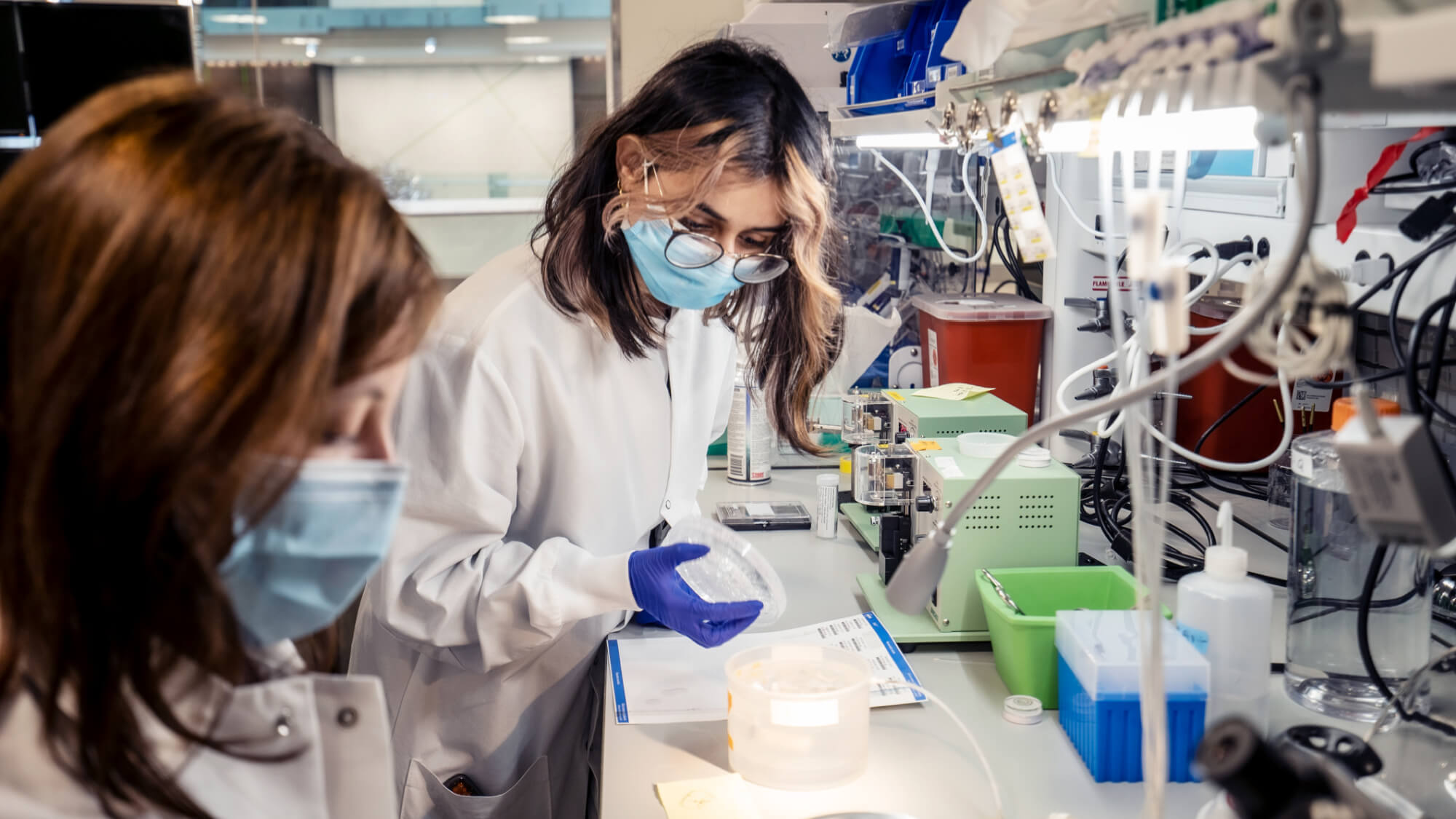
Female scientist in lab coat and mask working at laboratory bench with equipment.

For Brain Awareness Week 2022, we dropped in on five Allen Institute teams working to understand the brain. Get a glimpse into their workdays.

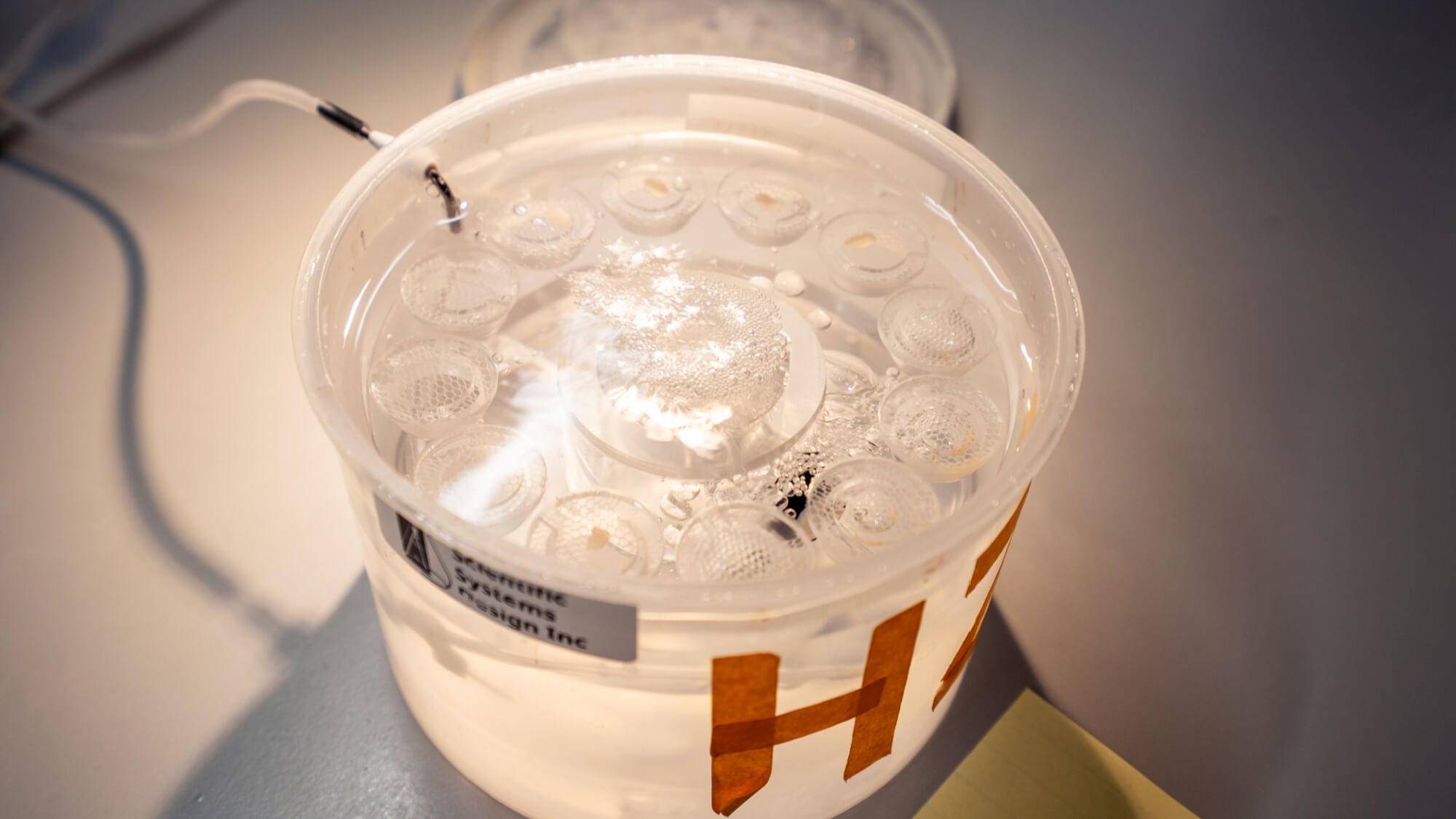
Brian Lee, Ph.D., arrives in the lab after a meeting to find five slices of human brain tissue waiting on the lab bench. The dish, containing the tiny pieces of tissue floating in a special liquid known as artificial cerebrospinal fluid, had just been dropped off by Lee’s colleague on the tissue processing team.
Close-up of clear deli container with decorative pattern and two insects on white surface

Just an hour prior, the piece of brain had arrived at the Allen Institute where the tissue processing researchers had prepared and sliced it. Just a couple hours before that, it had been part of a patient’s brain. The patient underwent surgery for a brain tumor that morning and agreed to donate to research the small healthy bit of their brain the surgeon removed to access their tumor.

The slices, still alive and about the size of a toddler’s fingernail, are ready for study. Lee, a neuroscientist at the Allen Institute, oversees much of the day-to-day work in this lab, the electrophysiology lab, casually known as e-phys. He peers into the dish to see what his team will be working with that day. E-phys researchers probe living neurons to record their electrical activity.
Three masked scientists work in a laboratory with computer equipment and shelves of supplies

“You can see all the layers, so that’s good,” he said. The pieces come from the layered, outer layer of the brain known as the cortex. The scientists look for landmarks above and below the layers to orient themselves. The landmarks are there, as are all the layers.

But the upper layers are ripped in each slice, little jagged edges on the tiny floating pieces. It must have happened during surgery. Today, Lee and his colleagues are looking for a kind of neuron known as a deep-layer excitatory neuron — he’s hoping that the lower layers are intact enough, but he’s worried.

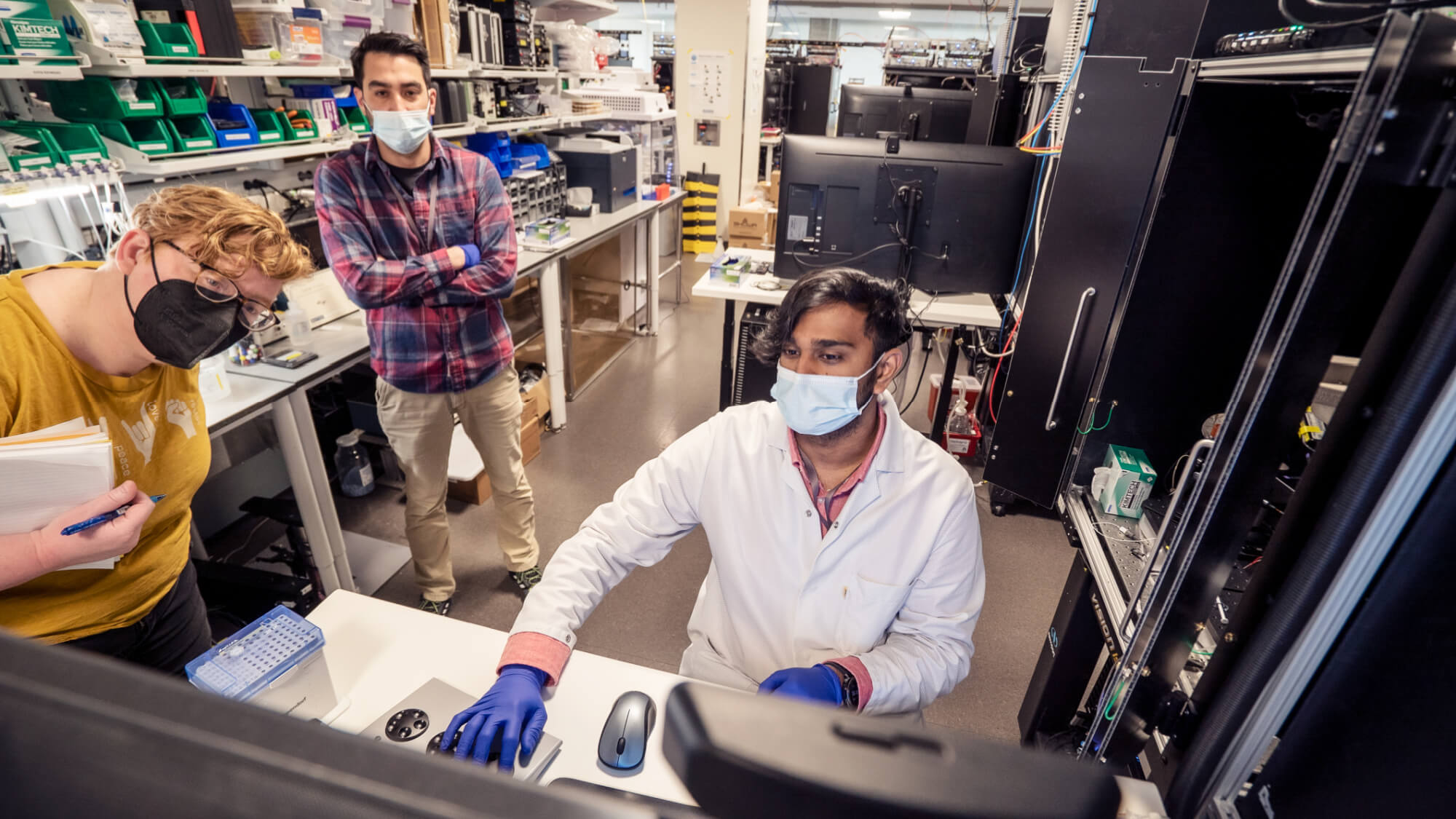
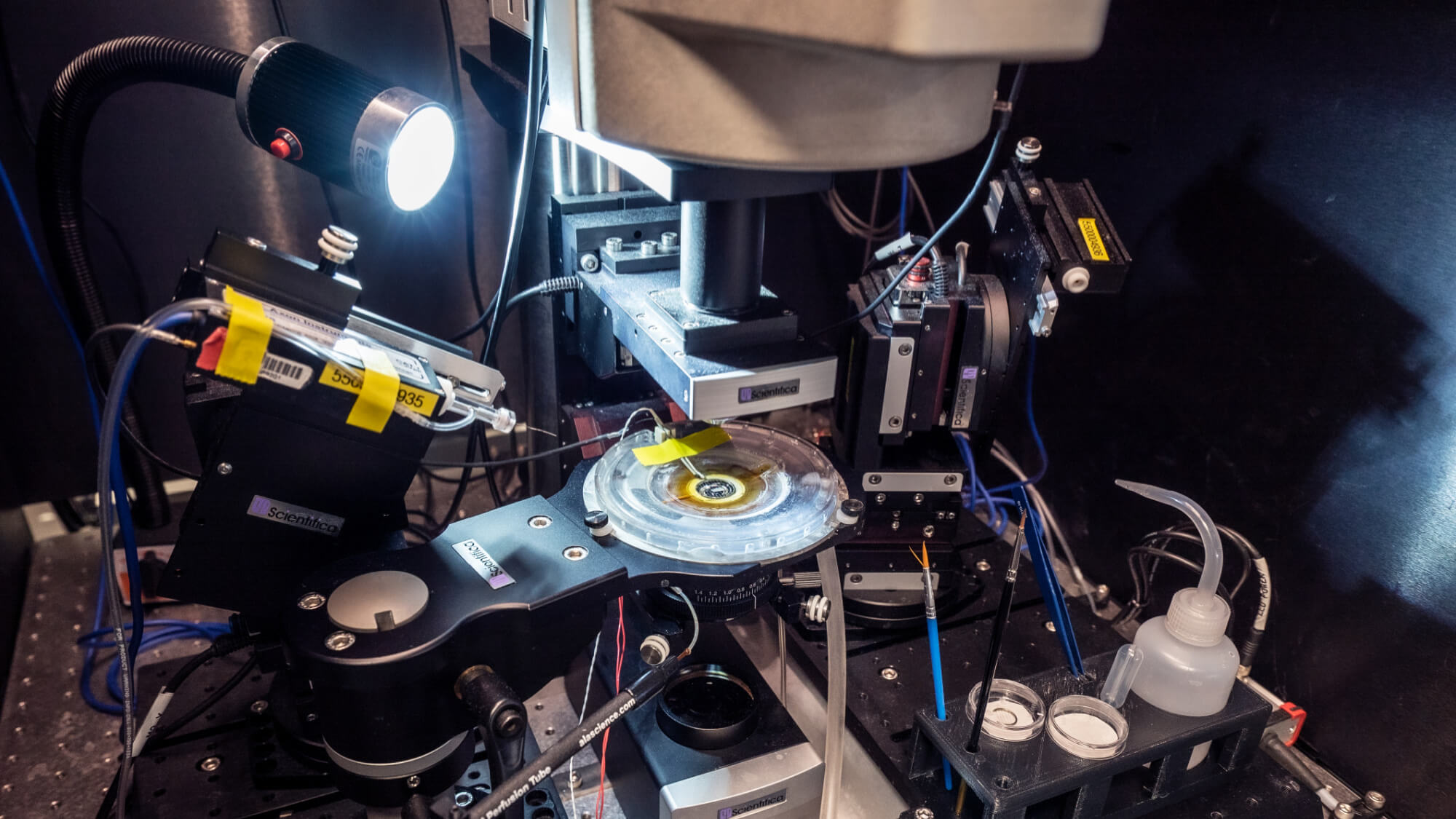
One of the experimentalists on the e-phys team, Ramkumar Rajanbabu, prepares a piece and slips it under the microscope. A craggy sea of gray appears on the monitor screen. It looks like the surface of the moon, but Rajanbabu points out several neurons and even a blood vessel as he dials controls back and forth to find what he’s looking for.
3D printer setup with illuminated nozzle, filament spool, and scientific laboratory equipment

“This is the true test — we’ll be able to tell if there are healthy cells there or not,” Lee said. “We always try because these samples are so precious. But sometimes we just can’t get any to record from.”

Rajanbabu and the other research associates in the lab spend much of their days recording neurons’ electrical communiques. Some of the process is automated, but much of the work relies on their specialized expertise. It takes him about 30 minutes to get the information he needs from a single neuron, Rajanbabu said. But if there’s a dearth of healthy neurons to choose from, as can happen with tissue from older patients, the process can take longer.

He scrolls through several screens of gray, pointing out circular blobs that he tells us are dead cells. He’s looking for a particular kind of neuron, a pyramidal neuron, that has a telltale triangular shaped body. Pyramidal neurons are a broad class of neurons that include several different types; their functions also vary based on their location in the cortex.
Three scientists in white lab coats working in a modern laboratory with equipment and computers.

Rajanbabu isn’t happy with the first two neurons he tries. The process includes gently piercing the outer layer of the neuron’s central body with a delicately thin glass pipette, maintaining the right amount of pressure on the glass so the cell doesn’t collapse or explode, and then inserting an even thinner electrode into the cell to jolt it with electricity and record its electrical responses.

On the third try, Rajanbabu gets a hit. Now the automation takes over — his computer runs a series of pre-programmed electrical currents into the neuron, checking for the quality of the cell’s response at each step. Any failures in this series means they need to move onto another neuron.
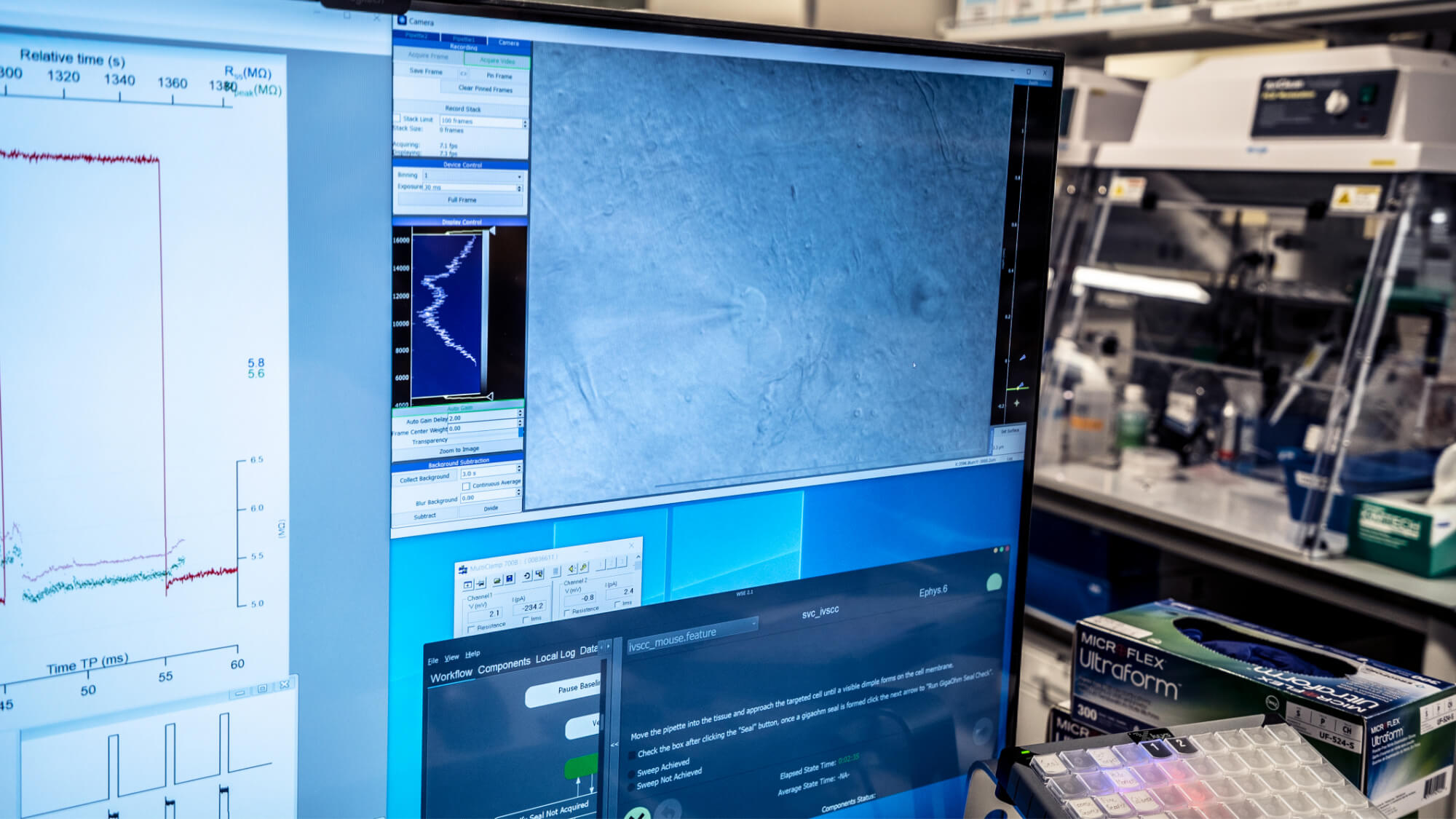
Scientific instruments and computer displays showing data analysis graphs and spectroscopy results in laboratory setting.

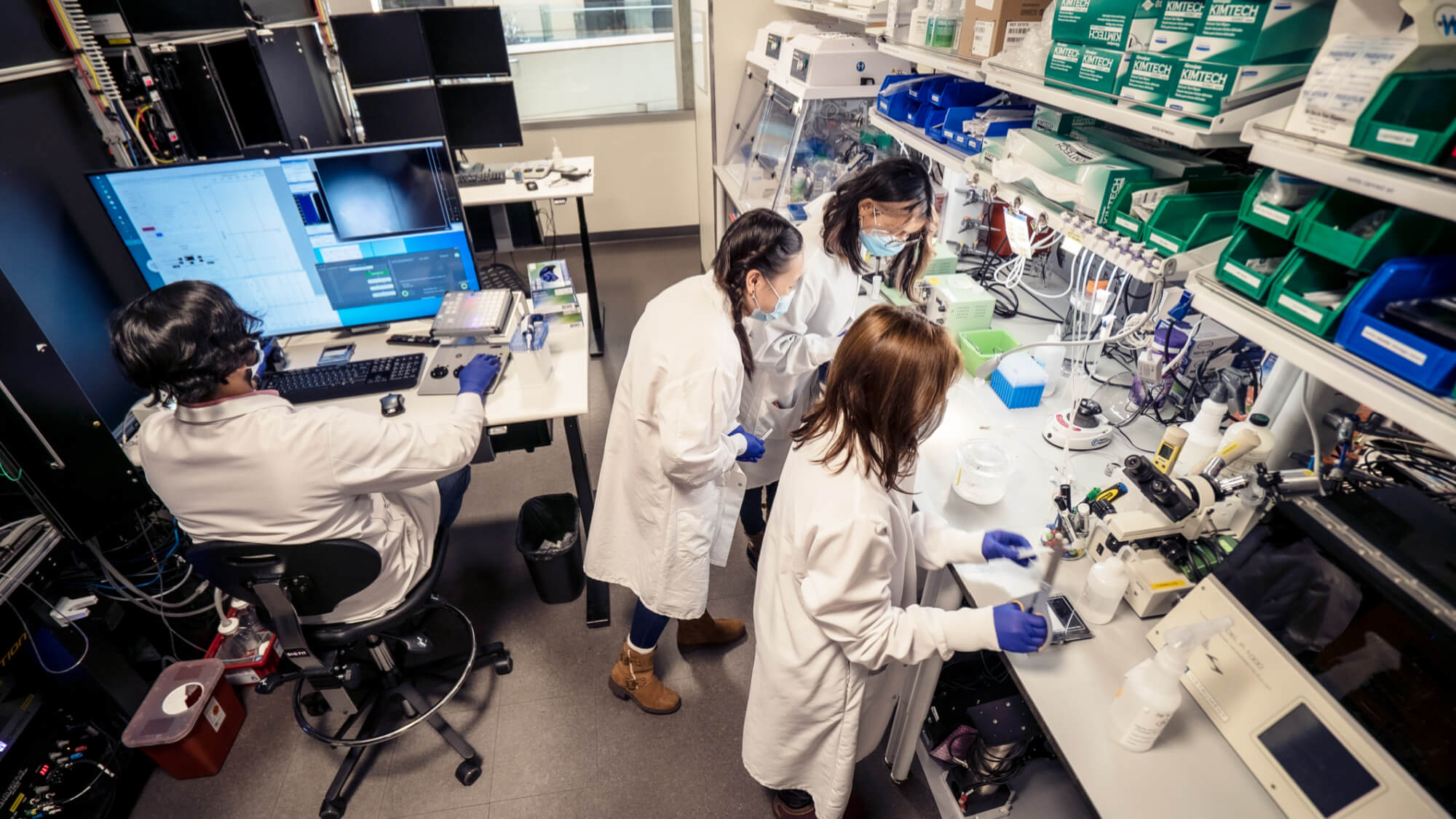
These cells are part of the Institute’s “Patch-seq pipeline,” a bucket-brigade style of data collection in which different expert teams handle different types of experiments, all on the same cells. After the e-phys researchers gather data about the neurons’ electrical characteristics, other teams take over to analyze their 3D shapes and their gene expression, measuring which genes are switched on or off in different kinds of neurons.

All this work is part of a larger effort to understand the different kinds of neurons and other cells that make up the brain, a lengthy “parts list” that is still being written.

Citations
No items found.

about the allen institute

The Allen Institute is an independent, 501(c)(3) nonprofit research organization founded by philanthropist and visionary, the late Paul G. Allen. The Allen Institute is dedicated to answering some of the biggest questions in bioscience and accelerating research worldwide. The Institute is a recognized leader in large-scale research with a commitment to an open science model. For more information, visit alleninstitute.org.
related news

all news
No articles for the category
we acceleratedevelopcatalyzeimpact

science done differently. shared with the world.

explore our accelerators

brain science

Mapping every cell, connection, and circuit in the brain—openly shared with the world.

cell science

Decoding how cells become tissues, then programming that knowledge into powerful new research tools.

neural dynamics

Revealing the brain's hidden algorithms that transform neural activity into real-world behavior.

immunology

Creating the deepest open reference for the healthy human immune system ever built.

synthetic biology

Engineering cells to record their own histories, transforming how we understand disease over time.

research

Big questions, open answers, and science built to be shared.

education

Inspiring the next generation of scientists through open science resources.

impact

Our science is empowering researchers and advancing health worldwide.
advancing science through open, collaborative research
Get the allen institute newsletter
Stay informed on the latest breakthroughs in neuroscience, bioscience, and AI-driven research.
allen institute
impactpeople & teamscareers & opportunitiesalumnihistory & founder
science resources
allencell.orgallenimmunology.orgallenneuraldynamics.orgbrain-bican.orgbrain-map.orgmicrons-explorer.org
research
brain sciencecell scienceneural dynamicsimmunologysynthetic biologypublications
education
science educationfield tripsprofessional developmenteducation resources
quick links
newseventsopen sciencepodcastscience resourceshuman brain donationvisit uscontact
follow us/

allen institute, 615 Westlake Ave North, Seattle, WA 98109 +12065487055

© 0000 allen institute. all rights reserved.
privacy policyterms of usecitation policyemployee portalpolicy & compliance