impact
about
our story
explore our impact
careers and opportunities
join us
open science
sharing science to speed discovery
open science week
celebrating open science
team science
people & teams
discovery is a team effort
allenites
the people who make our work possible
advisors
their input shapes our science
board of directors
they help us fulfill our mission
shanahan foundation fellowship
at the interface of data and neuroscience
next generation leaders
fostering emerging leaders in bioscience
research
overview
our approach
science at the scale of greatest impact
publications
explore our publications
open science
sharing science to speed discovery
science accelerators
brain science
building a blueprint of the brain
cell science
understanding how cells become organs
neural dynamics
revealing the brain’s hidden algorithms
immunology
creating the ultimate immune system reference
synthetic biology
seattle hub for synthetic biology
education
overview
science education
science is for everyone
open science
sharing science speeds discovery
engagement
education resources
real science. real skills.
field trips
experience science where it happens
educator development
empowering educators
news
overview
all news
explore the latest news
podcast
the human stories behind discovery
sign up for our newsletter
stay connected to our science
events
overview
all events
public engagement, workshops, seminars and more
conferences
connect with us
science resources
science resources
allencell.org
allenimmunology.org
allenneuraldynamics.org
brain-bican.org
brain-map.org
microns-explorer.org
impact
back to menu
team science
our story
explore our impact
careers and opportunities
join us
open science
sharing science to speed discovery
open science week
celebrating open science
team science
people & teams
discovery is a team effort
allenites
the people who make our work possible
advisors
their input shapes our science
board of directors
they help us fulfill our mission
shanahan foundation fellowship
at the interface of data and neuroscience
next generation leaders
fostering emerging leaders in bioscience
research
back to menu
overview
our approach
science at the scale of greatest impact
publications
explore our publications
open science
sharing science to speed discovery
science accelerators
brain science
building a blueprint of the brain
cell science
understanding how cells become organs
neural dynamics
revealing the brain’s hidden algorithms
immunology
creating the ultimate immune system reference
synthetic biology
seattle hub for synthetic biology
education
back to menu
overview
science education
science is for everyone
open science
sharing science speeds discovery
engagement
education resources
real science. real skills.
field trips
experience science where it happens
educator development
empowering educators
news
back to menu
overview
all news
explore the latest news
podcast
the human stories behind discovery
newsletter
stay connected to our science
events
back to menu
overview
all events
public engagement, workshops, seminars and more
conferences
connect with us
science resources
back to menu
science resources
allencell.org
allenimmunology.org
allenneuraldynamics.org
brain-bican.org
brain-map.org
microns-explorer.org
search
news

A day in the (neuroscience) life: Human cell types

Scientists in this laboratory are exploring the molecular details of human - and other primate - brain cells

March 16, 2022
 min read
share/
Scientists in this laboratory are exploring the molecular details of human — and other primate — brain cells
Thank you! Your submission has been received!
Oops! Something went wrong while submitting the form.

in this article

table of contents will display on published page only
set h2 to populate the table of contents here

For Brain Awareness Week 2022, we dropped in on five Allen Institute teams working to understand the brain. Get a glimpse into their workdays.

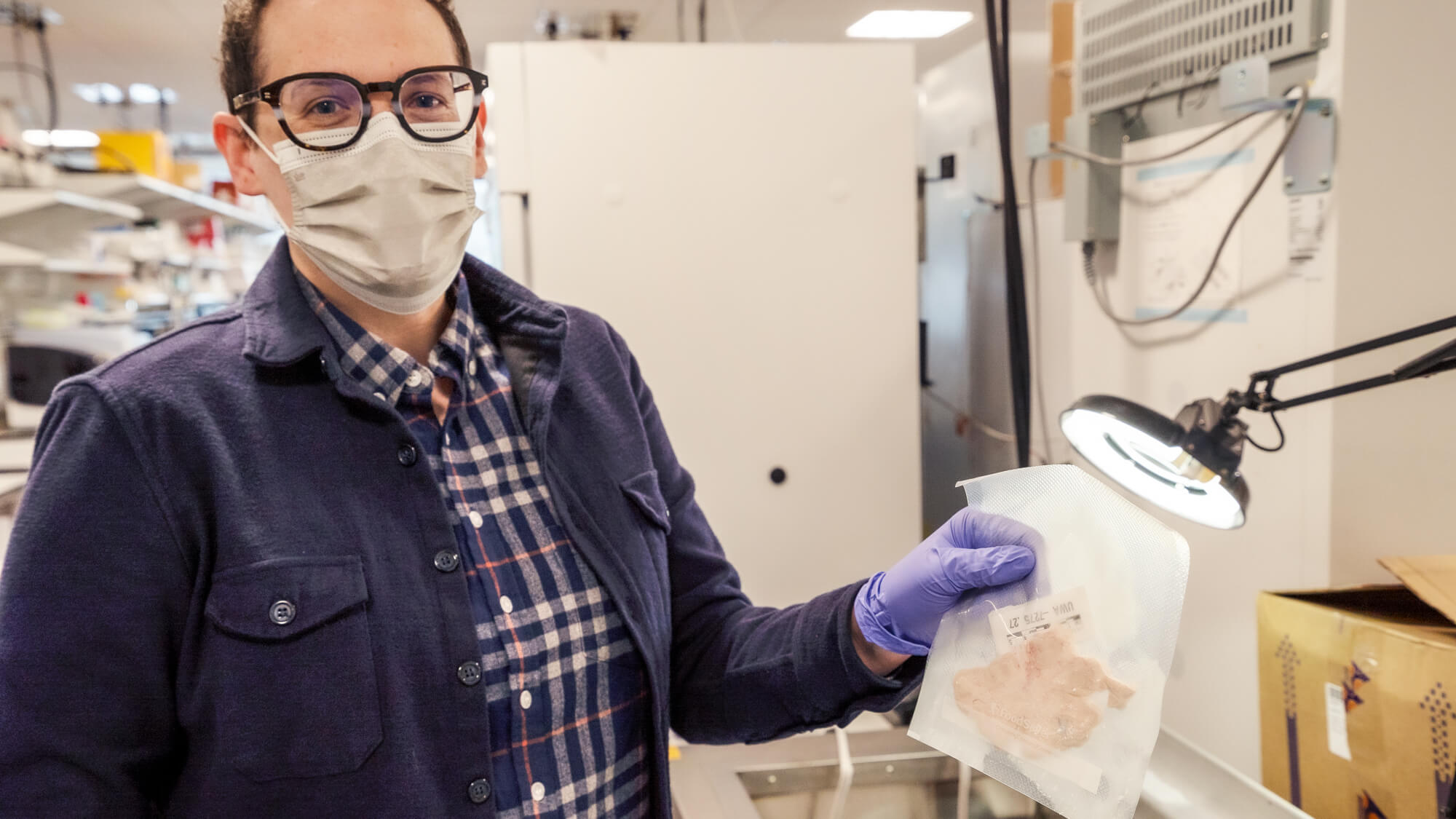
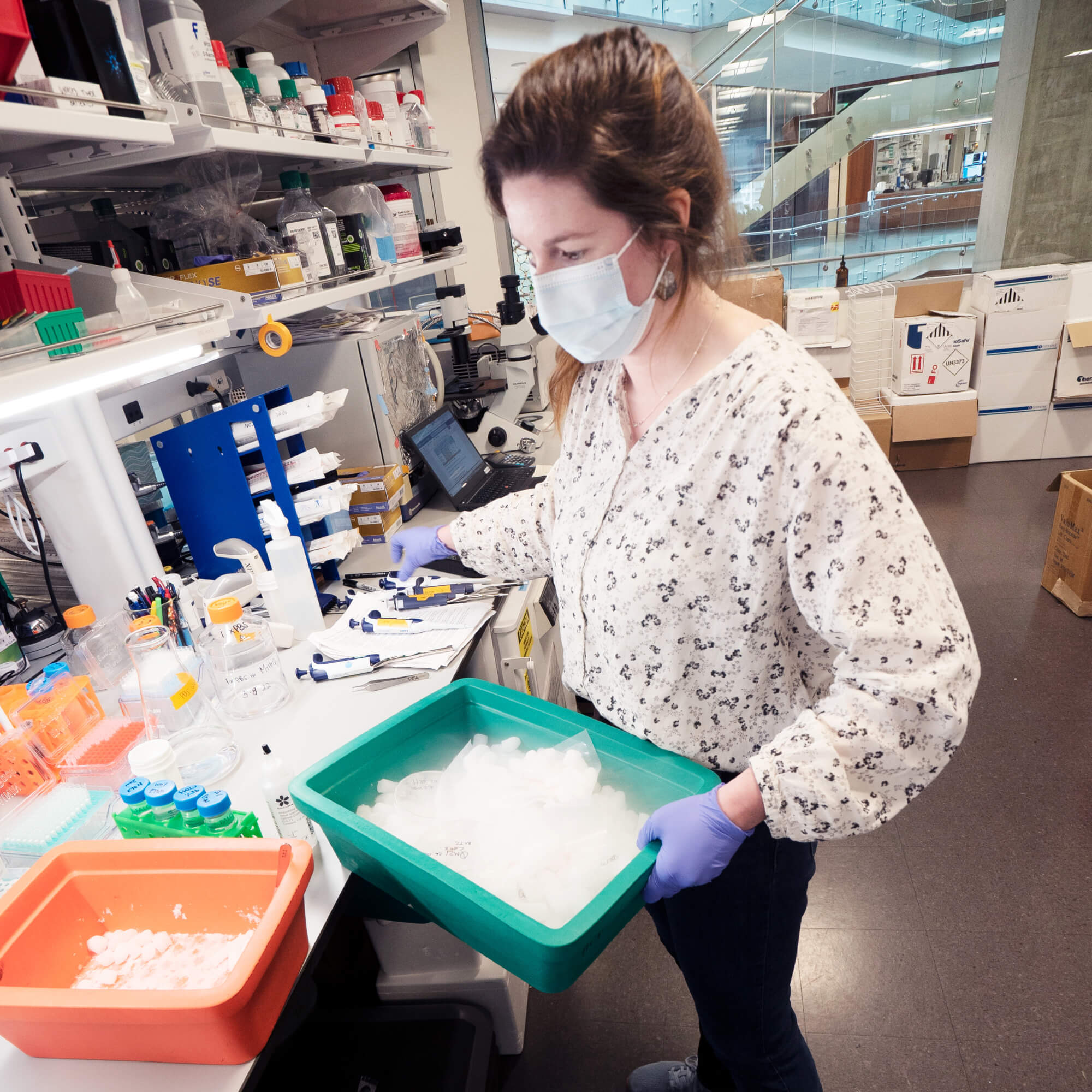
When we pop into the human cell types lab, Rebecca Hodge, Ph.D., is bent over a large metal trough with a tray inside — it’s a cold table, she says, for keeping frozen tissue cold as you look at it or dissect. A bucket of dry ice with open baggies is perched on the edge next to her.
Scientist in lab coat, mask, and glasses examining sample in laboratory.

Hodge is fiddling with a pinkish, frozen slab of brain on the table. It was taken from a macaque brain, and she’s looking for a certain region — the middle temporal gyrus, a section of your brain just behind your ear — for analysis.
Scientist in lab coat and mask holding green tray with samples in research laboratory

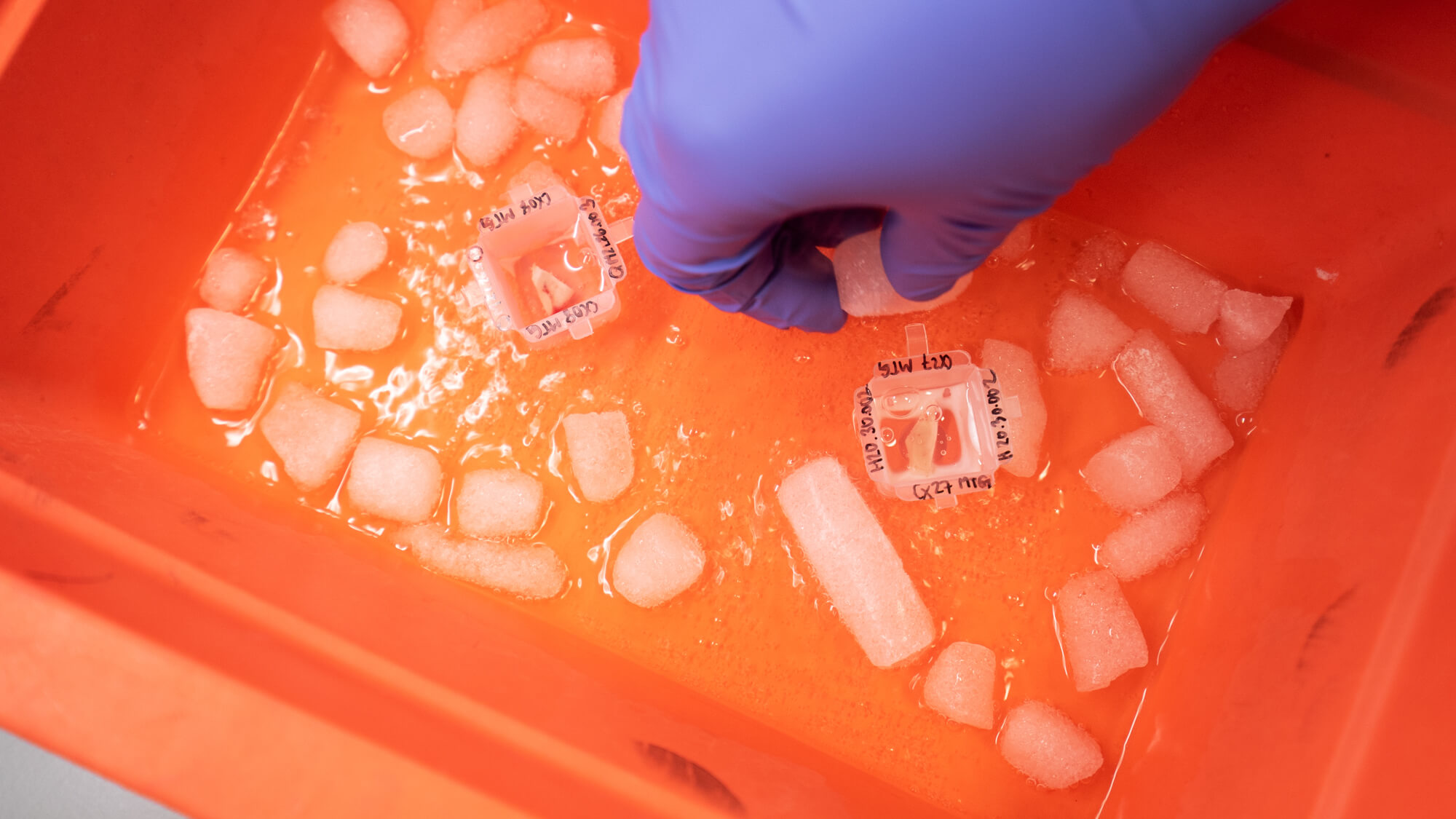
She finds what she’s looking for and hands the tissue off to Anna Marie Yanny, another researcher in the lab. Yanny will use a technique called multiplex FISH that looks at whether and how much genes are switched on (a measure known as gene expression) in brain cells in the context of the tissue itself. Other gene expression analyses break up tissue into individual cells or a slurry of cells, but FISH allows the researchers to see different genes light up without breaking up the brain tissue, meaning they can pinpoint where different types of neurons and other brain cells reside in the brain.

Their goal is to understand the cellular makeup of this region of the brain and how it differs in closely related species. In other experiments, the researchers will look at the same region from human, gorilla, marmoset and chimpanzee brains. By looking at gene expression across the entire genome in individual brain cells from these different kinds of primates, the scientists can get a better understanding of how the different types of cells that make up our brains are similar or different to those of our closest relatives.
Ice cubes melting in bright orange and purple colored container with water

With multiplex FISH, Yanny and others on the Human Cell Types team are looking at a few cell types they’re particularly interested in to see where they reside in the brain.
Laboratory technician in purple gloves holding small test tubes in medical lab setting.

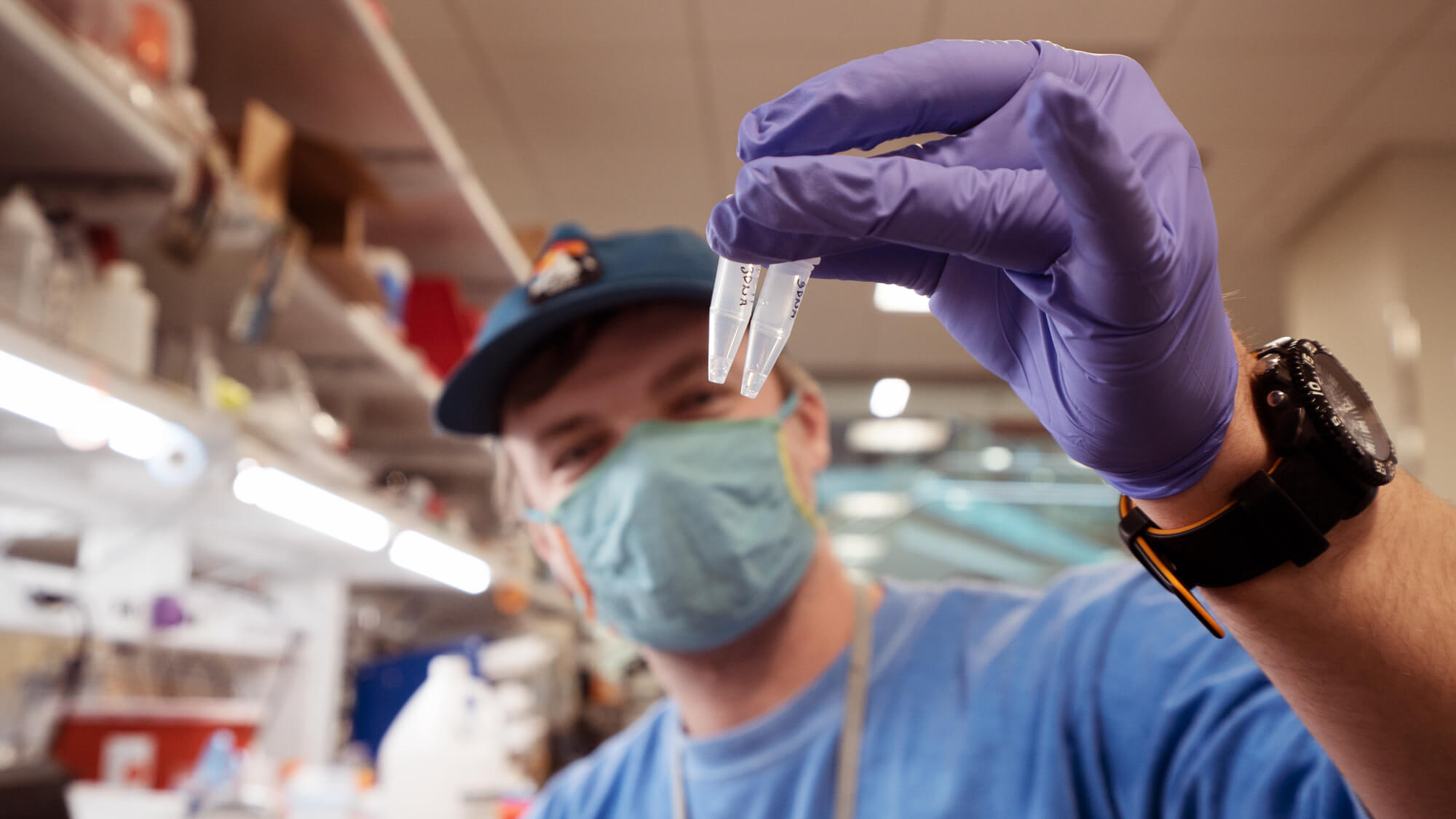
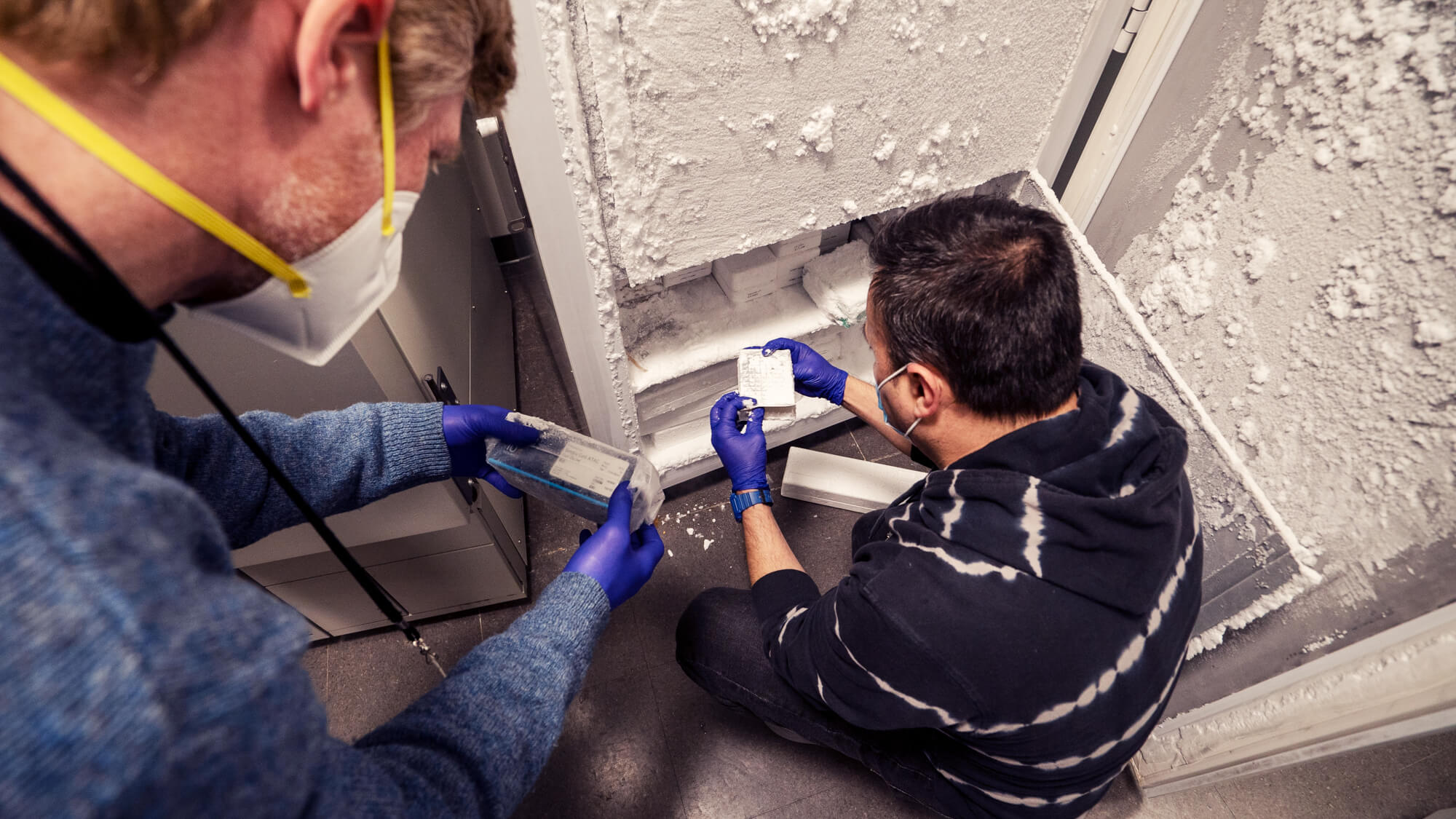
Next to Yanny at the lab bench, neuroscientist JT Mahoney is surrounded by tiny tubes of clear liquid. Each tube contains DNA from a different human donor, he said — most of them are from brain donors who died with Alzheimer’s disease.

The tubes are part of a relatively new project at the Allen Institute, a center launched in 2020 to map the different types of brain cells most vulnerable to Alzheimer’s. Like the studies comparing brain cell types in healthy humans and other primates, the scientists studying Alzheimer’s disease want to understand whether the cellular makeup of the brain changes during the course of the disease.

They’re using similar techniques to catalog the brain cell types by comparing their gene expression, Mahoney said, and right now, the researchers are testing a few different techniques before they pick one that they will scale up. The tubes of DNA serve as reference points, so they can match data from the different methods back to the same donor.
Two workers wearing blue gloves applying joint compound to drywall seams indoors.

Across the room from Mahoney and Yanny, the lab is bustling — several members of a group that works on gene therapy-related techniques for the brain have gathered for an early spring cleaning. These researchers work on special types of modified viruses that deliver fluorescent labels or other genetic cargo to a single cell type in the mouse, human or monkey brain. Eventually, these tools could be used to deliver gene therapies for genetic brain diseases and disorders.

Citations
No items found.

about the allen institute

The Allen Institute is an independent, 501(c)(3) nonprofit research organization founded by philanthropist and visionary, the late Paul G. Allen. The Allen Institute is dedicated to answering some of the biggest questions in bioscience and accelerating research worldwide. The Institute is a recognized leader in large-scale research with a commitment to an open science model. For more information, visit alleninstitute.org.
related news

all news
No articles for the category
we acceleratedevelopcatalyzeimpact

science done differently. shared with the world.

explore our accelerators

brain science

Mapping every cell, connection, and circuit in the brain—openly shared with the world.

cell science

Decoding how cells become tissues, then programming that knowledge into powerful new research tools.

neural dynamics

Revealing the brain's hidden algorithms that transform neural activity into real-world behavior.

immunology

Creating the deepest open reference for the healthy human immune system ever built.

synthetic biology

Engineering cells to record their own histories, transforming how we understand disease over time.

research

Big questions, open answers, and science built to be shared.

education

Inspiring the next generation of scientists through open science resources.

impact

Our science is empowering researchers and advancing health worldwide.
advancing science through open, collaborative research
Get the allen institute newsletter
Stay informed on the latest breakthroughs in neuroscience, bioscience, and AI-driven research.
allen institute
impactpeople & teamscareers & opportunitiesalumnihistory & founder
science resources
allencell.orgallenimmunology.orgallenneuraldynamics.orgbrain-bican.orgbrain-map.orgmicrons-explorer.org
research
brain sciencecell scienceneural dynamicsimmunologysynthetic biologypublications
education
science educationfield tripsprofessional developmenteducation resources
quick links
newseventsopen sciencepodcastscience resourceshuman brain donationvisit uscontact
follow us/

allen institute, 615 Westlake Ave North, Seattle, WA 98109 +12065487055

© 0000 allen institute. all rights reserved.
privacy policyterms of usecitation policyemployee portalpolicy & compliance