impact
about
our story
explore our impact
careers and opportunities
join us
open science
sharing science to speed discovery
open science week
celebrating open science
team science
people & teams
discovery is a team effort
allenites
the people who make our work possible
advisors
their input shapes our science
board of directors
they help us fulfill our mission
shanahan foundation fellowship
at the interface of data and neuroscience
next generation leaders
fostering emerging leaders in bioscience
research
overview
our approach
science at the scale of greatest impact
publications
explore our publications
open science
sharing science to speed discovery
science accelerators
brain science
building a blueprint of the brain
cell science
understanding how cells become organs
neural dynamics
revealing the brain’s hidden algorithms
immunology
creating the ultimate immune system reference
synthetic biology
seattle hub for synthetic biology
education
overview
science education
science is for everyone
open science
sharing science speeds discovery
engagement
education resources
real science. real skills.
field trips
experience science where it happens
educator development
empowering educators
news
overview
all news
explore the latest news
podcast
the human stories behind discovery
sign up for our newsletter
stay connected to our science
events
overview
all events
public engagement, workshops, seminars and more
conferences
connect with us
science resources
science resources
allencell.org
allenimmunology.org
allenneuraldynamics.org
brain-bican.org
brain-map.org
microns-explorer.org
impact
back to menu
team science
our story
explore our impact
careers and opportunities
join us
open science
sharing science to speed discovery
open science week
celebrating open science
team science
people & teams
discovery is a team effort
allenites
the people who make our work possible
advisors
their input shapes our science
board of directors
they help us fulfill our mission
shanahan foundation fellowship
at the interface of data and neuroscience
next generation leaders
fostering emerging leaders in bioscience
research
back to menu
overview
our approach
science at the scale of greatest impact
publications
explore our publications
open science
sharing science to speed discovery
science accelerators
brain science
building a blueprint of the brain
cell science
understanding how cells become organs
neural dynamics
revealing the brain’s hidden algorithms
immunology
creating the ultimate immune system reference
synthetic biology
seattle hub for synthetic biology
education
back to menu
overview
science education
science is for everyone
open science
sharing science speeds discovery
engagement
education resources
real science. real skills.
field trips
experience science where it happens
educator development
empowering educators
news
back to menu
overview
all news
explore the latest news
podcast
the human stories behind discovery
newsletter
stay connected to our science
events
back to menu
overview
all events
public engagement, workshops, seminars and more
conferences
connect with us
science resources
back to menu
science resources
allencell.org
allenimmunology.org
allenneuraldynamics.org
brain-bican.org
brain-map.org
microns-explorer.org
search
news

Allen Cell Types Database Launched

First-of-its-kind database of individual neurons enables scientists to understand fundamental building blocks of the brain

May 14, 2015
 min read
share/
First-of-its-kind database of individual neurons enables scientists to understand fundamental building blocks of the brain
Thank you! Your submission has been received!
Oops! Something went wrong while submitting the form.

in this article

table of contents will display on published page only
set h2 to populate the table of contents here

Download PDF

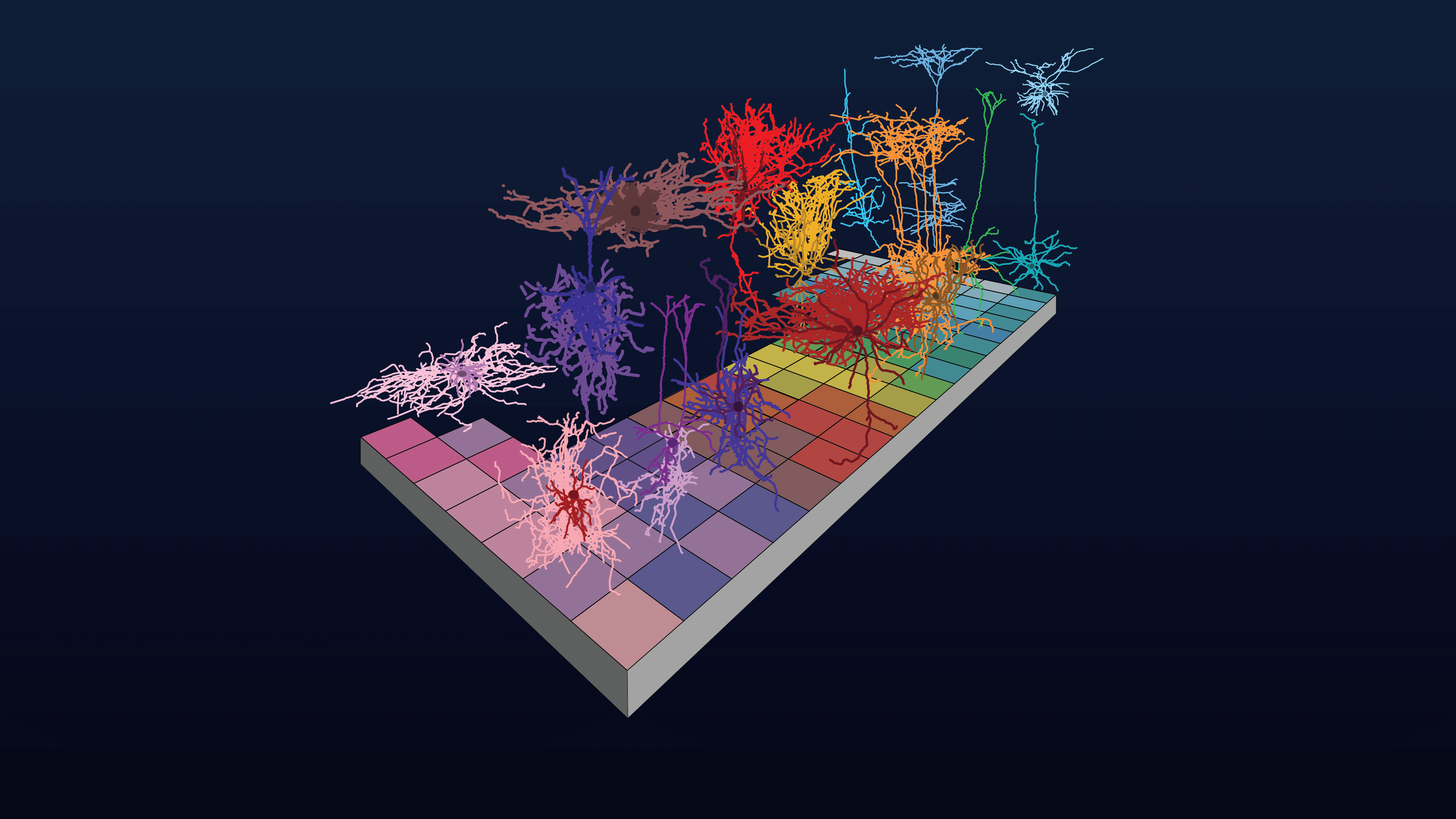
The Allen Institute for Brain Science announced today that it is taking the first major scientific step to create a searchable standards database for the brain with the launch of the Allen Cell Types Database. This first release includes information on the location, electrical activity and shape of more than 240 neurons.

“To make progress in brain research, we need established standards for all neuroscientists worldwide to share,” says Allan Jones, Ph.D., CEO of the Allen Institute. “These cell types may end up playing the same role in neuroscience as the periodic table does in chemistry.”

The publicly accessible database represents the first fruit of the Allen Institute’s ten-year plan to understand how activity in the brain leads to perception, decision-making and action. Understanding cell types—the brain’s building blocks—is fundamental to making sense of both how the healthy brain functions and what goes wrong in diseases such as autism, Alzheimer’s and Parkinson’s.
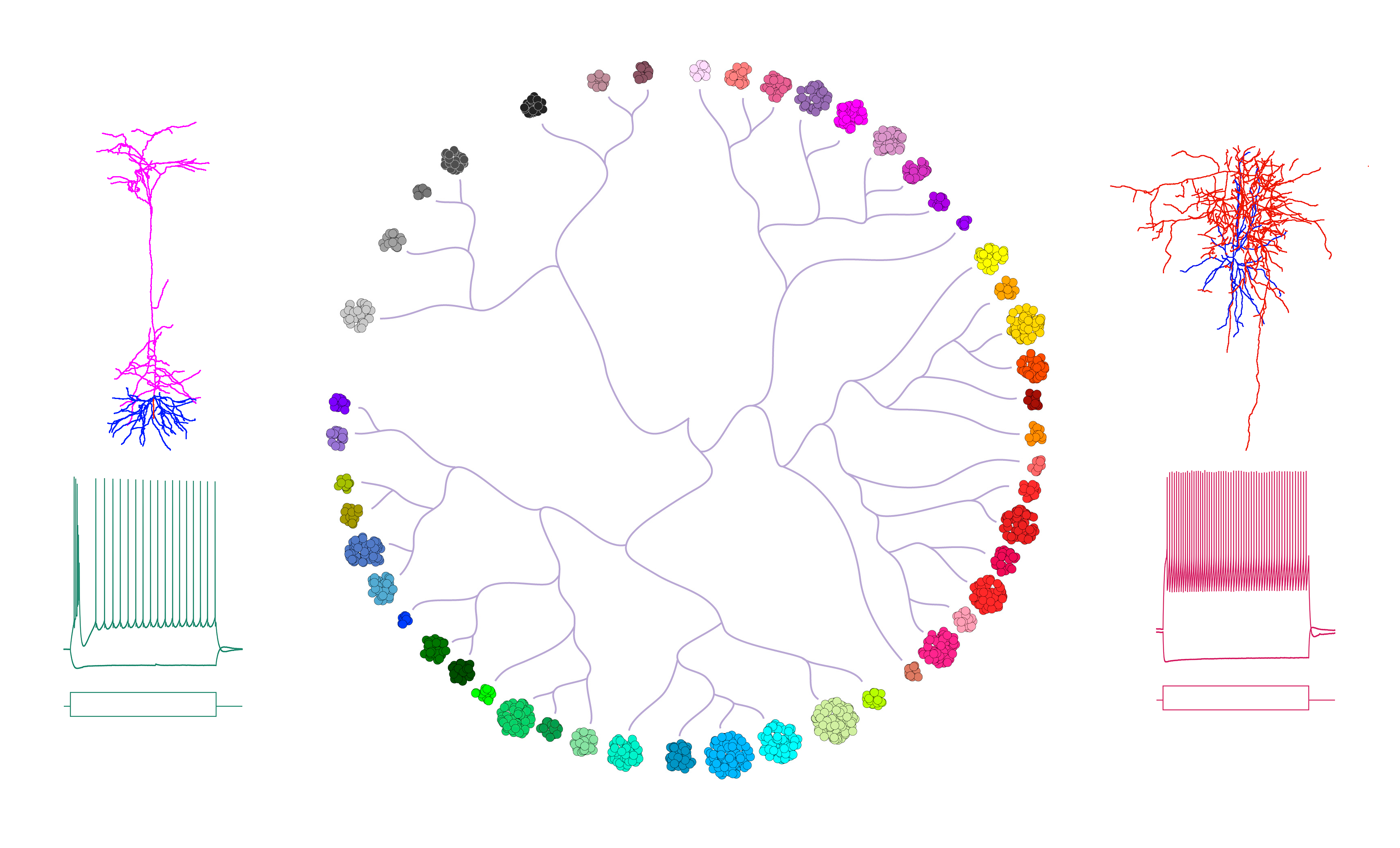
Circular dendrogram with colored molecular nodes and branching tree structures showing hierarchical relationships.

“Identifying neuronal cell types is essential to unraveling the mystery of how the brain processes information and gives rise to perception, memory and consciousness,” says Christof Koch, Ph.D., President and Chief Scientific Officer of the Allen Institute for Brain Science. “This is the first resource of its kind to bring together multiple types of data—shape, position in the brain and electrical activity—in a single searchable database anywhere on the planet.”

The Allen Cell Types Database contains detailed information on individual neurons from the mouse visual cortex. Their electrical activity in response to stimulation applied to their cell bodies was recorded with tiny electrodes before their shapes were captured in high resolution by a light microscope. Digitally reconstructed morphologies for a subset of cells in the release as well as different types of computer models that faithfully simulate the electrical behavior of these cells will also be made available.

Included in the release is the Allen Software Development Kit (SDK): a companion source code repository containing neuronal models of the cells. This tool allows scientists to download the models and run their own virtual experiments.

“Each cell in the database has an associated model of its electrical activity, which can be downloaded as part of the Allen SDK,” says Chinh Dang, Chief Technology Officer of the Allen Institute for Brain Science. “The models allow interested scientists to not just observe the patterns of individual cells, but to make quantitative and analytical comparisons that will ultimately help differentiate between cell types.”

Future data releases on this product will include cells from the human cortex and information about gene expression in individual cells.

An additional component of the data release is the Allen Institute’s newest Science Vignette: a dynamic animation that guides users through a classification of cell types of the mouse visual cortex based on analyzing the thousands of genes that are expressed in single neurons. The gene expression data for the approximately 1,600 cells in the animation will also be made available. Both resources showcase the kind of future insights that can be gleaned from combining morphological, electrical and transcriptional analyses.

“By making a database like this available right now to the public, we are building a fundamental framework, allowing us to speak the same language and helping the larger community answer future questions in neuroscience,” says Jones.

Citations
No items found.

about the allen institute

The Allen Institute is an independent, 501(c)(3) nonprofit research organization founded by philanthropist and visionary, the late Paul G. Allen. The Allen Institute is dedicated to answering some of the biggest questions in bioscience and accelerating research worldwide. The Institute is a recognized leader in large-scale research with a commitment to an open science model. For more information, visit alleninstitute.org.


related news

all news
No articles for the category
we acceleratedevelopcatalyzeimpact

science done differently. shared with the world.

explore our accelerators

brain science

Mapping every cell, connection, and circuit in the brain—openly shared with the world.

cell science

Decoding how cells become tissues, then programming that knowledge into powerful new research tools.

neural dynamics

Revealing the brain's hidden algorithms that transform neural activity into real-world behavior.

immunology

Creating the deepest open reference for the healthy human immune system ever built.

synthetic biology

Engineering cells to record their own histories, transforming how we understand disease over time.

research

Big questions, open answers, and science built to be shared.

education

Inspiring the next generation of scientists through open science resources.

impact

Our science is empowering researchers and advancing health worldwide.
advancing science through open, collaborative research
Get the allen institute newsletter
Stay informed on the latest breakthroughs in neuroscience, bioscience, and AI-driven research.
allen institute
impactpeople & teamscareers & opportunitiesalumnihistory & founder
science resources
allencell.orgallenimmunology.orgallenneuraldynamics.orgbrain-bican.orgbrain-map.orgmicrons-explorer.org
research
brain sciencecell scienceneural dynamicsimmunologysynthetic biologypublications
education
science educationfield tripsprofessional developmenteducation resources
quick links
newseventsopen sciencepodcastscience resourceshuman brain donationvisit uscontact
follow us/

allen institute, 615 Westlake Ave North, Seattle, WA 98109 +12065487055

© 0000 allen institute. all rights reserved.
privacy policyterms of usecitation policyemployee portalpolicy & compliance


