
impact
about
our story
explore our impact
careers and opportunities
join us
open science
sharing science to speed discovery
open science week
celebrating open science
team science
people & teams
discovery is a team effort
allenites
the people who make our work possible
advisors
their input shapes our science
board of directors
they help us fulfill our mission
shanahan foundation fellowship
at the interface of data and neuroscience
next generation leaders
fostering emerging leaders in bioscience
research
overview
our approach
science at the scale of greatest impact
publications
explore our publications
open science
sharing science to speed discovery
science accelerators
brain science
building a blueprint of the brain
cell science
understanding how cells become organs
neural dynamics
revealing the brain’s hidden algorithms
immunology
creating the ultimate immune system reference
synthetic biology
seattle hub for synthetic biology
education
overview
science education
science is for everyone
open science
sharing science speeds discovery
engagement
education resources
real science. real skills.
field trips
experience science where it happens
educator development
empowering educators
news
overview
all news
explore the latest news
podcast
the human stories behind discovery
sign up for our newsletter
stay connected to our science
events
overview
all events
public engagement, workshops, seminars and more
conferences
connect with us
science resources
science resources
allencell.org
allenimmunology.org
allenneuraldynamics.org
brain-bican.org
brain-map.org
microns-explorer.org
impact
back to menu
team science
our story
explore our impact
careers and opportunities
join us
open science
sharing science to speed discovery
open science week
celebrating open science
team science
people & teams
discovery is a team effort
allenites
the people who make our work possible
advisors
their input shapes our science
board of directors
they help us fulfill our mission
shanahan foundation fellowship
at the interface of data and neuroscience
next generation leaders
fostering emerging leaders in bioscience
research
back to menu
overview
our approach
science at the scale of greatest impact
publications
explore our publications
open science
sharing science to speed discovery
science accelerators
brain science
building a blueprint of the brain
cell science
understanding how cells become organs
neural dynamics
revealing the brain’s hidden algorithms
immunology
creating the ultimate immune system reference
synthetic biology
seattle hub for synthetic biology
education
back to menu
overview
science education
science is for everyone
open science
sharing science speeds discovery
engagement
education resources
real science. real skills.
field trips
experience science where it happens
educator development
empowering educators
news
back to menu
overview
all news
explore the latest news
podcast
the human stories behind discovery
newsletter
stay connected to our science
events
back to menu
overview
all events
public engagement, workshops, seminars and more
conferences
connect with us
science resources
back to menu
science resources
allencell.org
allenimmunology.org
allenneuraldynamics.org
brain-bican.org
brain-map.org
microns-explorer.org
search
news

Allen Institute cells blast off into outer space

Researchers from Cedars-Sinai are using Allen Institute cell lines to grow organoids in space, which could help design better drugs for disease

August 26, 2025
 min read
share/
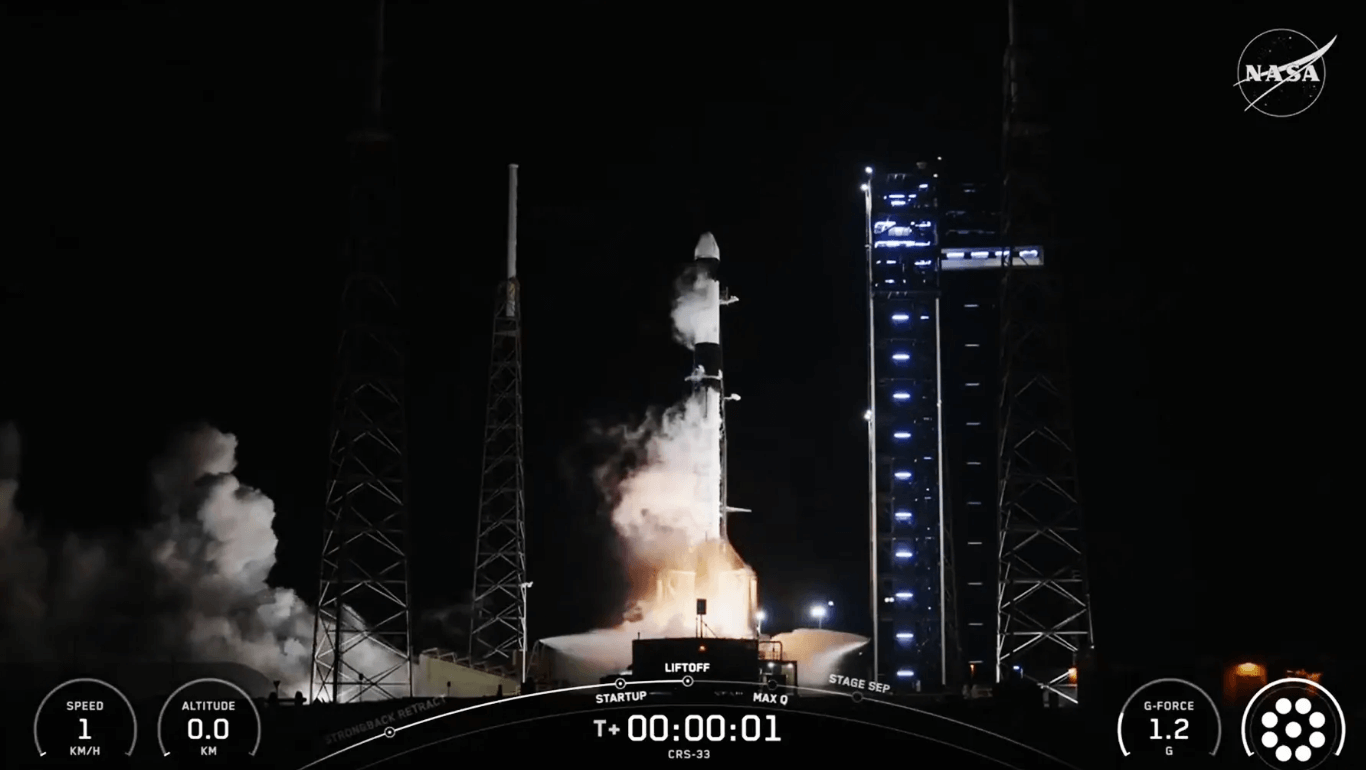
The SpaceX Falcon 9 rocket with Dragon atop launches on time from Cape Canaveral Space Force Station in Florida. (Photo credit: NASA)
Researchers from Cedars-Sinai are using Allen Institute cell lines to grow organoids in space, which could help design better drugs for disease
Thank you! Your submission has been received!
Oops! Something went wrong while submitting the form.

in this article

table of contents will display on published page only
set h2 to populate the table of contents here

authors

Peter Kim
Associate Director, Communications & Media Relations

Specially designed cells from the Allen Institute embarked on an out-of-this-world adventure—literally. On Sunday August 24, the cells blasted off to the International Space Station as part of a multi-year research project by Cedars-Sinai investigating whether stem cells can be turned into heart and brain organoids in space. If successful, this would be a scientific first.

Growing organoids in space

“On Earth, gravity compresses organoids, which are three-dimensional clumps of cells,” said Arun Sharma, Ph.D., director of the Cedars-Sinai Center for Space Medicine Research. “In space, gravity is reduced to almost nothing, what we call microgravity, and we believe that organoids will grow better under these conditions. They might develop new blood vessels that we aren’t able to develop on Earth, organize themselves in unique ways, or maybe even harbor different cell types that we can only develop in microgravity.”

Successfully accomplishing this feat would allow researchers to model diseases and test drugs for efficacy at a scale that wouldn’t be possible on earth.

We can create thousands of these organoids in just weeks."

Dr. Arun Sharma, director of Cedars-Sinai Center for Space Medicine Research

Professional headshot of a smiling man wearing white coat and navy shirt

Clive Svendsen, Ph.D., is executive director of the Board of Governors Regenerative Medicine Institute and a collaborator on the mission who studies brain organoids.   

“My lab is focused on the study of neurodegenerative diseases such as ALS, Huntington’s disease and Parkinson’s disease, and we use brain organoids as a tool for modeling these diseases,” Svendsen said. “Creating these organoids in space is potentially a step toward accelerating our work and gaining better understanding of these diseases.” 

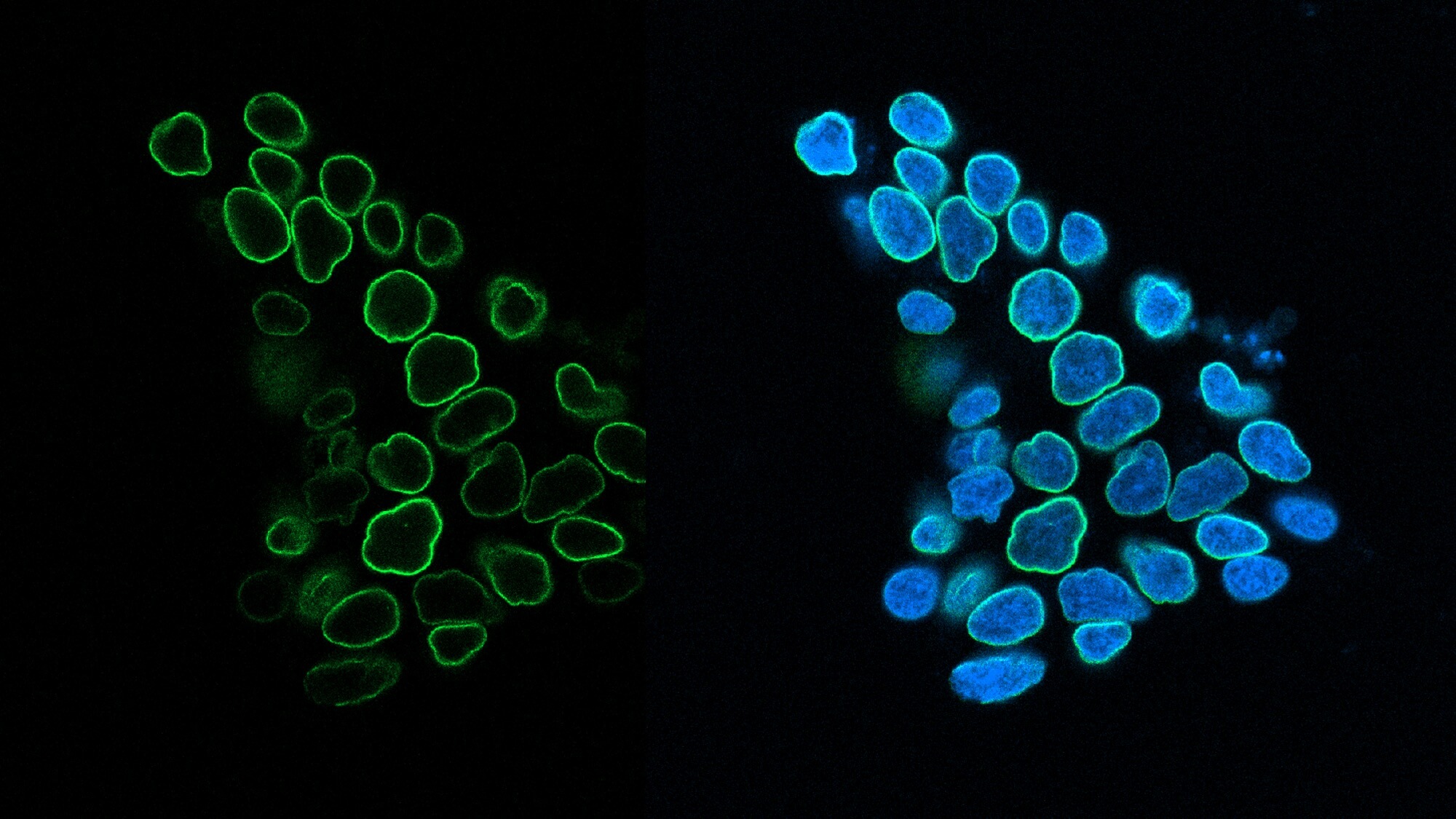
Allen Institute scientists in the Cell Science team engineered special stem cells to contain glowing markers that visually tell scientists when they turn into heart or brain organoids.

Original report by FOX 13

Allen Institute cell lines

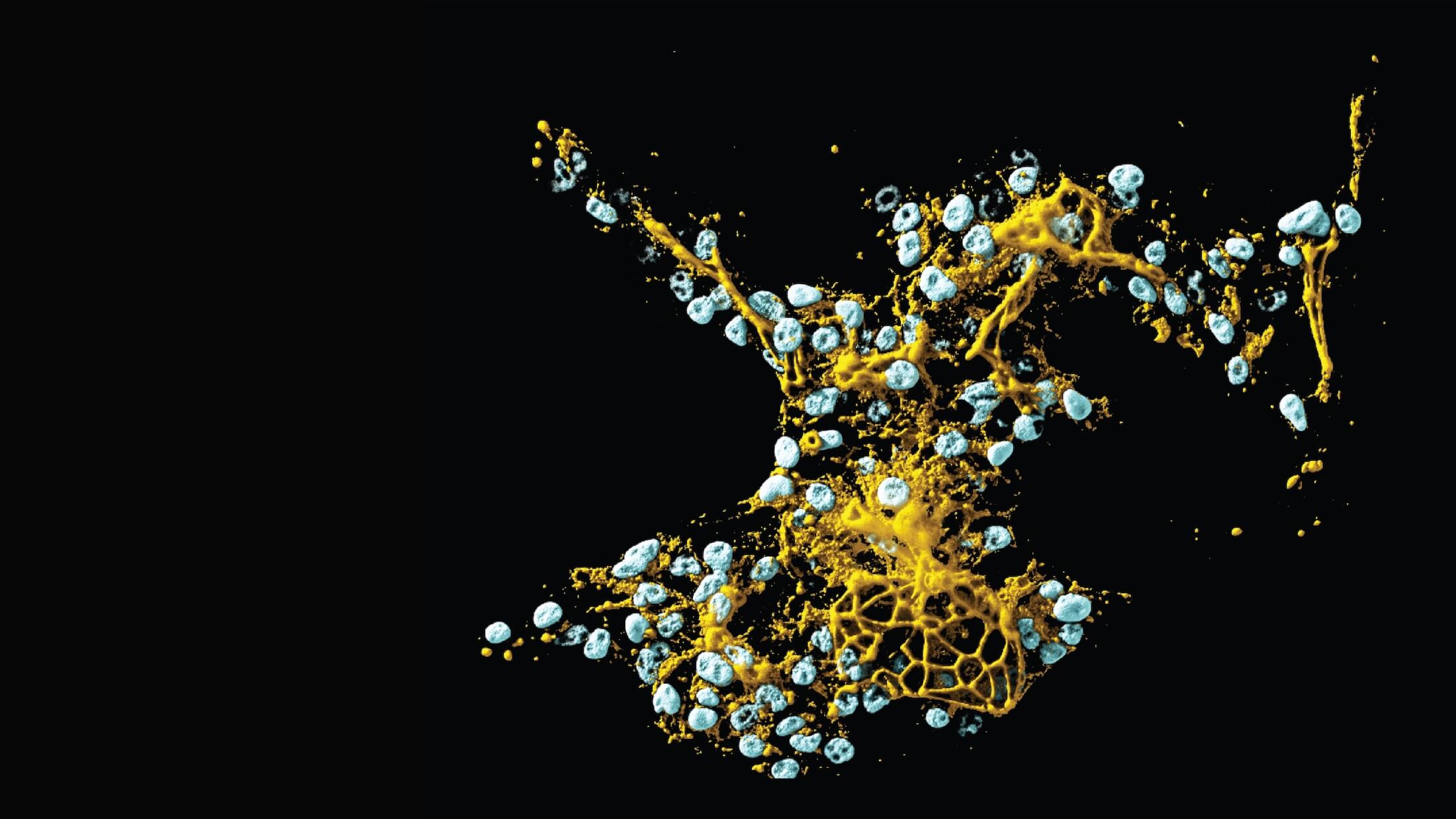
“The specific lines being used for the mission are Sox2-gfp and Actn2-gfp. Sox2 is great because it labels a gene that has been identified as necessary for several developmental transitions. And these cells can display gene expression in real time in living cells.” said Brock Roberts, Ph.D., senior scientist at the Allen Institute. “The ACTN-2 cells display in the same way a gene that is active in heart cells, and the signal appears in contractile heart fibers. This means that there is an indicator that heart cells have been properly made. When the cell can be observed while living, and molecular features are revealed, lots of information can be gleaned.”

Z-stack of live hiPS cell colony expressing mEGFP-tagged transcription factor SOX-2 protein. Cells were imaged in 3D on a spinning-disk confocal microscope.

Z-stack of live hiPS cell colony expressing mEGFP-tagged transcription factor SOX-2 protein. Cells were imaged in 3D on a spinning-disk confocal microscope.

Mission to the International Space Station

The mission is part of NASA’s SpaceX 33rd commercial resupply services mission to the International Space Station. Back in 2023, astronauts from Axiom Space flew cells from the Allen Institute to the ISS to study the effects of microgravity, as part of another Cedars-Sinai project.

Other key players in this first-of-its-kind endeavor include Axiom Space, which is a private space infrastructure developer in Houston; and BioServe Space Technologies in Colorado, who created the “plate habitat” that will house the cells. The NASA crew includes Zena Cardman and Jonny Kim, medical doctors and biomedical scientists who are first-time astronauts.
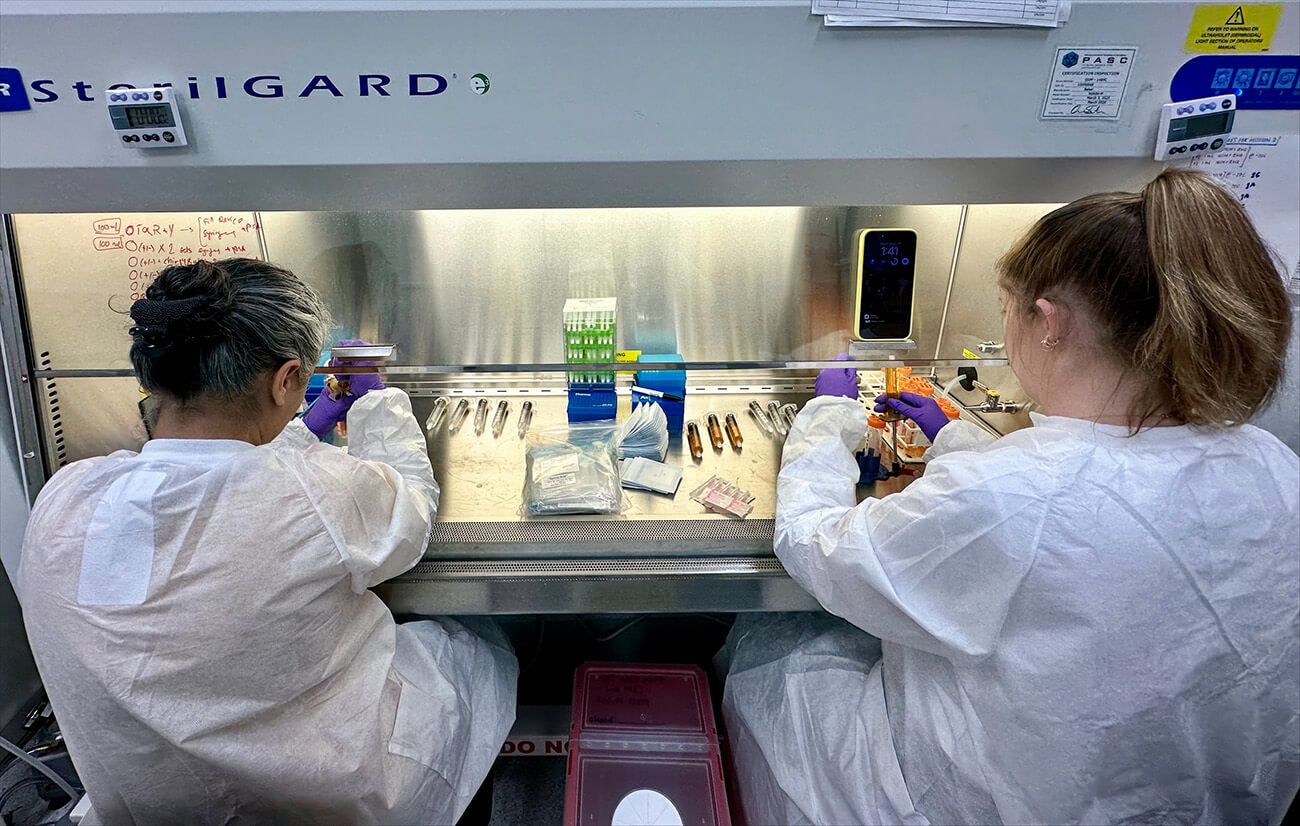
Two scientists in protective gowns working in a biosafety cabinet laboratory hood.
Members of Arun Sharma’s research team from Cedars-Sinai Center for Space Medicine Research working at the Kennedy Space Center preparing samples. On the left is Maedeh Mozneb, Ph.D. (project scientist) and right is Maddie Arzt (research associate)

In the fall, the organoids will be sent back to Cedars-Sinai investigators who will then analyze their size, shape, genetics, and other factors. If successful, this mission could propel science to stratospheric heights.

“A dream of mine is to have a lab in space that is parallel with the labs that we have here on Earth,” Sharma said. “That would allow us to create organoids and explore biomedical applications like bioprinting of artificial heart, brain and muscle tissues in space in ways that we may not be able to on Earth.”

‍

Citations
No items found.

about the allen institute

The Allen Institute is an independent, 501(c)(3) nonprofit research organization founded by philanthropist and visionary, the late Paul G. Allen. The Allen Institute is dedicated to answering some of the biggest questions in bioscience and accelerating research worldwide. The Institute is a recognized leader in large-scale research with a commitment to an open science model. For more information, visit alleninstitute.org.
related news

all news
video
Simularium: Accelerating discovery by animating insight
Simularium is an innovative online tool designed by the Allen Institute’s Cell Science team that visualizes 4D simulations (animations) of complex...
video
What Are the Parts of a Cell?
From mitochondria to endoplasmic reticulum, this educational video explores the major cell organelles and their functions.
news
Allen Institute names Sarah Norris Hall as next Chief Financial Officer
Norris Hall’s experience and insight into financial operations will help enable and propel transformative science at the Allen Institute.
video
CellScapes: Launching a new era of cellular biology
CellScapes introduces a groundbreaking approach that will combine cutting-edge imaging and powerful computer models to track how cells change, communicate, and organize.
video
A Decade of Discovery at the Allen Institute for Cell Science
Celebrating 10 Years of Impact
news
Allen Institute for Cell Science and New York Stem Cell Foundation join forces to advance inclusive cellular biology
Partnership combines advanced cellular tagging with ethnically diverse stem cell lines, addressing critical gaps in biomedical research
we acceleratedevelopcatalyzeimpact

science done differently. shared with the world.

explore our accelerators

brain science

Mapping every cell, connection, and circuit in the brain—openly shared with the world.

cell science

Decoding how cells become tissues, then programming that knowledge into powerful new research tools.

neural dynamics

Revealing the brain's hidden algorithms that transform neural activity into real-world behavior.

immunology

Creating the deepest open reference for the healthy human immune system ever built.

synthetic biology

Engineering cells to record their own histories, transforming how we understand disease over time.

research

Big questions, open answers, and science built to be shared.

education

Inspiring the next generation of scientists through open science resources.

impact

Our science is empowering researchers and advancing health worldwide.
advancing science through open, collaborative research
Get the allen institute newsletter
Stay informed on the latest breakthroughs in neuroscience, bioscience, and AI-driven research.
allen institute
impactpeople & teamscareers & opportunitiesalumnihistory & founder
science resources
allencell.orgallenimmunology.orgallenneuraldynamics.orgbrain-bican.orgbrain-map.orgmicrons-explorer.org
research
brain sciencecell scienceneural dynamicsimmunologysynthetic biologypublications
education
science educationfield tripsprofessional developmenteducation resources
quick links
newseventsopen sciencepodcastscience resourceshuman brain donationvisit uscontact
follow us/

allen institute, 615 Westlake Ave North, Seattle, WA 98109 +12065487055

© 0000 allen institute. all rights reserved.
privacy policyterms of usecitation policyemployee portalpolicy & compliance