in this article
By Rachel Tompa, Ph.D. / Allen Institute
The Allen Institute today announced the launch of the Allen Institute for Neural Dynamics, a new neuroscience research division focused on the mammalian brain’s computations that give rise to complex behaviors like decision making, learning and memory.
Scientists in the new division will explore the brain’s neural circuits and electrical activity, at the level of individual neurons and the whole brain, to reveal how we interpret our environments to make decisions. The division’s experiments and openly shared resources will shed light on behavior, memory, how we handle uncertainty or risk, how we chase rewards — and how some or all these complex cognitive functions go awry in neuropsychiatric disorders such as depression, ADHD or addiction.
The Allen Institute for Neural Dynamics becomes the Allen Institute’s fifth division, joining the Allen Institute for Brain Science, the Allen Institute for Cell Science, the Allen Institute for Immunology and The Paul G. Allen Frontiers Group. The new division will collaborate with and build off foundational work carried out by the Allen Institute’s other neuroscience research groups, the Allen Institute for Brain Science and the MindScope Program.
Allen Institute for Neural Dynamics Launch
Renowned neuroscientist Karel Svoboda, Ph.D., will lead the new division as its Vice President and Executive Director. Svoboda joins the Allen Institute from his previous position for 15 years as a senior group leader at The Howard Hughes Medical Institute’s Janelia Research Campus, where his lab studied synaptic plasticity and developed new neurotechnologies. He has also served as a member of the Allen Institute for Brain Science’s scientific advisory councils for more than a decade.
“Over the past several decades, we’ve learned that the mechanisms that allow our brains to deal with uncertain situations involve many brain regions, often distributed across the entire brain,” Svoboda said. “The Allen Institute for Neural Dynamics will focus on understanding how the brain, as a whole, solves problems to drive our behavior and ultimately to enable our survival in complex and ever-changing environments.”
The new division will study the laboratory mouse as a model for the mammalian brain, focusing first on food foraging. As an animal forages, it must make real-time decisions about risk and reward, as well as learn new information about its environment. Foraging, which is a basic survival behavior shared across all mammalian species, holds deep parallels with the risks and rewards of economic decision making, such as stock market trading. Deficits in foraging have been linked to behaviors reminiscent of human psychiatric disorders such as major depressive disorder and attention deficit disorder.
“Mammals are implicitly fantastic statisticians — they explore their environments in near-optimal ways and employ sophisticated inference about risks and rewards. In a situation like foraging, they learn much faster than any kind of algorithm that artificial intelligence would throw at a similar problem,” Svoboda said. “There’s something about the structure of neural circuits that has evolved to implement that quick learning, and that’s what we’d like to discover. How do the structures of neural circuits accelerate learning?”

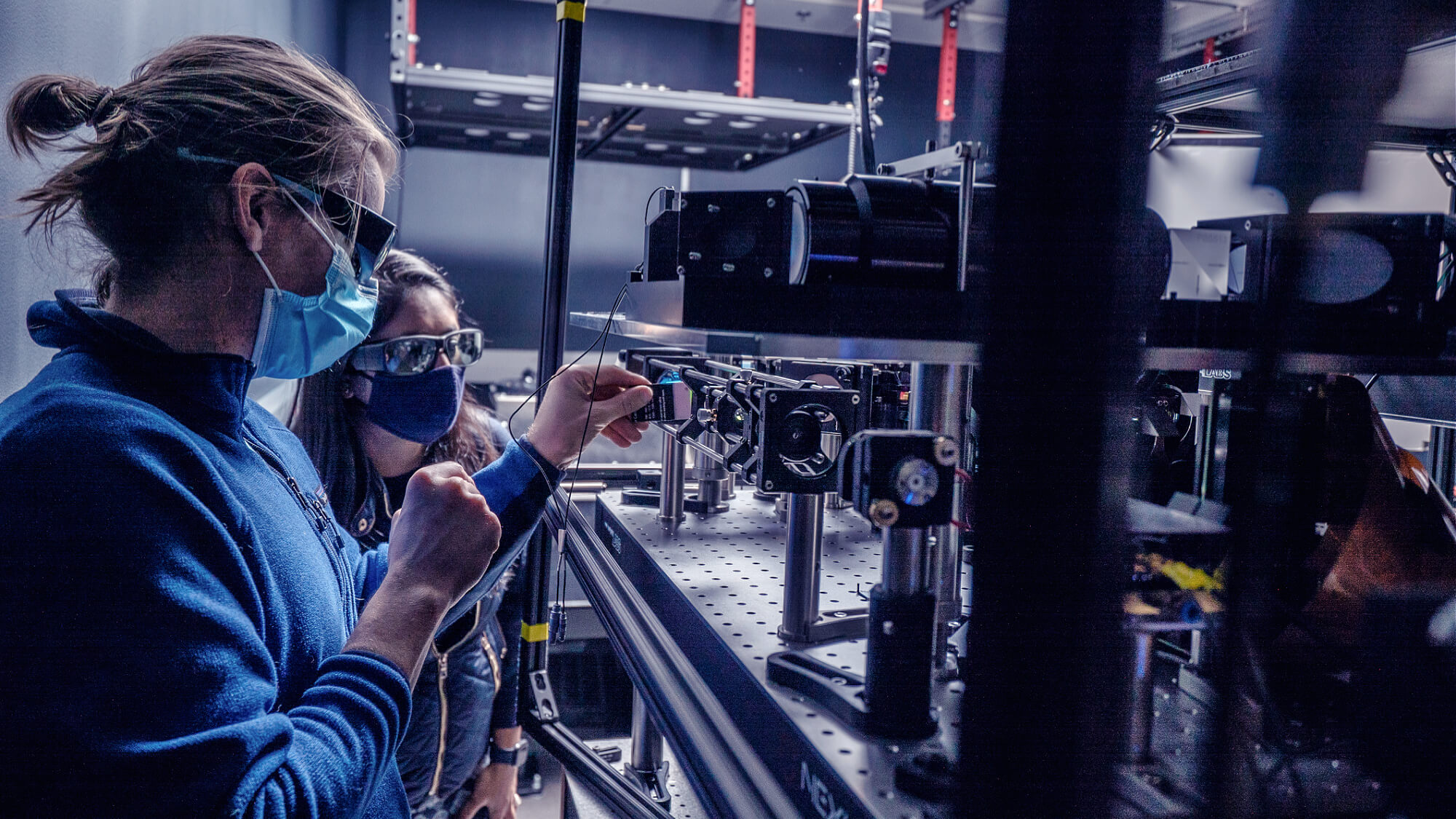
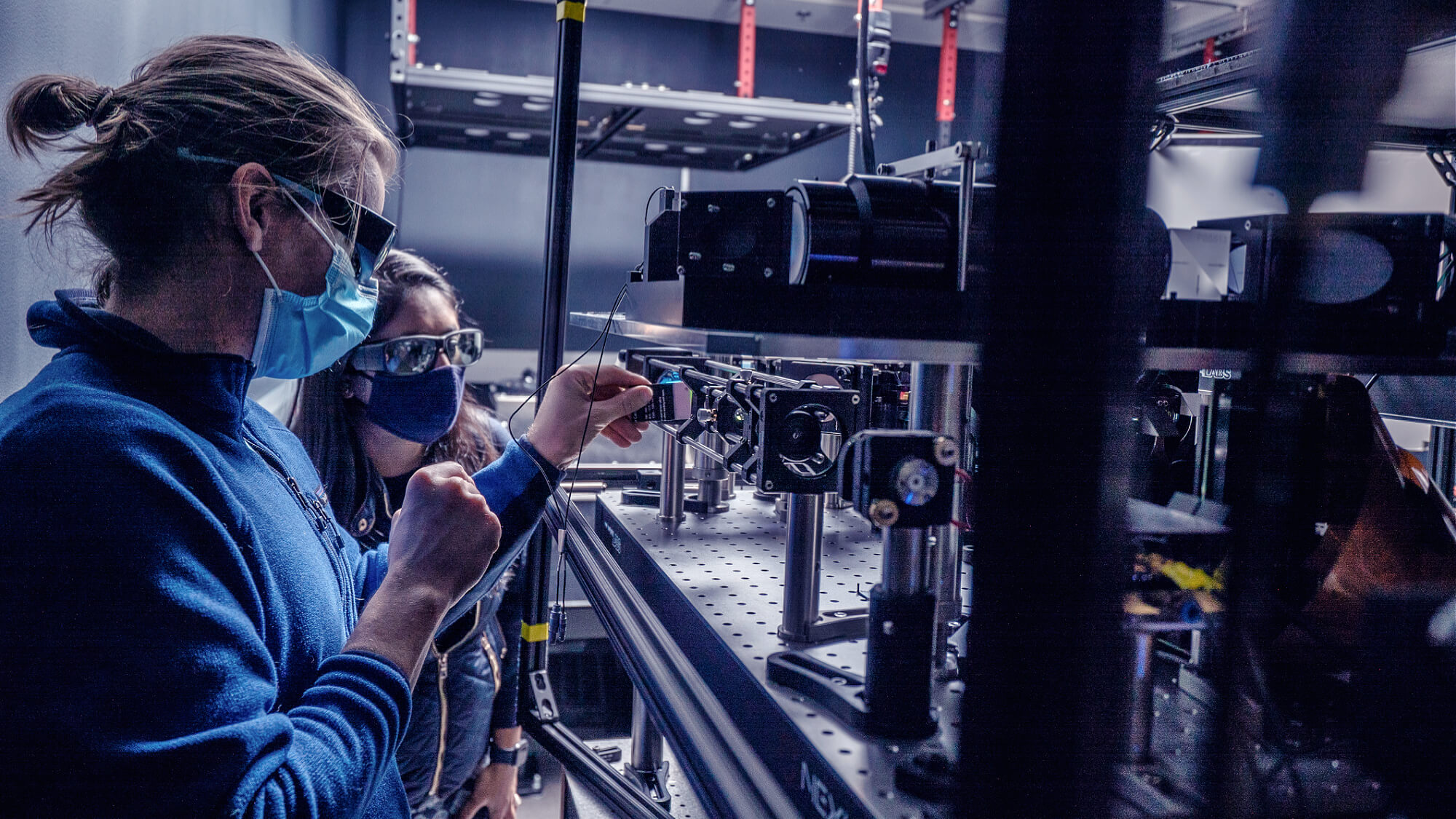
In their work to understand neural circuitry, the Allen Institute for Neural Dynamics will incorporate foundational findings from the Allen Institute for Brain Science that enumerate and categorize the mammalian brain’s “parts list,” the types of neurons and other cells that make up the brain. The Neural Dynamics team will also focus heavily on technology development to enable exploration of circuits at the scale of the entire brain and at the depth of individual types of neurons, in addition to relying on existing technologies such as Neuropixels, high-resolution silicon probes that read out activity from hundreds of neurons at once.
These existing and to-be-developed technologies will allow the researchers to follow conversations among specific cell types in several brain areas and then test ideas that emerge about how those neuron types communicate by perturbing specific neurons’ activity. The division will also employ computational modeling to bring together data and theories about neural dynamics, circuitry and behavior.
“While our knowledge of individual neurons and their widespread connections in the brain has increased enormously in the past decade — in large part due to research from the Allen Institute — we still do not understand how neurons in multiple brain areas work together to produce interesting behavior. This is a very challenging problem that needs to be pursued at a scale and with a level of long-term support not possible in most academic laboratories, making it the perfect project for the Allen Institute to tackle,” said neuroscientist Michael Stryker, Ph.D., who is the William Francis Ganong Professor in the Department of Physiology at the University of California, San Francisco, and a member of the Allen Institute’s Board of Directors and Scientific Advisory Board. “We have every reason to believe that the dynamics of activity in the small brain of the mouse will enlighten us about the operation of our own brains and the similar dynamics that would emerge among the corresponding types of cells in the human brain.”
About the Allen Institute for Neural Dynamics
Launched in 2021, the Allen Institute for Neural Dynamics is a division of the Allen Institute (alleninstitute.org), an independent, 501(c)(3) nonprofit medical research organization founded by Paul G. Allen in 2003. The Allen Institute for Neural Dynamics is dedicated to answering fundamental questions about brain dynamics at the level of individual neurons, and the whole brain, to reveal how we interpret our environments to make decisions. Knowledge, data, and tools created by the Institute will be publicly shared to advance the field’s understanding of brain function and support the development of therapies for brain diseases and disorders.
Citations
about the allen institute
The Allen Institute is an independent, 501(c)(3) nonprofit research organization founded by philanthropist and visionary, the late Paul G. Allen. The Allen Institute is dedicated to answering some of the biggest questions in bioscience and accelerating research worldwide. The Institute is a recognized leader in large-scale research with a commitment to an open science model. For more information, visit alleninstitute.org.




