impact
about
our story
explore our impact
careers and opportunities
join us
open science
sharing science to speed discovery
open science week
celebrating open science
team science
people & teams
discovery is a team effort
allenites
the people who make our work possible
advisors
their input shapes our science
board of directors
they help us fulfill our mission
shanahan foundation fellowship
at the interface of data and neuroscience
next generation leaders
fostering emerging leaders in bioscience
research
overview
our approach
science at the scale of greatest impact
publications
explore our publications
open science
sharing science to speed discovery
science accelerators
brain science
building a blueprint of the brain
cell science
understanding how cells become organs
neural dynamics
revealing the brain’s hidden algorithms
immunology
creating the ultimate immune system reference
synthetic biology
seattle hub for synthetic biology
education
overview
science education
science is for everyone
open science
sharing science speeds discovery
engagement
education resources
real science. real skills.
field trips
experience science where it happens
educator development
empowering educators
news
overview
all news
explore the latest news
podcast
the human stories behind discovery
sign up for our newsletter
stay connected to our science
events
overview
all events
public engagement, workshops, seminars and more
conferences
connect with us
science resources
science resources
allencell.org
allenimmunology.org
allenneuraldynamics.org
brain-bican.org
brain-map.org
microns-explorer.org
impact
back to menu
team science
our story
explore our impact
careers and opportunities
join us
open science
sharing science to speed discovery
open science week
celebrating open science
team science
people & teams
discovery is a team effort
allenites
the people who make our work possible
advisors
their input shapes our science
board of directors
they help us fulfill our mission
shanahan foundation fellowship
at the interface of data and neuroscience
next generation leaders
fostering emerging leaders in bioscience
research
back to menu
overview
our approach
science at the scale of greatest impact
publications
explore our publications
open science
sharing science to speed discovery
science accelerators
brain science
building a blueprint of the brain
cell science
understanding how cells become organs
neural dynamics
revealing the brain’s hidden algorithms
immunology
creating the ultimate immune system reference
synthetic biology
seattle hub for synthetic biology
education
back to menu
overview
science education
science is for everyone
open science
sharing science speeds discovery
engagement
education resources
real science. real skills.
field trips
experience science where it happens
educator development
empowering educators
news
back to menu
overview
all news
explore the latest news
podcast
the human stories behind discovery
newsletter
stay connected to our science
events
back to menu
overview
all events
public engagement, workshops, seminars and more
conferences
connect with us
science resources
back to menu
science resources
allencell.org
allenimmunology.org
allenneuraldynamics.org
brain-bican.org
brain-map.org
microns-explorer.org
search
news

Competition yields new approaches to trace development, cell by cell

The Allen Institute and Sage Bionetworks announced winners of the Allen Institute Cell Lineage Reconstruction DREAM Challenge

March 4, 2020
 min read
share/
The Allen Institute and Sage Bionetworks announced winners of the Allen Institute Cell Lineage Reconstruction DREAM Challenge
Thank you! Your submission has been received!
Oops! Something went wrong while submitting the form.

in this article

table of contents will display on published page only
set h2 to populate the table of contents here
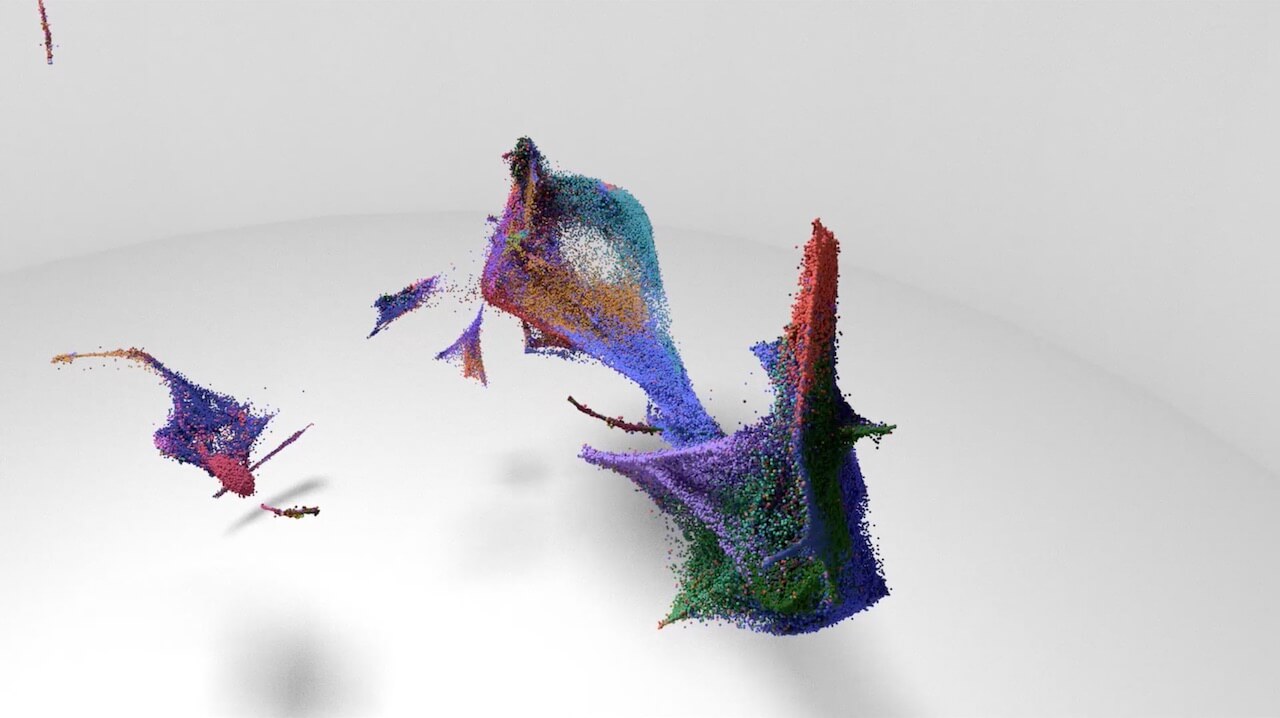
Colorful 3D point cloud visualization of geographic map with red, blue, purple, and green particles
Data visualization shows a 3D abstraction of single cells from the early development of the mouse central nervous system. These data are from a new 2 million-cell experiment tracing early mammalian growth at the single-cell level. Image courtesy of Cole Trapnell, Ph.D.

The Allen Institute and Sage Bionetworks today revealed the winning teams of the Allen Institute Cell Lineage Reconstruction DREAM Challenge, an open science competition for computational approaches to building accurate cell lineages in developmental biology.

“The field of cell lineage tracing needs innovative, specialized methods to analyze and understand these new types of experimental data,” said Kathryn Richmond, Ph.D., Director of The Paul G. Allen Frontiers Group, a division of the Allen Institute that supported the challenge. “We are thrilled that the computational biology community rallied around this challenge, and we can’t wait to see the insights in developmental biology that will result from their efforts.”

The experiments used in cell lineage tracing rely on molecular barcodes to reveal a developing creature’s cellular pedigree. These techniques are relatively new, and, to date, researchers have primarily used computational methods borrowed from the field of evolutionary biology to piece together the developmental lineages. In a broad sense, both fields reconstruct “family trees,” but there are enough differences that the scientists who head up the Allen Discovery Center at UW Medicine, Jay Shendure, M.D., Ph.D., and Michael Elowitz, Ph.D., felt that dedicated algorithms for cell lineage tracing could improve research in the field.

“I am happy to see that participants to the challenge adapted approaches from evolutionary biology to the specific problems posed by cell lineage tracing. Some participants also tried outside-the-box solutions,” said Pablo Meyer, Ph.D., a computational biologist at IBM and a director of the DREAM Challenges. “One of the main outcomes of this challenge is showing that algorithms built using data from a smaller set of trees can be implemented to effectively reconstruct a much larger and different type of tree.”

The Allen Institute DREAM Challenge ran from October 15, 2019, to January 31, 2020. Eleven international teams competed in the open science competition, which included three subchallenges that asked participants to reconstruct cell lineages from datasets of different sizes and types. DREAM challenges are open science competitions to develop computational solutions to biomedical research problems, on topics ranging from preterm birth to Parkinson’s disease to basic molecular biology. Sage Bionetworks provided the expertise and infrastructure to host this DREAM Challenge on their Synapse platform.

Challenge winners
Three teams tied for Subchallenge 1, which asked teams to reconstruct a small cell lineage tree of less than 100 cells based in part on video microscopy data:

  • Jingyuan Hu and Zhandong Liu, Ph.D., both of Baylor College of Medicine.
  • Hanrui Zhang and Yuanfang Guan, Ph.D., both of the University of Michigan.
  • Matthew G. Jones of the University of California, Berkeley, and UC San Francisco and Alex Khodaverdian, Richard Zhang, Suhas Rao, Robert Wang and Nir Yosef, Ph.D., of the University of California, Berkeley.

One team won both Subchallenges 2 and 3, which comprised computer-generated mutations for a thousand-cell lineage tree of the microscopic worm, C. elegans, and a computer-generated tree of 10,000 cells, respectively:

  • Wuming Gong, Ph.D., of Lillehei Heart Institute, University of Minnesota, and Il-Youp Kwak, Ph.D., of Chung-Ang University.

For more about the challenge, see our Q&A with Shendure, Elowitz and Meyer.

About The Paul G. Allen Frontiers Group

The Paul G. Allen Frontiers Group, a division of the Allen Institute, is dedicated to exploring the landscape of bioscience to identify and foster ideas that will change the world. The Frontiers Group directs funding through award mechanisms to accelerate our understanding of biology, including: Allen Discovery Centers at partner institutions for leadership-driven, compass-guided research, and Allen Distinguished Investigators for frontier explorations with exceptional creativity and potential impact. The Paul G. Allen Frontiers Group was founded in 2016 by the late philanthropist and visionary Paul G. Allen. For more information, visit allenfrontiersgroup.org.

About Sage Bionetworks

Sage Bionetworks is a nonprofit biomedical research and technology development organization that was founded in Seattle in 2009. Our focus is to develop and apply open practices to data-driven research for the advancement of human health. Our interdisciplinary team of scientists and engineers work together to provide researchers access to technology tools and scientific approaches to share data, benchmark methods, and explore collective insights, all backed by Sage’s gold-standard governance protocols and commitment to user-centered design. Sage is a 501c3 and is supported through a portfolio of competitive research grants, commercial partnerships, and philanthropic contributions. Learn more at sagebionetworks.org.

About DREAM Challenges

DREAM (Dialogue on Reverse Engineering and Assessment Methods) Challenges emerged in 2006 to leverage the wisdom of the multidisciplinary scientific community to solve fundamental and difficult questions in biomedical research. DREAM’s methodology is based on crowd-sourcing scientific Challenges, fostering open and collaborative research, and promoting data sharing. In 2013, DREAM partnered with Sage Bionetworks, which developed and administers the technology platform that underpins DREAM Challenges. Learn more at dreamchallenges.org.

Citations
No items found.

about the allen institute

The Allen Institute is an independent, 501(c)(3) nonprofit research organization founded by philanthropist and visionary, the late Paul G. Allen. The Allen Institute is dedicated to answering some of the biggest questions in bioscience and accelerating research worldwide. The Institute is a recognized leader in large-scale research with a commitment to an open science model. For more information, visit alleninstitute.org.
related news

all news
No articles for the category
we acceleratedevelopcatalyzeimpact

science done differently. shared with the world.

explore our accelerators

brain science

Mapping every cell, connection, and circuit in the brain—openly shared with the world.

cell science

Decoding how cells become tissues, then programming that knowledge into powerful new research tools.

neural dynamics

Revealing the brain's hidden algorithms that transform neural activity into real-world behavior.

immunology

Creating the deepest open reference for the healthy human immune system ever built.

synthetic biology

Engineering cells to record their own histories, transforming how we understand disease over time.

research

Big questions, open answers, and science built to be shared.

education

Inspiring the next generation of scientists through open science resources.

impact

Our science is empowering researchers and advancing health worldwide.
advancing science through open, collaborative research
Get the allen institute newsletter
Stay informed on the latest breakthroughs in neuroscience, bioscience, and AI-driven research.
allen institute
impactpeople & teamscareers & opportunitiesalumnihistory & founder
science resources
allencell.orgallenimmunology.orgallenneuraldynamics.orgbrain-bican.orgbrain-map.orgmicrons-explorer.org
research
brain sciencecell scienceneural dynamicsimmunologysynthetic biologypublications
education
science educationfield tripsprofessional developmenteducation resources
quick links
newseventsopen sciencepodcastscience resourceshuman brain donationvisit uscontact
follow us/

allen institute, 615 Westlake Ave North, Seattle, WA 98109 +12065487055

© 0000 allen institute. all rights reserved.
privacy policyterms of usecitation policyemployee portalpolicy & compliance