impact
about
our story
explore our impact
careers and opportunities
join us
open science
sharing science to speed discovery
open science week
celebrating open science
team science
people & teams
discovery is a team effort
allenites
the people who make our work possible
advisors
their input shapes our science
board of directors
they help us fulfill our mission
shanahan foundation fellowship
at the interface of data and neuroscience
next generation leaders
fostering emerging leaders in bioscience
research
overview
our approach
science at the scale of greatest impact
publications
explore our publications
open science
sharing science to speed discovery
science accelerators
brain science
building a blueprint of the brain
cell science
understanding how cells become organs
neural dynamics
revealing the brain’s hidden algorithms
immunology
creating the ultimate immune system reference
synthetic biology
seattle hub for synthetic biology
education
overview
science education
science is for everyone
open science
sharing science speeds discovery
engagement
education resources
real science. real skills.
field trips
experience science where it happens
educator development
empowering educators
news
overview
all news
explore the latest news
podcast
the human stories behind discovery
sign up for our newsletter
stay connected to our science
events
overview
all events
public engagement, workshops, seminars and more
conferences
connect with us
science resources
science resources
allencell.org
allenimmunology.org
allenneuraldynamics.org
brain-bican.org
brain-map.org
microns-explorer.org
impact
back to menu
team science
our story
explore our impact
careers and opportunities
join us
open science
sharing science to speed discovery
open science week
celebrating open science
team science
people & teams
discovery is a team effort
allenites
the people who make our work possible
advisors
their input shapes our science
board of directors
they help us fulfill our mission
shanahan foundation fellowship
at the interface of data and neuroscience
next generation leaders
fostering emerging leaders in bioscience
research
back to menu
overview
our approach
science at the scale of greatest impact
publications
explore our publications
open science
sharing science to speed discovery
science accelerators
brain science
building a blueprint of the brain
cell science
understanding how cells become organs
neural dynamics
revealing the brain’s hidden algorithms
immunology
creating the ultimate immune system reference
synthetic biology
seattle hub for synthetic biology
education
back to menu
overview
science education
science is for everyone
open science
sharing science speeds discovery
engagement
education resources
real science. real skills.
field trips
experience science where it happens
educator development
empowering educators
news
back to menu
overview
all news
explore the latest news
podcast
the human stories behind discovery
newsletter
stay connected to our science
events
back to menu
overview
all events
public engagement, workshops, seminars and more
conferences
connect with us
science resources
back to menu
science resources
allencell.org
allenimmunology.org
allenneuraldynamics.org
brain-bican.org
brain-map.org
microns-explorer.org
search
news

Cracking the code of developmental biology

Jay Shendure had the notion to put genetic barcodes on cells to track their development when he was just a young graduate student. Problem was, the...

March 23, 2017
 min read
share/
Jay Shendure had the notion to put genetic barcodes on cells to track their development when he was just a young graduate student. Problem was, the technology to put that idea into action would not be developed for another decade.
Thank you! Your submission has been received!
Oops! Something went wrong while submitting the form.

in this article

table of contents will display on published page only
set h2 to populate the table of contents here

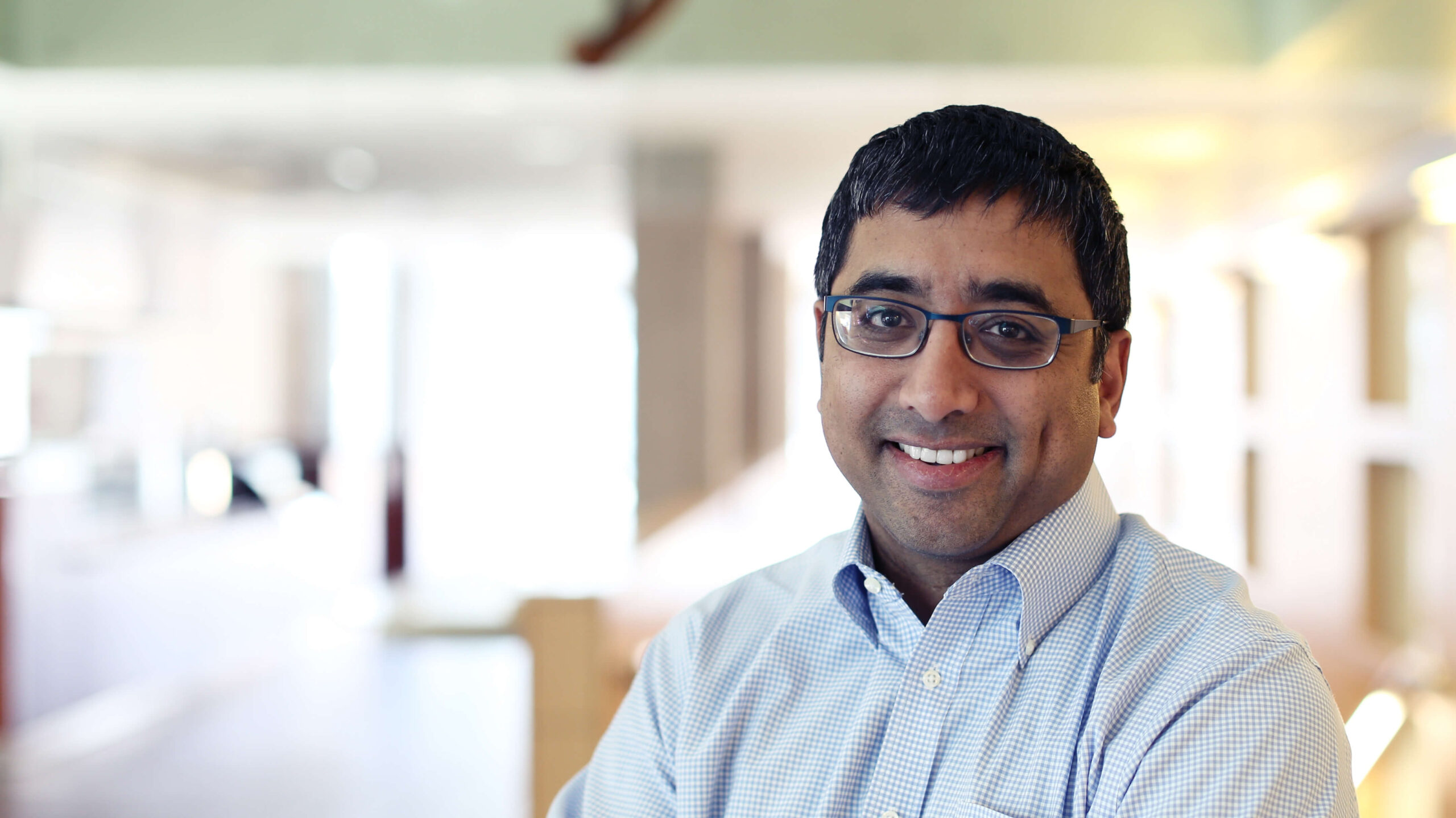
Jay Shendure had the notion to put genetic barcodes on cells to track their development when he was just a young graduate student. Problem was, the technology to put that idea into action would not be developed for another decade. “At the time, I was encouraged to pick a different project that I could actually complete in a reasonable amount of time for my degree,” he says. “But the idea of taking that kind of global view and getting a comprehensive picture of what’s happening during development stayed in the back of my mind for years.”

The idea of lineage tracing—or recording how a single cell gives rise to complex organisms with thousands, millions or trillions of cells—dates back to the 1870s. But even as technologies graduated from dyes to more sophisticated techniques, researchers struggled to trace not only the lineage of cells, but how mature cells related to one another.

“Every one of us started out as a single cell that divided many times, ultimately giving rise to the highly organized mass of 40 trillion cells that is an adult human,” says Shendure. “That history, those relationships between the cells, is effectively an organism’s family tree. Understanding how that tree came to be is fundamental to developmental biology.”

Creating a lineage barcode

With the advent of CRISPR gene editing technology and next generation sequencing, the idea that had been nagging at Shendure for years finally seemed possible to implement. Working in zebrafish and together with his collaborator Alexander Schier at Harvard University, his team inserted a “barcode” sequence of DNA into the genome of a fertilized zygote, and then also injected the Cas9 protein and guide RNAs that would allow the cell to generate unique mutations with every cell division. Having set the machine in motion, they stepped back and observed as the barcode they inserted into just one cell became more and more differentiated with each new generation of daughter cells.

When it came time to analyze the results, Shendure’s team used the patterns in the mature cells’ barcodes to trace back the origins of each cell. “If we see a change in the barcode that’s consistent across many of the cells, we can assume that the mutation took place earlier in the organism’s development, while rarer mutations probably happened later,” he explains. “We can use that information to learn not just about the progenitors of any given cell, but about the relationships between mature cells.”

Aside from its precision, part of the excitement around the technology—called GESTALT—is that it enables researchers to record development in the organism as it is actually happened. “Part of the reason there is so much uncertainty in the field of developmental biology is that we do so many experiments in a dish, which isn’t necessarily a perfect reflection of what really happens in the real biological context,” says Shendure. “This technology makes it possible to record the development of model organisms in vivo.”

Understanding development

Shendure sees the reconstruction of cell lineage histories not just as a means to an end, but as a valuable end in itself. To truly understand any organism, he says, we need to know what its cell lineage tree looks like, and we can then use that knowledge as a starting point for uncovering the molecular decisions that shape the tree’s creation.

“This generation of technologies that we’re developing will enable us to gain the same kind of global view on development that the Human Genome Project provided for our genes,” he says. “It won’t be an easy thing to bring this technology from where it is now to its fullest potential, but it has immense potential to crack open unanswered questions in developmental biology. Understanding cell lineage may unravel long-standing questions in human disease, such as how cancers originate and evolve, and how we recover brain function after strokes or traumatic injuries. The potential impact on human health is vast if this code can be unlocked.”

Citations
No items found.

about the allen institute

The Allen Institute is an independent, 501(c)(3) nonprofit research organization founded by philanthropist and visionary, the late Paul G. Allen. The Allen Institute is dedicated to answering some of the biggest questions in bioscience and accelerating research worldwide. The Institute is a recognized leader in large-scale research with a commitment to an open science model. For more information, visit alleninstitute.org.
related news

all news
No articles for the category
we acceleratedevelopcatalyzeimpact

science done differently. shared with the world.

explore our accelerators

brain science

Mapping every cell, connection, and circuit in the brain—openly shared with the world.

cell science

Decoding how cells become tissues, then programming that knowledge into powerful new research tools.

neural dynamics

Revealing the brain's hidden algorithms that transform neural activity into real-world behavior.

immunology

Creating the deepest open reference for the healthy human immune system ever built.

synthetic biology

Engineering cells to record their own histories, transforming how we understand disease over time.

research

Big questions, open answers, and science built to be shared.

education

Inspiring the next generation of scientists through open science resources.

impact

Our science is empowering researchers and advancing health worldwide.
advancing science through open, collaborative research
Get the allen institute newsletter
Stay informed on the latest breakthroughs in neuroscience, bioscience, and AI-driven research.
allen institute
impactpeople & teamscareers & opportunitiesalumnihistory & founder
science resources
allencell.orgallenimmunology.orgallenneuraldynamics.orgbrain-bican.orgbrain-map.orgmicrons-explorer.org
research
brain sciencecell scienceneural dynamicsimmunologysynthetic biologypublications
education
science educationfield tripsprofessional developmenteducation resources
quick links
newseventsopen sciencepodcastscience resourceshuman brain donationvisit uscontact
follow us/

allen institute, 615 Westlake Ave North, Seattle, WA 98109 +12065487055

© 0000 allen institute. all rights reserved.
privacy policyterms of usecitation policyemployee portalpolicy & compliance