in this article
Millions of obese and overweight adults in the U.S. struggle — and often fail — to lose weight. Obesity medications exist, but they don’t always work for all patients. Scientists are working to develop better medications and to better understand how current medications work, both to help people lose weight and to understand any side effects of these medications.
For one of these groups of pharmaceutical researchers, resources developed at the Allen Institute are helping lay the groundwork for an improved understanding of how a weight management drug, liraglutide, acts on the mammalian brain.
Liraglutide, which was developed by the Danish pharmaceutical company Novo Nordisk, is a modified version of a hormone naturally produced in the body. The drug was first approved in the U.S. to treat type 2 diabetes and later for chronic weight management, even in people without diabetes.
To treat diabetes, liraglutide works through the pancreas to increase insulin production and decrease the release of another hormone, glucagon. But the molecular details of how it helps people lose weight are less clear.
The Novo Nordisk scientists have been studying these details for years. For researchers whose work directly affects patients’ lives and well-being, understanding how these molecules work in the body — and brain — is vital, said Lotte Bjerre Knudsen, DMSc, inventor of liraglutide and Scientific Corporate Vice President at Novo Nordisk.
“Describing the mechanism of action of obesity drugs is incredibly important,” Knudsen said. “With obesity drugs, there was a huge scare going back many years. People were thinking anything that works in the brain, maybe it could have depression as a side effect. You also have to know what the effects are before you can conceptualize what’s a main effect and what’s a side effect.”
Last year, Knudsen and her colleagues published a study in the journal Scientific Reports describing how liraglutide acts on the mouse brain. An earlier study in rodents had shown how liraglutide enters the brain and acts on the hypothalamus, activating certain regions that could be a common pathway for appetite reduction in the brain. In their follow-up study, they wanted to take a broad, quantitative approach to expand on those earlier findings. To do so, they turned to resources from the Allen Institute, generated nearly 5,000 miles away from Novo Nordisk’s headquarters in Copenhagen and shared publicly online.
The map of the brain
The researchers added a fluorescent tag to liraglutide to trace the molecule’s path in the mouse brain after it was injected into the animal’s blood stream. They used a special microscopy method that allowed them to capture the drug’s location in high resolution, but then they needed to put that data in context — it was as if they’d identified a single road but were missing the rest of the city map.
As neuroscientists, they weren’t working completely blind, said Anna Secher, Ph.D., a researcher at Novo Nordisk and one of the study authors. They were familiar with mouse brain regions, but they wanted to make sure they weren’t missing anything.
“If you want to discover something new, you have to take a step away from all your known comfort zones, because often then you’ll just dive into that part again,” Secher said. “If you take a helicopter view, you’ll discover everything in the map.”
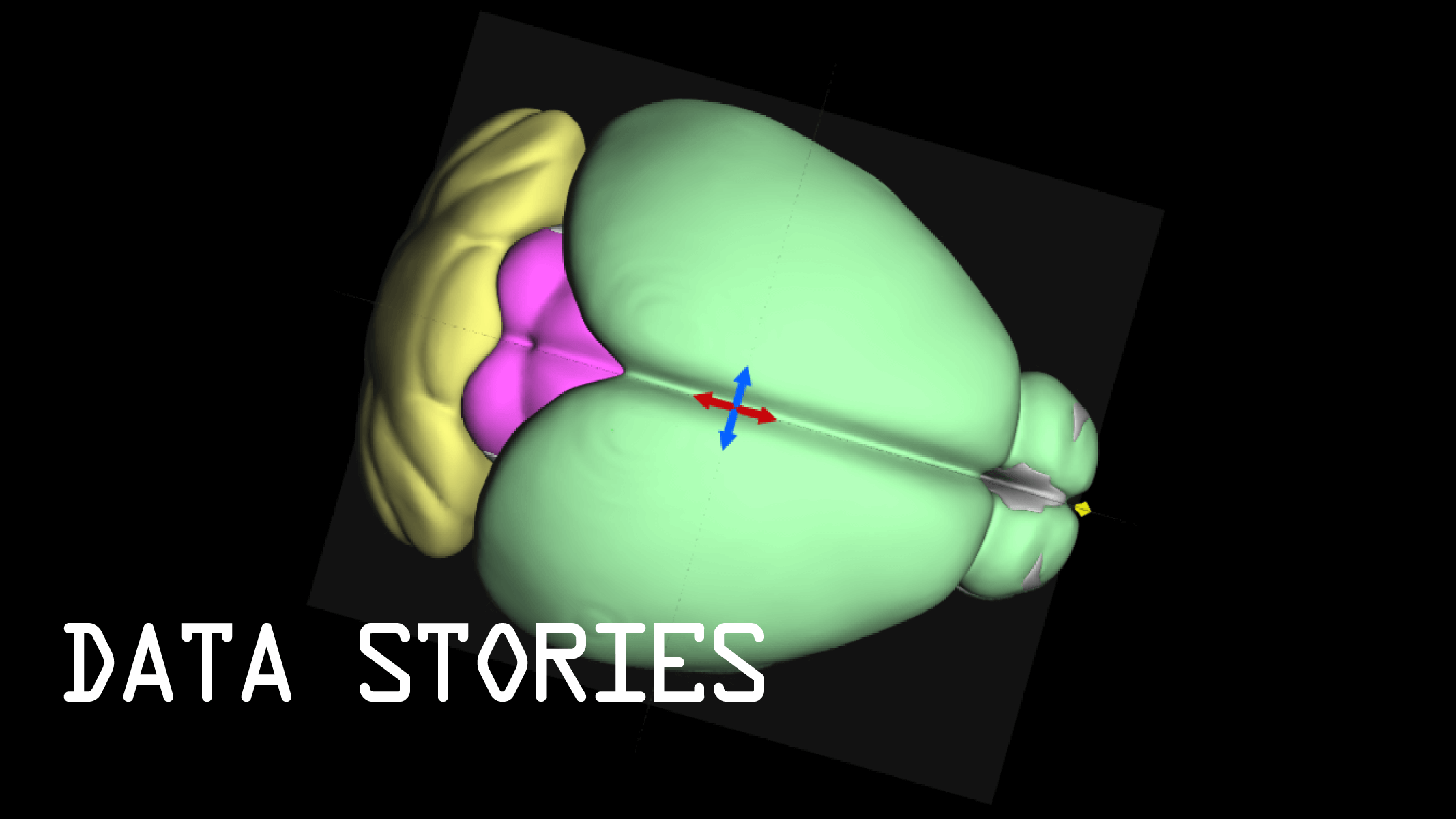
They needed a global view of the brain for comparison, and that’s where Allen Institute resources came in. As part of their suite of publicly available data, tools and other resources, the Allen Institute for Brain Science, a division of the Allen Institute, created a standardized 3D map of the entire mouse brain, known as the Allen Mouse Common Coordinate Framework.
Many types of neuroscience experiments yield flat images, but for some kinds of data — like those the Novo Nordisk team generated — researchers need to place that information in the context of the three-dimensional brain. With the merging of their data with the Common Coordinate Framework, they found that the drug gets into several regions of the mouse brain, including the brainstem and the hypothalamus.
Tracing connections
The research team also used a visual readout of neural activity to find the cells that respond to liraglutide in the mouse. They found activity in several regions of the brain, and then used the Allen Mouse Brain Connectivity Atlas, a global map of neural connections in the mouse brain, to trace the connections between those active neurons.
They found that a part of the brain known as the lateral parabrachial nucleus, which is located between the brainstem and the midbrain, seemed to be the central hub between most of the pathways that are activated when mice are given liraglutide. This pattern of activation is similar to what the researchers have seen for other weight loss compounds, so it might be a general pathway for appetite suppression, Secher said.
The team is also using the platform they created to compare their microscopy images to Allen Institute brain maps to study the activity of other molecules in the brain, including other obesity drugs developed or under development at Novo Nordisk.
It’s not yet clear whether the drug acts the same way in the human brain, and these exact experiments can’t be done on people. Researchers at the Allen Institute have also recently published findings that many brain cell types show fine-level but important differences between the mouse and human cortex, the outermost shell of the brain. The Novo Nordisk team has also seen that the protein that responds to liraglutide, known as the GLP-1 receptor, is switched on in similar regions of the monkey brain as in the mouse brain.
It’s possible the team would have been able to reach some of these conclusions without the Allen Institute resources, said Casper Salinas, Ph.D., one of the study authors who carried out his doctoral work at Novo Nordisk and is now a scientist at Gubra, a Danish biotech company. But their scope would have been much more limited, and it would have been a lot more work.
“It’s one thing if we start with what’s already known, but when you want to broaden this approach to look at other molecules or other indications of disease, then this unbiased data mining becomes really important,” Salinas said. “You could call this a new way of doing science, where you collect large amounts of data and through data mining you generate a hypothesis that you can test. And you could not do that without places like the Allen Institute.”
The Allen Institute was not involved in the research or development of liraglutide and is not affiliated with Novo Nordisk. This story is meant to highlight how Allen Institute resources are used in the community and is not meant to endorse individual research efforts or medications.
Citations
about the allen institute
The Allen Institute is an independent, 501(c)(3) nonprofit research organization founded by philanthropist and visionary, the late Paul G. Allen. The Allen Institute is dedicated to answering some of the biggest questions in bioscience and accelerating research worldwide. The Institute is a recognized leader in large-scale research with a commitment to an open science model. For more information, visit alleninstitute.org.




