in this article
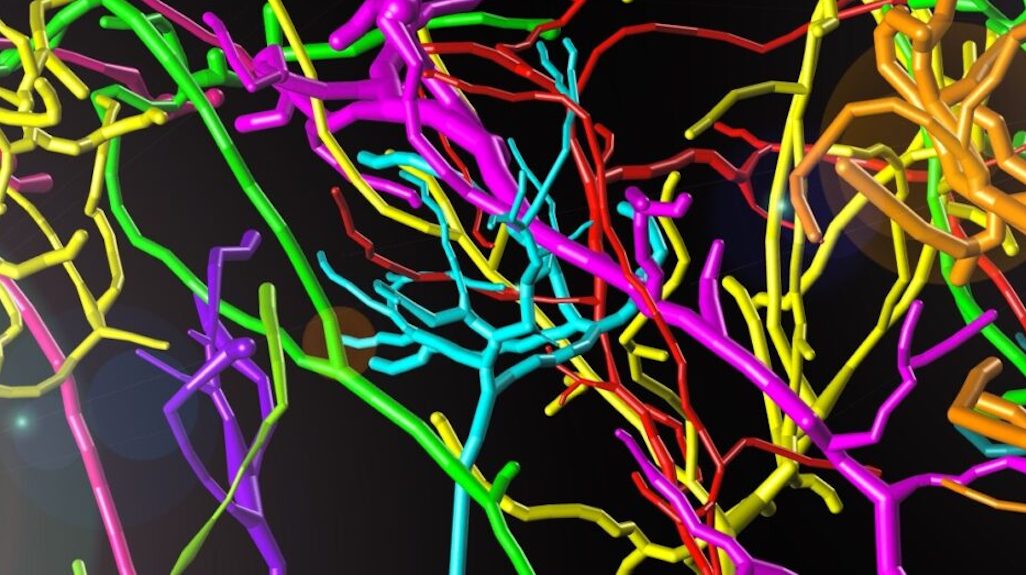
The Allen Institute for Brain Science is spearheading a landmark international effort to define and advance the state-of-the-art digital reconstruction and analysis of single neurons. The project launching today, called BigNeuron, aims to create reliable high-throughput and quantitative 3D reconstructions of the thousands of branches that make up individual neurons: a crucial step to ultimately understanding how the brain encodes information.
“In our quest to learn how the brain works, one of the fundamental steps is to understand how neurons function, and an individual neuron’s shape is a major contributor to its role in the brain,” says Allan Jones, Ph.D., CEO of the Allen Institute for Brain Science. “There has been much exciting work in the field of digitally reconstructing the shapes of individual neurons, but the community needs standards in order to both make the most of the work we’ve already done and to make sure that the work we do in the future will be of the greatest possible value.”
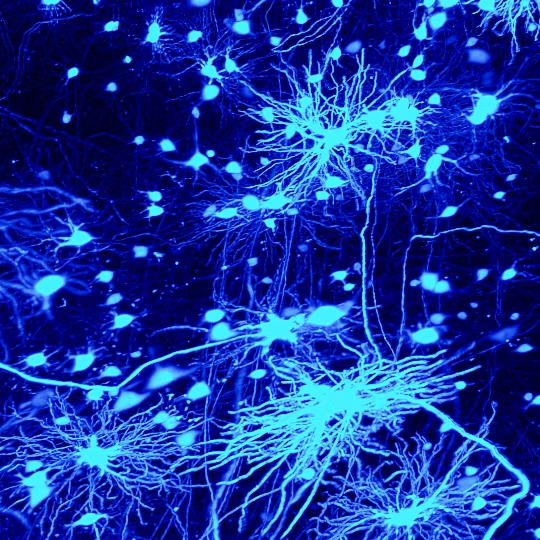
Advances in technology and imaging of individual brain cells have yielded a large library of three-dimensional images of neurons, as well as dozens of different programs to create digital reconstructions of the neurons’ structures. But because no standards exist to compare the algorithms, which are often built on different platforms and use different standards of analysis, these large data sets cannot be analyzed and compared as a whole. BigNeuron is a partnership with some of the leading research and computing centers around the world, including: Janelia Research Campus (HHMI); Oak Ridge National Laboratory; National Energy Research Scientific Computing Center at the Lawrence Berkeley National Laboratory; the Human Brain Project; the University of Cambridge; the Wellcome Trust; NeuroMorpho.org and George Mason University; Beijing University of Technology; the International Neuroinformatics Coordinating Facility (INCF); FlyCircuit.org; and Erasmus University Medical Center.
“This is truly a worldwide collaboration to define the best algorithms and methods, with the goal to create the most reliable and robust neural reconstructions possible,” says Hanchuan Peng, Ph.D., Associate Investigator at the Allen Institute for Brain Science and lead organizer of BigNeuron. “We are ‘bench testing’ many different algorithms, comparing how each of them handles very large scale, publicly available 3D neuron image datasets.”
The results of BigNeuron will include a large set of open-source, community-based tools for neuroscience studies, standardized protocols for researchers to create their own neuron morphologies, and a rich library of morphological feature definitions and algorithms to provide a foundation of quality metrics and classification organized in an openly available database of single neuron morphology data. “Each of the nearly 100 billion neurons in a human brain is shaped like a miniaturized tree, with thousands of ultra-thin branches that can span from ear to ear, enabling neurons to connect, process information, and learn,” says Giorgio Ascoli, Ph.D., Principal Investigator of NeuroMorpho.Org, Director of the Center for Neural Informatics at George Mason University, and author of Trees of the Brain Roots of the Mind.
“These arbors are so diverse that, after three decades of manual reconstructions from microscopic imaging in countless labs worldwide, no one knows yet the number of distinct types or shapes even in the nervous systems of mice or flies. BigNeuron’s success will provide the community with much needed reliable, repeatable, high-throughput, quantitative data to begin piecing together the complex neural puzzle.”
BigNeuron will encompass a series of international hackathons and workshops, the first of which took place in Beijing, China on March 16-20, 2015. Future workshops are scheduled in Cambridge, UK, at Janelia Research Campus (HHMI), and in Boston and Seattle. Algorithms and data for bench testing are being collected from labs around the world, using different light microscopy techniques in many different species, and supercomputing analysis will be conducted and validated at Oak Ridge National Laboratory and Lawrence Berkeley National Laboratory, among others.
“As data collection for neuron morphologies becomes automated, high-throughput approaches will generate high-resolution images of thousands, perhaps even millions of neurons,” says Nelson Spruston, Ph.D., Scientific Program Director at the Janelia Research Campus at HHMI. “As these experimental methods accelerate, it is critical that the methods for analyzing the data keep up. BigNeuron is an effort to make that happen.”
The partners of BigNeuron are:
- Allen Institute for Brain Science, Seattle, Wash., USA
- Janelia Research Campus, HHMI, Ashburn, Va., USA
- Oak Ridge National Laboratory, Oak Ridge, Tenn., USA
- National Energy Research Scientific Computing Center at the Lawrence Berkeley National Laboratory, Berkeley, Calif., USA
- Human Brain Project, Europe
- Wellcome Trust, London, UK
- University of Cambridge, Cambridge, UK
- NeuroMorpho.org/George Mason University, Fairfax, Va., USA
- International Neuroinformatics Coordinating Facility (INCF), Stockholm, Sweden
- FlyCircuit.org/National Tsing Hua University, Hsinchu, Taiwan
- Beijing University of Technology, Beijing, China
- Broad Institute, Cambridge, Mass., USA
- Erasmus University Medical Center, Rotterdam, Netherlands
For more information about BigNeuron, visit alleninstitute.org/bigneuron.
About the Howard Hughes Medical Institute
The Howard Hughes Medical Institute plays an influential role in advancing scientific research and education in the United States. Its scientists, located across the country and around the world, have made important discoveries that advance both human health and our fundamental understanding of biology. The Institute also aims to transform science education into a creative, interdisciplinary endeavor that reflects the excitement of real research. For more information, visit www.hhmi.org.
About the Oak Ridge National Laboratory
Oak Ridge National Laboratory is the largest US Department of Energy science and energy laboratory, conducting basic and applied research to deliver transformative solutions to compelling problems in energy and security. Visit www.ornl.gov for more information. UT-Battelle manages ORNL for the DOE’s
Office of Science. The Office of Science is the single largest supporter of basic research in the physical sciences in the United States, and is working to address some of the most pressing challenges of our time. For more information, please visit http://science.energy.gov/.
About NERSC and Berkeley Lab
The National Energy Research Scientific Computing Center (NERSC) is the primary high-performance computing facility for scientific research sponsored by the U.S. Department of Energy’s Office of Science. Located at Lawrence Berkeley National Laboratory, the NERSC Center serves more than 6,000 scientists at national laboratories and universities researching a wide range of problems in combustion, climate modeling, fusion energy, materials science, physics, chemistry, computational biology, and other disciplines. Berkeley Lab is a U.S. Department of Energy national laboratory located in Berkeley, California. It conducts unclassified scientific research and is managed by the University of California for the U.S. DOE Office of Science. Learn more about computing sciences at Berkeley Lab.
About The Wellcome Trust
The Wellcome Trust is a global charitable foundation dedicated to improving health. We support bright minds in science, the humanities and the social sciences, as well as education, public engagement and the application of research to medicine. Our investment portfolio gives us the independence to support such transformative work as the sequencing and understanding of the human genome, research that established front-line drugs for malaria, and Wellcome Collection, our free venue for the incurably curious that explores medicine, life and art.
About George Mason University
The George Mason University Center for Neural Informatics, Structures, and Plasticity (CN3) pursues fundamental breakthroughs in neuroscience by fostering data-driven computational approaches to neuroanatomy, learning, and memory. By bringing together faculty expertise in multiple disciplines, the Center provides opportunities for graduate and postdoctoral cross-training in neuroscience, cognitive science, and engineering. CN3 researchers investigate the relationship between brain structure, activity, and function from the subcellular to the network level, with a specific focus on axonal and dendritic morphology (NeuroMorpho.Org) and the hippocampal formation.
About the International Neuroinformatics Coordinating Facility (INCF)
The International Neuroinformatics Coordinating Facility (INCF) is an international organization launched in 2005, following a proposal from the Global Science Forum of the OECD to establish international coordination and collaborative informatics infrastructure for neuroscience – and currently has 18 member countries across North America, Europe, Australia and Asia. INCF establishes and operates scientific programs to develop standards for neuroscience data sharing, analysis, modeling and simulation while coordinating an informatics infrastructure designed to enable the integration of neuroscience data and knowledge worldwide and catalyze insights into brain function in health and disease.
Citations
about the allen institute
The Allen Institute is an independent, 501(c)(3) nonprofit research organization founded by philanthropist and visionary, the late Paul G. Allen. The Allen Institute is dedicated to answering some of the biggest questions in bioscience and accelerating research worldwide. The Institute is a recognized leader in large-scale research with a commitment to an open science model. For more information, visit alleninstitute.org.