impact
about
our story
explore our impact
careers and opportunities
join us
open science
sharing science to speed discovery
open science week
celebrating open science
team science
people & teams
discovery is a team effort
allenites
the people who make our work possible
advisors
their input shapes our science
board of directors
they help us fulfill our mission
shanahan foundation fellowship
at the interface of data and neuroscience
next generation leaders
fostering emerging leaders in bioscience
research
overview
our approach
science at the scale of greatest impact
publications
explore our publications
open science
sharing science to speed discovery
science accelerators
brain science
building a blueprint of the brain
cell science
understanding how cells become organs
neural dynamics
revealing the brain’s hidden algorithms
immunology
creating the ultimate immune system reference
synthetic biology
seattle hub for synthetic biology
education
overview
science education
science is for everyone
open science
sharing science speeds discovery
engagement
education resources
real science. real skills.
field trips
experience science where it happens
educator development
empowering educators
news
overview
all news
explore the latest news
podcast
the human stories behind discovery
sign up for our newsletter
stay connected to our science
events
overview
all events
public engagement, workshops, seminars and more
conferences
connect with us
science resources
science resources
allencell.org
allenimmunology.org
allenneuraldynamics.org
brain-bican.org
brain-map.org
microns-explorer.org
impact
back to menu
team science
our story
explore our impact
careers and opportunities
join us
open science
sharing science to speed discovery
open science week
celebrating open science
team science
people & teams
discovery is a team effort
allenites
the people who make our work possible
advisors
their input shapes our science
board of directors
they help us fulfill our mission
shanahan foundation fellowship
at the interface of data and neuroscience
next generation leaders
fostering emerging leaders in bioscience
research
back to menu
overview
our approach
science at the scale of greatest impact
publications
explore our publications
open science
sharing science to speed discovery
science accelerators
brain science
building a blueprint of the brain
cell science
understanding how cells become organs
neural dynamics
revealing the brain’s hidden algorithms
immunology
creating the ultimate immune system reference
synthetic biology
seattle hub for synthetic biology
education
back to menu
overview
science education
science is for everyone
open science
sharing science speeds discovery
engagement
education resources
real science. real skills.
field trips
experience science where it happens
educator development
empowering educators
news
back to menu
overview
all news
explore the latest news
podcast
the human stories behind discovery
newsletter
stay connected to our science
events
back to menu
overview
all events
public engagement, workshops, seminars and more
conferences
connect with us
science resources
back to menu
science resources
allencell.org
allenimmunology.org
allenneuraldynamics.org
brain-bican.org
brain-map.org
microns-explorer.org
search
news

Online simulations offer scientists new views inside cells

Simularium Viewer provides interactive visual outputs of computational, biological models

April 4, 2022
 min read
share/
Simularium Viewer provides interactive visual outputs of computational, biological models
Thank you! Your submission has been received!
Oops! Something went wrong while submitting the form.

in this article

table of contents will display on published page only
set h2 to populate the table of contents here
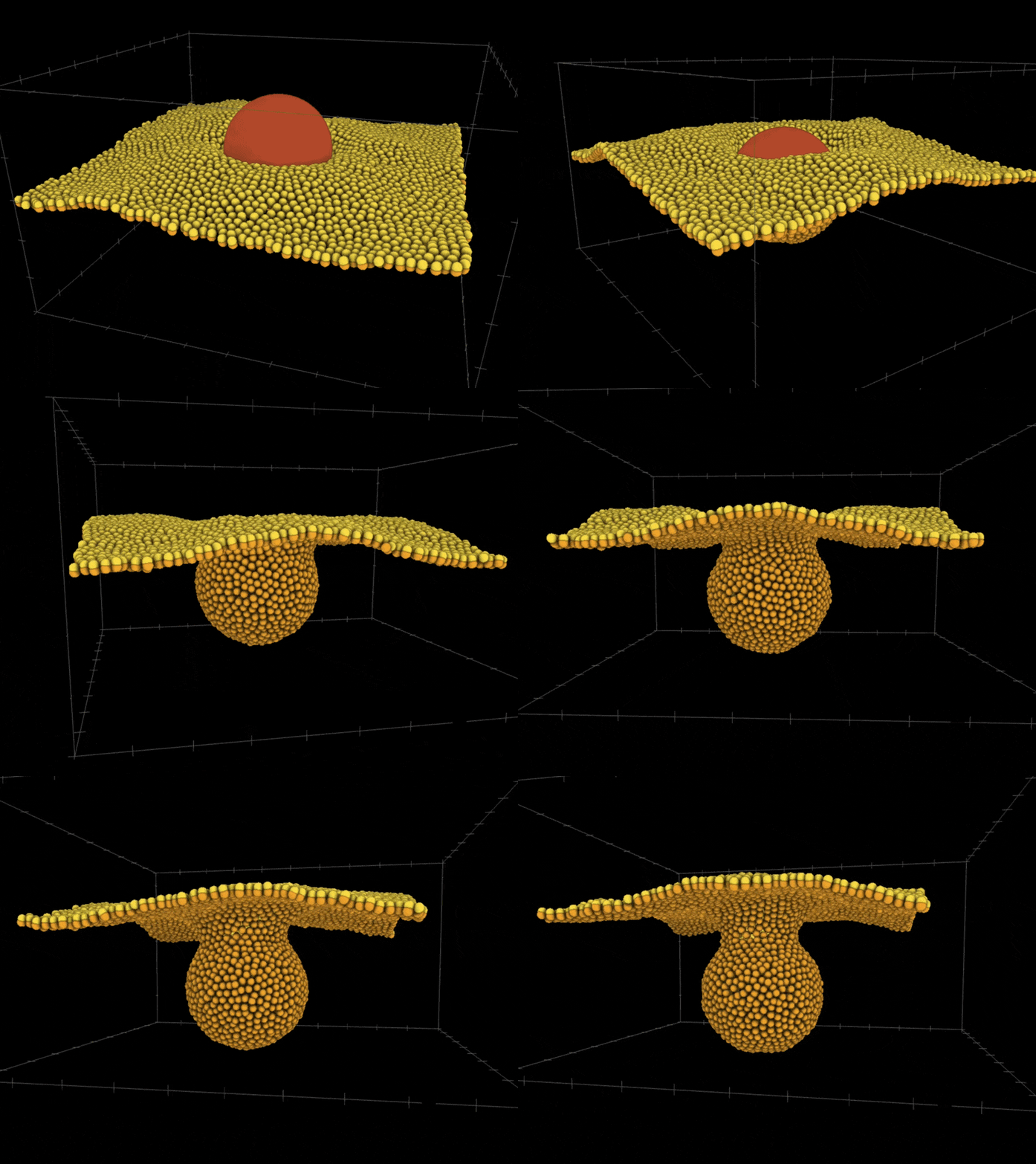
A lipid membrane wraps around a nanoparticle in a visualization tool created by researchers at the Allen Institute for Cell Science. The tool, Simularium Viewer, offers a new way of viewing computational models created by other labs.

By Rachel Tompa, Ph.D. / Allen Institute

Scientists have built a new space for collaboration — at the microscopic level.

The Allen Institute for Cell Science’s Simularium Viewer, described today in a publication in the journal Nature Methods, aims to bring together disparate views of cells and molecules and to enable visualization of computational renderings of living systems.

The viewer is a web-based platform where users can share their own data or computational models to generate visualizations, which can help scientists better interpret their data and more easily share their findings with others.

“The goal is to make it easier for experimental biologists to collaborate with computational biologists who are working on biological simulations,” said Blair Lyons, Simulation Software Design Engineer at the Allen Institute for Cell Science who led the development of Simularium along with Graham Johnson, Ph.D., Senior Director of the Animated Cell team, and Eric Isaac, a former software engineer at the Allen Institute for Cell Science.

Simularium aims to address a number of problems in computational cell biology by allowing users to see the outputs of their computational models, by integrating different models of the same system (for example, to visualize the same cellular structure at different levels of magnification), and by allowing non-experts to use and understand the outputs of computational models.

Computational models — virtual simulations of some real-life process, usually simplified — can be hugely helpful in predicting and better understanding cell biology. But most models are difficult for non-experts to interact with, let alone understand, and because models are usually made for one specific purpose, their output isn’t always comparable to other models.

“A lot of computational biology approaches — just like in any other scientific specialty — can be esoteric, or at least require special skills to use,” Johnson said. “The types of models that Simularium supports can be visualized just a mouse-click away.”

Some computational models might give results in a string of numbers, or lines of code. Simularium translates models of spatial objects into an onscreen 3D visualization and related 2D graphs that aid interpretation. The viewer also allows users to zoom in and out, show or hide parts of the model, and rotate views.
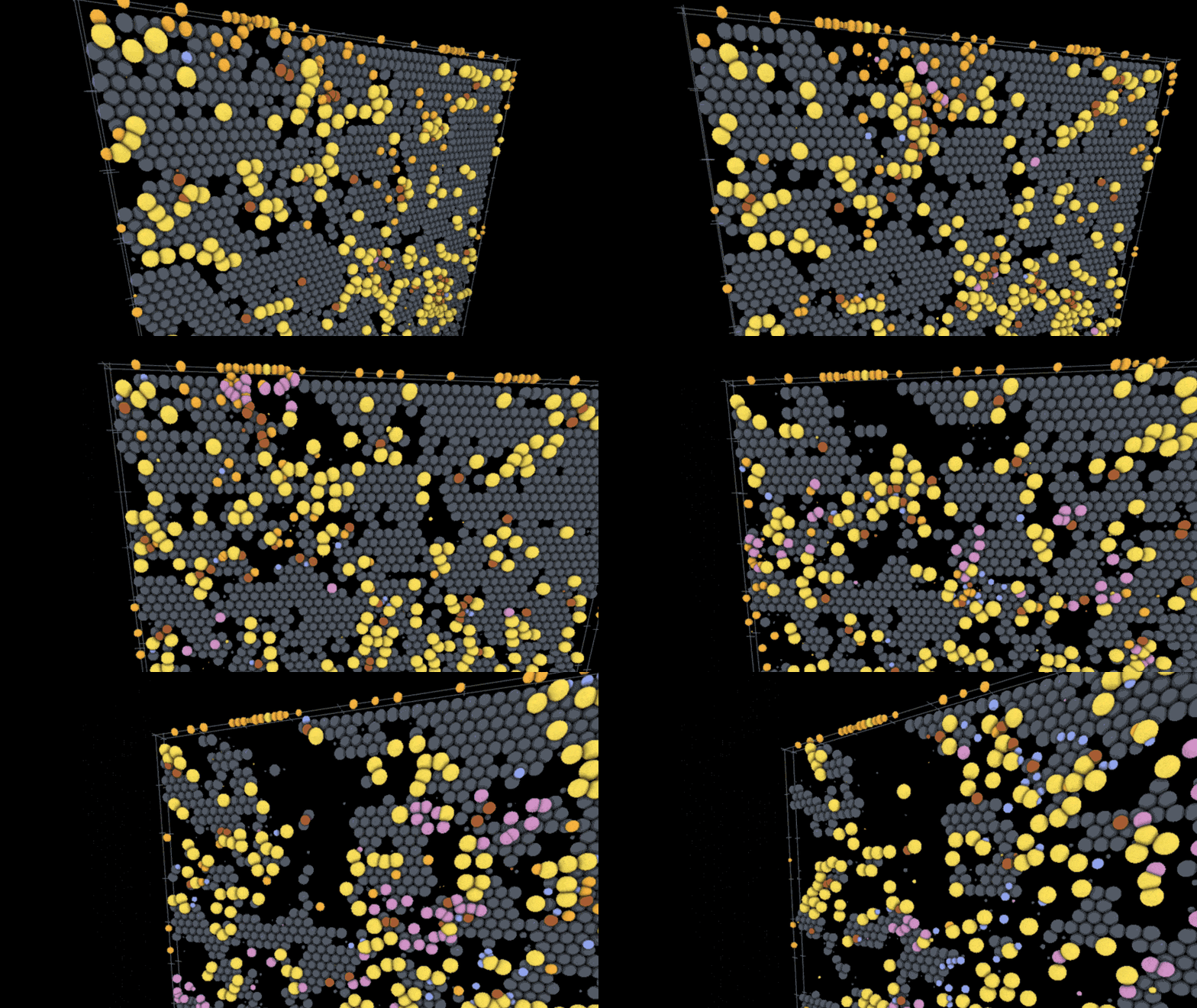
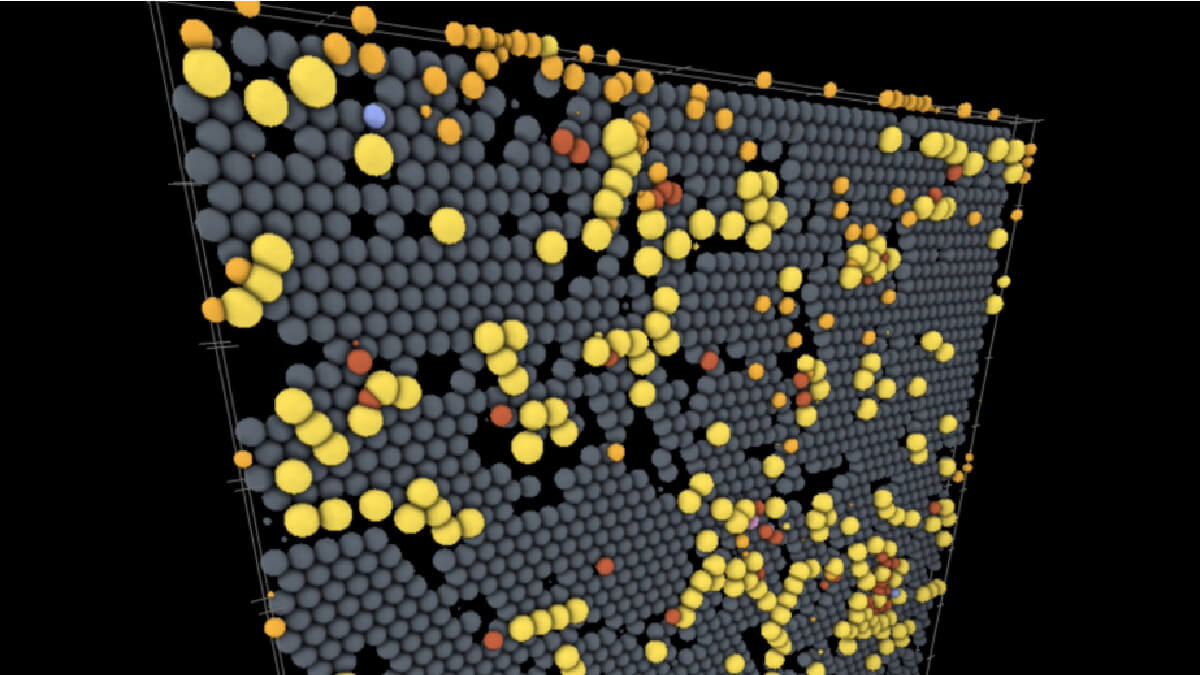
A simulation of SARS-CoV-2 infection on the inner lining of the lung. Gray dots are lung epithelial cells; the other colors are different types of immune cells.

One example visualization on the site models the interactions of SARS-CoV-2 virus particles with different kinds of immune cells on the lining of the lung using models and data from an external team of researchers; users can play through the time course of the model to watch the infection spread while rotating the surface of the tissue and hiding or showing the different cell types involved. Another visualization created by a different lab deals with action at a much smaller scale — a lipid membrane wrapping a nanoparticle.

In addition to being a platform for exploration and collaboration, Simularium’s developers foresee it as complementing how scientific findings are shared with the community.

“Simularium could expand what is available for scientific publishing,” Isaac said. “We hope it will become a way to make interactivity and web-native sharing extremely easy to integrate alongside scientific findings with direct access to the scientific data.”

Citations
No items found.

about the allen institute

The Allen Institute is an independent, 501(c)(3) nonprofit research organization founded by philanthropist and visionary, the late Paul G. Allen. The Allen Institute is dedicated to answering some of the biggest questions in bioscience and accelerating research worldwide. The Institute is a recognized leader in large-scale research with a commitment to an open science model. For more information, visit alleninstitute.org.


related news

all news
No articles for the category
we acceleratedevelopcatalyzeimpact

science done differently. shared with the world.

explore our accelerators

brain science

Mapping every cell, connection, and circuit in the brain—openly shared with the world.

cell science

Decoding how cells become tissues, then programming that knowledge into powerful new research tools.

neural dynamics

Revealing the brain's hidden algorithms that transform neural activity into real-world behavior.

immunology

Creating the deepest open reference for the healthy human immune system ever built.

synthetic biology

Engineering cells to record their own histories, transforming how we understand disease over time.

research

Big questions, open answers, and science built to be shared.

education

Inspiring the next generation of scientists through open science resources.

impact

Our science is empowering researchers and advancing health worldwide.
advancing science through open, collaborative research
Get the allen institute newsletter
Stay informed on the latest breakthroughs in neuroscience, bioscience, and AI-driven research.
allen institute
impactpeople & teamscareers & opportunitiesalumnihistory & founder
science resources
allencell.orgallenimmunology.orgallenneuraldynamics.orgbrain-bican.orgbrain-map.orgmicrons-explorer.org
research
brain sciencecell scienceneural dynamicsimmunologysynthetic biologypublications
education
science educationfield tripsprofessional developmenteducation resources
quick links
newseventsopen sciencepodcastscience resourceshuman brain donationvisit uscontact
follow us/

allen institute, 615 Westlake Ave North, Seattle, WA 98109 +12065487055

© 0000 allen institute. all rights reserved.
privacy policyterms of usecitation policyemployee portalpolicy & compliance


