impact
about
our story
explore our impact
careers and opportunities
join us
open science
sharing science to speed discovery
open science week
celebrating open science
team science
people & teams
discovery is a team effort
allenites
the people who make our work possible
advisors
their input shapes our science
board of directors
they help us fulfill our mission
shanahan foundation fellowship
at the interface of data and neuroscience
next generation leaders
fostering emerging leaders in bioscience
research
overview
our approach
science at the scale of greatest impact
publications
explore our publications
open science
sharing science to speed discovery
science accelerators
brain science
building a blueprint of the brain
cell science
understanding how cells become organs
neural dynamics
revealing the brain’s hidden algorithms
immunology
creating the ultimate immune system reference
synthetic biology
seattle hub for synthetic biology
education
overview
science education
science is for everyone
open science
sharing science speeds discovery
engagement
education resources
real science. real skills.
field trips
experience science where it happens
educator development
empowering educators
news
overview
all news
explore the latest news
podcast
the human stories behind discovery
sign up for our newsletter
stay connected to our science
events
overview
all events
public engagement, workshops, seminars and more
conferences
connect with us
science resources
science resources
allencell.org
allenimmunology.org
allenneuraldynamics.org
brain-bican.org
brain-map.org
microns-explorer.org
impact
back to menu
team science
our story
explore our impact
careers and opportunities
join us
open science
sharing science to speed discovery
open science week
celebrating open science
team science
people & teams
discovery is a team effort
allenites
the people who make our work possible
advisors
their input shapes our science
board of directors
they help us fulfill our mission
shanahan foundation fellowship
at the interface of data and neuroscience
next generation leaders
fostering emerging leaders in bioscience
research
back to menu
overview
our approach
science at the scale of greatest impact
publications
explore our publications
open science
sharing science to speed discovery
science accelerators
brain science
building a blueprint of the brain
cell science
understanding how cells become organs
neural dynamics
revealing the brain’s hidden algorithms
immunology
creating the ultimate immune system reference
synthetic biology
seattle hub for synthetic biology
education
back to menu
overview
science education
science is for everyone
open science
sharing science speeds discovery
engagement
education resources
real science. real skills.
field trips
experience science where it happens
educator development
empowering educators
news
back to menu
overview
all news
explore the latest news
podcast
the human stories behind discovery
newsletter
stay connected to our science
events
back to menu
overview
all events
public engagement, workshops, seminars and more
conferences
connect with us
science resources
back to menu
science resources
allencell.org
allenimmunology.org
allenneuraldynamics.org
brain-bican.org
brain-map.org
microns-explorer.org
search
news

Recipe for human neuron development

Allen Institute published a recipe for how to grow a class of human neurons from stem cells in a dish.

March 15, 2017
 min read
share/
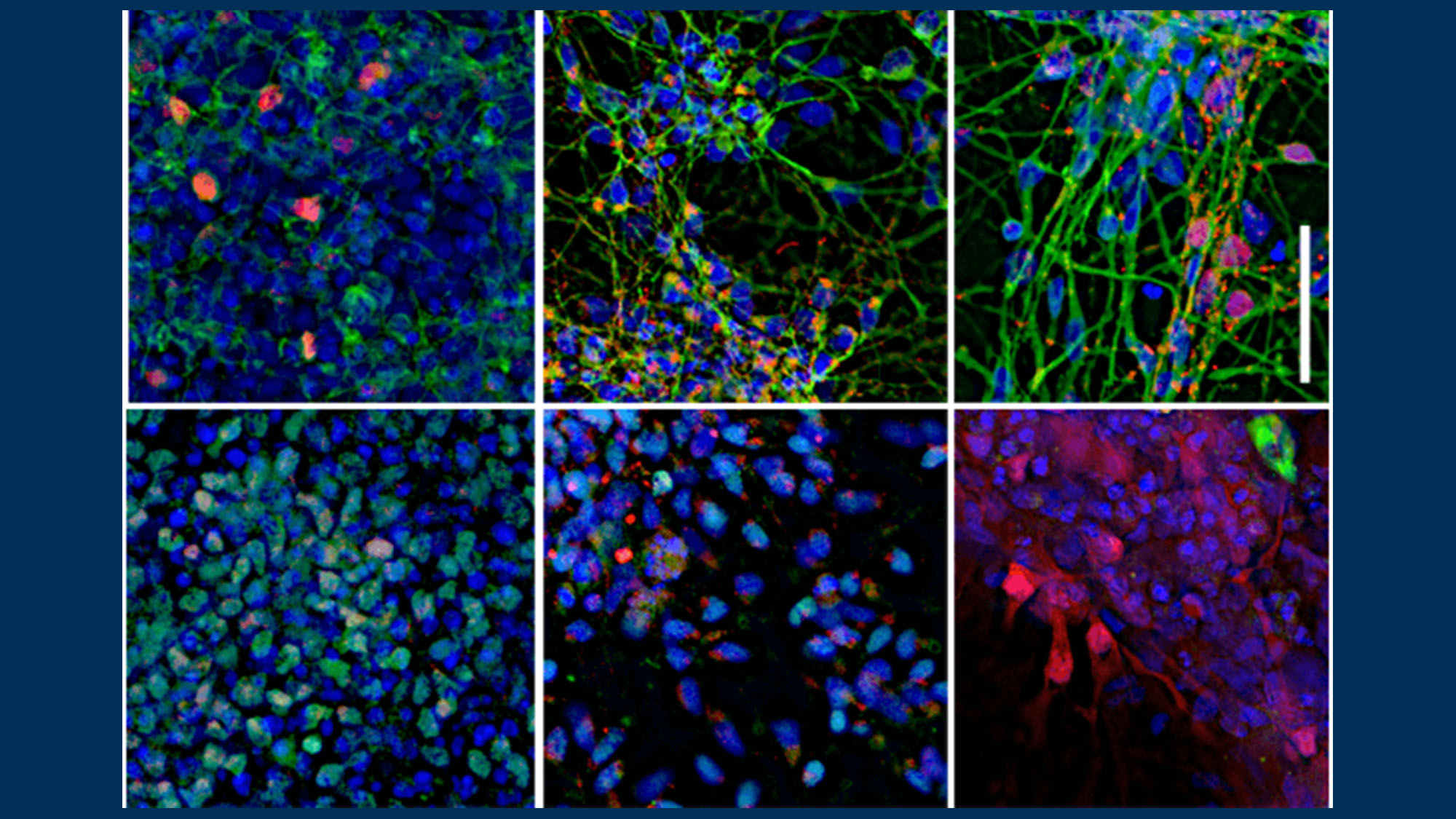
Allen Institute for Brain Science researchers have published a recipe for how to grow a class of human neurons from stem cells in a dish.
Thank you! Your submission has been received!
Oops! Something went wrong while submitting the form.

in this article

table of contents will display on published page only
set h2 to populate the table of contents here

The paper, published this month in the journal Neuron, provides a window into how a subset of neurons develop in the human brain and an enticing promise of the future therapeutic potential of this knowledge.

Neurons that use the chemical GABA to communicate belong to a class of neurons whose role is to help control the flow of information in neural circuits. When GABAergic neurons do not properly develop or function, they have been shown to play a role in disorders including autism, schizophrenia and epilepsy.

Researchers at the Allen Institute for Brain Science set out to understand how and when this class of neurons develops in the brain. Most cells originate in one of a few select regions and then migrate to their final locations, responding to a significant number of genetic cues along the way that guide their development into healthy, mature cells.

“This is the first study to characterize the diverse gene expression changes that take place in these kinds of neurons as they grow and mature, and also the first to compare the results we get in the dish against actual tissue,” says Jennie Close, Ph.D., Scientist II at the Allen Institute for Brain Science and lead author on the paper.

Neurons encounter many genetic switches along their developmental path, but notably, many of the genes Close and her team identified as crucial to GABAergic neuron development have already been implicated as key players in neurodevelopmental and psychiatric disorders.

Comparing the gene expression results they obtained by growing cells in a dish against actual tissue—at single-cell resolution—provided further confidence that the genes they identified as developmental markers in the dish were accurate, because they were the same genes used by cells from actual tissue. The gene expression patterns also aligned with data in the Allen Developing Mouse Brain Atlas.

Beyond satisfying scientific curiosity about how these neurons come to be, understanding the process of GABAergic neuron development could also have exciting applications in medicine.

“Because of the location in which these neurons arise, being able to grow these cells could have tremendous therapeutic applications, including transplantation,” says Close. “Single-cell resolution is key, since being able to see gene expression at the level of individual cells will provide insight into how to develop effective protocols to generate specific populations that will someday be necessary for therapeutic transplants.

‍

Citations
No items found.

about the allen institute

The Allen Institute is an independent, 501(c)(3) nonprofit research organization founded by philanthropist and visionary, the late Paul G. Allen. The Allen Institute is dedicated to answering some of the biggest questions in bioscience and accelerating research worldwide. The Institute is a recognized leader in large-scale research with a commitment to an open science model. For more information, visit alleninstitute.org.
related news

all news
No articles for the category
we acceleratedevelopcatalyzeimpact

science done differently. shared with the world.

explore our accelerators

brain science

Mapping every cell, connection, and circuit in the brain—openly shared with the world.

cell science

Decoding how cells become tissues, then programming that knowledge into powerful new research tools.

neural dynamics

Revealing the brain's hidden algorithms that transform neural activity into real-world behavior.

immunology

Creating the deepest open reference for the healthy human immune system ever built.

synthetic biology

Engineering cells to record their own histories, transforming how we understand disease over time.

research

Big questions, open answers, and science built to be shared.

education

Inspiring the next generation of scientists through open science resources.

impact

Our science is empowering researchers and advancing health worldwide.
advancing science through open, collaborative research
Get the allen institute newsletter
Stay informed on the latest breakthroughs in neuroscience, bioscience, and AI-driven research.
allen institute
impactpeople & teamscareers & opportunitiesalumnihistory & founder
science resources
allencell.orgallenimmunology.orgallenneuraldynamics.orgbrain-bican.orgbrain-map.orgmicrons-explorer.org
research
brain sciencecell scienceneural dynamicsimmunologysynthetic biologypublications
education
science educationfield tripsprofessional developmenteducation resources
quick links
newseventsopen sciencepodcastscience resourceshuman brain donationvisit uscontact
follow us/

allen institute, 615 Westlake Ave North, Seattle, WA 98109 +12065487055

© 0000 allen institute. all rights reserved.
privacy policyterms of usecitation policyemployee portalpolicy & compliance