impact
about
our story
explore our impact
careers and opportunities
join us
open science
sharing science to speed discovery
open science week
celebrating open science
team science
people & teams
discovery is a team effort
allenites
the people who make our work possible
advisors
their input shapes our science
board of directors
they help us fulfill our mission
shanahan foundation fellowship
at the interface of data and neuroscience
next generation leaders
fostering emerging leaders in bioscience
research
overview
our approach
science at the scale of greatest impact
publications
explore our publications
open science
sharing science to speed discovery
science accelerators
brain science
building a blueprint of the brain
cell science
understanding how cells become organs
neural dynamics
revealing the brain’s hidden algorithms
immunology
creating the ultimate immune system reference
synthetic biology
seattle hub for synthetic biology
education
overview
science education
science is for everyone
open science
sharing science speeds discovery
engagement
education resources
real science. real skills.
field trips
experience science where it happens
educator development
empowering educators
news
overview
all news
explore the latest news
podcast
the human stories behind discovery
sign up for our newsletter
stay connected to our science
events
overview
all events
public engagement, workshops, seminars and more
conferences
connect with us
science resources
science resources
allencell.org
allenimmunology.org
allenneuraldynamics.org
brain-bican.org
brain-map.org
microns-explorer.org
impact
back to menu
team science
our story
explore our impact
careers and opportunities
join us
open science
sharing science to speed discovery
open science week
celebrating open science
team science
people & teams
discovery is a team effort
allenites
the people who make our work possible
advisors
their input shapes our science
board of directors
they help us fulfill our mission
shanahan foundation fellowship
at the interface of data and neuroscience
next generation leaders
fostering emerging leaders in bioscience
research
back to menu
overview
our approach
science at the scale of greatest impact
publications
explore our publications
open science
sharing science to speed discovery
science accelerators
brain science
building a blueprint of the brain
cell science
understanding how cells become organs
neural dynamics
revealing the brain’s hidden algorithms
immunology
creating the ultimate immune system reference
synthetic biology
seattle hub for synthetic biology
education
back to menu
overview
science education
science is for everyone
open science
sharing science speeds discovery
engagement
education resources
real science. real skills.
field trips
experience science where it happens
educator development
empowering educators
news
back to menu
overview
all news
explore the latest news
podcast
the human stories behind discovery
newsletter
stay connected to our science
events
back to menu
overview
all events
public engagement, workshops, seminars and more
conferences
connect with us
science resources
back to menu
science resources
allencell.org
allenimmunology.org
allenneuraldynamics.org
brain-bican.org
brain-map.org
microns-explorer.org
search
news

Scientists find mouse neurons that are unique to male or female brains

Study linking behaviors with cells in an ancient section of the brain also pinpointed a neuron tied to social fear

October 17, 2019
 min read
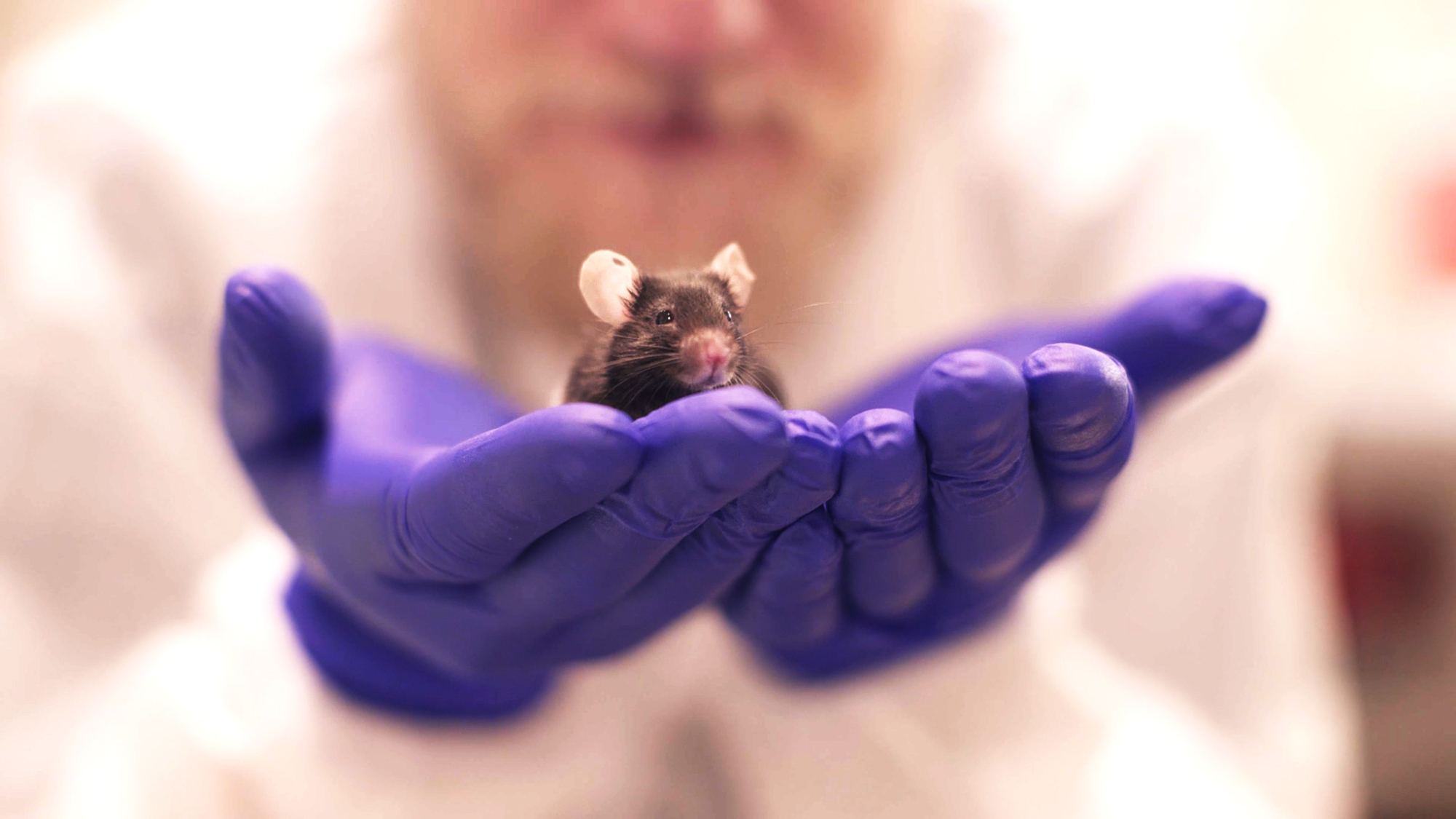
Researcher with a mouse
share/
A collaborative team of researchers at the California Institute of Technology and the Allen Institute uncovered brain cell types specific to female or male mice.
Study linking behaviors with cells in an ancient section of the brain also pinpointed a neuron tied to social fear
Thank you! Your submission has been received!
Oops! Something went wrong while submitting the form.

in this article

table of contents will display on published page only
set h2 to populate the table of contents here

A team of scientists who were trying to identify neurons that drive instinctive behaviors in mice uncovered something surprising on the way: brain cell types that exist only in female or male animals.

Other researchers have previously found genes that are switched on, or expressed, exclusively in male or female brains, but this is the first demonstration of sex-specific neuron types in mammals, the authors said.

In the study, which was published Thursday in the journal Cell, researchers at the California Institute of Technology and the Allen Institute binned brain cells into different groups based on the suite of genes each cell switches on. The resulting categories, commonly referred to as brain cell types, are defined by hundreds or even thousands of subtle differences in these sets of defining genes.

“To me, there is something very profound about the idea that there are cell types in the female brain that are not found in the male brain, and vice versa,” said David Anderson, Ph.D., a Professor of Biology at Caltech who led the study along with Caltech doctoral student Dong-Wook Kim. “Evolution went to all the trouble to select for a particular constellation of genes that are switched on to make a cell type in just one sex. That seems like a true structural difference.”

The researchers don’t yet know what these unique brain cells are doing in male or female mice, but they suspect the female-specific cells could play a role in mating — these cells switch on a gene known to be important in mating, the estrogen receptor, which allows the neurons to respond to the estrogen hormone in the brain.

Can we link brain cells to behavior? It’s complicated.

The research team was studying one section of the hypothalamus, an evolutionarily ancient part of our brains. This tiny part of the hypothalamus, known as VMHvl, plays an important role in instinctive behaviors such as aggression, social fear responses, and mating— in both male and female animals.

Anderson and his colleagues wanted to understand more about the specific cells that underlie these behaviors. Sifting through the 4,000 neurons in this small part of the brain, they uncovered 17 different types of neurons. They found three of those types primarily in the brains of male mice, and one of those types only in female brains.

They then looked at the connections those neurons make in the brain and which cell types are activated when animals were engaged in different social behaviors like fighting or freezing in fear in response to an aggressive mouse. They were expecting to find a one-to-one correspondence between cell types, where they connect in the brain, and specific behaviors. Many researchers thought that since the hypothalamus is so ancient, the rules that govern its organization might be relatively straightforward. But their findings proved otherwise.

“There doesn’t seem to be a fighting cell type or a mating cell type,” said Hongkui Zeng, Ph.D., Executive Director of Structured Science at the Allen Institute for Brain Science, a division of the Allen Institute, who is also a co-author on the study. “Even the most basic, innate behavior is based on complex interactions of individual cells across different types.”

Of the 17 cell types in this region known to drive these innate behaviors, the researchers only found one cell type with a clear link to both a specific behavior — social fear, or fear of aggressive mice — and connections to a single other region of the brain. None of the other 16 cell types showed such a clear relationship.

Anderson and Zeng are now working on a collaborative project to study cell types across the entire mouse hypothalamus. And the Caltech team is also delving further into the sex-specific neurons they identified to try to pin down what those cells are doing in the brain.

“This shows that even the parts of the brain that we assumed were going to be simple are very complicated,” Anderson said. “If we think the hypothalamus is an easy problem, we’re in for a long haul with the rest of the brain.”

The research described in this article was supported by the National Institutes of Health, including awards U19Mh414830 from the National Institute Of Mental Health and U01Mh405982 from the NIMH and Eunice Kennedy Shriver National Institute Of Child Health & Human Development. The content is solely the responsibility of the authors and does not necessarily represent the official views of the NIH.

Citations
No items found.

about the allen institute

The Allen Institute is an independent, 501(c)(3) nonprofit research organization founded by philanthropist and visionary, the late Paul G. Allen. The Allen Institute is dedicated to answering some of the biggest questions in bioscience and accelerating research worldwide. The Institute is a recognized leader in large-scale research with a commitment to an open science model. For more information, visit alleninstitute.org.


related news

all news
No articles for the category
we acceleratedevelopcatalyzeimpact

science done differently. shared with the world.

explore our accelerators

brain science

Mapping every cell, connection, and circuit in the brain—openly shared with the world.

cell science

Decoding how cells become tissues, then programming that knowledge into powerful new research tools.

neural dynamics

Revealing the brain's hidden algorithms that transform neural activity into real-world behavior.

immunology

Creating the deepest open reference for the healthy human immune system ever built.

synthetic biology

Engineering cells to record their own histories, transforming how we understand disease over time.

research

Big questions, open answers, and science built to be shared.

education

Inspiring the next generation of scientists through open science resources.

impact

Our science is empowering researchers and advancing health worldwide.
advancing science through open, collaborative research
Get the allen institute newsletter
Stay informed on the latest breakthroughs in neuroscience, bioscience, and AI-driven research.
allen institute
impactpeople & teamscareers & opportunitiesalumnihistory & founder
science resources
allencell.orgallenimmunology.orgallenneuraldynamics.orgbrain-bican.orgbrain-map.orgmicrons-explorer.org
research
brain sciencecell scienceneural dynamicsimmunologysynthetic biologypublications
education
science educationfield tripsprofessional developmenteducation resources
quick links
newseventsopen sciencepodcastscience resourceshuman brain donationvisit uscontact
follow us/

allen institute, 615 Westlake Ave North, Seattle, WA 98109 +12065487055

© 0000 allen institute. all rights reserved.
privacy policyterms of usecitation policyemployee portalpolicy & compliance


