in this article
Stephen Smith, Ph.D., had been waiting for a certain kind of dataset for a long time.
The Allen Institute neuroscientist has a driving interest in brain diversity — not in the sense of how one person’s brain is different from another’s, but in the rich and incredible variation within a single brain.
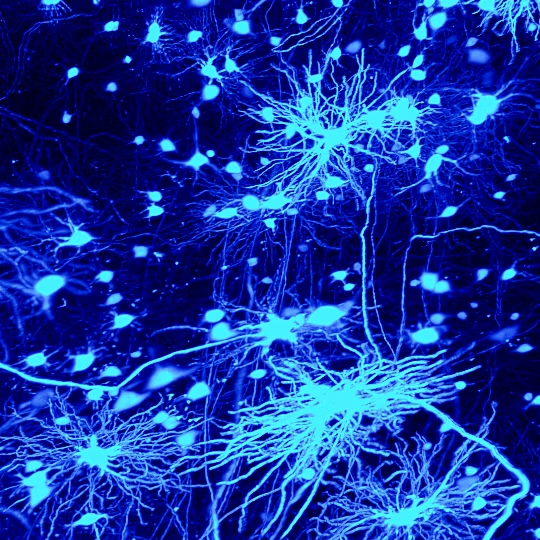
There are a lot of different ways to explore this kind of diversity, but a dataset published last year by Smith’s colleagues at the Allen Institute is offering a unique window into this question: Why do our brains have so many different kinds of neurons and different kinds of connections between those neurons?
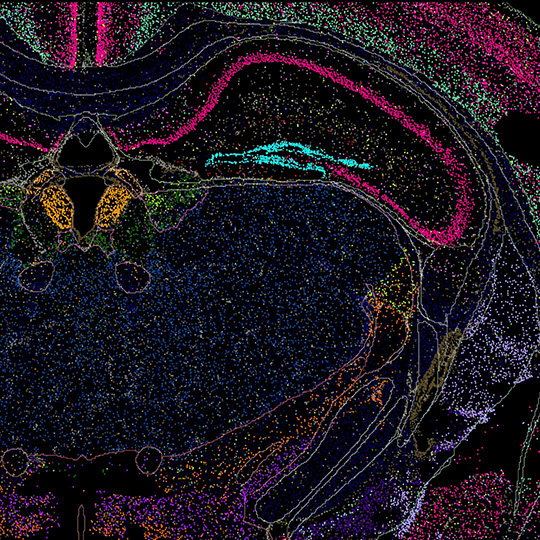
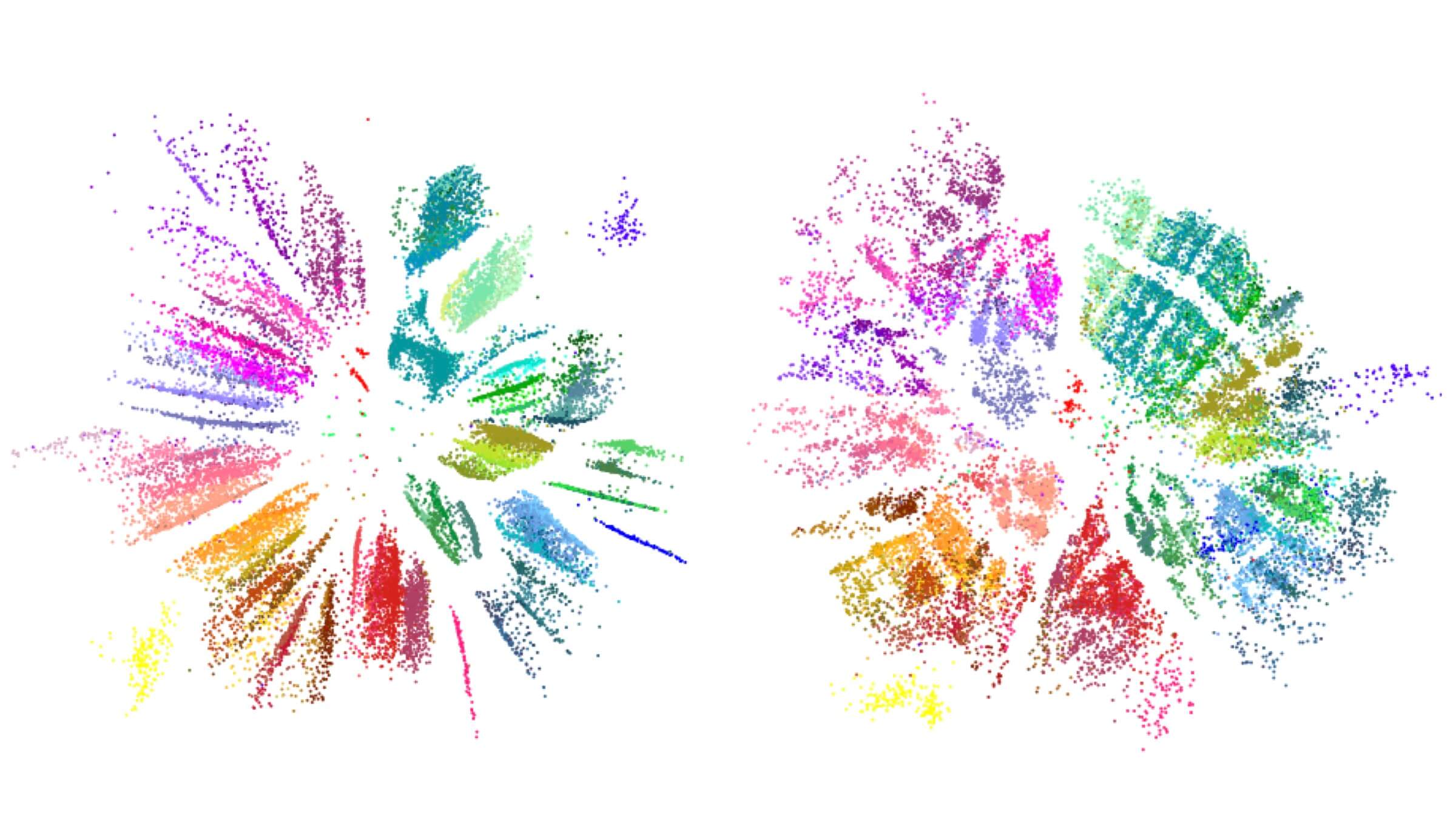
That dataset — and others of its kind — are catalogs of brain cell types from the mouse or human cortex, the outermost shell of the brain. These data revealed that there are substantially more unique types of brain cells in a single mouse or human brain than previously thought — upwards of 100 or more in just one or two regions of the cortex. For Smith, those brain cell type datasets were also the jumping off point to explore another, deeper layer of brain diversity: the variation among synapses, the connection points between neurons.
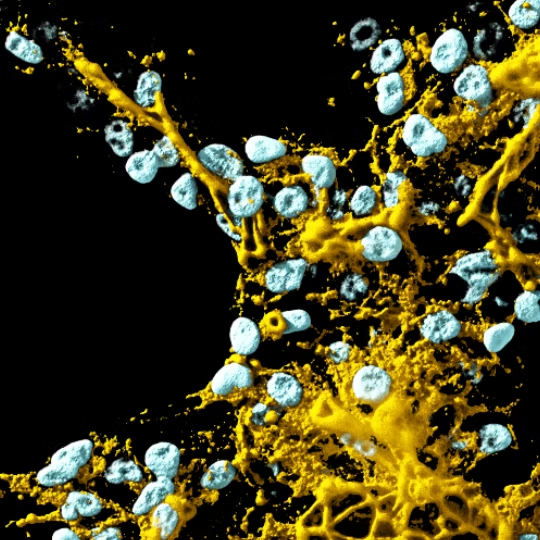
“Synapses are clearly very diverse in structure and function but, up until now, this diversity has proven very difficult to fathom systematically,” Smith said. “This is an important problem to tackle because we believe synapse diversity is critical to how our brains work.”
In a study recently published online in the journal eLife, Smith and his Allen Institute colleagues describe a possible connection between brain cell diversity and synapse diversity: a large class of small proteins known as neuropeptides. You’ve probably heard of the most famous neuropeptide, endorphins, but there are close to 100 more kinds. Their new findings imply that neuropeptides could underlie many aspects of brain diversity and might be promising targets for more specific psychiatric treatments. The published study centers around mouse brain cell types, but the researchers are currently analyzing human brain cells as well.
How the brain tunes itself
Scientists have a general understanding of how synapses pass messages between neurons: One neuron transmits an electrical signal that spurs the release of small molecules known as neurotransmitters into the synapse, the incredibly thin space between two neurons. Depending on the kind of signal being sent, the neurotransmitters either cause the neighboring neuron to fire its own electrical signal, or they prevent that signal.
But those two flavors of synapse — stop or go — are just a small part of the possible types of communication. If neurotransmitters are the words through which neurons piece together a sentence, there’s a whole universe of other neuro-molecules that alter the tone of voice, the volume, and the ultimate meaning of those neural messages.
Neuropeptides are one such fine-tuning molecule. They have been implicated in mood (endorphins, for example, which cause the phenomenon known as runner’s high), appetite, pain, alcohol consumption, blood pressure and sleep. But exactly how — and where — they act in the brain is less clear.
Sifting through the extensive, publicly available data on mouse brain cell types, Smith found that “neuropeptide genes just jumped off the page,” he said. The genes that code for neuropeptides were not only switched on, or expressed, in pretty much every individual mouse neuron, their expression was incredibly diverse. Each type of neuron in the dataset switches on a different collection of neuropeptide genes. That diversity isn’t the case for other kinds of neuro-signaling molecules, like neurotransmitters.
“We could never have uncovered that neuropeptides are used in every neuron we looked at until we had this dataset that captures so much information at the single-cell level,” Smith said. “My first thought was, maybe we’ve found a new principle of how these myriad cell types work together to adjust each other’s synaptic signaling.”
Why do we have so many brain cell types?
Could neuropeptide diversity actually drive neuron diversity? It’s possible, Smith said. Scientists know that neuropeptides have been around for a very, very long time. Many of these small proteins have been unaltered by the hundreds of millions of years of evolution that separate every creature that has neurons.
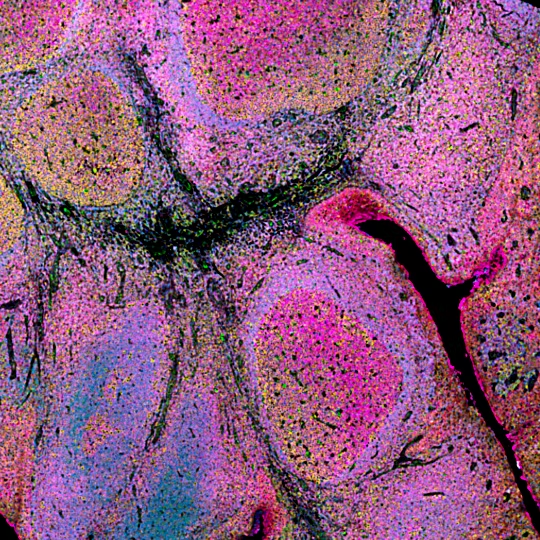
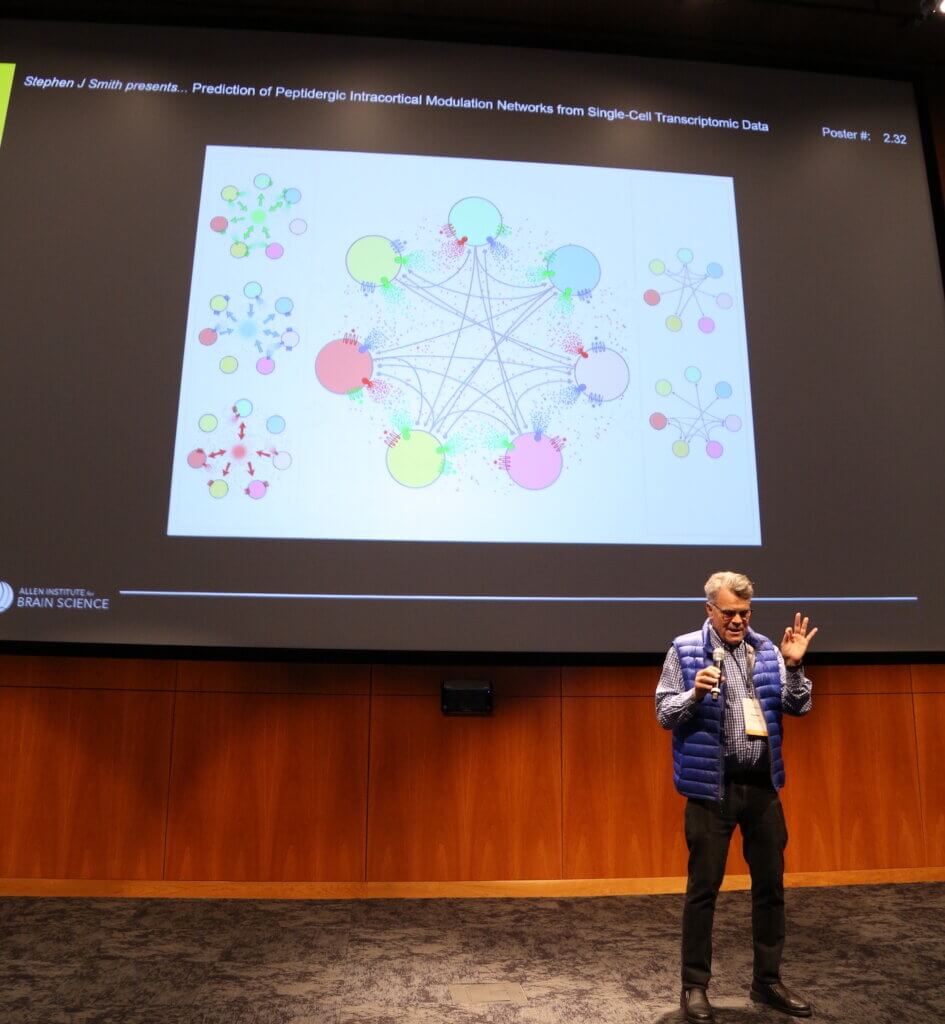
This analysis also poses new questions about how different types of neurons work together. Each neuropeptide fits into a specific neuropeptide receptor, like a key into a lock. By looking at where each neuropeptide and its corresponding receptor light up in the brain cell types dataset, the researchers predicted which neuron types are likely to talk to each other using these small proteins.
Neuropeptides could also prove a good target for new psychiatric therapies, Smith said. Most modern psychiatric drugs target other types of brain signaling molecules, such as dopamine and serotonin, which are much more ubiquitous across the brain. Targeting a single neuropeptide could instead limit a therapy’s effects to a smaller set of neurons, or even a specific brain cell type, which might mean fewer side effects.
Neuroscientists have been working for years to define the different building blocks of the mammalian brain, the cell types. Finding those building blocks opens many new avenues and questions, said Michael Hawrylycz, Ph.D., a computational biologist at the Allen Institute who is also a co-author on the neuropeptide study.
“Large-scale data clustering has identified many putative brain cell types that show correspondence across tissues and species. We can now begin to ask about the meaning behind the clusters of cells that emerge from those data,” Hawrylycz said. “This is an example of a deep kind of analysis of the cell types, a kind we are just beginning to see.”
The research described in this story was supported in part by award number R01NS092474 from the Office of the Director of National Institutes of Health and award number R01Mh404227 from the National Institute of Mental Health. Its contents are solely the responsibility of the authors and does not necessarily represent the official views of the National Institutes of Health.
Citations
about the allen institute
The Allen Institute is an independent, 501(c)(3) nonprofit research organization founded by philanthropist and visionary, the late Paul G. Allen. The Allen Institute is dedicated to answering some of the biggest questions in bioscience and accelerating research worldwide. The Institute is a recognized leader in large-scale research with a commitment to an open science model. For more information, visit alleninstitute.org.