impact
impact
open science
subheadline
careers and opportunities
subheadline
people & teams
people & teams
subheadline
allenites
subheadline
allen institute advisors
subheadline
board of directors
subheadline
shanahan foundation fellowship
subheadline
next generation leaders
subheadline
research
overview
our approach
subheadline
publications
subheadline
open science
subheadline
accelerator
brain science
subheadline
cell science
subheadline
neural dynamics
subheadline
immunology
subheadline
synthetic biology
subheadline
education
education
science education
subheadline
education resources
subheadline
field trips
subheadline
open science
subheadline
open science quest
subheadline
news
news
stories
subheadline
podcast
subheadline
sign up for our newsletter
subheadline
events
events
all events
subheadline
conferences
subheadline
event code of conduct
subheadline
events
open science quest
subheadline
summer workshop on the dynamic brain
subheadline
open science week
subheadline
brain fest
subheadline
science resources
science resources
allencell.org
subheadline
allenimmunology.org
subheadline
allenneuraldynamics.org
subheadline
brain-bican.org
subheadline
brain-map.org
subheadline
microns-explorer.org
subheadline
impact
back to menu
impact
open science
subheading
careers and opportunities
subheading
people & teams
people & teams
subheading
allen institute advisors
subheading
board of directors
subheading
shanahan foundation fellowship
subheading
next generation leaders
subheading
research
back to menu
impact
Label
subheading
Label
subheading
people & teams
education
back to menu
research
Label
subheading
Label
subheading
Heading
news
back to menu
research
Label
subheading
Label
subheading
Heading
events
back to menu
research
Label
subheading
Label
subheading
Heading
science resources
back to menu
science resources
allencell.org
subheading
allenimmunology.org
subheading
allenneuraldynamics.org
subheading
brain-bican.org
subheading
brain-map.org
subheading
microns-explorer.org
subheading
search
research
brain science

molecular genetics

leading an effort toward comprehensive molecular analysis of cell type identity in the mouse brain and building state-of-the-art transgenic and viral tools to experimentally access cell types
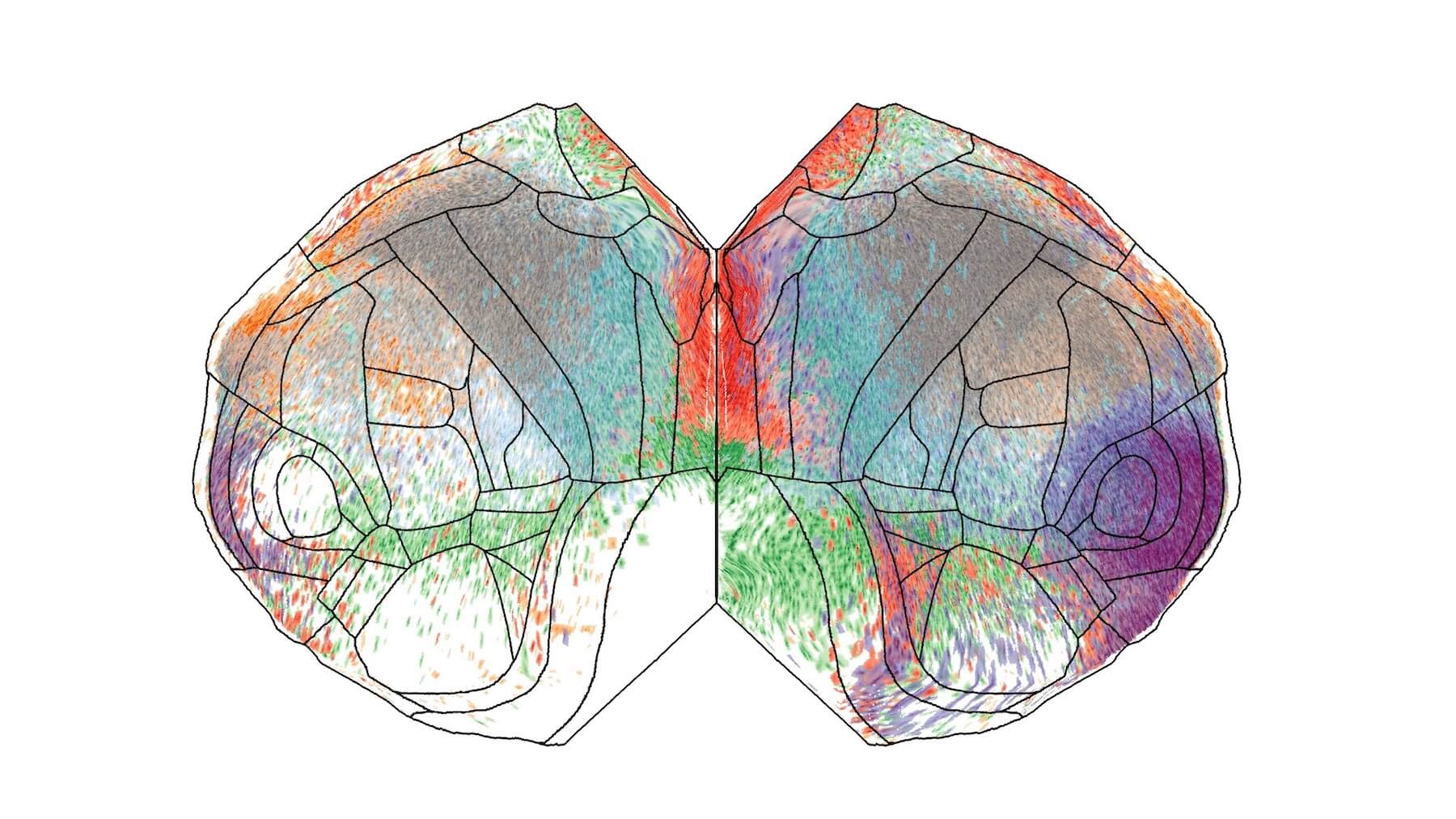
Colorful illustrated brain map showing anatomical regions with different colored zones and labeled divisions.

goals and approach

Mammalian nervous systems are composed of diverse neurons, some of which have been identified by one or more properties: specific shape, physiology, or molecular signature. However, a consensus approach to neuronal classification does not exist, and the correlations of different types of neuronal properties with one another and neuronal function have not been systematically examined. Therefore, scientists still don’t know how many different flavors of cellular building blocks comprise even relatively simple mammalian brains such as the mouse brain.

The Molecular Genetics team with the Allen Institute's Brain Science accelerator approaches this question at the molecular level by analyzing transcriptomes and epigenetic landscapes of individual neurons. Through these efforts, they have discovered many specific marker genes and enhancers that can be used to classify these cells into types and that we use to create tools for genetic access to specific cell types. They also collaborate with many teams across the institute to establish multi-modal neuronal phenotyping and classification. In the long run, they hope their studies will reveal how molecular characteristics determine neuronal phenotypes, and how they govern myriads of functions carried out by mammalian brains.  

3D brain model with green highlighted cerebral cortex region on white background
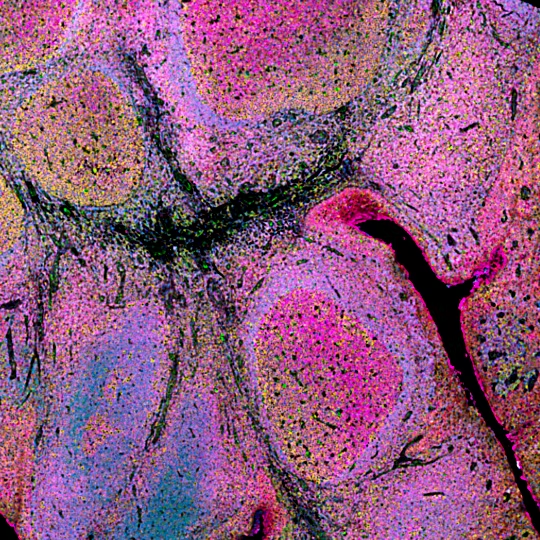
Serial two photon imaging following retroorbital injection of an enhancer-driven AAV vector expressing SYFP2. This vector was designed to target a specific glutamatergic cell population in central thalamus. This is one of the data modalities used in the Viral Genetic Tools Pipeline.

projects/

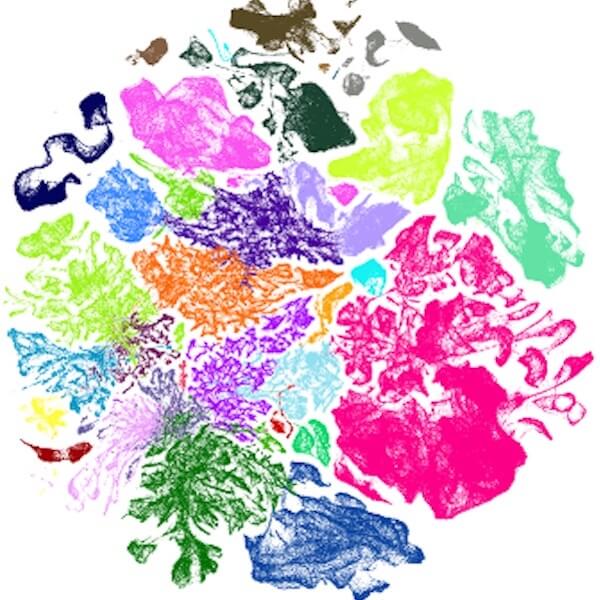
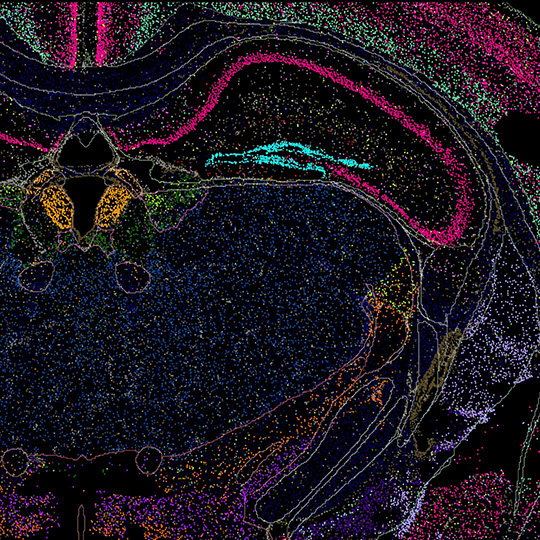
mouse brain cell type atlasing

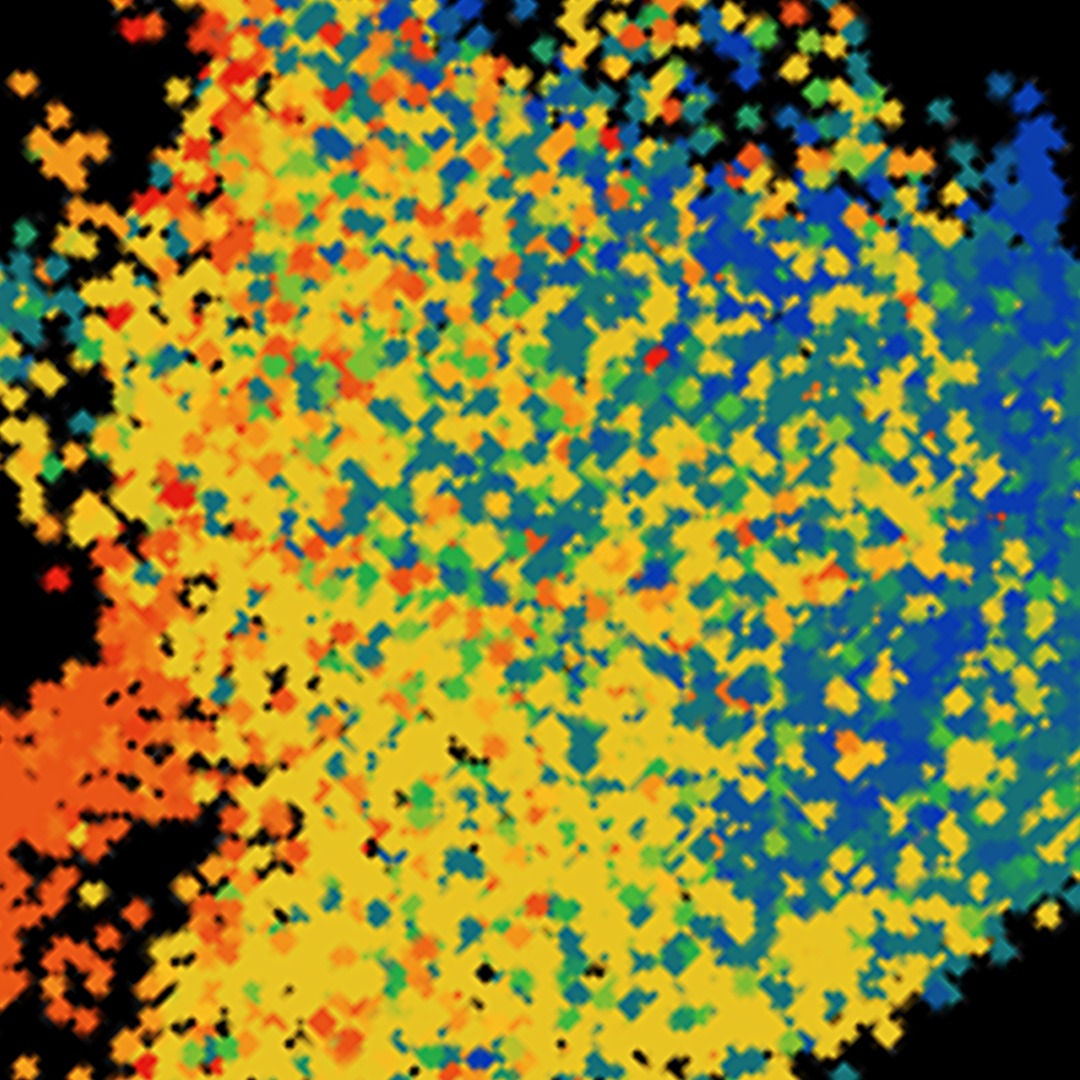
The Molecular Genetics team at the Allen Institute for Brain Science is measuring many properties at the single-cell level to define groups or cells that are similar to each other (for example, cell classes and types). They use single cell transcriptomics (scRNA-seq), single-cell epigenomics (snATAC-seq) and multimodal measurements to define cell types and marker genes and enhancers. They integrate the datasets computationally to produce integrative taxonomies of mouse brain cell types.

Colorful abstract map showing world regions in vibrant neon colors including magenta, blue, green, and orange.

cell-type-specific genetic tools

The Molecular Genetics team at the Allen Institute for Brain Science is using molecularly defined cell types to create various transgenic and viral tools to study cell types, their connectivity and their contributions to brain functions.

cell-type-specific connectomics

The Molecular Genetics team at the Allen Institute for Brain Science is using the tools they develop to define cell-type-specific connectivity in the mouse brain. They build and produce recombinant adeno associated viruses (AAVs) and rabies viruses for connectivity studies.

molecular genetics team

Yoav Ben-Simon
Assistant Investigator
Deepanjali Dwivedi
Scientist I
Katie Fancher
Research Associate III
Molly Gasperini
Associate Director, Genome Engineering
Marcus Hooper
Scientist II
Shannon Khem
Research Associate II
Rana Kutsal
Research Associate II
Zack Lewis
Scientist, Sr.
Nicholas Lusk
Scientist I
Aryana Merritt-Johnson
Research Associate I
Sujatha Narayan
Senior Scientist
Tai Nguyen
Lab Operations Coordinator II
Aaron Oster
SW Engineer II
Jada Roth
Research Associate II
Mara Rue
Scientist I
Bosiljka Tasic
Director, Molecular Genetics
Emma Thomas
Scientist II
Sharon Way
Scientific Project and Alliance Manager
Brooke Wynalda
Research Associate II
Shenqin Yao
Assistant Investigator
we acceleratedevelopcatalyzeimpact

science done differently. shared with the world.

explore our accelerators

brain science

Mapping every cell, connection, and circuit in the brain—openly shared with the world.

cell science

Decoding how cells become tissues, then programming that knowledge into powerful new research tools.

neural dynamics

Revealing the brain's hidden algorithms that transform neural activity into real-world behavior.

immunology

Creating the deepest open reference for the healthy human immune system ever built.

synthetic biology

Engineering cells to record their own histories, transforming how we understand disease over time.

research

Big questions, open answers, and science built to be shared.

education

Inspiring the next generation of scientists through open science resources.

impact

Our science is empowering researchers and advancing health worldwide.
advancing science through open, collaborative research
Get the allen institute newsletter
Stay informed on the latest breakthroughs in neuroscience, bioscience, and AI-driven research.
allen institute
impactpeople & teamscareers & opportunitiesalumnihistory & founder
science resources
allencell.orgallenimmunology.orgallenneuraldynamics.orgbrain-bican.orgbrain-map.orgmicrons-explorer.org
research
brain sciencecell scienceneural dynamicsimmunologysynthetic biologypublications
education
science educationfield tripsprofessional developmenteducation resources
quick links
newseventsopen sciencepodcastscience resourceshuman brain donationvisit uscontact
follow us/

allen institute, 615 Westlake Ave North, Seattle, WA 98109 +12065487055

© 0000 allen institute. all rights reserved.
privacy policyterms of usecitation policyemployee portalpolicy & compliance