impact
impact
open science
subheadline
careers and opportunities
subheadline
people & teams
people & teams
subheadline
allenites
subheadline
allen institute advisors
subheadline
board of directors
subheadline
shanahan foundation fellowship
subheadline
next generation leaders
subheadline
research
overview
our approach
subheadline
publications
subheadline
open science
subheadline
accelerator
brain science
subheadline
cell science
subheadline
neural dynamics
subheadline
immunology
subheadline
synthetic biology
subheadline
education
education
science education
subheadline
education resources
subheadline
field trips
subheadline
open science
subheadline
open science quest
subheadline
news
news
stories
subheadline
podcast
subheadline
sign up for our newsletter
subheadline
events
events
all events
subheadline
conferences
subheadline
event code of conduct
subheadline
events
open science quest
subheadline
summer workshop on the dynamic brain
subheadline
open science week
subheadline
brain fest
subheadline
science resources
science resources
allencell.org
subheadline
allenimmunology.org
subheadline
allenneuraldynamics.org
subheadline
brain-bican.org
subheadline
brain-map.org
subheadline
microns-explorer.org
subheadline
impact
back to menu
impact
open science
subheading
careers and opportunities
subheading
people & teams
people & teams
subheading
allen institute advisors
subheading
board of directors
subheading
shanahan foundation fellowship
subheading
next generation leaders
subheading
research
back to menu
impact
Label
subheading
Label
subheading
people & teams
education
back to menu
research
Label
subheading
Label
subheading
Heading
news
back to menu
research
Label
subheading
Label
subheading
Heading
events
back to menu
research
Label
subheading
Label
subheading
Heading
science resources
back to menu
science resources
allencell.org
subheading
allenimmunology.org
subheading
allenneuraldynamics.org
subheading
brain-bican.org
subheading
brain-map.org
subheading
microns-explorer.org
subheading
search
research
immunology

tissue immunity

The tissue immunity team at the Allen Institute uncovers how immune cells adapt to tissues to provide protection, revealing fundamental principles that guide the development of new strategies to enhance or restrain immunity at specific sites.
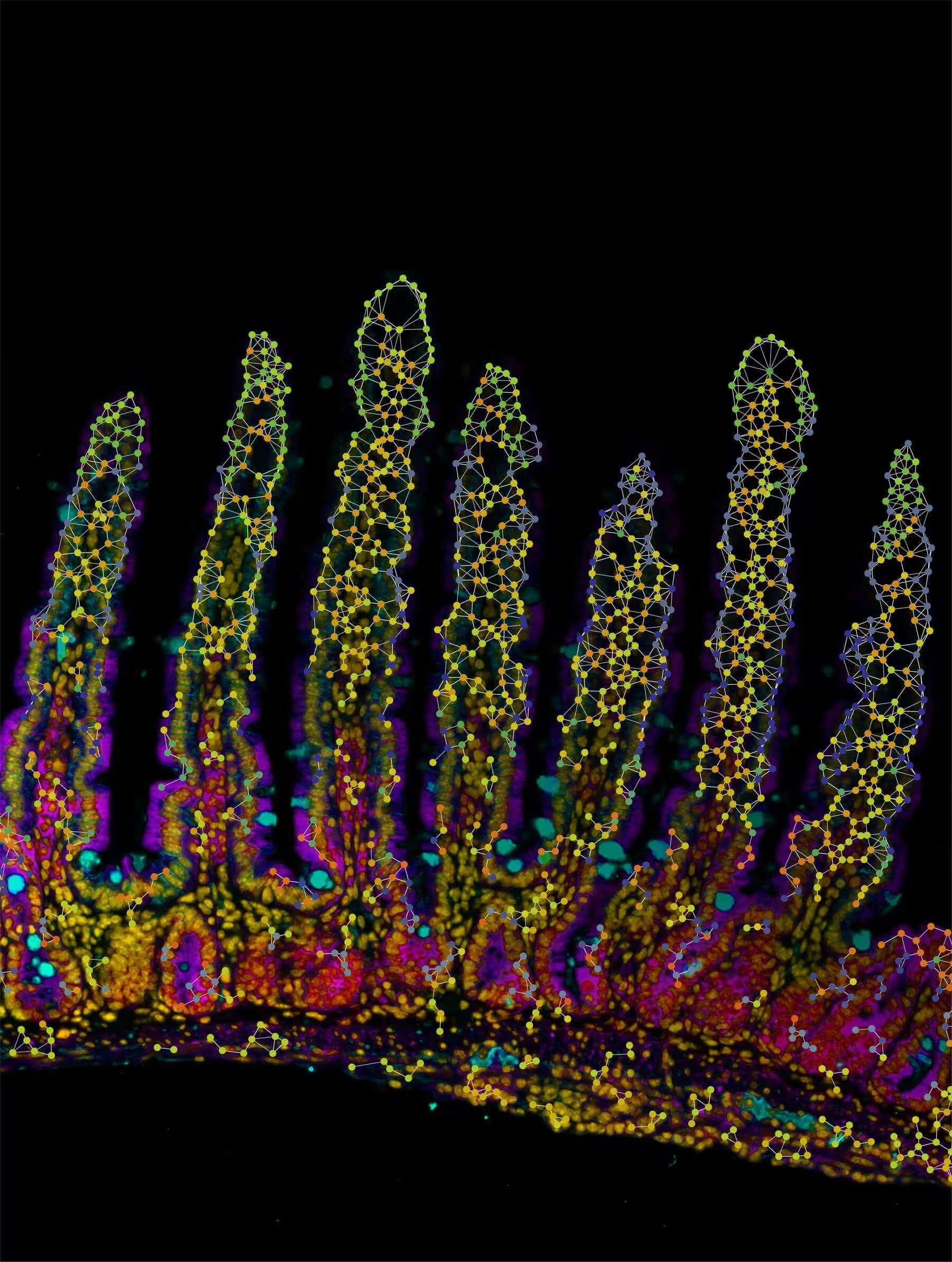
Colorful 3D molecular structure visualization with interconnected geometric shapes against black background

goals and approach

Our goal is to build a comprehensive spatial map of tissue immunity and to translate mechanistic insights into new strategies to guide immune responses. These approaches aim to direct immune cells to target tissues, enhance protective immunity at sites of infection or tumors, or selectively dampen harmful inflammation in autoimmune and inflammatory diseases.

The Tissue Immunity team at the Allen Institute investigates how immune cells establish and maintain protection within tissues. While traditional immunology has focused on the blood and lymphoid organs, critical immune responses occur directly at tissue sites such as the intestine, lung, and skin. Our research centers on tissue-resident memory T cells (TRM cells), a specialized population that remains embedded within tissues to provide rapid and durable local immunity.

We integrate studies in human tissues and genetic mouse models, combining the strengths of both systems to uncover the principles that govern tissue-specific immune adaptation. Fundamental mechanistic studies in mice allow precise dissection of the molecular and cellular pathways that drive immune cell residency, while human research captures the complexity and diversity of tissue immunity in health and disease. Using spatial transcriptomics, single-cell profiling, genetic perturbations, and computational analysis, we define how tissue environments imprint immune cell fate, function, and organization.
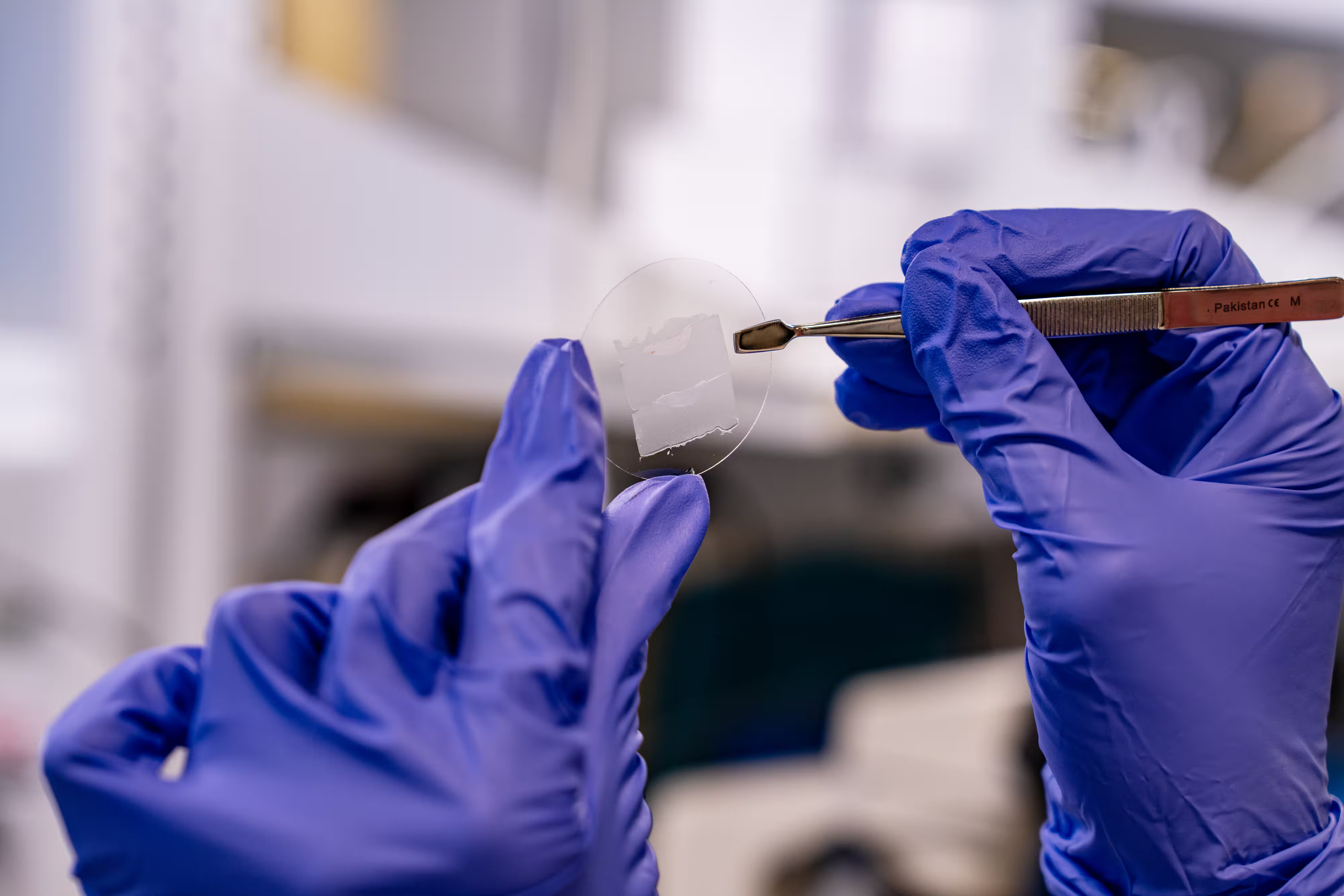
Gloved hands holding a brush applying coating to a translucent scientific sample

projects/

Spatial Regulation of Tissue-Resident Memory T Cells

Our team investigates how the location of immune cells within tissues governs their function, using advanced spatial transcriptomics and genetic perturbation strategies. Our recent work, published in Nature, revealed that tissue-resident memory CD8 T cells adopt distinct functions depending on their position within the intestinal architecture, highlighting how tissue niches imprint immune cell fate and behavior​​. Regional signaling, cytokine gradients, and cell–cell interactions shape whether T cells differentiate into effector-like or memory-like subsets, highlighting how tissue niches imprint immune cell fate and function. Building on these findings, we are now exploring strategies in mouse models to target these pathways. By analyzing transcription factors and molecular circuits that regulate spatial differentiation and positioning, we aim to identify approaches to enhance protective immunity or modulate pathological immune responses at specific tissue sites.

Human Tissue Immune Map

The developing mouse brain is a foundational experimental model for investigation of the origins of cell types in the mammalian brain. We are generating a comprehensive, spatially and temporally resolved, cellular-resolution atlas of the whole developing mouse brain, spanning the entire period of embryonic and postnatal brain development, using single-cell and spatial transcriptomic and multiomic technologies. This work will enable a deep understanding of the mechanisms of mammalian brain development and neurodevelopmental disorders. This project is supported by the BRAIN Initiative Cell Atlas Network (BICAN) with funding from NIH/NIMH.

tissue immunity publications

view all publications
No articles for the category
view all publications

tissue immunity team

Nathan Kieswetter
Scientist I
Kennidy Takehara
Scientist I
we acceleratedevelopcatalyzeimpact

science done differently. shared with the world.

explore our accelerators

brain science

Mapping every cell, connection, and circuit in the brain—openly shared with the world.

cell science

Decoding how cells become tissues, then programming that knowledge into powerful new research tools.

neural dynamics

Revealing the brain's hidden algorithms that transform neural activity into real-world behavior.

immunology

Creating the deepest open reference for the healthy human immune system ever built.

synthetic biology

Engineering cells to record their own histories, transforming how we understand disease over time.

research

Big questions, open answers, and science built to be shared.

education

Inspiring the next generation of scientists through open science resources.

impact

Our science is empowering researchers and advancing health worldwide.
advancing science through open, collaborative research
Get the allen institute newsletter
Stay informed on the latest breakthroughs in neuroscience, bioscience, and AI-driven research.
allen institute
impactpeople & teamscareers & opportunitiesalumnihistory & founder
science resources
allencell.orgallenimmunology.orgallenneuraldynamics.orgbrain-bican.orgbrain-map.orgmicrons-explorer.org
research
brain sciencecell scienceneural dynamicsimmunologysynthetic biologypublications
education
science educationfield tripsprofessional developmenteducation resources
quick links
newseventsopen sciencepodcastscience resourceshuman brain donationvisit uscontact
follow us/

allen institute, 615 Westlake Ave North, Seattle, WA 98109 +12065487055

© 0000 allen institute. all rights reserved.
privacy policyterms of usecitation policyemployee portalpolicy & compliance