impact
about
our story
explore our impact
careers and opportunities
join us
open science
sharing science to speed discovery
open science week
celebrating open science
team science
people & teams
discovery is a team effort
allenites
the people who make our work possible
advisors
their input shapes our science
board of directors
they help us fulfill our mission
shanahan foundation fellowship
at the interface of data and neuroscience
next generation leaders
fostering emerging leaders in bioscience
research
overview
our approach
science at the scale of greatest impact
publications
explore our publications
open science
sharing science to speed discovery
science accelerators
brain science
building a blueprint of the brain
cell science
understanding how cells become organs
neural dynamics
revealing the brain’s hidden algorithms
immunology
creating the ultimate immune system reference
synthetic biology
seattle hub for synthetic biology
education
overview
science education
science is for everyone
open science
sharing science speeds discovery
engagement
education resources
real science. real skills.
field trips
experience science where it happens
educator development
empowering educators
news
overview
all news
explore the latest news
podcast
the human stories behind discovery
sign up for our newsletter
stay connected to our science
events
overview
all events
public engagement, workshops, seminars and more
conferences
connect with us
science resources
science resources
allencell.org
allenimmunology.org
allenneuraldynamics.org
brain-bican.org
brain-map.org
microns-explorer.org
impact
back to menu
team science
our story
explore our impact
careers and opportunities
join us
open science
sharing science to speed discovery
open science week
celebrating open science
team science
people & teams
discovery is a team effort
allenites
the people who make our work possible
advisors
their input shapes our science
board of directors
they help us fulfill our mission
shanahan foundation fellowship
at the interface of data and neuroscience
next generation leaders
fostering emerging leaders in bioscience
research
back to menu
overview
our approach
science at the scale of greatest impact
publications
explore our publications
open science
sharing science to speed discovery
science accelerators
brain science
building a blueprint of the brain
cell science
understanding how cells become organs
neural dynamics
revealing the brain’s hidden algorithms
immunology
creating the ultimate immune system reference
synthetic biology
seattle hub for synthetic biology
education
back to menu
overview
science education
science is for everyone
open science
sharing science speeds discovery
engagement
education resources
real science. real skills.
field trips
experience science where it happens
educator development
empowering educators
news
back to menu
overview
all news
explore the latest news
podcast
the human stories behind discovery
newsletter
stay connected to our science
events
back to menu
overview
all events
public engagement, workshops, seminars and more
conferences
connect with us
science resources
back to menu
science resources
allencell.org
allenimmunology.org
allenneuraldynamics.org
brain-bican.org
brain-map.org
microns-explorer.org
search
news

Simulations of life - in health and disease

Across many areas of biology, researchers are turning to virtual simulations to help ask and answer important questions.

August 1, 2019
 min read
share/
Across many areas of biology, researchers are turning to virtual simulations to help ask and answer important questions.
Thank you! Your submission has been received!
Oops! Something went wrong while submitting the form.

in this article

table of contents will display on published page only
set h2 to populate the table of contents here
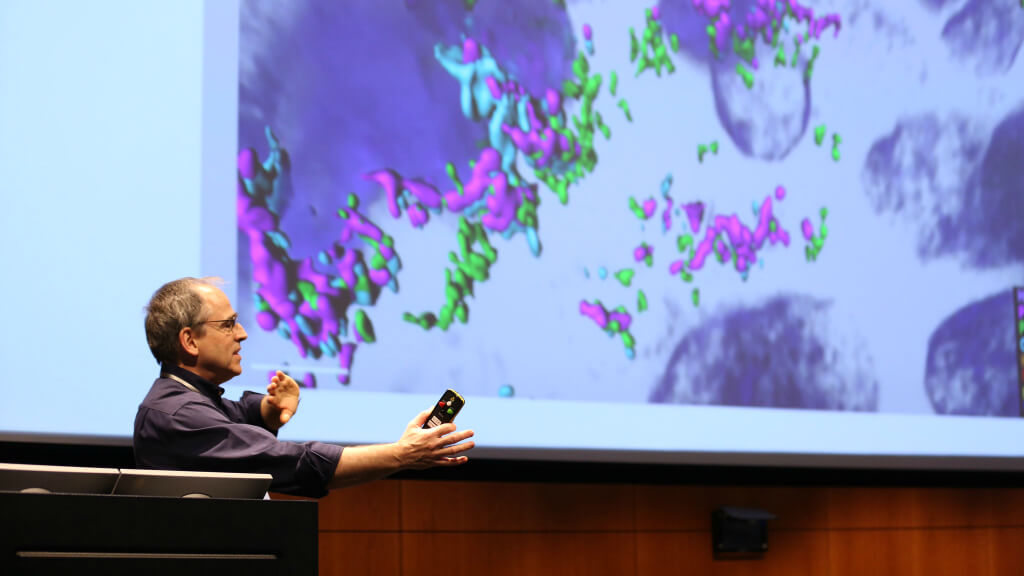
Man presenting at podium with colorful molecular visualization on screen behind him

Meier-Schellersheim was one of several researchers from around the world who participated in a symposium on modeling in biology, Exploring Frontiers: Predicting Biology. The two-day event brought together researchers who use computational simulations to better understand living systems, from the tiny ruffling edge of a migrating immune cell to how a large group of cancer patients respond to an experimental therapy.

The speakers at last week’s symposium, which was hosted by The Paul G. Allen Frontiers Group, a division of the Allen Institute, all use computational models of the cells, organs or populations they study to help them answer questions in a way that’s not possible with laboratory experiments alone.

“Models can help us get at what the truth really is,” said Markus Covert, Ph.D., director of the Allen Discovery Center at Stanford University and organizer of the event.

Covert described his group’s recent efforts to build an incredibly detailed computational simulation of the commonly studied bacteria E. coli, which they hope to debut later this year. Many models focus on one aspect or detail of a cell or living creature. The Allen Discovery Center team aims to wrap their arms around every known fact about this tiny bacterium, mining scientific publications for bacterial datasets of all types and recapitulating them all in an online software recreation of a complete bacterial cell that grows, divides, and responds to its environment.

But computer models aren’t the be-all and end-all solution to a research question.

“They’re not meant to be the way to predict everything or understand everything,” said Kathryn Richmond, Ph.D., Director of the Frontiers Group. “Models are really a tool to take complex data and elucidate parts of the issue. They need to be iterative, and they need to incorporate experimental data in those iterations.”

A model cell

The symposium was divided into three research sections that tied with the Allen Institute’s three scientific divisions: Cell Science, Brain Science and Immunology. In the cell biology modeling group, several other speakers touched on computational models of bacteria — especially in relation to infectious bacteria that impact human health.

Mary Dunlop, Ph.D., a bioengineer at Boston University, described her team’s research on how variation between individual bacterial cells can lead to antibiotic resistance. Dunlop’s computational models allowed the researchers to pinpoint how bacteria make tradeoffs between quick growth and protecting themselves against drugs.

Zaida Luthey-Schulten, Ph.D., a chemist at the University of Illinois at Urbana-Champaign, shared her computational modeling research to recreate the chemical reactions inside the “minimal cell,” a pared-down version of a bacterium with just 493 genes.

In some settings, computational modeling has to take into account both the microscopic and macroscopic scales, said Mark Brynildsen, Ph.D., a bioengineer at Princeton University. His research group is looking to combat antibiotic resistance from two angles: by boosting current antibiotics to better effectiveness and by looking for new therapies that render bacteria more vulnerable to our own immune systems.

“We’re looking at cell-to-cell combat, but we really want to predict what will happen at the population level,” Brynildsen said. “Who will win, the host or the bacteria?”

Capturing the brain’s complexity

Researchers speaking in the neuroscience modeling section also tackled the question of scales — from individual molecules to synapses to entire sections of the brain. It’s an ongoing challenge to understand the level of detail needed to answer a thorny question in neuroscience, the researchers said. But it’s not an impossible task.

Gaute Einevoll, Ph.D., a computational neuroscientist at the Norwegian University of Life Sciences, drew a parallel between modeling the brain and weather forecasts. Predicting the weather also relies on computational models of different scales to tackle a complicated problem.

“The key here is the use of mathematics,” Einevoll said. “That’s the only language that’s precise enough to link these scales.”

Adrienne Fairhall, Ph.D., a computational neuroscientist at the University of Washington, talked about how theory can guide both computational and experimental work to understand the brain. Fairhall is part of an advisory committee with the BRAIN Initiative, a National Institutes of Health-led neuroscience research endeavor with investigative groups all over the country, including at the Allen Institute.

In the BRAIN Initiative, the computational theorists are tasked with identifying fundamental principles of the brain. “Theory is really the heart of it,” Fairhall said. “Without theory, all the data we collect from these cool new tools is useless to us.”

Simulating disease

Several speakers at the event touched on models that could impact human health. Peter Sorger, Ph.D., a systems biologist at Harvard Medical School, described modeling and experimental work studying combination therapy for cancer patients. Sorger and his collaborators used mouse models of individual cancer patients’ and mined large datasets from clinical trials of combinations of drugs to come up with a surprising bottom line: Many so-called success stories of combination drugs can be explained by variation in the patient population.

That is, for the combination therapies Sorger and his team analyzed, it’s not that a single patient gets more benefit from taking two drugs at once, but rather that one patient in the trial benefited from one drug and another patient from the other drug.

Shai Shen-Orr, Ph.D., an immunologist at Technion-Israel Institute of Technology, also described ways that studying individual people rather than averaging datasets can lead to new insight for human health. By following changes in the immune system over time in individual people, Shen-Orr and his colleagues have devised ways to track a person’s “immune age.”

“For the level and scale of data the world is generating, we need to change how we model,” Shen-Orr said.

Videos of several of the talks from the event are available here.

Citations
No items found.

about the allen institute

The Allen Institute is an independent, 501(c)(3) nonprofit research organization founded by philanthropist and visionary, the late Paul G. Allen. The Allen Institute is dedicated to answering some of the biggest questions in bioscience and accelerating research worldwide. The Institute is a recognized leader in large-scale research with a commitment to an open science model. For more information, visit alleninstitute.org.
related news

all news
video
Simularium: Accelerating discovery by animating insight
Simularium is an innovative online tool designed by the Allen Institute’s Cell Science team that visualizes 4D simulations (animations) of complex...
news
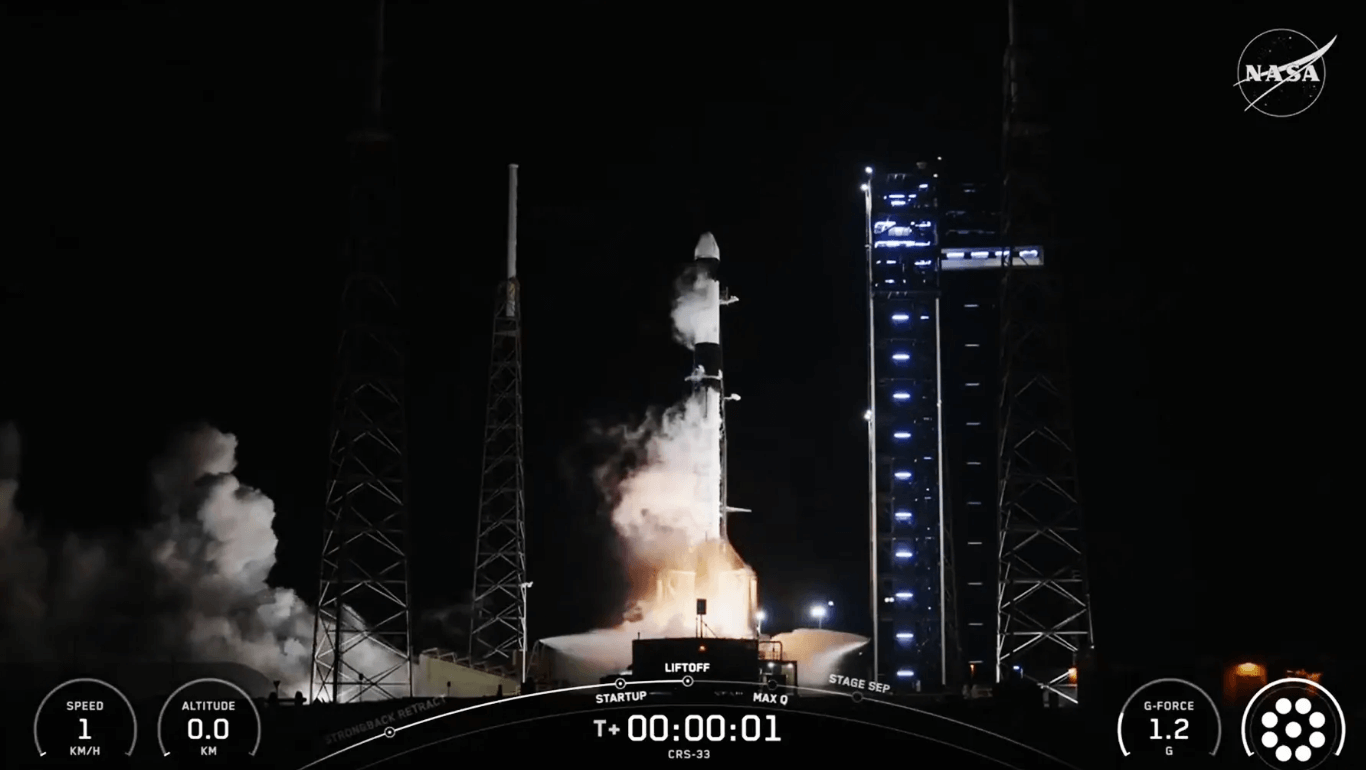
Allen Institute cells blast off into outer space
Researchers from Cedars-Sinai are using Allen Institute cell lines to grow organoids in space, which could help design better drugs for disease
video
What Are the Parts of a Cell?
From mitochondria to endoplasmic reticulum, this educational video explores the major cell organelles and their functions.
news
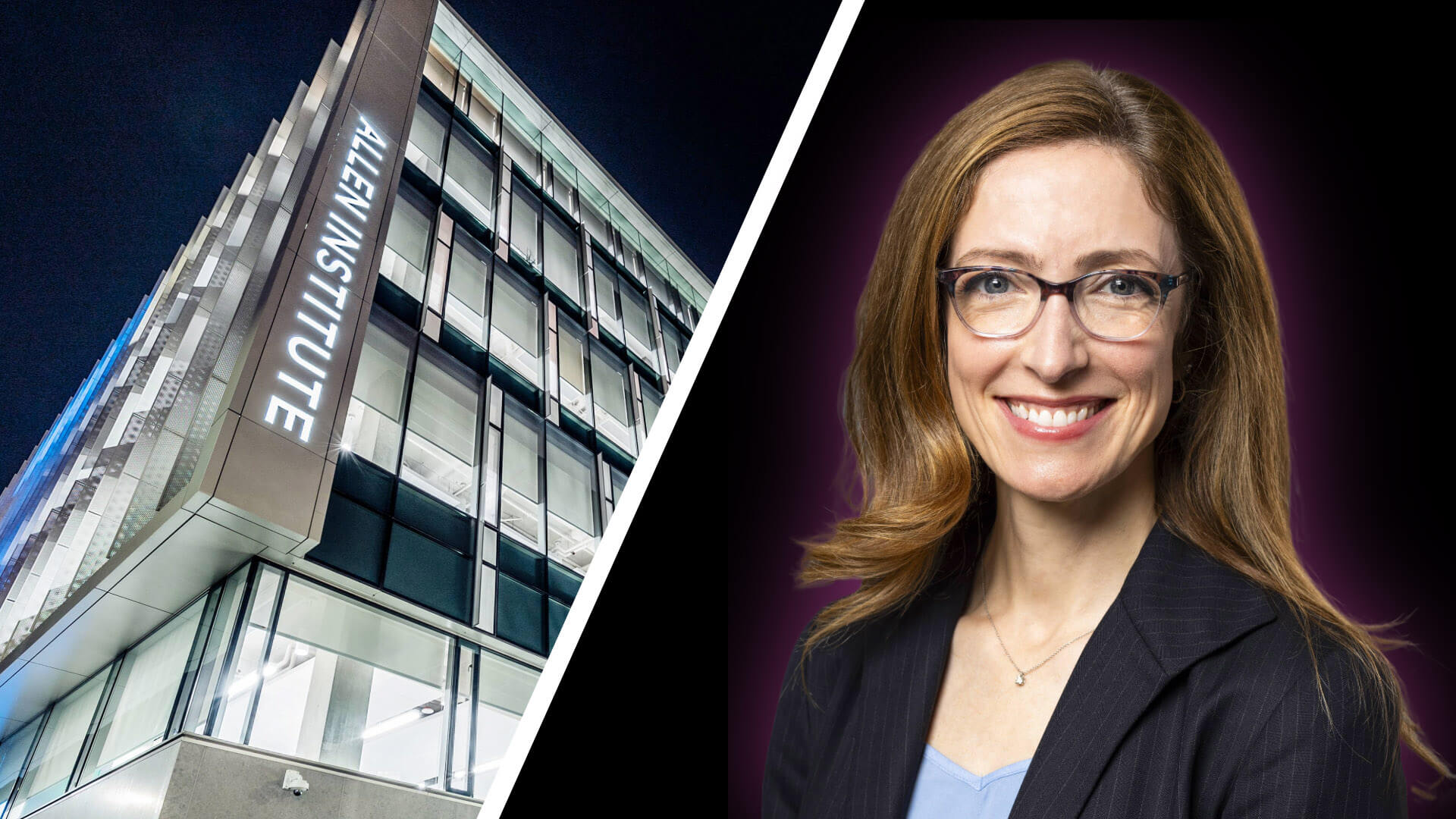
Allen Institute names Sarah Norris Hall as next Chief Financial Officer
Norris Hall’s experience and insight into financial operations will help enable and propel transformative science at the Allen Institute.
video
CellScapes: Launching a new era of cellular biology
CellScapes introduces a groundbreaking approach that will combine cutting-edge imaging and powerful computer models to track how cells change, communicate, and organize.
video
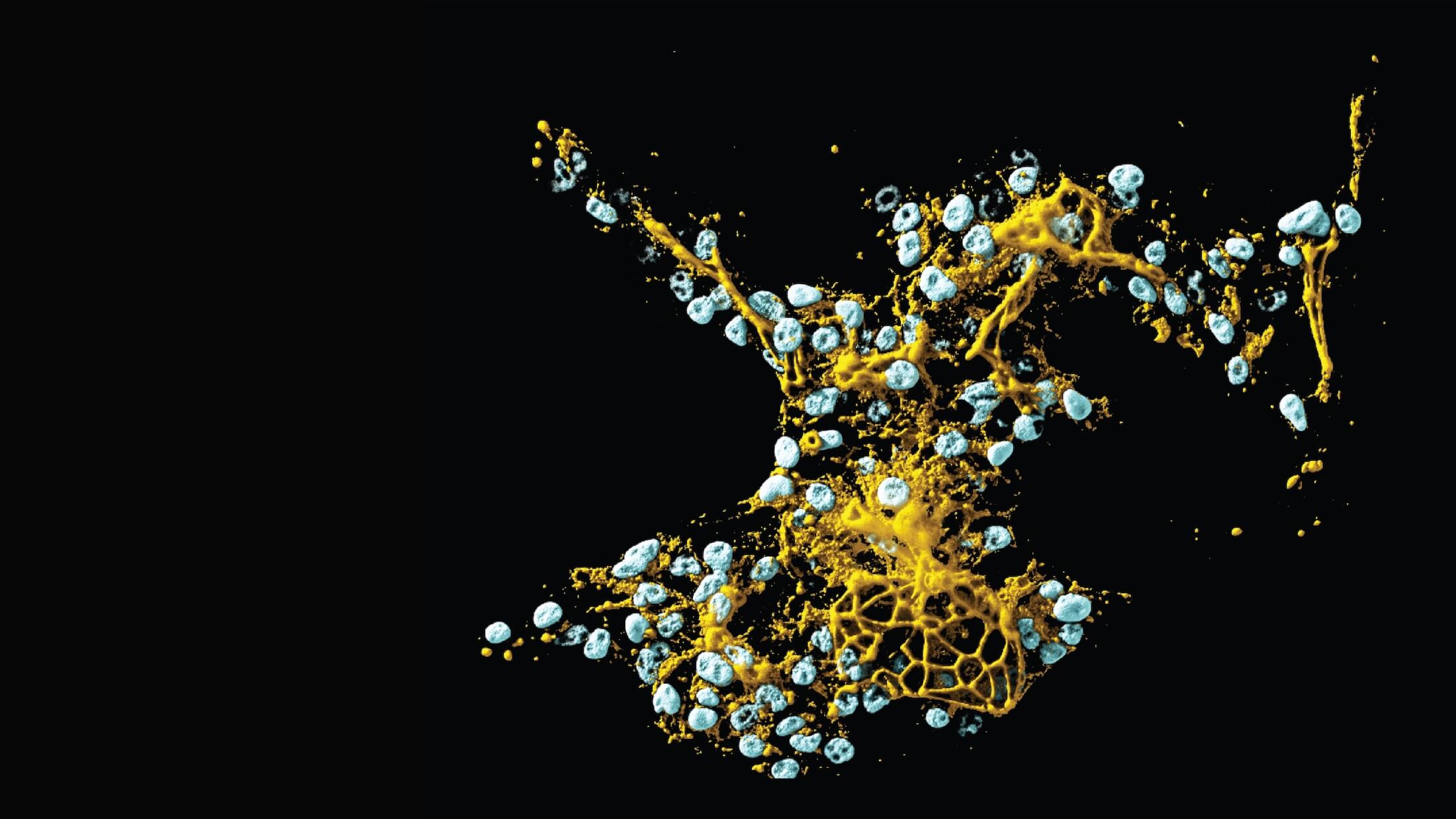
A Decade of Discovery at the Allen Institute for Cell Science
Celebrating 10 Years of Impact
we acceleratedevelopcatalyzeimpact

science done differently. shared with the world.

explore our accelerators

brain science

Mapping every cell, connection, and circuit in the brain—openly shared with the world.

cell science

Decoding how cells become tissues, then programming that knowledge into powerful new research tools.

neural dynamics

Revealing the brain's hidden algorithms that transform neural activity into real-world behavior.

immunology

Creating the deepest open reference for the healthy human immune system ever built.

synthetic biology

Engineering cells to record their own histories, transforming how we understand disease over time.

research

Big questions, open answers, and science built to be shared.

education

Inspiring the next generation of scientists through open science resources.

impact

Our science is empowering researchers and advancing health worldwide.
advancing science through open, collaborative research
Get the allen institute newsletter
Stay informed on the latest breakthroughs in neuroscience, bioscience, and AI-driven research.
allen institute
impactpeople & teamscareers & opportunitiesalumnihistory & founder
science resources
allencell.orgallenimmunology.orgallenneuraldynamics.orgbrain-bican.orgbrain-map.orgmicrons-explorer.org
research
brain sciencecell scienceneural dynamicsimmunologysynthetic biologypublications
education
science educationfield tripsprofessional developmenteducation resources
quick links
newseventsopen sciencepodcastscience resourceshuman brain donationvisit uscontact
follow us/

allen institute, 615 Westlake Ave North, Seattle, WA 98109 +12065487055

© 0000 allen institute. all rights reserved.
privacy policyterms of usecitation policyemployee portalpolicy & compliance