impact
impact
open science
subheadline
careers and opportunities
subheadline
people & teams
people & teams
subheadline
allenites
subheadline
allen institute advisors
subheadline
board of directors
subheadline
shanahan foundation fellowship
subheadline
next generation leaders
subheadline
research
overview
our approach
subheadline
publications
subheadline
open science
subheadline
accelerator
brain science
subheadline
cell science
subheadline
neural dynamics
subheadline
immunology
subheadline
synthetic biology
subheadline
education
education
science education
subheadline
education resources
subheadline
field trips
subheadline
open science
subheadline
open science quest
subheadline
news
news
stories
subheadline
podcast
subheadline
sign up for our newsletter
subheadline
events
events
all events
subheadline
conferences
subheadline
event code of conduct
subheadline
events
open science quest
subheadline
summer workshop on the dynamic brain
subheadline
open science week
subheadline
brain fest
subheadline
science resources
science resources
allencell.org
subheadline
allenimmunology.org
subheadline
allenneuraldynamics.org
subheadline
brain-bican.org
subheadline
brain-map.org
subheadline
microns-explorer.org
subheadline
impact
back to menu
impact
open science
subheading
careers and opportunities
subheading
people & teams
people & teams
subheading
allen institute advisors
subheading
board of directors
subheading
shanahan foundation fellowship
subheading
next generation leaders
subheading
research
back to menu
impact
Label
subheading
Label
subheading
people & teams
education
back to menu
research
Label
subheading
Label
subheading
Heading
news
back to menu
research
Label
subheading
Label
subheading
Heading
events
back to menu
research
Label
subheading
Label
subheading
Heading
science resources
back to menu
science resources
allencell.org
subheading
allenimmunology.org
subheading
allenneuraldynamics.org
subheading
brain-bican.org
subheading
brain-map.org
subheading
microns-explorer.org
subheading
search
impact
people

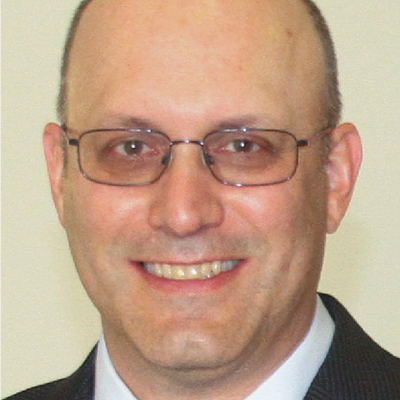
Daniel Starr

University of California, Davis

Daniel Starr is a professor of Molecular and Cellular Biology at the University of California, Davis. His laboratory studies how nuclei move, and then anchor to, a specific part of a cell throughout development. The Starr Lab focuses on the molecular mechanisms of KASH and SUN proteins in the nuclear envelope to determine how the nucleus connects to the cytoskeleton, primarily using C. elegans as a model system to better understand nuclear positioning in a developmental context. The lab team answers fundamental questions in cell and developmental biology, including how motors target to the nuclear envelope and how the activities of motors are switched throughout development, how the nuclear lamina is connected to the nuclear envelope, how actin filaments move nuclei, and how molecular forces are transferred across the nuclear envelope. All of these mechanisms have been shown to be conserved across eukaryotes and defects in these processes lead to a variety of neuromuscular diseases. The Starr Lab is particularly interested in how these mechanisms are regulated to squeeze nuclei through constricted spaces and how this relates to development and cancer metastasis.

Dr. Starr was trained as a developmental geneticist in the laboratory of Dr. Michael Goldberg at Cornell University, where he characterized a complex of kinetochore proteins, showed they were conserved across eukaryotes, and found that they function to recruit the microtubule motor dynein to the kinetochore to move chromosomes. Starr then joined Min Han’s group with the Howard Hughes Medical Institute at the University of Colorado, Boulder. There he and his colleagues used forward genetics in C. elegans to discover KASH proteins and propose the LINC complex model where KASH and SUN proteins span the nuclear envelope and connect the nucleus to the cytoskeleton.

In 2003, Starr established his research group at UC Davis. He was named a Basil O’Conner Scholar by the March of Dimes in 2005, which supports early-career scientists embarking on independent research careers to study health issues of mothers and babies. Starr also is the director of the PREP@UC Davis training program, and serves as a deputy editor for Science Advances.
back to team
featured contributions
featured publications
featured media
featured stories
featured events

featured publications

No articles for the category

featured events

No articles for the category

featured stories

No articles for the category

featured media

No articles for the category
we acceleratedevelopcatalyzeimpact

science done differently. shared with the world.

explore our accelerators

brain science

Mapping every cell, connection, and circuit in the brain—openly shared with the world.

cell science

Decoding how cells become tissues, then programming that knowledge into powerful new research tools.

neural dynamics

Revealing the brain's hidden algorithms that transform neural activity into real-world behavior.

immunology

Creating the deepest open reference for the healthy human immune system ever built.

synthetic biology

Engineering cells to record their own histories, transforming how we understand disease over time.

research

Big questions, open answers, and science built to be shared.

education

Inspiring the next generation of scientists through open science resources.

impact

Our science is empowering researchers and advancing health worldwide.
advancing science through open, collaborative research
Get the allen institute newsletter
Stay informed on the latest breakthroughs in neuroscience, bioscience, and AI-driven research.
allen institute
impactpeople & teamscareers & opportunitiesalumnihistory & founder
science resources
allencell.orgallenimmunology.orgallenneuraldynamics.orgbrain-bican.orgbrain-map.orgmicrons-explorer.org
research
brain sciencecell scienceneural dynamicsimmunologysynthetic biologypublications
education
science educationfield tripsprofessional developmenteducation resources
quick links
newseventsopen sciencepodcastscience resourceshuman brain donationvisit uscontact
follow us/

allen institute, 615 Westlake Ave North, Seattle, WA 98109 +12065487055

© 0000 allen institute. all rights reserved.
privacy policyterms of usecitation policyemployee portalpolicy & compliance