goals and approach
The “Sense” team is part of a larger effort that includes teams focused on expanding our abilities to engineer cells and genomes to autonomously “Write,” and “Read” at a molecular level. It is building and improving signal conversion technologies aimed at sensing changes in the cell and transmitting that information to modules that ‘Write’ those changes to the cell’s DNA. Essentially, the team improves the performance of artificial signal transduction capabilities, e.g., using ENGRAM. The team’s goal is to develop sensors that are sensitive and specific, robust, inert, fast, and have broad applicability. By doing so, the team hopes to capture signaling and lineage histories of many thousands of individual cells.
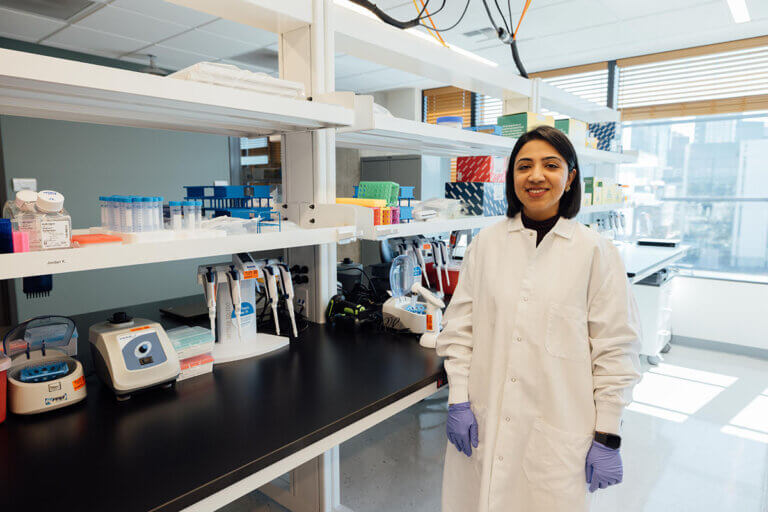
Lead scientist of the Sense Team, Dr. Hina Iftikhar at the opening of the SeaHub lab at the Allen Institute
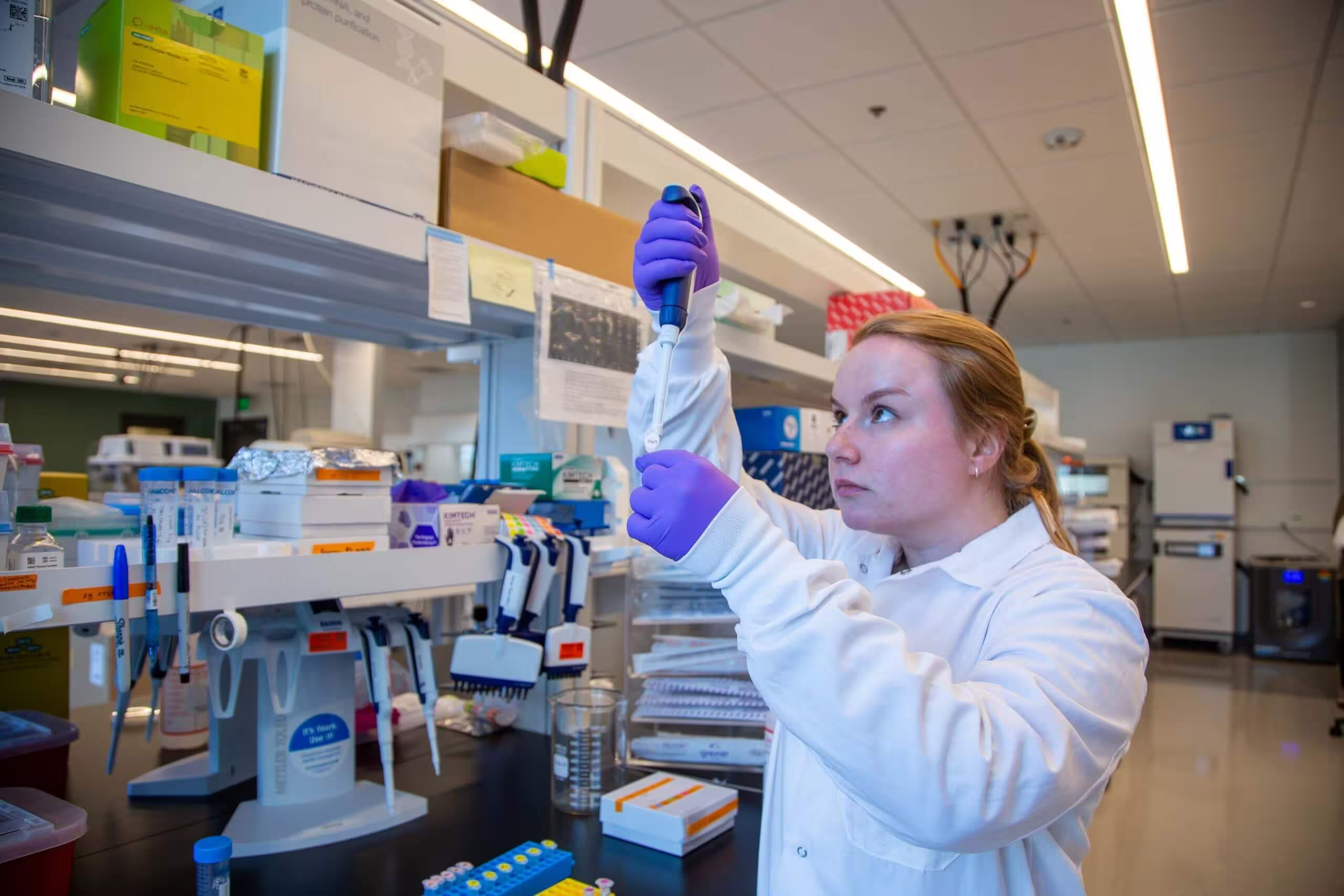
Diana Vedenova (Sense Team) treats an in vitro transcribed (IVT) RNA sample with DNase to remove residual DNA. She pauses briefly to double-check the volume setting on the pipette before proceeding with the addition of the enzyme, a precise pipetting step.