in this article
In a relatively short period of time, we and other mammals create our bodies’ dozens of different organs from a few thin layers of cells. In mice, that period is only four days long. In humans, it’s complete before the end of the first trimester of pregnancy.
Now, a new study by researchers at the Allen Discovery Center at UW Medicine has traced that important period of organ formation, cell by cell, in the developing mouse. Published today in the journal Nature, the study is by far the largest dataset of its kind to date.
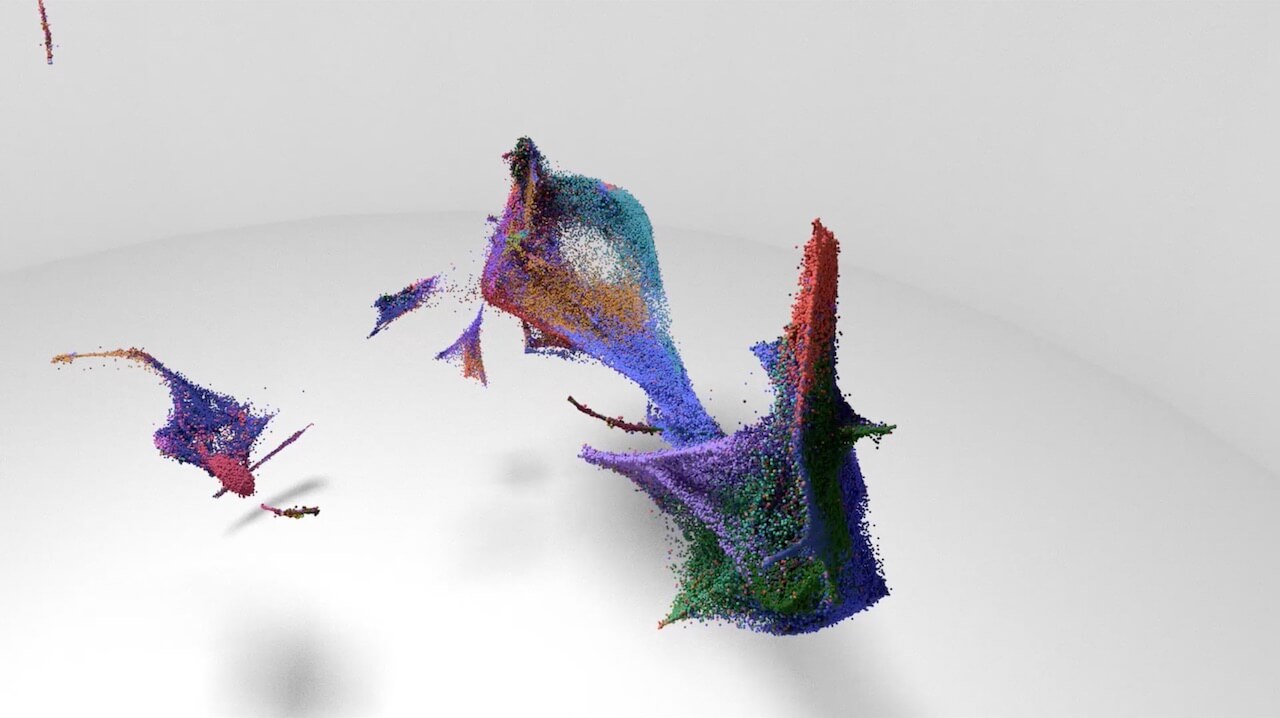
The study captured the genes that switch on and off across 2 million different cells as they go from undistinguished cellular precursors to becoming the animals’ stomach, muscles, brain, skin and everything else in between.
Understanding how we grow from one cell into thousands of different types of cells, all connected and functioning together to make our adult bodies, is essential to understanding not only human biology, but much of life itself, said Jay Shendure, M.D., Ph.D., a senior author on the study and leader of the Allen Discovery Center.
“We each came from a single cell — not just every human, but every multicellular organism on the planet. These cell lineages result in us becoming functioning organisms, but are also what unites us,” said Shendure, who is also an Investigator of the Howard Hughes Medical Institute and Professor of Genome Sciences at the University of Washington. “Major subsets of the tree of life share this general developmental program.”
Development is also at the foundation of many human diseases, even those that don’t manifest until much later in life. “Not only developmental diseases, but myriad common diseases of adulthood have some root in processes of development, and we just don’t understand those things well enough yet,” Shendure said.
Understanding our genetic program
The study relied on a new technique developed by Junyue Cao, a UW graduate student working in the Allen Discovery Center and co-lead author on the paper, for measuring how genes are turned on and off, also known as gene expression, from individual cells across all parts of the animals’ bodies and different stages of development. The researchers labeled the output of each cell’s genes with a unique set of three molecular barcodes, which are then read out at the same time as the rest of the cell’s gene expression data.
This triple-labeling means the researchers can mix many cells together in one test tube to capture their gene expression and still trace those gene products back to a single cell, thanks to their individual barcodes. It’s the reason why Cao could run this 2 million-cell experiment in under two weeks, but the technique development itself took close to a year — as did the analysis of the resulting pile of data.
Cao, together with Malte Spielmann, Ph.D., a former UW postdoctoral fellow, co-first author on the paper and now faculty at the Max Planck Institute for Molecular Genetics, used this method to study the gene expression of single cells from 61 lab mouse embryos of different ages across that four-day window of development. Their analysis didn’t capture every single cell in these embryos, but from the researchers’ estimates, they got pretty close in some of the developmental stages. They were able to study about 80 percent of cells in the earliest embryos and between 3 and 20 percent in the slightly older embryos.
This work is very different from classical methods of studying developmental biology, where researchers would mutate a single gene or a few genes and see what structures changed in the resulting developing animals.
“That approach only gives you a glimpse into this underlying genetic architecture of development,” said Cole Trapnell, Ph.D., an Assistant Professor of Genome Sciences at UW and a member of the Allen Discovery Center at UW Medicine. Trapnell was also a senior author on the study. “If you could watch the entire process unfold at incredibly high resolution and then apply sophisticated computer algorithms to organize the data, you might be able to map out much bigger pieces of the genetic program that control development,” he said.
This study isn’t quite at that point yet. The researchers didn’t track cells in the same animal as they developed, although that kind of lineage tracing is one of their long-term goals. But it’s a step on that path and could still yield valuable information about the biology of development, the researchers said.
In their study, they delved into a few key types of development, namely the formation of limbs and of skeletal muscle, two general processes that are very similar in mice and humans. The researchers found hundreds of genes switching on and off in brief time periods in the specific cells that drive leg development, genes that hadn’t been linked to these cells in previous studies. They don’t yet know what those genes are doing, and there’s much more yet to uncover in this dataset, they said.
“It’s going to take a whole community of researchers years to look at this data to the point where we feel like we’ve exhausted it,” Trapnell said. “We’re really only scratching the surface of what this data will mean for the field.”
Citations
about the allen institute
The Allen Institute is an independent, 501(c)(3) nonprofit research organization founded by philanthropist and visionary, the late Paul G. Allen. The Allen Institute is dedicated to answering some of the biggest questions in bioscience and accelerating research worldwide. The Institute is a recognized leader in large-scale research with a commitment to an open science model. For more information, visit alleninstitute.org.