in this article
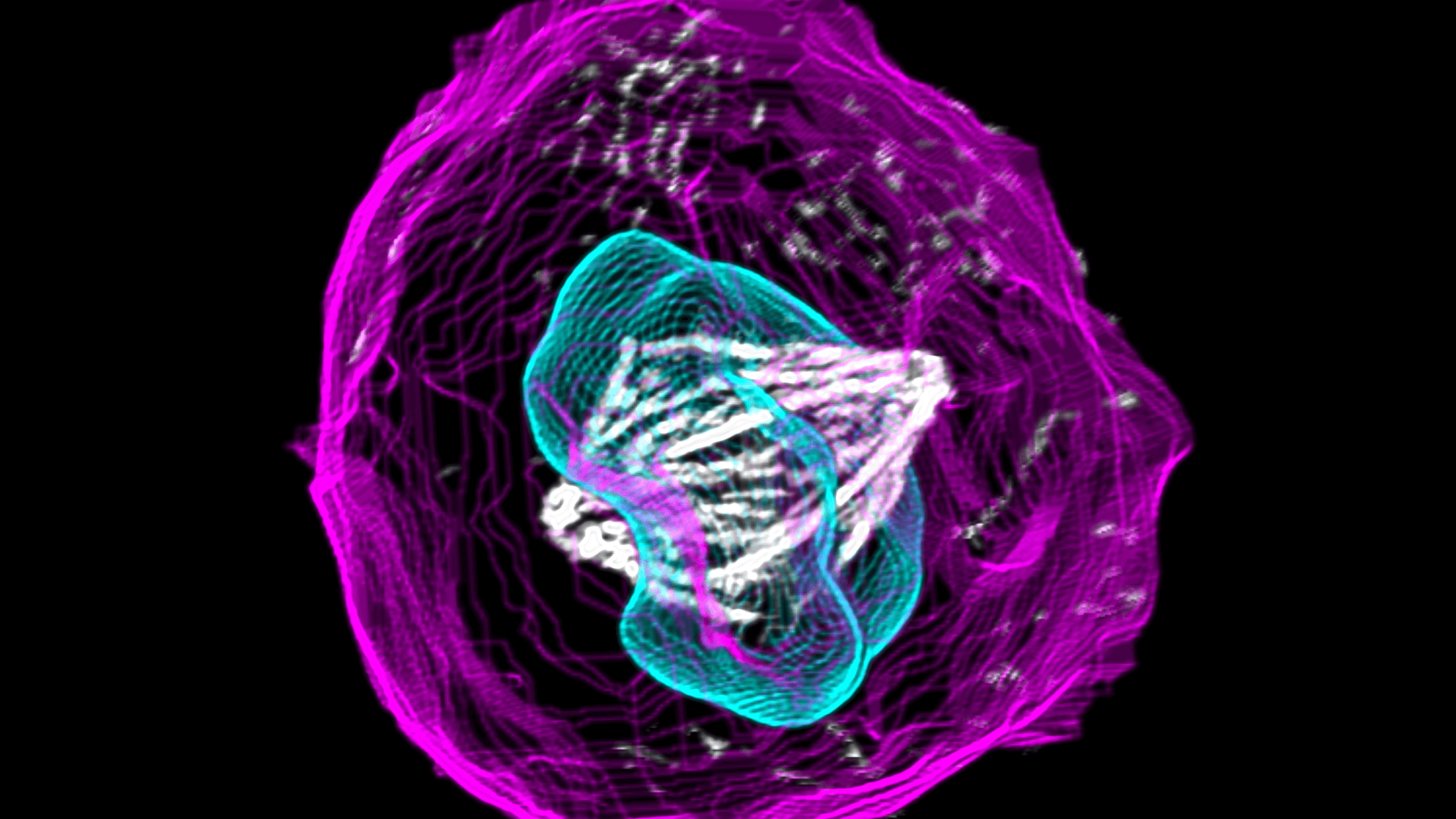
The Allen Institute for Cell Science today announces the launch of the Allen Cell Explorer: a one-of-a-kind portal and dynamic digital window into the human cell. The website combines large-scale 3D imaging data, the first application of deep learning to create predictive models of cell organization, gene edited human stem cell lines and a growing suite of powerful tools. The Allen Cell Explorer will be the platform for these and future publicly available resources created and shared by the Allen Institute for Cell Science.
“Cells are incredibly complex, with thousands of moving and interacting parts that work together to drive and regulate both cell architecture and behavior,” says Rick Horwitz, Ph.D., Executive Director of the Allen Institute for Cell Science. “We are beyond excited to launch the Allen Cell Explorer website and to share our cells, incredible image data, predictive models and more with the global scientific community.”
“The Allen Cell Explorer gives an extraordinary view into the organization of human cells” says Allan Jones, Ph.D., President and CEO of the Allen Institute. “The first installment of these freely available tools from the Allen Institute for Cell Science follows in our legacy, started with the Allen Institute for Brain Science and the Allen Brain Atlas, of creating and sharing powerful open science tools that fuel innovation around the world.”
The Integrated Cell Model, a featured component of the Allen Cell Explorer launch, is the first model to apply deep learning techniques to predict the organization of human stem cells. To create the model, researchers trained a computational tool on thousands of high quality images of human stem cells to learn how their components are organized. The website currently showcases comparisons between the Integrated Cell Model’s predictions of cellular organization and actual image data, demonstrating the impressive accuracy of the model’s predictions. Future iterations of the model will also allow users to generate and explore these virtual cells in three dimensions.
“This is the first time researchers have used deep learning to try and understand the elusive question of how actual cells are organized,” says Horwitz. “The cartoons we rely on in textbooks, which are based on an artist’s interpretation of data from a relatively small number of cells, will eventually be replaced by data driven models of this kind from very large numbers of cells.”
An additional tool on the portal, the 3D Cell Viewer, provides online access to the largest publicly available collection of human stem cells visualized in three dimensions. Users can view and manipulate thousands of gene edited cells and explore the astonishing variability of their intracellular organization—even among cells that are clones of one another—directly in a web browser, or by downloading data to their desktop.
The Allen Cell Explorer also includes access to state-of-the-art biological tools. The Cell Catalog contains detailed information and quality control measures on the Allen Institute’s gene edited human stem cell lines, which are available to the community as part of the Allen Cell Collection at the Coriell Cell Repository. To open the door for even more researchers to harness the power of gene editing, the plasmids used to create the lines and instructions on how to use them are available through Addgene.
“One of the things that excites me most about the launch of the Allen Cell Explorer is how it uses cells that are far more relevant to human biology than the cultured cells that have been used by necessity for much of modern biomedical research,” says Anne E. Carpenter, Ph.D., Director of the Imaging Platform at the Broad Institute of Harvard and MIT.
“Taken as a whole, this publicly available portal will enable researchers to ask important new questions about the variability of cells, and how they change as they grow, differentiate and respond to drugs,” says Horwitz. “Working as a community, we can apply and expand on these tools to make leaps forward in the field of cell biology and have great impact on our study of human health and disease.”
About the Allen Institute for Cell Science
The Allen Institute for Cell Science is a division of the Allen Institute (alleninstitute.org), an independent, 501(c)(3) nonprofit medical research organization, and is a research organization dedicated to understanding and modeling cells: the fundamental units of life. By integrating technologies, approaches, models and data into a common standardized framework, the Allen Institute for Cell Science is creating dynamic, visual models of how genetic information is transformed into cellular behavior, and how the molecules and organelles within each cell interact and function as systems. These predictive models will enable the cell science community to better understand the role of cells in both health and disease. The Allen Institute for Cell Science was launched in 2014 with a contribution from founder and philanthropist Paul G. Allen. The data, tools and models from the Allen Institute for Cell Science will be publicly available online.
Citations
about the allen institute
The Allen Institute is an independent, 501(c)(3) nonprofit research organization founded by philanthropist and visionary, the late Paul G. Allen. The Allen Institute is dedicated to answering some of the biggest questions in bioscience and accelerating research worldwide. The Institute is a recognized leader in large-scale research with a commitment to an open science model. For more information, visit alleninstitute.org.