in this article
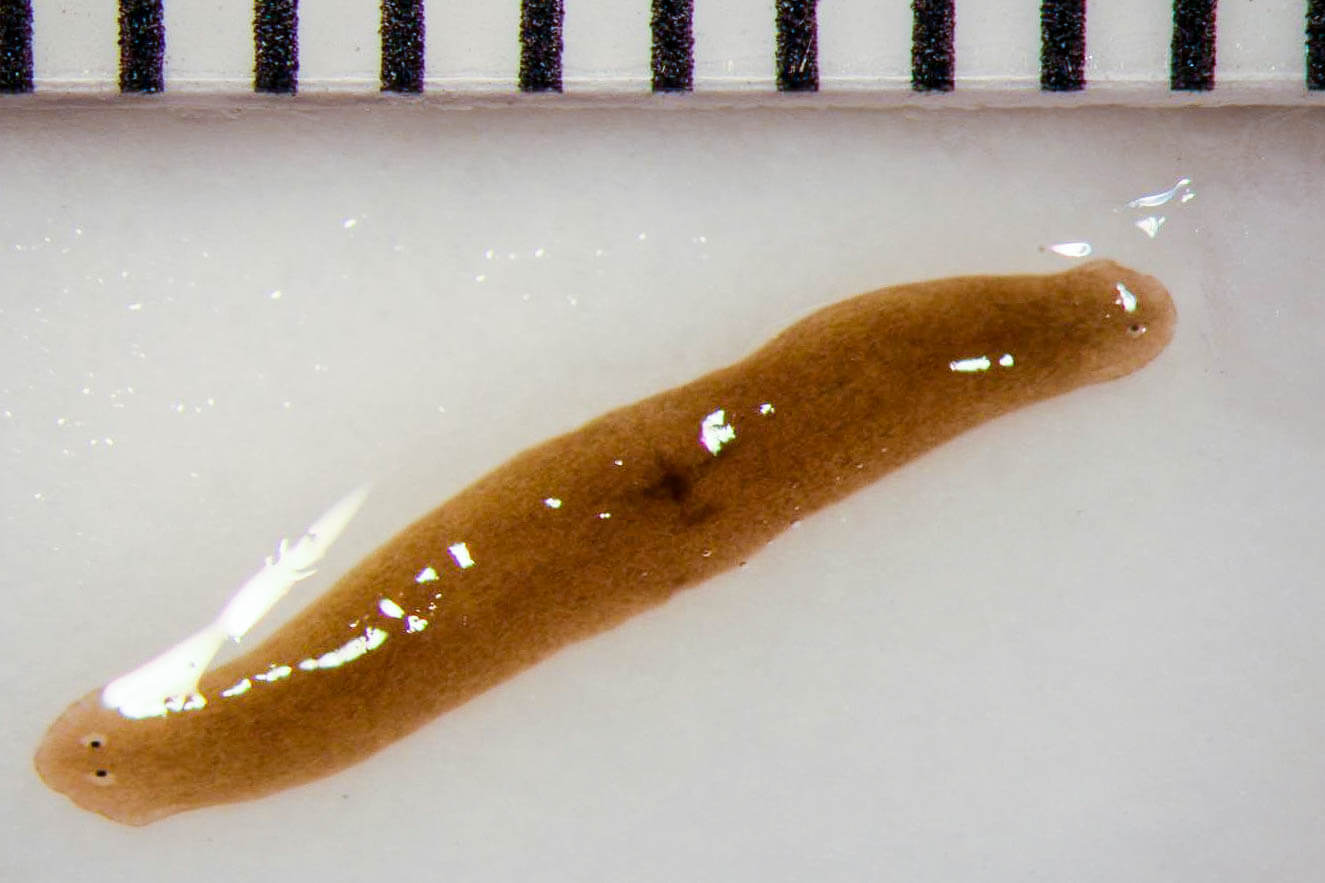
Flatworms that spent five weeks aboard the International Space Station displayed some surprising changes in body plan upon their return to Earth, including the generation of a rare double-headed worm. The research has implications for human and animal space travelers and for regenerative and bioengineering science.
Planaria flatworms are frequently used for studies because of their remarkable ability to regenerate when parts of their bodies are amputated. In this study, which was published in the journal Regeneration, researchers sent whole and fragmented worms to space. One of the fragments that spent time in space regenerated into a rare double-headed worm—a surprising result in itself. Even more surprising, when the double-headed worm was amputated, its fragments also developed into double-headed worms, suggesting that the change in the body plan was permanent.
“During regeneration, development, and cancer suppression, body patterning is subject to the influence of physical forces, such as electric fields, magnetic fields, electromagnetic fields, and other biophysical factors,” says Michael Levin, Ph.D., director of the Allen Discovery Center at Tufts. “We want to learn more about how these forces affect anatomy, behavior and microbiology.”
“As humans transition toward becoming a space-faring species, it is important that we deduce the impact of space flight on regenerative health for the sake of medicine and the future of space laboratory research,” added Junji Morokuma, research associate in Levin’s lab and first author on the paper.
Press Coverage
- Science Friday – Space Life Could Give You An Extra Head (If You’re A Flatworm)
- CBS News – Worm grows surprising mutation after space visit
- Discover Magazine – Flatworm Travels to Space With One Head, Comes Back With Two
- LiveScience – Worm Grows 2 Heads in Space, Surprising Scientists
- Smithsonian Magazine – What Space-Faring Flatworms Can Teach Us About Human Health
Citations
about the allen institute
The Allen Institute is an independent, 501(c)(3) nonprofit research organization founded by philanthropist and visionary, the late Paul G. Allen. The Allen Institute is dedicated to answering some of the biggest questions in bioscience and accelerating research worldwide. The Institute is a recognized leader in large-scale research with a commitment to an open science model. For more information, visit alleninstitute.org.