in this article
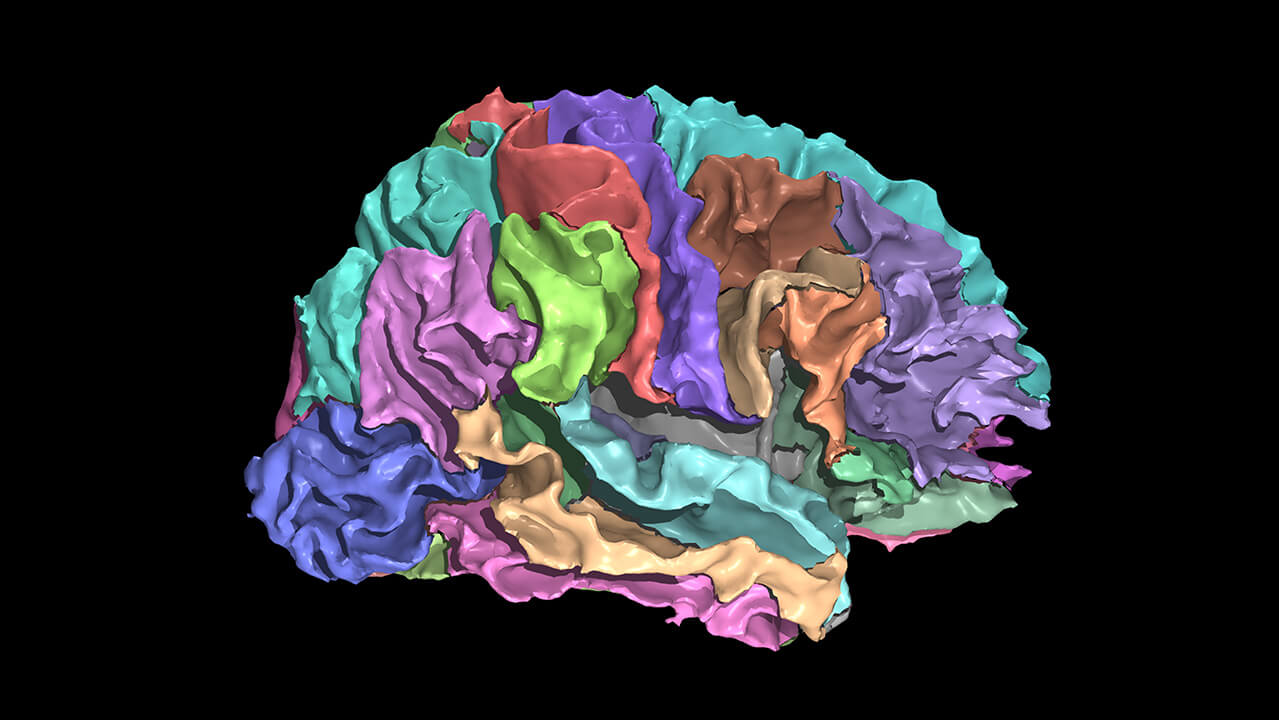
The Allen Institute for Brain Science has released the world’s first anatomically and genomically comprehensive human brain map, a previously unthinkable feat made possible through leading-edge technology and more than four years of rigorous studies and documentation. The unprecedented mappings are the foundation for the Allen Human Brain Atlas, an online public resource developed to advance the Institute’s goal to accelerate understanding of how the human brain works and fuel new discovery among the global research community.
In developing the Allen Human Brain Atlas, the Allen Institute has now thoroughly characterized and mapped the biochemistry of two normal adult human brains, providing opportunities for scientists to study the brain with new detail and accuracy. The data reveal a striking 94 percent similarity between human brains, establishing strong patterns as a critical foundation for translational and clinical research. In addition, data analysis from the two human brains indicate that at least 82 percent of all human genes are expressed in the brain, highlighting its tremendous complexity while also providing an essential genetic blueprint to understand brain functionality better and propel research in neurologic disease and other brain disorders.
“Until now, a definitive map of the human brain, at this level of detail, simply hasn’t existed,” said Allan Jones, Ph.D., Chief Executive Officer of the Allen Institute for Brain Science. “The Allen Human Brain Atlas provides never-before-seen views into our most complex and most important organ. Understanding how our genes are used in our brains will help scientists and the medical community better understand and discover new treatments for the full spectrum of brain diseases and disorders, from mental illness and drug addiction, to Alzheimer’s and Parkinson’s diseases, multiple sclerosis, autism and more.”
Similar to a high-powered, multi-functional GPS navigation system, the Allen Human Brain Atlas identifies 1,000 anatomical sites in the human brain, backed by more than 100 million data points that indicate the particular gene expression and underlying biochemistry of each site. Scientists can use the Allen Human Brain Atlas to explore the human brain and identify how disease and trauma, including physical brain injuries and mental health disorders, affect specific areas of the brain. This powerful resource makes it possible to pinpoint where a particular drug acts anatomically in the brain, to ultimately better control the successful outcome of numerous therapies.
“The Allen Institute is a powerful force in modern science,” said Dr. Edward Jones, neuroscientist at the University of California, Davis. “They’ve applied an industrialized approach and high-output technology to accomplish what no other lab has ever done. The original data produced for the mouse brain revolutionized neuroscience and now the Allen Human Brain Atlas delivers extremely rare and essential information that most researchers could not otherwise access. They are truly paving the way for the future of research.”
The Allen Human Brain Atlas is free and available to scientists, physicians and the education community as an online public resource at www.brain-map.org.
Previously, as its inaugural initiative, the Allen Institute for Brain Science completed mappings of the adult mouse brain in 2006, similarly making the data available free to scientists. Overall, those data have led to a number of significant research advances around the world, including the publishing of over 500 peer-reviewed papers citing the Allen Mouse Brain Atlas to support research conclusions.
About the Allen Human Brain Atlas
A key aspect of the Atlas that makes it a powerful research tool is that it fully integrates several different kindsof data across different scales of brain exploration. Data incorporated into the Atlas include magneticresonance imaging (MRI), diffusion tensor imaging (DTI), as well as histology and gene expression dataderived from both microarray and in situ hybridization (ISH) approaches.
Users of the Allen Human Brain Atlas comprise a diverse array of biomedical researchers – primarily neuroscientists – throughout the world. They include scientists who study the human brain itself, as well as those working in mouse and other model systems, providing a rare and important opportunity for them to probe the relevance of the findings to humans. Already, some 4,000 unique visitors are accessing the new Atlas each month.
It is anticipated that the Allen Human Brain Atlas will be used in small and large-scale applications to examine diseases and disorders, such as obesity, Parkinson’s disease, autism, schizophrenia, Alzheimer’s disease and multiple sclerosis — as well as those exploring how the healthy brain works.
The Allen Institute for Brain Science will continue to expand the Allen Human Brain Atlas in the coming years, with new data from additional brains, as well as enhanced tools for searching, analyzing and viewing the data.
Citations
about the allen institute
The Allen Institute is an independent, 501(c)(3) nonprofit research organization founded by philanthropist and visionary, the late Paul G. Allen. The Allen Institute is dedicated to answering some of the biggest questions in bioscience and accelerating research worldwide. The Institute is a recognized leader in large-scale research with a commitment to an open science model. For more information, visit alleninstitute.org.




