in this article
Karl Koehler, Ph.D., and his colleagues were in for a long wait. The research team had set up a system to grow human skin in the lab, starting with induced pluripotent stem cells, naïve adult human cells with the potential to give rise to many other kinds of tissues.
With its complex layers and different types of cells, skin takes a while to form, be it in a petri dish or a growing human. After 10 weeks, the team finally saw what they were waiting for: The tiny clumps of skin-in-a-dish were growing hair follicles.
Growing hair isn’t the end goal, Koehler said, although this is the first time hairy human skin has been made in the lab. Rather, the hair is a marker of mature, developed human skin — what turns out to be a more lifelike version of skin than anyone else has yet managed to engineer. Along with biologist Jiyoon Lee, Ph.D., Koehler led a study published Wednesday in the journal Nature describing these advances.
The skin grows in tiny, oddly shaped clusters or cysts known as organoids. The researchers say they can use these organoids to better understand how skin develops; to study the biology of certain diseases like skin cancer and epidermolysis bullosa, a rare genetic disorder that causes increased blistering; and even, one day, as the basis for better skin grafts for burn victims or other surgical uses.
The research team has already shown that in a mouse model of wound healing, these little skin blobs flatten out and grow into a skin sheet, complete with tufts of black hair.
“The ultimate, long-term goal is to use these organoids for skin reconstructive surgery,” said Koehler, who is an assistant professor at Boston Children’s Hospital and Harvard Medical School. “We’re hoping we can use skin organoids kind of like seeds to generate new skin in a wound.”
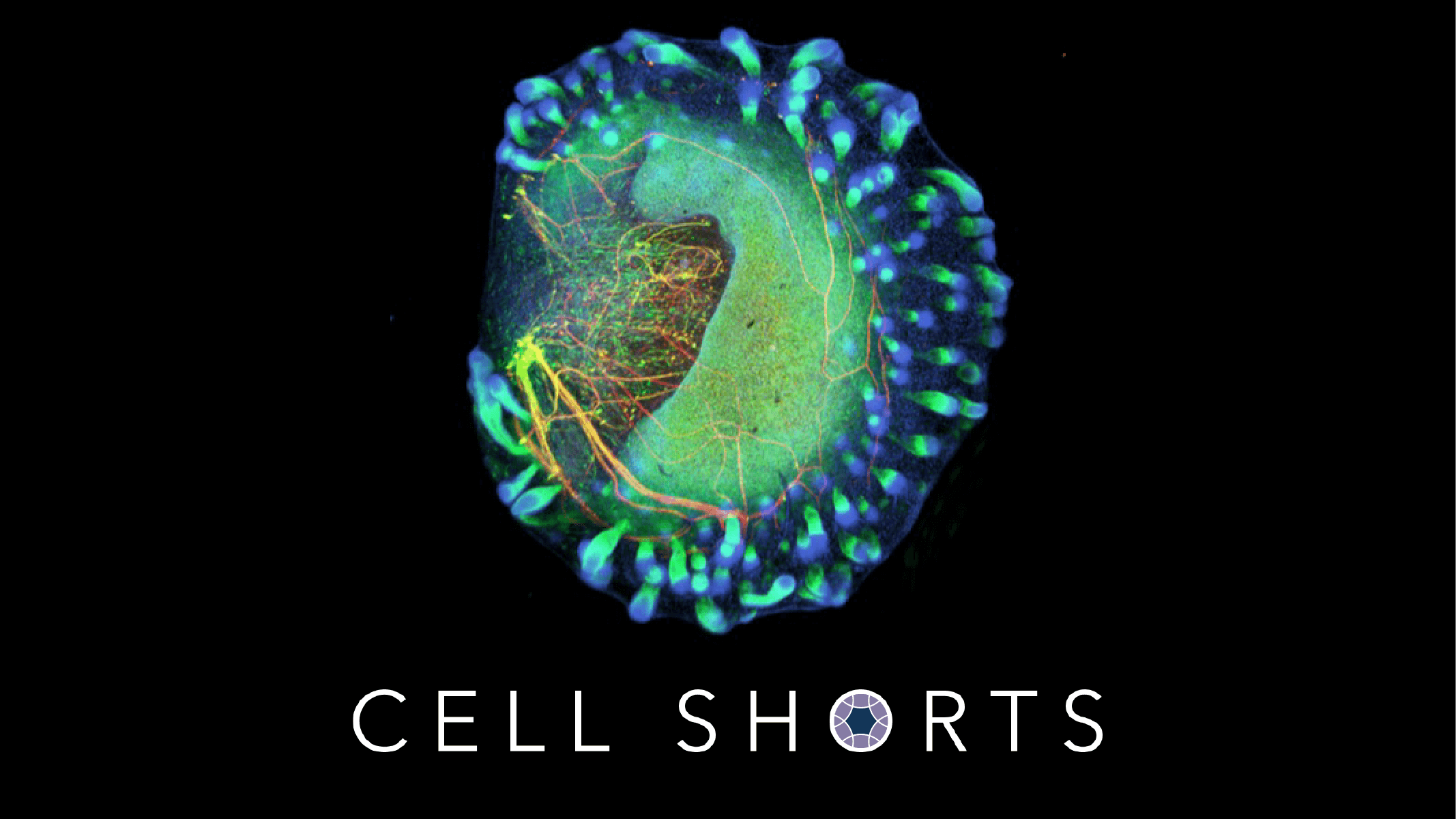
Compared to studying individual cells in a petri dish, organoids allow researchers to study cells in more lifelike environs, as the clumps of tissue will form different types of structures akin to real organs in the body. Unlike some other types of organoids, which grow in spheres, the skin organoids sprout fleshy tentacles, Koehler said, like tiny octopi. That’s because they actually grow inside-out, with hair growing into their centers and the bases of the hair follicles pushing outward.

From ears to skin
It wasn’t always Koehler’s plan to study skin. As an otolaryngologist, or someone who researches the ear, nose and throat, he was originally working on growing inner ear tissue in the lab. Through the course of that project, which used mouse stem cells rather than human cells, he and his colleagues managed to generate skin tissue as a by-product.
That wasn’t a surprise to the researchers. They knew that the skin and the inner ear come from the same common source in mammal development. But they were surprised by how good the mouse skin looked compared to previous attempts to grow skin in the lab. It had layers of dermis and epidermis, just like real skin, and tiny mouse hair follicles.
So they set out to replicate the process using human stem cells, adding additional steps to get the skin to further mature and develop. They turned to cell lines from the Allen Cell Collection, a suite of human stem cells gene-edited by researchers at the Allen Institute for Cell Science, a division of the Allen Institute, to tag certain parts of the cell with fluorescent labels. Ironically, the Allen Cell Collection is built from stem cells first generated at the Gladstone Institutes from an adult donor’s skin cells — although that doesn’t mean the stem cells are more similar to skin than they are to other types of tissue.
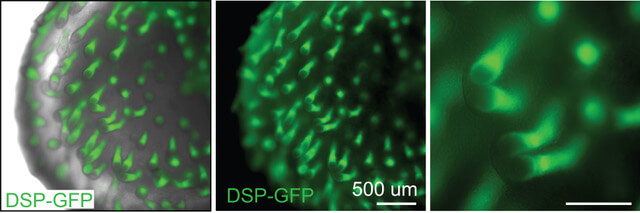
The team used one of the first stem cell lines released from the collection as the basis for their human skin organoids. This cell line labels a cellular structure known as desmosomes, which help cells stick together and withstand mechanical forces. The outer layer of skin, the epidermis, is chock full of desmosomes. These glowing structures allowed the researchers to better track the formation of different skin layers in the organoids — they could see the epidermis developing in real-time as the fluorescent signal got brighter under the microscope. They were also able to spot the first stages of hair follicle growth: Before the follicles were large enough to see, the organoids sprouted glowing green dimples on their surfaces, marking the sites of each future hair shaft.
“The cell catalog has been definitely accelerating for our work,” Koehler said. “It was really fortuitous that they made the desmosome-labeling cell line and we could pick it up.”
They’re currently using another line from the cell collection in the next iteration of their skin organoids study, and they are also gene-editing their own fluorescent tags into the existing cell lines to track the development of multiple structures in the same organoids.
The researchers are also interested in studying other types of cells that reside in the skin. The human skin organoids develop sensory nerve cells that make connections with the organoids’ hair follicles, reminiscent of how our own skin’s nervous circuits enable us to feel touch. The team next plans to add a genetic label to the neurons to see if they switch on when something touches the hair follicles.
The skin organoids are missing one major type of cells, though: immune cells. Koehler and his colleagues are trying to figure out how to add human immune cells into the lab-grown skin, which he says is a crucial step for using the organoids to study skin-related diseases.
“This is already one of the most complete skin-in-a-dish models, but we’re thinking hard about how we can make it even more complex,” Koehler said. “Integrating immune cells would be a really important next step.”
Citations
about the allen institute
The Allen Institute is an independent, 501(c)(3) nonprofit research organization founded by philanthropist and visionary, the late Paul G. Allen. The Allen Institute is dedicated to answering some of the biggest questions in bioscience and accelerating research worldwide. The Institute is a recognized leader in large-scale research with a commitment to an open science model. For more information, visit alleninstitute.org.




