in this article
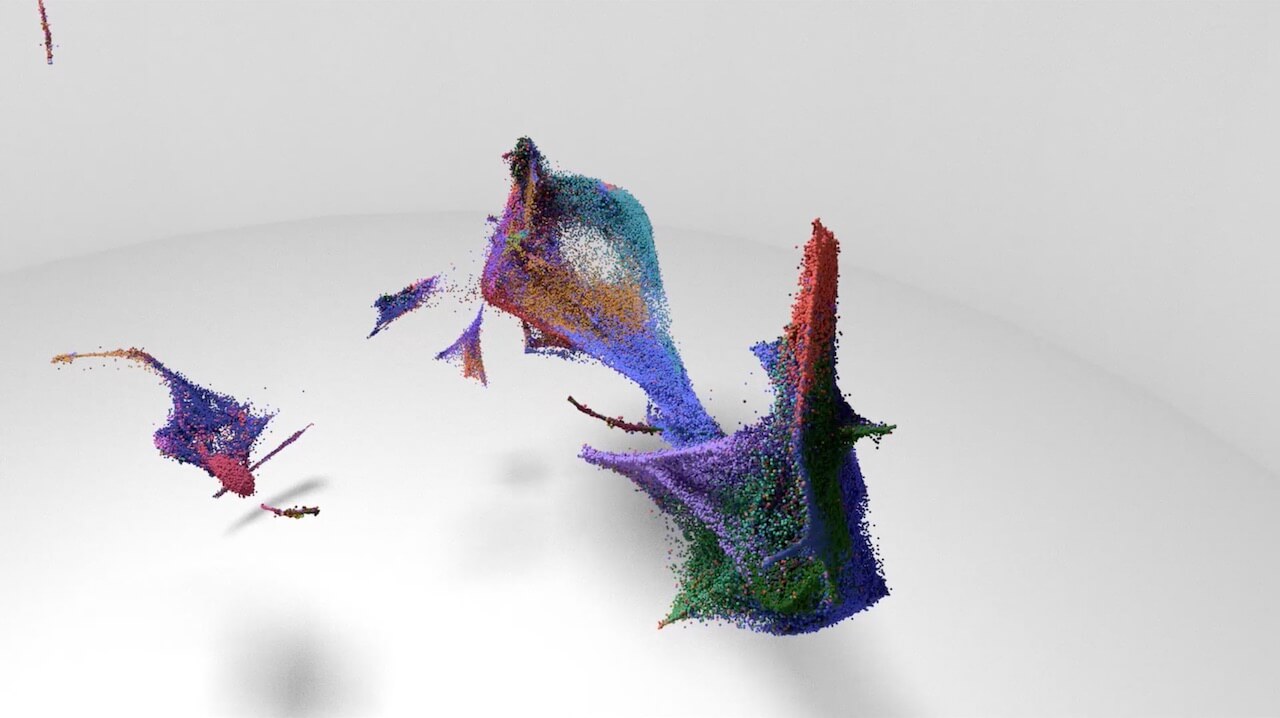
The Allen Institute and Sage Bionetworks today revealed the winning teams of the Allen Institute Cell Lineage Reconstruction DREAM Challenge, an open science competition for computational approaches to building accurate cell lineages in developmental biology.
“The field of cell lineage tracing needs innovative, specialized methods to analyze and understand these new types of experimental data,” said Kathryn Richmond, Ph.D., Director of The Paul G. Allen Frontiers Group, a division of the Allen Institute that supported the challenge. “We are thrilled that the computational biology community rallied around this challenge, and we can’t wait to see the insights in developmental biology that will result from their efforts.”
The experiments used in cell lineage tracing rely on molecular barcodes to reveal a developing creature’s cellular pedigree. These techniques are relatively new, and, to date, researchers have primarily used computational methods borrowed from the field of evolutionary biology to piece together the developmental lineages. In a broad sense, both fields reconstruct “family trees,” but there are enough differences that the scientists who head up the Allen Discovery Center at UW Medicine, Jay Shendure, M.D., Ph.D., and Michael Elowitz, Ph.D., felt that dedicated algorithms for cell lineage tracing could improve research in the field.
“I am happy to see that participants to the challenge adapted approaches from evolutionary biology to the specific problems posed by cell lineage tracing. Some participants also tried outside-the-box solutions,” said Pablo Meyer, Ph.D., a computational biologist at IBM and a director of the DREAM Challenges. “One of the main outcomes of this challenge is showing that algorithms built using data from a smaller set of trees can be implemented to effectively reconstruct a much larger and different type of tree.”
The Allen Institute DREAM Challenge ran from October 15, 2019, to January 31, 2020. Eleven international teams competed in the open science competition, which included three subchallenges that asked participants to reconstruct cell lineages from datasets of different sizes and types. DREAM challenges are open science competitions to develop computational solutions to biomedical research problems, on topics ranging from preterm birth to Parkinson’s disease to basic molecular biology. Sage Bionetworks provided the expertise and infrastructure to host this DREAM Challenge on their Synapse platform.
Challenge winners
Three teams tied for Subchallenge 1, which asked teams to reconstruct a small cell lineage tree of less than 100 cells based in part on video microscopy data:
- Jingyuan Hu and Zhandong Liu, Ph.D., both of Baylor College of Medicine.
- Hanrui Zhang and Yuanfang Guan, Ph.D., both of the University of Michigan.
- Matthew G. Jones of the University of California, Berkeley, and UC San Francisco and Alex Khodaverdian, Richard Zhang, Suhas Rao, Robert Wang and Nir Yosef, Ph.D., of the University of California, Berkeley.
One team won both Subchallenges 2 and 3, which comprised computer-generated mutations for a thousand-cell lineage tree of the microscopic worm, C. elegans, and a computer-generated tree of 10,000 cells, respectively:
- Wuming Gong, Ph.D., of Lillehei Heart Institute, University of Minnesota, and Il-Youp Kwak, Ph.D., of Chung-Ang University.
For more about the challenge, see our Q&A with Shendure, Elowitz and Meyer.
About The Paul G. Allen Frontiers Group
The Paul G. Allen Frontiers Group, a division of the Allen Institute, is dedicated to exploring the landscape of bioscience to identify and foster ideas that will change the world. The Frontiers Group directs funding through award mechanisms to accelerate our understanding of biology, including: Allen Discovery Centers at partner institutions for leadership-driven, compass-guided research, and Allen Distinguished Investigators for frontier explorations with exceptional creativity and potential impact. The Paul G. Allen Frontiers Group was founded in 2016 by the late philanthropist and visionary Paul G. Allen. For more information, visit allenfrontiersgroup.org.
About Sage Bionetworks
Sage Bionetworks is a nonprofit biomedical research and technology development organization that was founded in Seattle in 2009. Our focus is to develop and apply open practices to data-driven research for the advancement of human health. Our interdisciplinary team of scientists and engineers work together to provide researchers access to technology tools and scientific approaches to share data, benchmark methods, and explore collective insights, all backed by Sage’s gold-standard governance protocols and commitment to user-centered design. Sage is a 501c3 and is supported through a portfolio of competitive research grants, commercial partnerships, and philanthropic contributions. Learn more at sagebionetworks.org.
About DREAM Challenges
DREAM (Dialogue on Reverse Engineering and Assessment Methods) Challenges emerged in 2006 to leverage the wisdom of the multidisciplinary scientific community to solve fundamental and difficult questions in biomedical research. DREAM’s methodology is based on crowd-sourcing scientific Challenges, fostering open and collaborative research, and promoting data sharing. In 2013, DREAM partnered with Sage Bionetworks, which developed and administers the technology platform that underpins DREAM Challenges. Learn more at dreamchallenges.org.
Citations
about the allen institute
The Allen Institute is an independent, 501(c)(3) nonprofit research organization founded by philanthropist and visionary, the late Paul G. Allen. The Allen Institute is dedicated to answering some of the biggest questions in bioscience and accelerating research worldwide. The Institute is a recognized leader in large-scale research with a commitment to an open science model. For more information, visit alleninstitute.org.