in this article
Neurobiologist Erich Jarvis, Ph.D., has a simple reason to study the evolution of spoken language: It’s a fundamental tenet of humanity.
“When people say humans are unique among animals, if we are, I believe it’s mostly because of vocal learning,” he said.
But this trait is, of course, not completely unique to humans — a little over a handful of other animal groups in the world have a talent for vocal learning. That term, which is a specific component of spoken language, means the animal has an ability to imitate and repeat a variety of sounds. That’s in contrast to most animal vocalizations, which are mainly instinctual and not learned — animals without vocal learning that are born deaf will still make the same noises as their hearing peers.
Jarvis, who leads a laboratory team at Rockefeller University in New York City, wants to understand how our brains evolved to enable humanity’s rich spoken language, which requires not only learning new sounds and the meanings behind them, but fine motor control of our larynxes, the special structure that lets us make so many different noises. Through his studies, he thinks he’s also come across a previously undiscovered way that brains can evolve to allow new traits like speech, a phenomenon he terms “brain pathway duplication.”
Neuroscientists who study common behaviors can use animal models like the laboratory mouse to shed light on how the brain works broadly. But it’s a complicated task to identify the genes and neural circuits that underlie a rare phenomenon like speech or vocal learning. Mice don’t talk (although, as explained below, some of Jarvis’ latest work is coming back to the laboratory mouse). So for many of his studies, Jarvis looks at birds.
A few groups of birds — songbirds, parrots and hummingbirds — can learn and repeat complex sounds akin to spoken language, sounds that are passed down from older generations to fledglings, just as human toddlers learn to babble and then speak by imitating and interacting with their parents.
Bird song is not identical to human speech, but there are parallels. With rare exceptions, songbirds don’t use vocalizations to communicate abstract meaning, the way we do in conversation, in speeches, in song. They mostly use their advanced serenading abilities to attract mates, Jarvis said, but they also have certain calls that signal that a predator is nearby, even communicating the size of the predator.
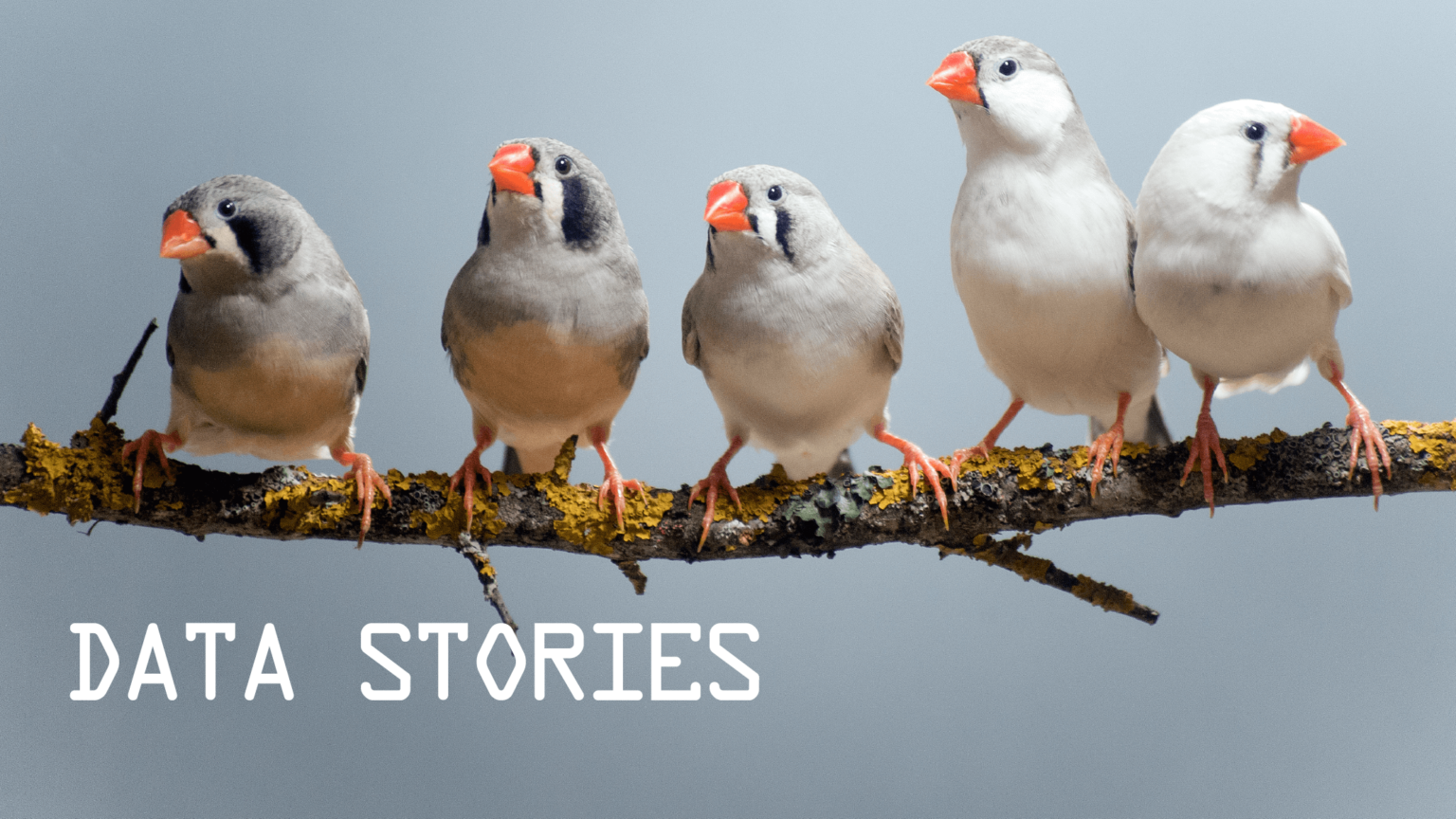
Jarvis is not the only researcher to study the varied trills of songbirds. Many labs use zebra finches as a model for our own language and speech disorders, Jarvis said, but until recently, it was difficult to draw direct parallels between human conversation and the staccato chirps of these tiny creatures.
The genes that let us speak
Several years ago, Jarvis and his colleagues, including collaborators at the Allen Institute, published a landmark comparison of songbird and human brains, showing that both the genes and the regions of the brains used for bird song and human speech are similar. Birds that don’t show vocal learning (they looked at the brains of doves and quails) don’t have the same brain regions and associated trove of song-related genes. And neither do our non-speaking primate relatives.
The Rockefeller team provided the bird data for this project, and the human brain data came from the Allen Human Brain Atlas, a publicly available dataset that shows how and where genes are switched on throughout the human brain.
“Many people study birdsong only, but for us, we want to figure out how these vocalizations translate to our own speech,” Jarvis said. “The Allen Institute dataset was critical for us to make that translation.”
Researchers know that vocal learning evolved independently in songbirds and in us, so these results are an example of convergent evolution, where, over time, our changing genes stumbled onto the same solution. What that means is that there are probably limited ways that animals could acquire spoken language — or maybe, as Jarvis thinks, there’s just one possibility.
“There seems to be a limited core pathway that evolution settles on,” he said. “In another half million years from now, if another species evolves vocal learning, I could tell you what that species’ gene expression pathway will look like.”
Those findings also mean that songbirds are, after all, a good proxy for scientists to study human speech, especially the brain patterns and circuits that underlie speech and language. That’s good news for the many laboratories who were already using zebra finches to study speech.
But for Jarvis, one of the coolest results is that he’s now studying a completely new avenue of brain evolution.
From birds to mice
The research team found that the shared vocal learning circuits are embedded in the same brain pathways we — and birds — use to learn to move, the forebrain motor pathways. This part of the brain is much more ancient, evolutionarily speaking, than speech.
There’s a phenomenon in evolution in which a gene makes an extra copy of itself, at random. Over time, that second copy, freed from the pressure of its original purpose, can change more rapidly. Occasionally the copied genes evolve to take on a new job.
Jarvis thinks this happened for an entire brain pathway.
There’s no evidence that an entire brain pathway has ever duplicated. But the theory makes sense in the face of the data researchers have so far. Vocalizations are themselves a type of specialized movement of the larynx, the voice box, along with other oral modulators of the sounds. One can see parallels between how we move our entire bodies and how we move this tiny structure that produces speech. Jarvis thinks the whole thing may have been driven by the random duplication of a single gene involved in brain development.
Jarvis and his team are now looking more deeply into parallels between vocal learning genes and motor learning genes in the brain. And they’re comparing brain cell types, using the suite of genes each cell switches on or off, between birds and mammals to better understand brain evolution overall. Jarvis’ own lab is sequencing many of these bird brain cells, and he’s comparing those results to a similar dataset of mouse and human brain cells at the Allen Institute, the Allen Cell Types Database.
They’re also turning to the laboratory mouse, after all, to see what happens if a mammal without vocal learning gets a boost of some of those specialized genes. They want to engineer a mouse to carry and switch on human vocal learning genes in the motor pathway of the brain, to see if they can force the type of evolution they think happened in us and in songbirds.
As for birdsong, Jarvis isn’t abandoning that any time soon. He started studying songbirds because he wanted to understand human speech, but the birds soon drew his attention in their own right.
“I thought I would eventually move away from vocal learning in birds, because we’d find the translation to human speech, but we keep learning more and more and now we’re studying both in parallel,” he said. “Birds are also fascinating creatures in and of themselves.”
Citations
about the allen institute
The Allen Institute is an independent, 501(c)(3) nonprofit research organization founded by philanthropist and visionary, the late Paul G. Allen. The Allen Institute is dedicated to answering some of the biggest questions in bioscience and accelerating research worldwide. The Institute is a recognized leader in large-scale research with a commitment to an open science model. For more information, visit alleninstitute.org.




