impact
impact
open science
subheadline
careers and opportunities
subheadline
people & teams
people & teams
subheadline
allenites
subheadline
allen institute advisors
subheadline
board of directors
subheadline
shanahan foundation fellowship
subheadline
next generation leaders
subheadline
research
overview
our approach
subheadline
publications
subheadline
open science
subheadline
accelerator
brain science
subheadline
cell science
subheadline
neural dynamics
subheadline
immunology
subheadline
synthetic biology
subheadline
education
education
science education
subheadline
education resources
subheadline
field trips
subheadline
open science
subheadline
open science quest
subheadline
news
news
stories
subheadline
podcast
subheadline
sign up for our newsletter
subheadline
events
events
all events
subheadline
conferences
subheadline
event code of conduct
subheadline
events
open science quest
subheadline
summer workshop on the dynamic brain
subheadline
open science week
subheadline
brain fest
subheadline
science resources
science resources
allencell.org
subheadline
allenimmunology.org
subheadline
allenneuraldynamics.org
subheadline
brain-bican.org
subheadline
brain-map.org
subheadline
microns-explorer.org
subheadline
impact
back to menu
impact
open science
subheading
careers and opportunities
subheading
people & teams
people & teams
subheading
allen institute advisors
subheading
board of directors
subheading
shanahan foundation fellowship
subheading
next generation leaders
subheading
research
back to menu
impact
Label
subheading
Label
subheading
people & teams
education
back to menu
research
Label
subheading
Label
subheading
Heading
news
back to menu
research
Label
subheading
Label
subheading
Heading
events
back to menu
research
Label
subheading
Label
subheading
Heading
science resources
back to menu
science resources
allencell.org
subheading
allenimmunology.org
subheading
allenneuraldynamics.org
subheading
brain-bican.org
subheading
brain-map.org
subheading
microns-explorer.org
subheading
search
stories
news

First-ever BrainFest inspires young minds at Pacific Science Center

Allen Institute and Pacific Science Center partnership kicks off with a cerebral celebration

April 10, 2024
 min read
share/
Researchers from the Allen Institute partnered with the Pacific Science Center and fielded countless questions as they shared their passion for neuroscience at BrainFest: A Cerebral Celebration on March 16.
Thank you! Your submission has been received!
Oops! Something went wrong while submitting the form.

in this article

table of contents will display on published page only
set h2 to populate the table of contents here

How do you categorize brain cells? What are white matter and gray matter? What happens when a neuron gets damaged? Can you transplant parts of the brain? Why does this brain smell weird? Are we living in a simulation? Oh, and where’s the bathroom?

Researchers from the Allen Institute fielded these and countless other questions as they shared their passion for neuroscience at BrainFest: A Cerebral Celebration on March 16. As part of a new partnership with Pacific Science Center, the Allen Institute Education & Engagement team planned an afternoon of brainy fun at the museum, including a dozen activity stations led by Allen Institute staff and collaborators. Over a thousand visitors showed up to play games, make crafts, explore the latest scientific tools and data, and ask scientists all their burning questions about the brain.
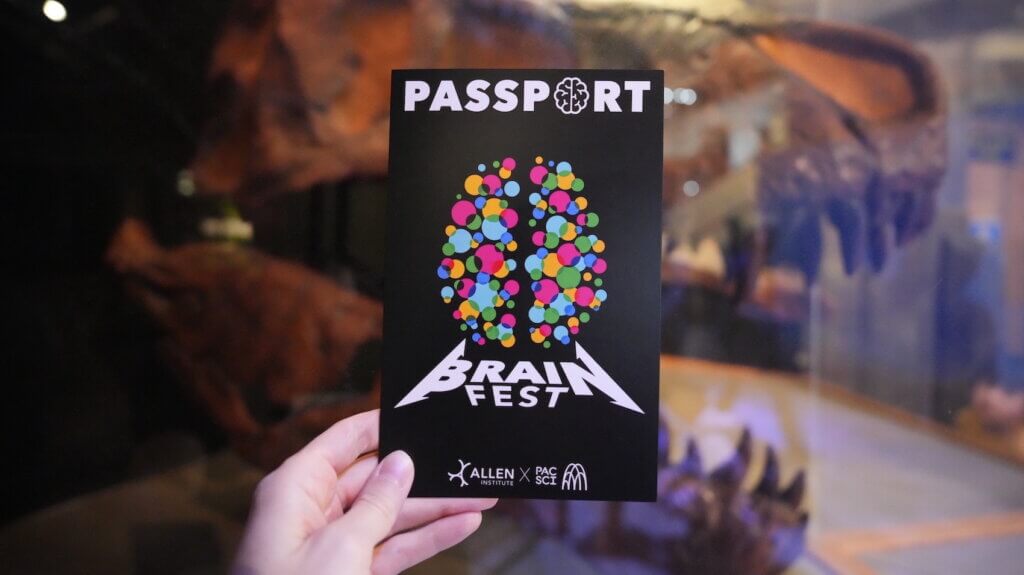
Person holding Brain Fest passport with colorful brain design artwork at event
Visitors were invited to complete a BrainFest “passport” as they explored the activities, receiving a letter stamp at each station to ultimately spell out the words STAY CURIOUS. Photo by Erik Dinnel / Allen Institute

It’s an exciting challenge to share cutting-edge neuroscience research in ways that appeal to everyone from preschoolers through professors. At one station, visitors referenced images of actual brain cells as they constructed cell models out of pipe cleaners. At another, they explored the brain’s evolutionary origins by comparing the structure of different animal brains – including a cranial endocast from a Tyrannosaurus rex!
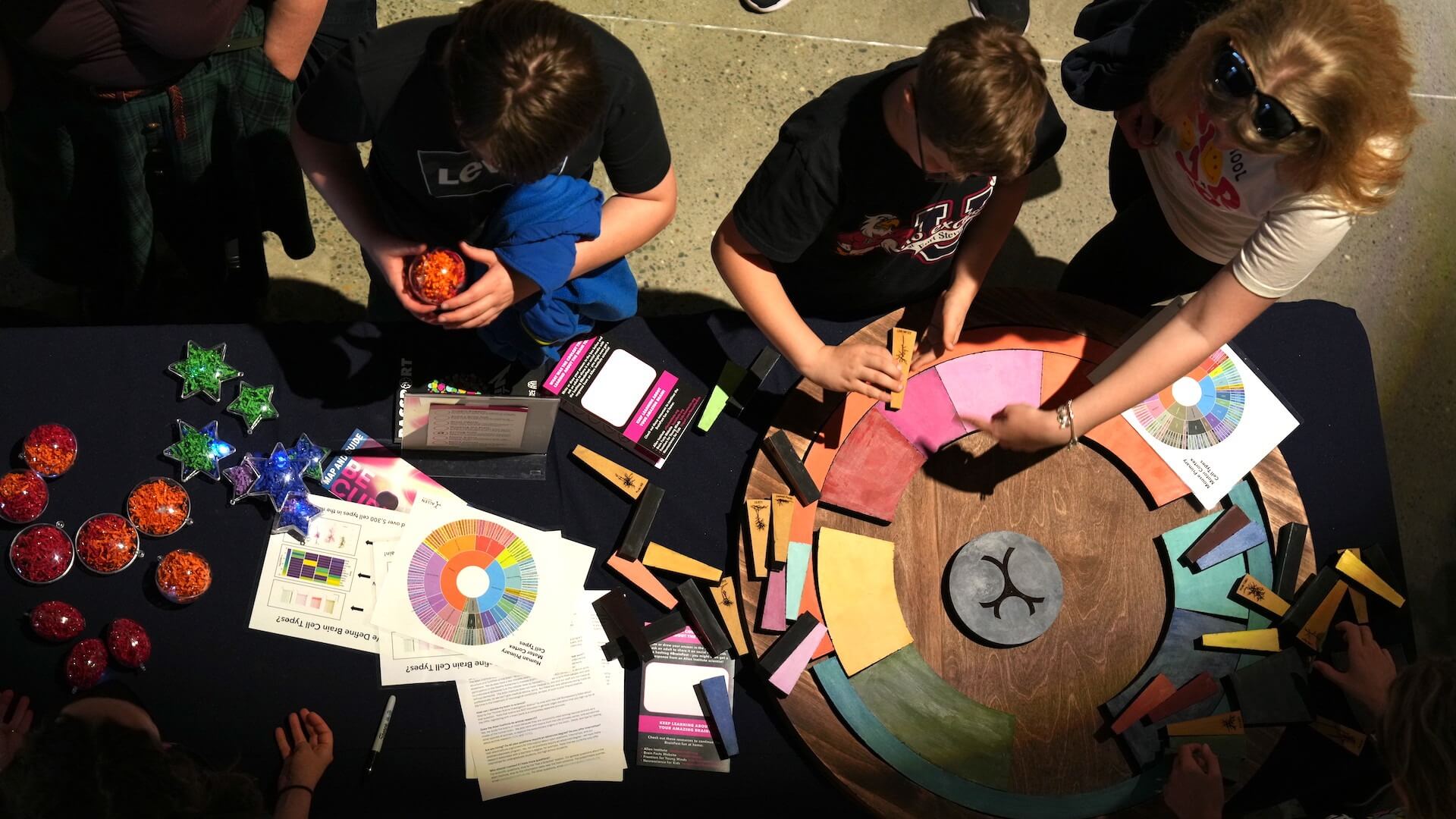
Group of people working on color theory and design projects at a collaborative workshop table.
Visitors explore the Allen Institute’s cell types research through hands-on activities. Photo by Erik Dinnel / Allen Institute

Kids and adults worked together to assemble a six-foot-tall jigsaw puzzle as they learned how scientists piece together neuron reconstructions from electron microscope images. An interactive sorting game presented the Allen Institute’s pioneering research on brain cell types, and scientific charts came to life through a colorful wooden model that could be assembled like a puzzle.
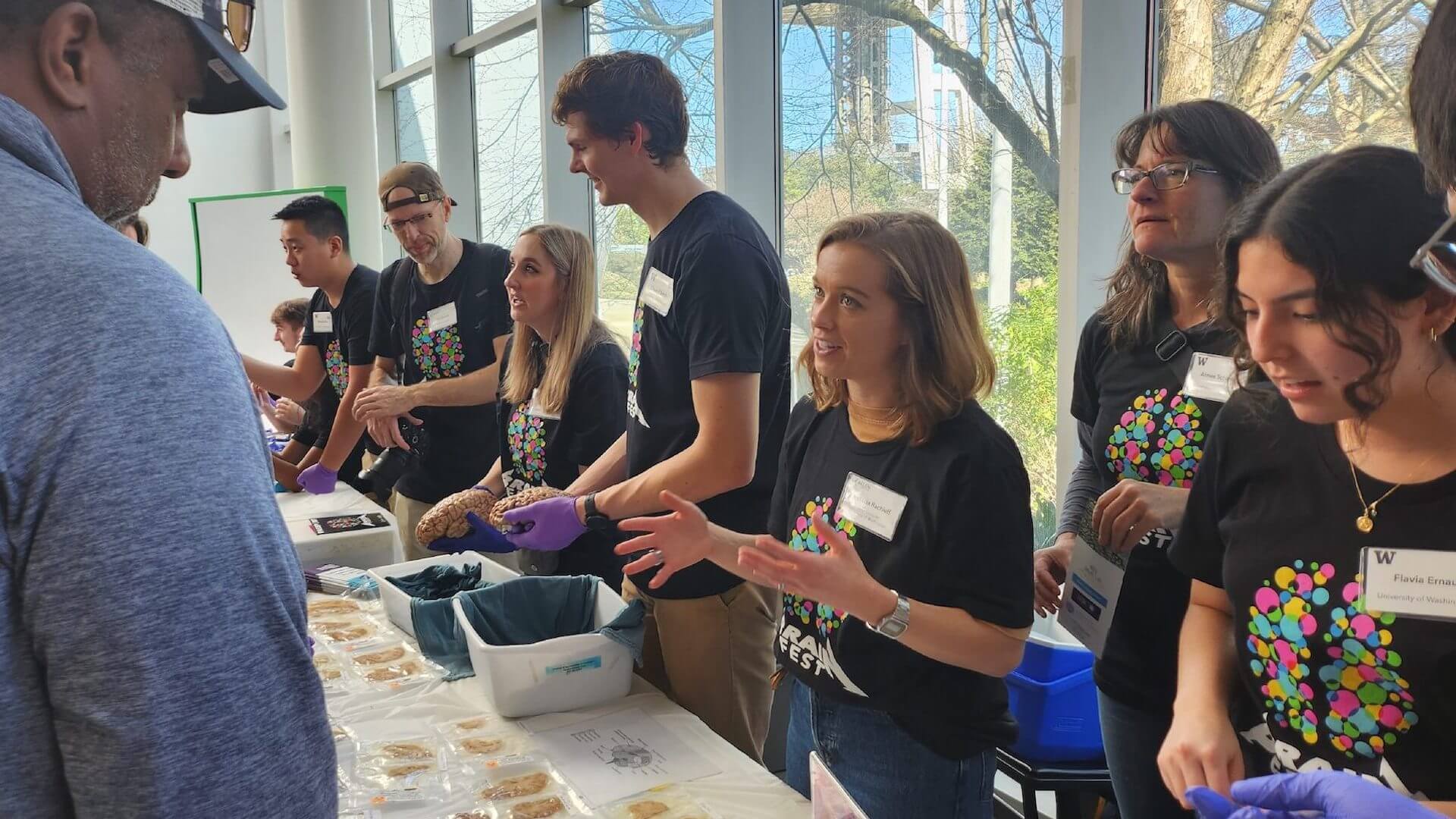
Group of people in black shirts handling colorful items at a sunny indoor event with windows.
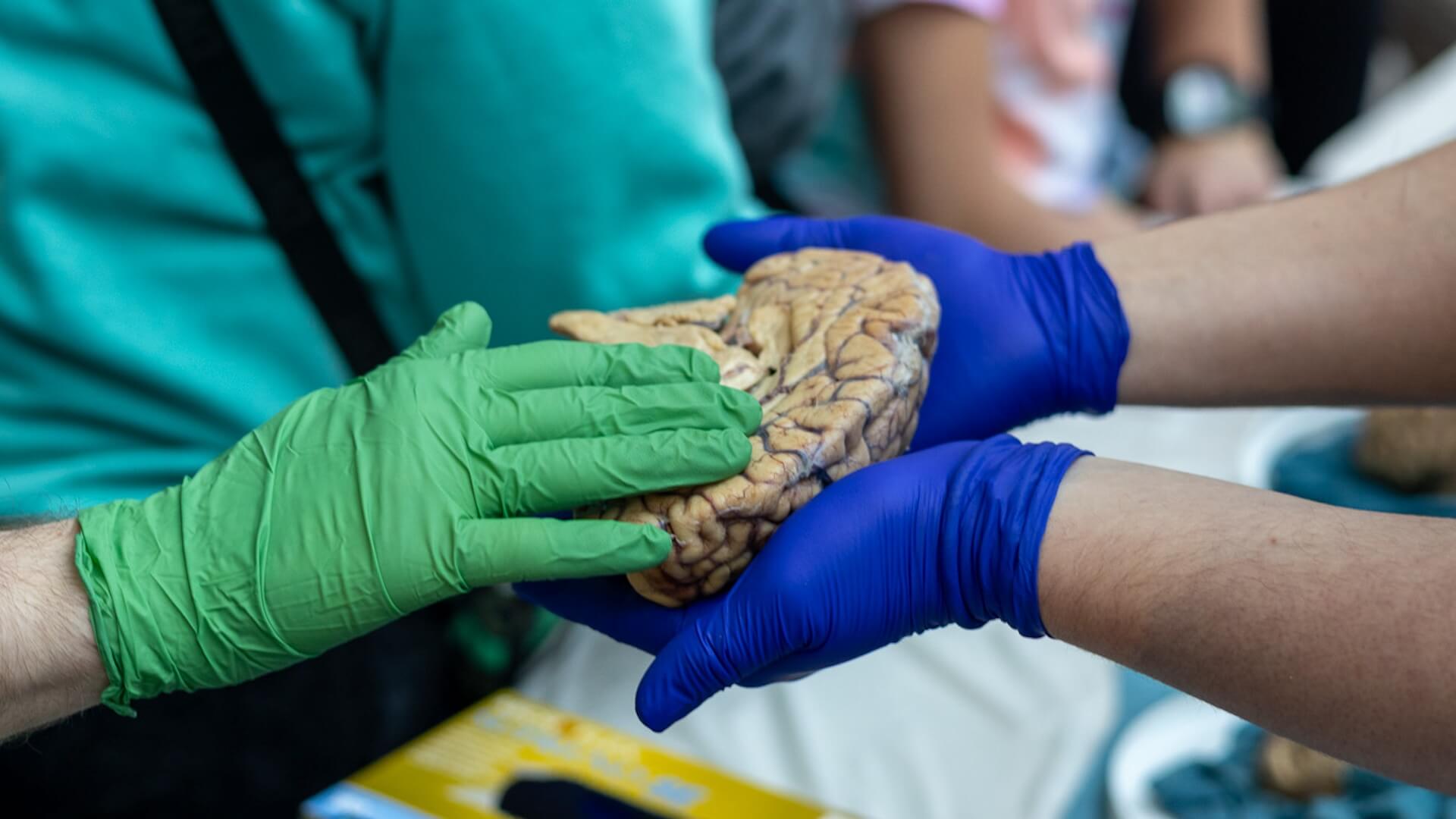
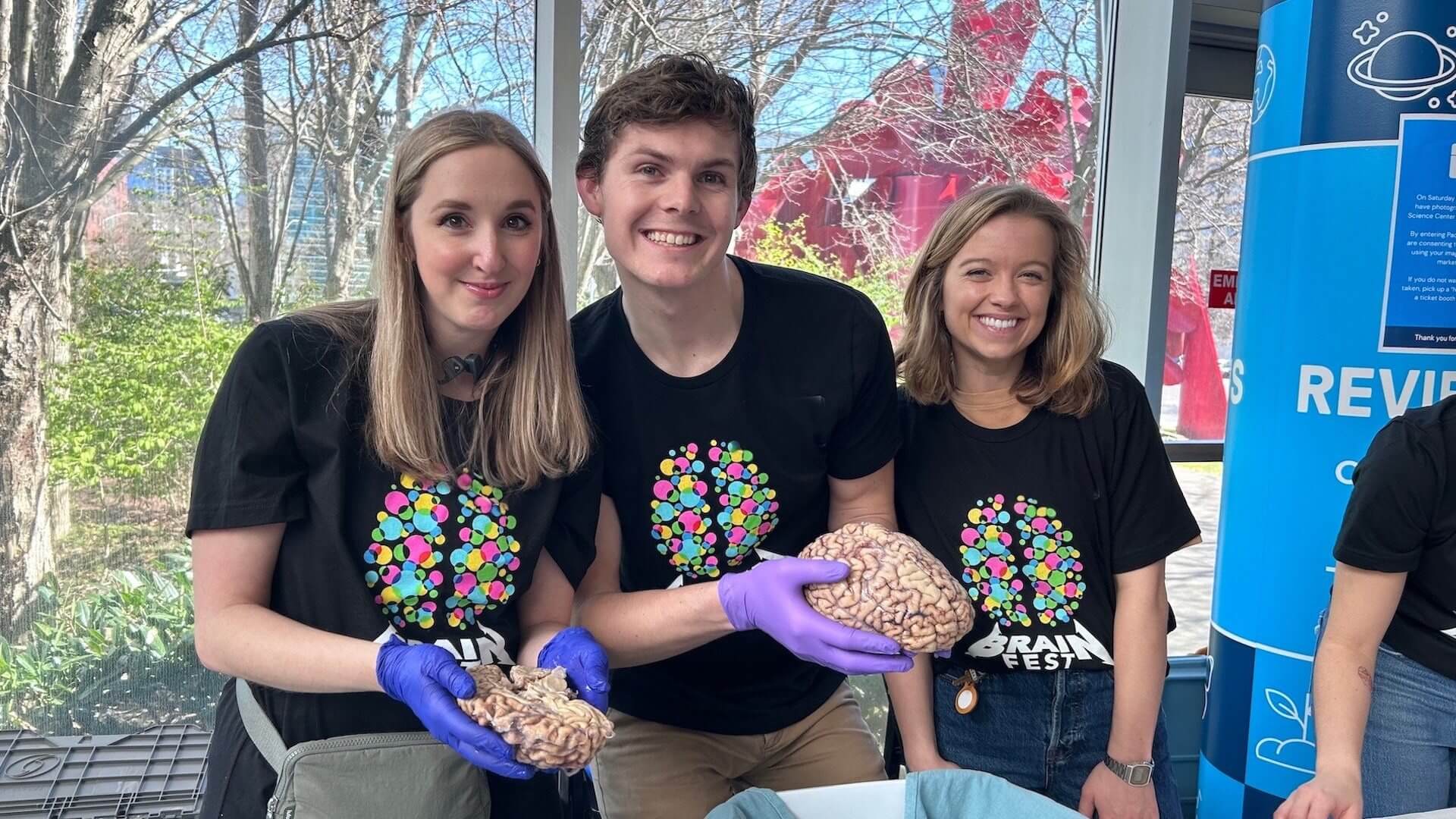
University of Washington researchers share human brain samples with visitors. Photo by Diana Johns / Pacific Science Center

Collaborators and students from the University of Washington also contributed to the fun. Researchers from the UW Biorepository and Integrated Neuropathology (BRaIN) Laboratory shared samples from the brains of healthy human donors as well as those with Alzheimer’s disease and other neurological conditions. UW students invited visitors to touch a sheep brain, try on prism goggles to explore neuroplasticity, and record electricity from their own nervous systems using an electromyogram.
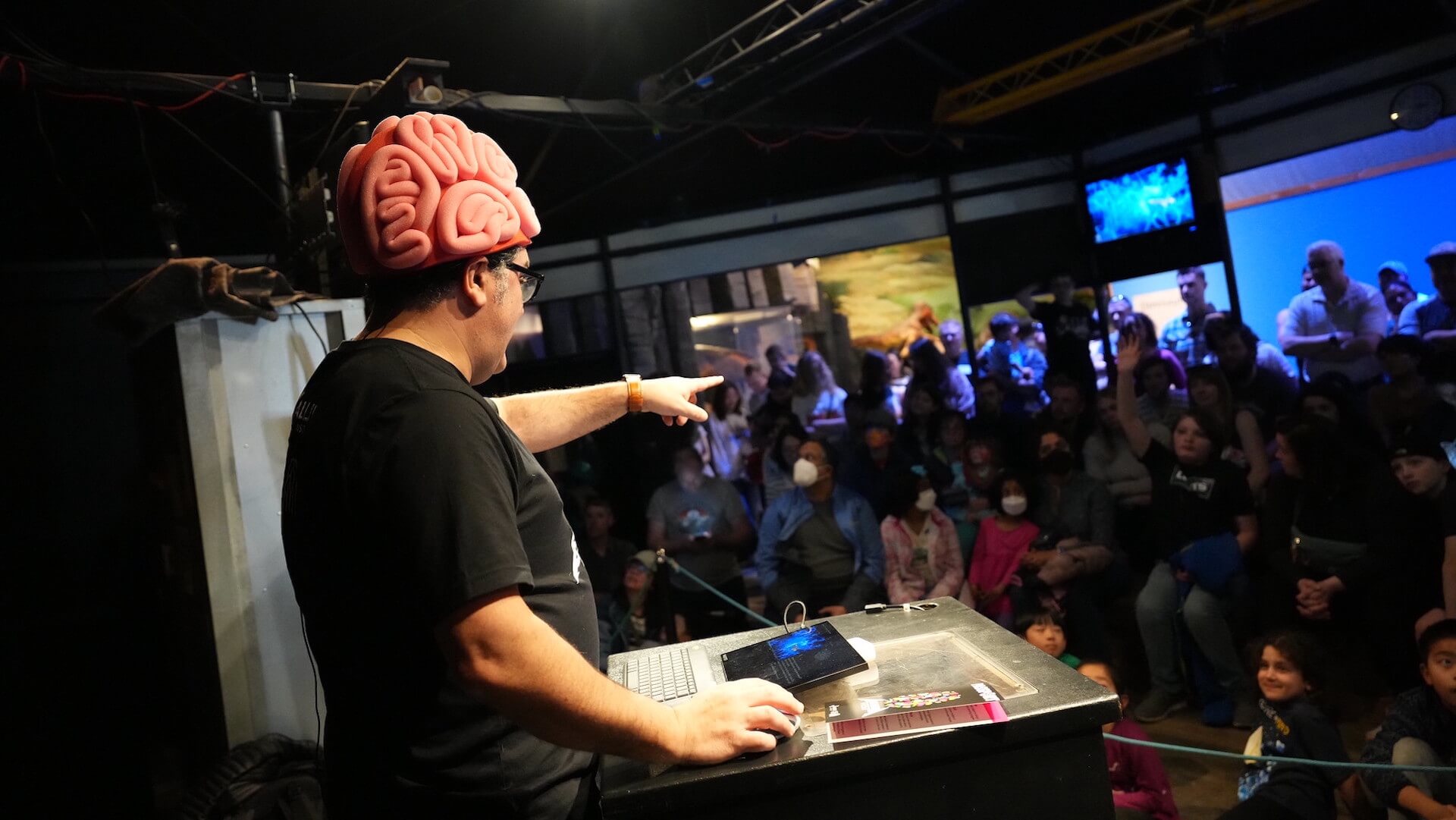
Man wearing oversized brain hat gives presentation to audience at event
Rui Costa shares neuroscience with visitors of all ages on the Live Science Stage. Photo by Erik Dinnel / Allen Institute

Allen Institute President and CEO, Rui Costa, Ph.D., D.V.M., presented to a standing-room-only crowd at the museum’s Live Science Stage. He described the many ways that Allen Institute researchers are exploring new frontiers of neuroscience – and how future scientists in the audience might someday join them.

“Watching a 10-year-old child connect with a STEM professional who looks like them, sharing a moment of ‘wow’ over the size and shape of the T. Rex brain, is an unforgettable memory for all involved,” said Diana Johns, Vice President of Exhibits, Education, and Outreach at the Pacific Science Center. “PacSci is thrilled to have this partnership in curiosity with the Allen Institute!”
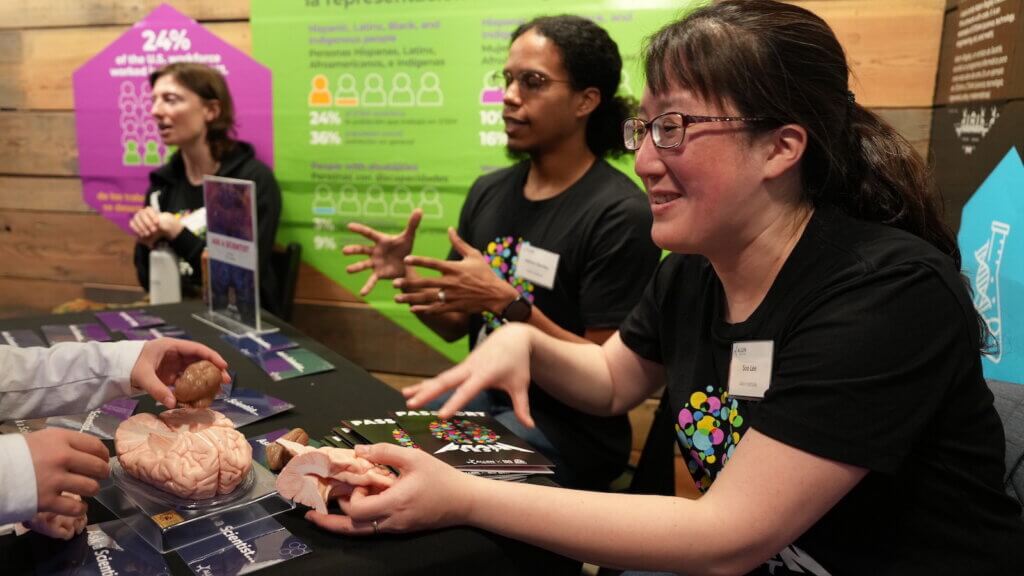
Scientists demonstrate brain model at educational booth with colorful infographic backdrop.
Allen Institute researchers answer visitor questions and share a human brain model at the “Ask a Scientist” booth. Photo by Erik Dinnel / Allen Institute

Her enthusiasm was also shared by Allen Institute volunteers: “I think this [event] opened a greater excitement in me for the work we do at Allen,” one noted. Others shared that it was “gratifying to witness the genuine interest of the general public” and that they enjoyed being able to “spark some curiosity about brains in kids and adults, as well as have fun ourselves.”

We hope you’ll join us for more curiosity and fun at BrainFest 2025!

Citations
No items found.

about the allen institute

The Allen Institute is an independent, 501(c)(3) nonprofit research organization founded by philanthropist and visionary, the late Paul G. Allen. The Allen Institute is dedicated to answering some of the biggest questions in bioscience and accelerating research worldwide. The Institute is a recognized leader in large-scale research with a commitment to an open science model. For more information, visit alleninstitute.org.
explore related stories

explore more stories
video 
Empowering the Next Generation Through Open Science
The Allen Institute's Education and Engagement Program is designed to open the doors of discovery to students, educators, and working scientists alike...
video 
Allen Institute Education Lab to offer innovative training and workshops to current and future scientists
The custom-built learning space immerses students, educators, and scientists in authentic learning experiences
news 
Brainy fun for all ages at BrainFest 2025
Thousands of visitors gathered to explore their amazing brains at the second annual BrainFest, a partnership of the Allen Institute and Pacific Science Center
we acceleratedevelopcatalyzeimpact

science done differently. shared with the world.

explore our accelerators

brain science

Mapping every cell, connection, and circuit in the brain—openly shared with the world.

cell science

Decoding how cells become tissues, then programming that knowledge into powerful new research tools.

neural dynamics

Revealing the brain's hidden algorithms that transform neural activity into real-world behavior.

immunology

Creating the deepest open reference for the healthy human immune system ever built.

synthetic biology

Engineering cells to record their own histories, transforming how we understand disease over time.

research

Big questions, open answers, and science built to be shared.

education

Inspiring the next generation of scientists through open science resources.

impact

Our science is empowering researchers and advancing health worldwide.
advancing science through open, collaborative research
Get the allen institute newsletter
Stay informed on the latest breakthroughs in neuroscience, bioscience, and AI-driven research.
allen institute
impactpeople & teamscareers & opportunitiesalumnihistory & founder
science resources
allencell.orgallenimmunology.orgallenneuraldynamics.orgbrain-bican.orgbrain-map.orgmicrons-explorer.org
research
brain sciencecell scienceneural dynamicsimmunologysynthetic biologypublications
education
science educationfield tripsprofessional developmenteducation resources
quick links
newseventsopen sciencepodcastscience resourceshuman brain donationvisit uscontact
follow us/

allen institute, 615 Westlake Ave North, Seattle, WA 98109 +12065487055

© 0000 allen institute. all rights reserved.
privacy policyterms of usecitation policyemployee portalpolicy & compliance