in this article
It’s hard to see a bright side to the current coronavirus pandemic. But if you ask Allen Institute immunologist Troy Torgerson, M.D., Ph.D., how an immunology expert views this public health crisis, he has a somewhat surprising answer: It makes you realize how much our immune systems do for us, every day, even in the midst of a major disease outbreak.
As the new virus sweeps the globe, there are many whose immune systems fail to protect them. But for most people who are infected — especially for the still unknown percentage of people who show mild or even no symptoms — it’s a striking example of our immune systems’ power to find, attack and eliminate a foreign entity from our bodies, even one it has never seen before, Torgerson said.
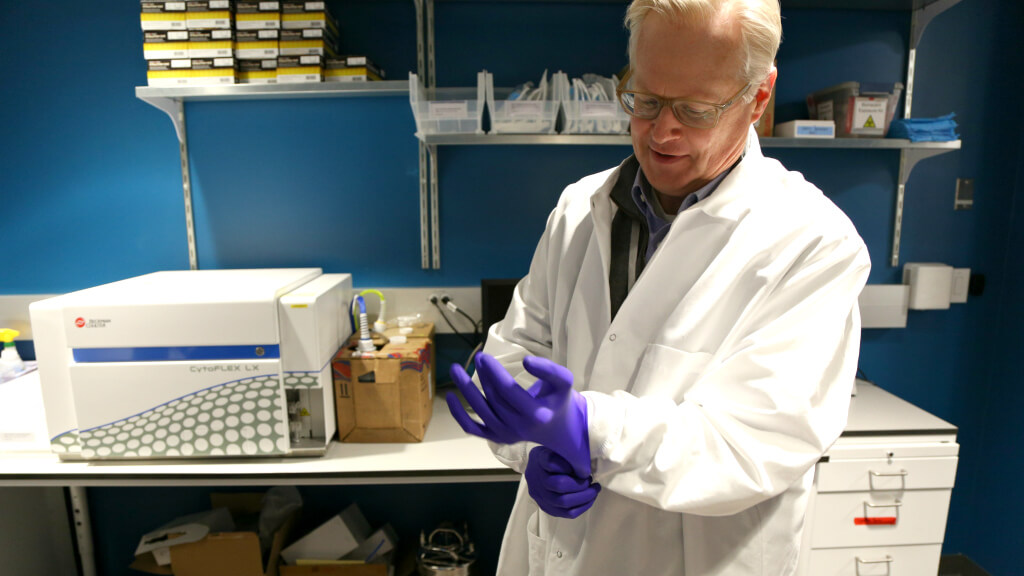
As an immunology researcher and physician whose past career at Seattle Children’s focused on children with rare genetic immune disorders, Torgerson is all too familiar with the ways this natural defense system can fail — and how far medicine has yet to go to make up for many of those failures.
Torgerson recently joined the Allen Institute for Immunology, the newest division of the Allen Institute, as the Director of Experimental Immunology. He made this career change to focus solely on research in part because of how many children he and his team couldn’t help, even with the best current medicine has to offer. There are just too many mysteries left to solve.
We recently caught up with Torgerson — over video chat, of course — to find out more about his views on immunology and how he thinks science can help patients in need. The following conversation has been lightly edited for length and clarity.
What do you find most meaningful about studying the immune system?
The immune system is pretty remarkable. It’s one of just two organ systems in the body that learn and develop memory (the other, obviously, is the brain). We ask the immune system to perform an impossible task, namely, to protect us from any possible pathogen we could ever encounter but at the same time to not attack our own cells. It seems like an impossible dichotomy, but what’s remarkable is that for most of us, the immune system pulls it off amazingly well.
What led you to join the Allen Institute?
In the clinical part of my job at Seattle Children’s, I focused on patients who had a genetic immune deficiency. Some of these children were more susceptible to infection, some had autoimmune disease. From the time I started in the field to now, the number of known genetic defects associated with these errors of immunity has exploded; we now know more than 400 different genes linked to these diseases. People would come from around the country because of our expertise in these rare genetic diseases, and a lot of times we’d be their last resort. If we found something through genetic testing, in many cases there was a treatment that would help. The problem was that was only about 40% of patients. The other 60% were just as sick, maybe even more so, and yet we didn’t know what they had, so we didn’t know how to make them better. It was so frustrating for us and for the patients. They came to us for help and we often couldn’t help.
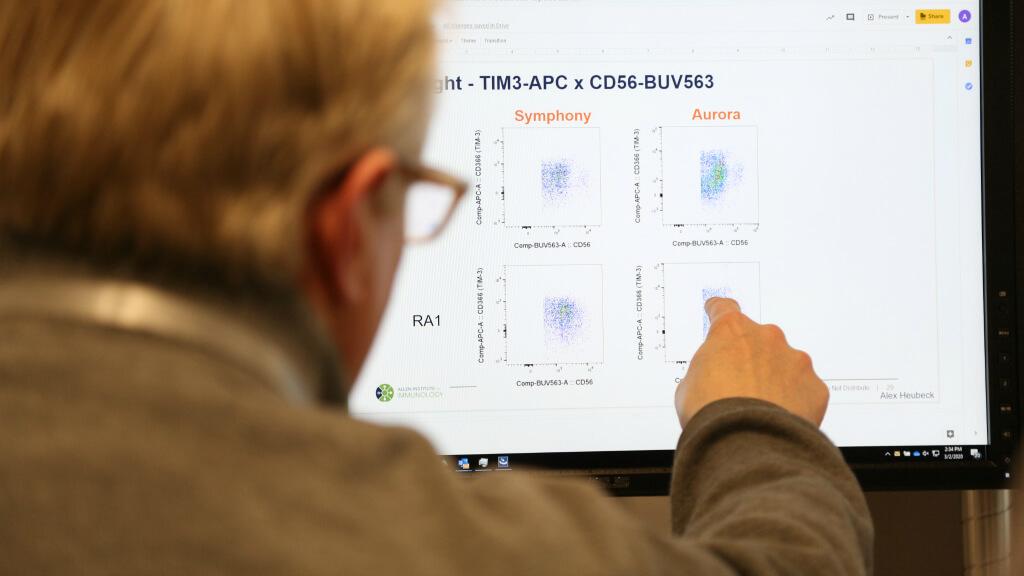
When I saw that the Allen Institute was launching a new effort to map the immune system in healthy people and in patients, and to develop tools that could pin down how the immune system gets broken beyond just genetics, that was really appealing. All of these tools, biomarkers and new information we’re generating could eventually help those patients we weren’t able to help in the clinic. That’s what drew me to this.
As an immunologist, what is it like to be living through this immune-related public health crisis?
Our colleagues in the infectious disease community have been talking about pandemics for a long time. It’s interesting and bizarre to now be in the middle of one and see such widespread impacts. From an immunology standpoint, it highlights the fact that if your immune system does everything absolutely perfectly, when you get infected with coronavirus you might get sick, but your immune system ultimately controls the infection and makes antibodies that protect you from reinfection, all without you getting deathly ill. But clearly, there are people for whom that’s not the case. It looks like either their immune response to the virus is too strong, and that could be the cause of death, or maybe that their immune systems fail in a certain way and then they’re not able to fight off the virus. There’s a ton of effort right now on preventing infection, which is so important. But there should also be an effort on how we control the immune system in people who are infected, to prevent death. The problem is we don’t know yet if we need to dial the immune system up or turn it down.
Why do we need to study the immune system?
The immune system is unique in that it touches on every other organ system in the body. It’s both integrated into every part of the body and protects every part of the body. As such it has vast impacts across every aspect of health and disease, so understanding that is really important.
I like to think of the immune system like a safety net under a trapeze artist. It fluctuates a bit if the trapeze artist falls, but then it settles down and comes back to being stable. It’s connected in many different knots, and we think that in disease, some of those links or knots are broken. If the trapeze artist lands on one of those broken spots, they might fall through, or the net might begin to wobble out of control and not come back to stability. That’s what we think happens in autoimmune disease or cancer. And we’re trying to understand what those knots are, what the connections are in this system, so we can understand how to repair them when they break.
In your mind, what are the most important things we still don’t understand about the human immune system?
The immune system is regulated in multiple ways, and we have insights into some of those now, but we still don’t understand all the layers. Understanding how the immune system switches on, and how it turns off instead of raging out of control, is extremely important so we can fix it in patients who don’t regulate it as they should. The answer to that question would impact pretty much all autoimmune diseases, but other diseases too, possibly including coronavirus.
We also don’t understand how the immune system responds to many types of pathogens — that’s obviously especially important now, but it’s broader than just coronavirus. For many infectious diseases, we understand the basics, but what is it about that particular pathogen that makes things go so haywire? The specifics of each infection are incredibly important, and for many diseases, they remain a mystery.
Citations
about the allen institute
The Allen Institute is an independent, 501(c)(3) nonprofit research organization founded by philanthropist and visionary, the late Paul G. Allen. The Allen Institute is dedicated to answering some of the biggest questions in bioscience and accelerating research worldwide. The Institute is a recognized leader in large-scale research with a commitment to an open science model. For more information, visit alleninstitute.org.