impact
impact
open science
subheadline
careers and opportunities
subheadline
people & teams
people & teams
subheadline
allenites
subheadline
allen institute advisors
subheadline
board of directors
subheadline
shanahan foundation fellowship
subheadline
next generation leaders
subheadline
research
overview
our approach
subheadline
publications
subheadline
open science
subheadline
accelerator
brain science
subheadline
cell science
subheadline
neural dynamics
subheadline
immunology
subheadline
synthetic biology
subheadline
education
education
science education
subheadline
education resources
subheadline
field trips
subheadline
open science
subheadline
open science quest
subheadline
news
news
stories
subheadline
podcast
subheadline
sign up for our newsletter
subheadline
events
events
all events
subheadline
conferences
subheadline
event code of conduct
subheadline
events
open science quest
subheadline
summer workshop on the dynamic brain
subheadline
open science week
subheadline
brain fest
subheadline
science resources
science resources
allencell.org
subheadline
allenimmunology.org
subheadline
allenneuraldynamics.org
subheadline
brain-bican.org
subheadline
brain-map.org
subheadline
microns-explorer.org
subheadline
impact
back to menu
impact
open science
subheading
careers and opportunities
subheading
people & teams
people & teams
subheading
allen institute advisors
subheading
board of directors
subheading
shanahan foundation fellowship
subheading
next generation leaders
subheading
research
back to menu
impact
Label
subheading
Label
subheading
people & teams
education
back to menu
research
Label
subheading
Label
subheading
Heading
news
back to menu
research
Label
subheading
Label
subheading
Heading
events
back to menu
research
Label
subheading
Label
subheading
Heading
science resources
back to menu
science resources
allencell.org
subheading
allenimmunology.org
subheading
allenneuraldynamics.org
subheading
brain-bican.org
subheading
brain-map.org
subheading
microns-explorer.org
subheading
search
stories
news

From 300,000 mouse neurons, scientists hope to glean how the brain drives behavior

New public dataset captures billions of electrical spikes from brains of animals trained to identify ‘oddball’ photos

August 23, 2022
 min read
share/
New public dataset captures billions of electrical spikes from brains of animals trained to identify ‘oddball’ photos
Thank you! Your submission has been received!
Oops! Something went wrong while submitting the form.

in this article

table of contents will display on published page only
set h2 to populate the table of contents here
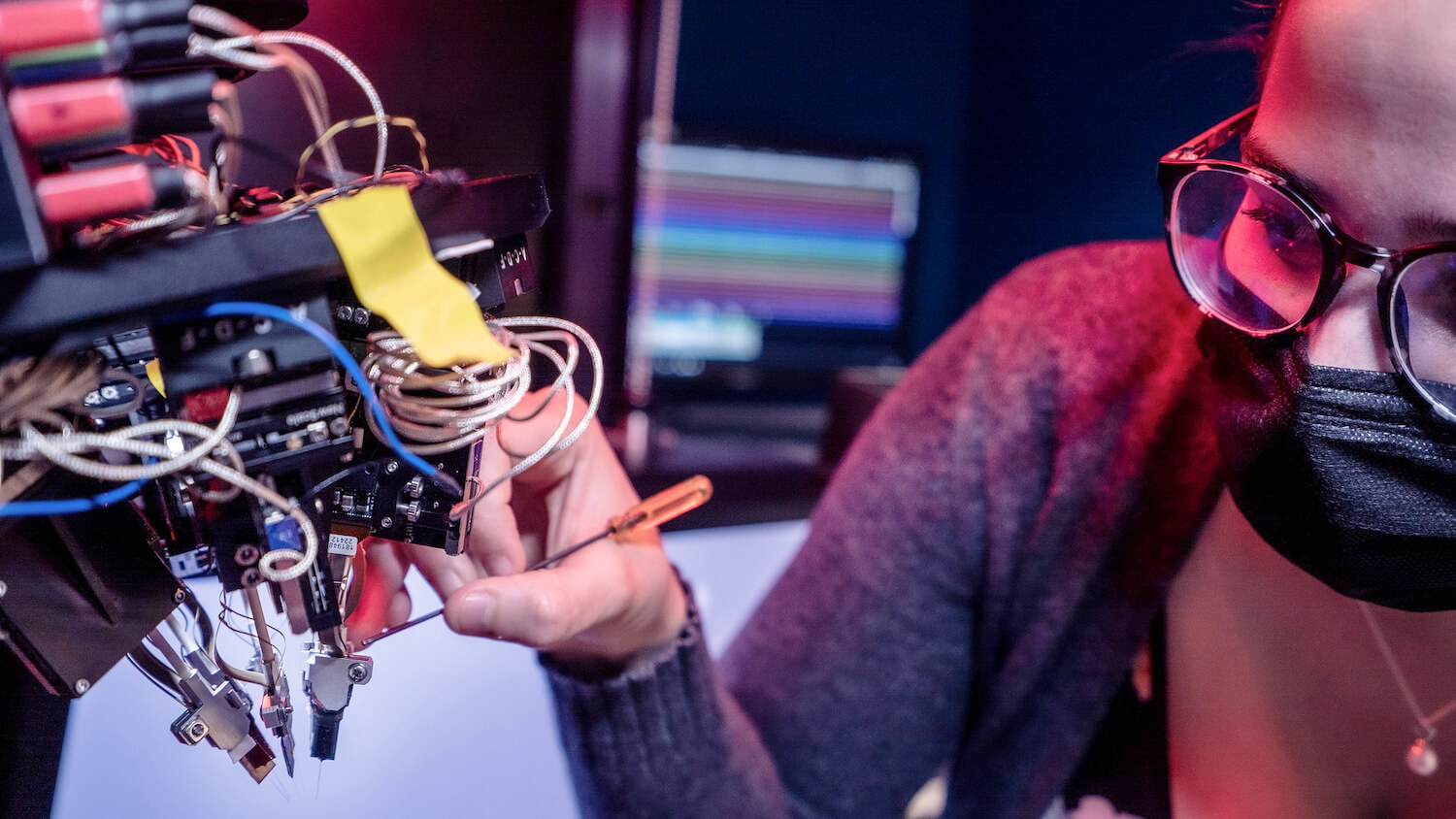
Person assembling electronic circuit board with colorful wires and components under pink lighting
Tamina Ramirez, a neuroscientist in the Allen Institute’s MindScope Program, adjusts Neuropixels probes for an experiment — these whisper-thin silicon probes can record electrical activity from more than 1,000 neurons in a single experiment.

By Rachel Tompa, Ph.D. / Allen Institute

The mouse waits for the experiment to start. Its legs jitter as it runs on a specialized treadmill. Its tail is straight and high in the air.

Finally, the scientists are ready. They gently swing a monitor in front of its face and lower a small blind, shielding its peripheral vision from distractions. The mouse is now alone inside what is effectively a black box, focusing on changing images on the large computer monitor in front of him, and on a tiny waterspout near his mouth.

He could use a drink, but he’s been trained to lick the spout only when the image in front of his face changes, so he waits a little longer. An image of pencils flashes in front of his eyes: pencils, pencils, pencils, then suddenly a flower appears — he immediately licks and gets some water.

Black and white image: pencils with gradient shading and small delicate flowers with stamens
Two images that are part of a selection of natural scenes shown during MindScope experiments

“What’s amazing is people don’t really think of mice as very smart, but they can do really complex tasks,” said Séverine Durand, Ph.D., a neuroscientist in the Allen Institute’s MindScope Program who’s overseeing the experiments.

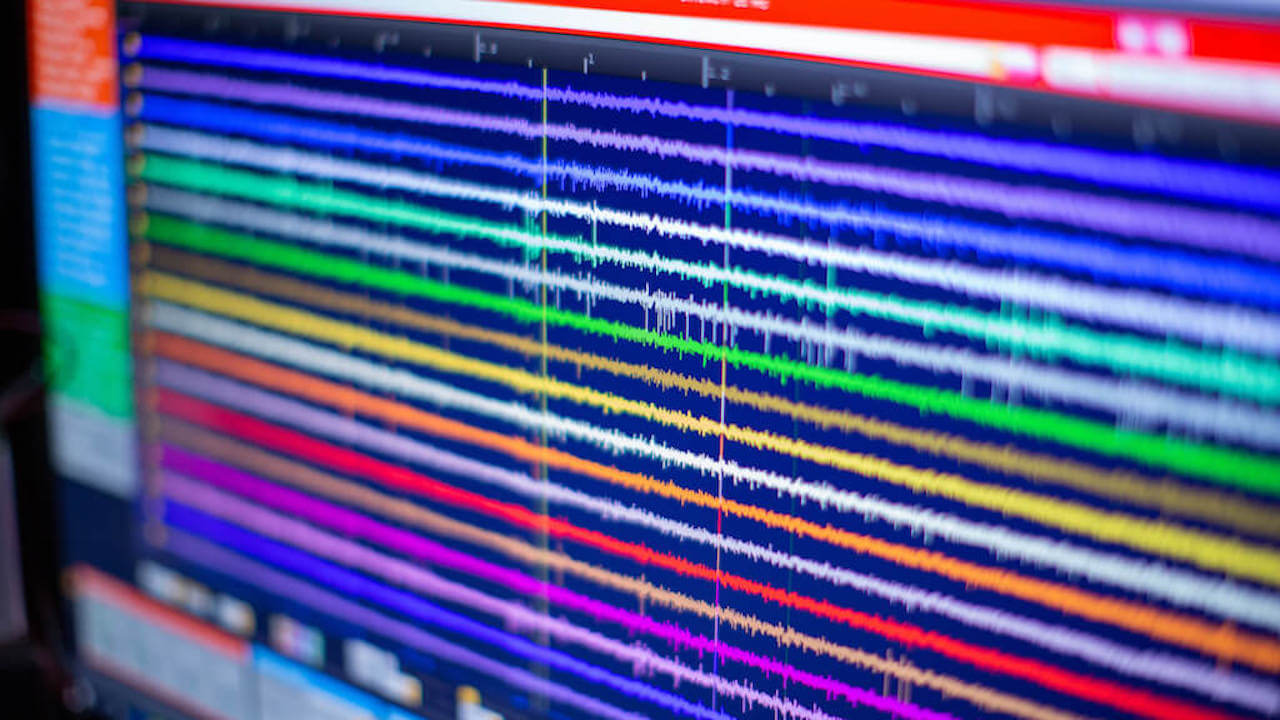
As the animal performs its task, six super-thin silicon probes known as Neuropixels record electrical chatter from more than a thousand neurons in action across several areas of the mouse’s brain. The scientists sit just outside the black box, watching on their own sets of monitors as colorful waveforms appear from the animal’s brain activity.

The Allen Institute team just released a dataset full of electrical information like this, the largest dataset of Neuropixels recordings ever collected. The publicly available dataset contains detailed information from more than 300,000 mouse neurons in action collected as the animals performed their trained task — licking a waterspout when they see a changed image, also known as an oddball task.
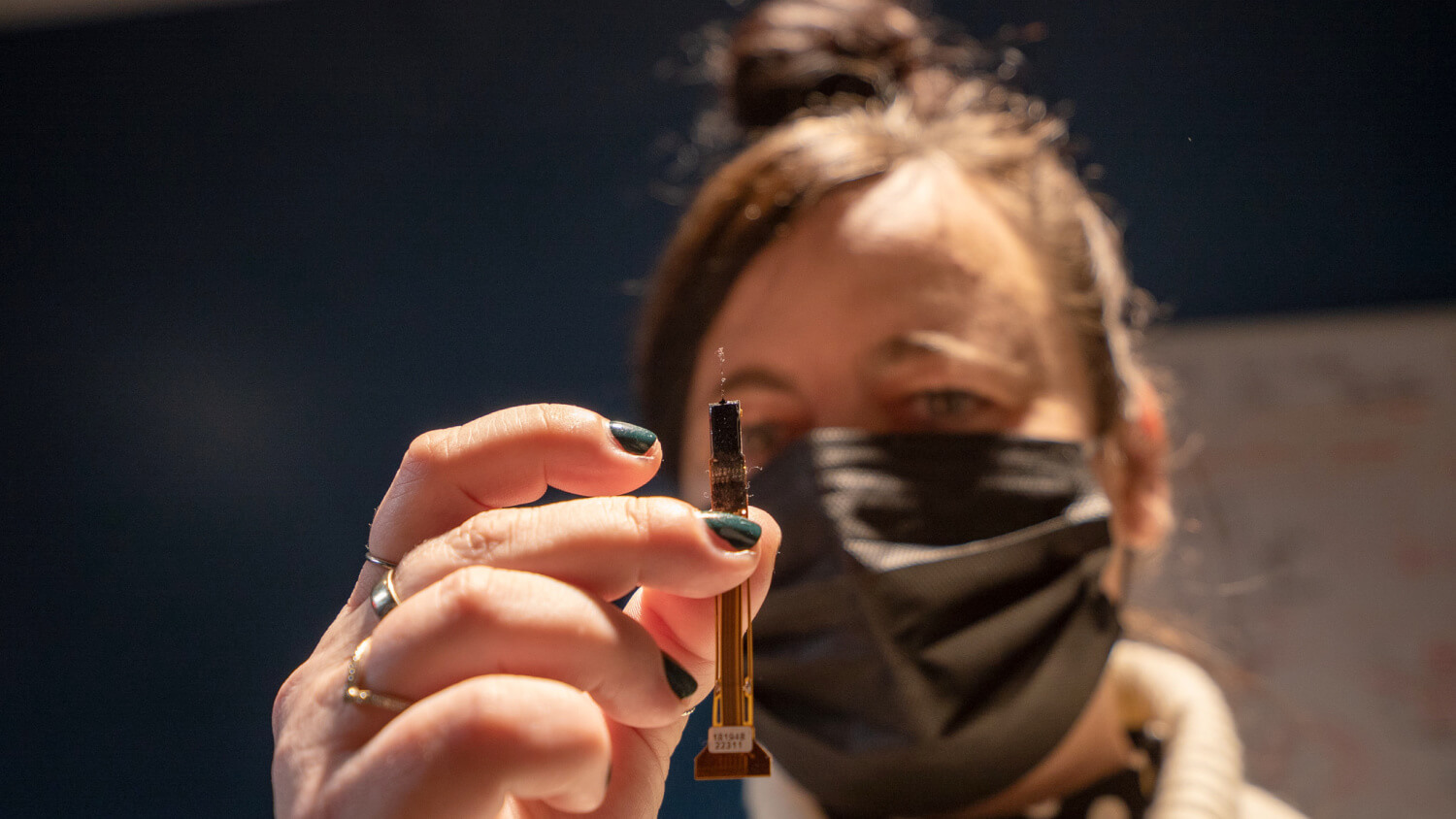
Woman holding a small electronic circuit board component close to camera
Séverine Durand, Ph.D., a neuroscientist in the Allen Institute’s MindScope Program, holds a single Neuropixels probe

These data represent billions of split-second electrical pulses that comprise the brain’s language of information. From this massive collection of cellular activity, the scientists hope to decode the neural computations that underlie behavior.

The 300,000 brain cells are just a drop in the bucket of the mouse brain’s 75 million total neurons, but it’s a much larger drop than anyone has ever collected in a single set of standardized experiments. Before the advent of technologies like Neuropixels, scientists could only eavesdrop on handfuls of single neurons at a time. It’s like trying to deduce the rules of an unknown sports game by just watching one player, said Allen Institute neuroscientist Corbett Bennett, Ph.D., who was part of the team that led the creation of the dataset.

“People have discovered really valuable, interesting things with that method. But now that we can record from 1,000 neurons in every experiment, we’re seeing so much more of the field, and we can determine a few more pieces of the rules of the game,” Bennett said. “Of course, in this case there are millions of players, so it’s complicated.”

‘The footprint of perception’

While a mouse’s ability to tell pencils from flowers might seem esoteric, the scientists are hoping to extrapolate broader information from the dataset. The suite of electrical activity represents what they call a “perception-action cycle” — how what is perceived leads to an action. The data encapsulates how the brain processes visual information that comes from the eyes, how the animal makes sense of what the mouse sees, how the mouse decides to take an action (to lick or not to lick) and how it translates that decision into movement.

“We’re hoping to capture the footprint of perception in this neural activity,” said Shawn Olsen, Ph.D., an investigator in the Allen Institute’s MindScope Program who helped lead the data collection and analysis.

The dataset includes activity gathered from a few dozen different regions of the brain, most of which are involved in processing visual information. In the next phase of data collection, the team plans to expand to other areas of the brain, such as those that coordinate movement. The dataset also includes neural activity from mice who were viewing images but weren’t asked to perform any tasks, as well as mice exposed to completely new images. How the brain distinguishes novelty from familiar images is a fascinating but still poorly understood process, Olsen said.

“We’ve tried to incorporate multiple interesting features, so that other scientists can analyze different aspects of the dataset,” Olsen said. “It’s not designed for just one question.”

Citations
No items found.

about the allen institute

The Allen Institute is an independent, 501(c)(3) nonprofit research organization founded by philanthropist and visionary, the late Paul G. Allen. The Allen Institute is dedicated to answering some of the biggest questions in bioscience and accelerating research worldwide. The Institute is a recognized leader in large-scale research with a commitment to an open science model. For more information, visit alleninstitute.org.
explore related stories

explore more stories
No articles for the category
we acceleratedevelopcatalyzeimpact

science done differently. shared with the world.

explore our accelerators

brain science

Mapping every cell, connection, and circuit in the brain—openly shared with the world.

cell science

Decoding how cells become tissues, then programming that knowledge into powerful new research tools.

neural dynamics

Revealing the brain's hidden algorithms that transform neural activity into real-world behavior.

immunology

Creating the deepest open reference for the healthy human immune system ever built.

synthetic biology

Engineering cells to record their own histories, transforming how we understand disease over time.

research

Big questions, open answers, and science built to be shared.

education

Inspiring the next generation of scientists through open science resources.

impact

Our science is empowering researchers and advancing health worldwide.
advancing science through open, collaborative research
Get the allen institute newsletter
Stay informed on the latest breakthroughs in neuroscience, bioscience, and AI-driven research.
allen institute
impactpeople & teamscareers & opportunitiesalumnihistory & founder
science resources
allencell.orgallenimmunology.orgallenneuraldynamics.orgbrain-bican.orgbrain-map.orgmicrons-explorer.org
research
brain sciencecell scienceneural dynamicsimmunologysynthetic biologypublications
education
science educationfield tripsprofessional developmenteducation resources
quick links
newseventsopen sciencepodcastscience resourceshuman brain donationvisit uscontact
follow us/

allen institute, 615 Westlake Ave North, Seattle, WA 98109 +12065487055

© 0000 allen institute. all rights reserved.
privacy policyterms of usecitation policyemployee portalpolicy & compliance