in this article
A new study aims to understand how the human brain evolved by comparing our brain’s cellular composition to that of a mouse and monkey.
The end result? We’re not so different, neuron-wise — with many key exceptions in the details.
The study, led by Allen Institute researchers and published today in the journal Nature, took a deep dive into the evolution of brain cells, comparing human brain cells’ molecular features carefully to those of the marmoset monkey and mouse in a region of the brain that controls movement, the primary motor cortex. This study, part of a large collaborative research effort brought together by the National Institutes of Health’s BRAIN Initiative, found that by and large, our brain cell types are very similar to those of the monkey and mouse, with some key differences.
“The basic blueprint of cell types seems to be extremely well-conserved, so that there are really no major branches of new types of cells that have arisen from a mouse to a human,” said Ed Lein, Ph.D., Senior Investigator at the Allen Institute for Brain Science, who led the study. “It’s similar to other parts of evolutionary biology, for example, if you think of limb homology: All mammals have forelimbs, but the front leg of a mouse, the flipper of a dolphin, and the arm of a human are very different looking. We see that recapitulated at the level of brain cell types.”
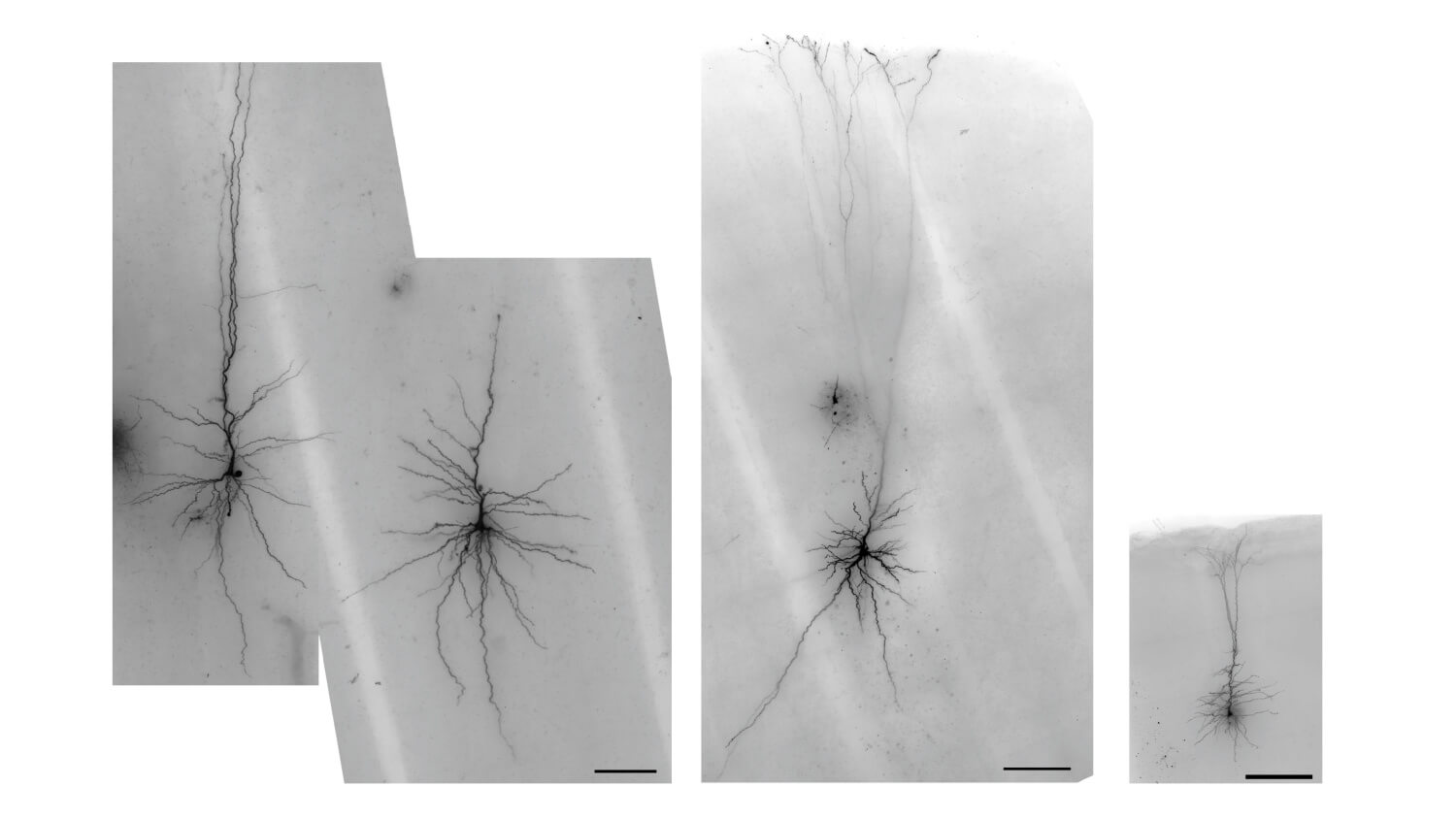
The study also captured the first electrical signals from rare human neurons known as Betz cells, motor neurons that project all the way to the spinal cord and degenerate in ALS, a devastating neurological disease that affects movement. These neurons, the largest known human neuron, are present in humans and monkeys but not found in mice, although rodents have a neuron type that matches many of Betz cells’ molecular characteristics.
Where are we the same as a mouse?
The study used two kinds of genomic data to compare brain cells from the primary motor cortex, one of the regions of the brain that controls voluntary movement, from the human, marmoset monkey and mouse brain.
“We wanted to understand how similar we are to some of the model organisms that we study, especially in the context of understanding human disease,” said Trygve Bakken, M.D., Ph.D., Assistant Investigator at the Allen Institute for Brain Science and first author on the study. “This was a great chance to do that because we’re looking at a part of the brain that all mammals have, and it functions in similar ways to control our muscles.”
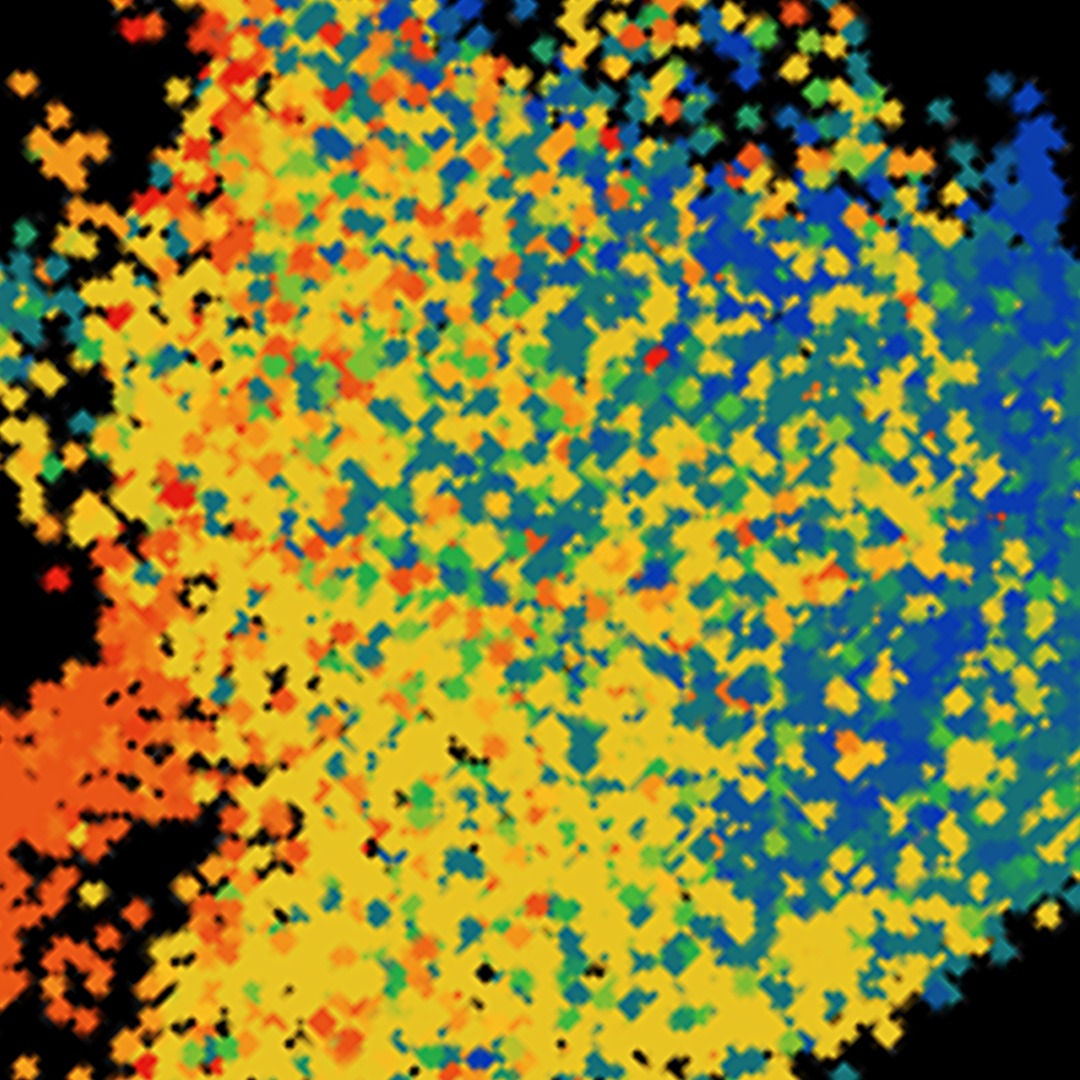
This study expands on a similar study published in 2019 from the Allen Institute team, adding new types of data to the comparison as well as a third mammalian species, the marmoset monkey, by collaborating with many other experts in the National Institutes of Health-funded BRAIN Initiative. In the current study, the scientists examined single brain cells’ transcriptomics, the suite of genes each cell switches on; and their epigenomics, which captures information about whether given stretches of DNA are accessible or closed off, a measure of gene regulation.
Overall, the lists of mouse, marmoset and human brain cell types as measured by these two types of data are remarkably similar. But that doesn’t mean our brains are just scaled-up versions of a mouse or monkey brain. There are two types of neurons: excitatory neurons, those that activate other neurons, and inhibitory neurons, those that switch off other neurons. It turns out that humans have about twice as many excitatory neurons as inhibitory neurons in the motor cortex, while mice have five times as many. The scientists are now studying many more mammals to understand how this ratio changed through mammalian evolution.
The ‘famous’ Betz cell
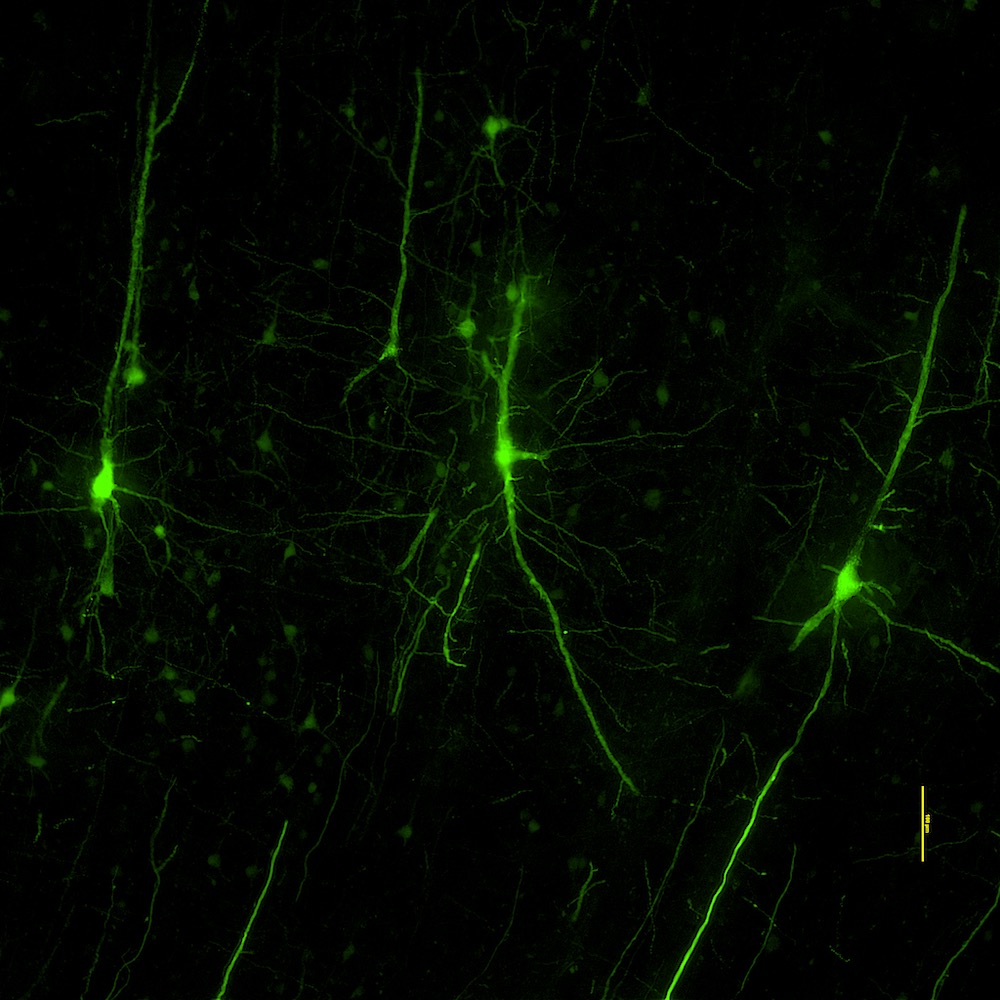
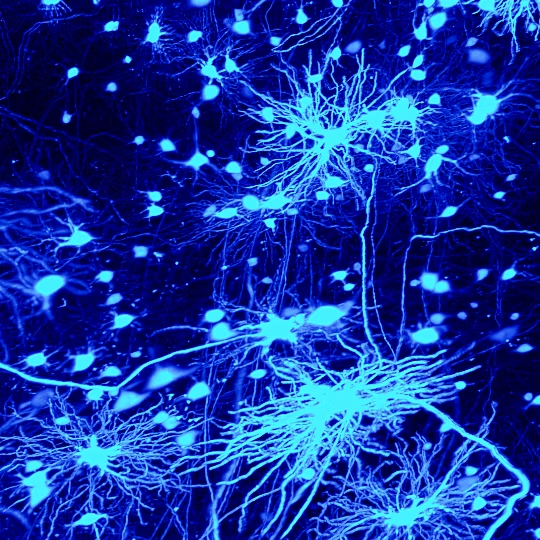
The researchers also used a technique known as Patch-seq, which captures electrical activity, 3D shape, and gene expression all from the same individual neuron, to study huge, rare neurons known as Betz cells. These cells have fascinated scientists since the advent of neuroscience — they’re so large they can be seen with the naked eye in a stained piece of brain tissue, and they send their axons all the way from our brains to our spinal cords.
“These neurons are highly specialized,” said Brian Kalmbach, Ph.D., Senior Scientist at the Allen Institute for Brain Science and a co-author on the study. “Everything about them — their huge size, their firing properties — is built for speed and sustained activity. This is likely related to our ability for highly complex, coordinated and dexterous movements.”
The neurons also seem to be selectively vulnerable in amyotrophic lateral sclerosis, or ALS, the progressive neurodegenerative disease that afflicted physicist Stephen Hawking and baseball player Lou Gehrig. The disease gradually kills off motor neurons, including Betz cells, leading to muscle weakness and atrophy, and eventually death.
Using their transcriptomic and epigenomic data, the researchers were able to find Betz cells’ closest relatives in the mouse brain, neurons that have a very similar signature of gene expression but that look very different from human and macaque monkey Betz cells. They also captured electrical information from all three kinds of neurons — including the first known electrical recordings from live human Betz cells in a piece of tissue donated by one brain surgery patient. Human and macaque Betz cells have a unique, rapid-fire electrical activity, the researchers found, which is very different from the way their rodent relatives send signals.
The next big task — for Betz cells and all the other brain cell types — will be to understand how their different characteristics translate into how the cells work in the brain.
“We’re a good way toward understanding the molecular profile of cell types,” Bakken said. “Next, we’ll need to link those cell types to their function. And that’s going to take a long time.”
The research described in this article was supported in part by the National Institutes of Health, including BRAIN Initiative awards U01MH114812, RF1MH114126, U01MH121282, U19MH114831, U19MH114830, U01MH114819, U01MH114828, and U19MH114821, award P51OD010425 from the Office of Research Infrastructure Programs (ORIP), award UL1TR000423 from the National Center for Advancing Translational Sciences (NCATS), BRAIN Initiative award RF1MH114126 and U19MH121282, National Institute on Drug Abuse award R01DA036909 and National Institute of Neurological Disorders and Stroke award R01NS044163. Its contents are solely the responsibility of the authors and do not necessarily represent the official view of NIH or its subsidiary institutes.
Citations
about the allen institute
The Allen Institute is an independent, 501(c)(3) nonprofit research organization founded by philanthropist and visionary, the late Paul G. Allen. The Allen Institute is dedicated to answering some of the biggest questions in bioscience and accelerating research worldwide. The Institute is a recognized leader in large-scale research with a commitment to an open science model. For more information, visit alleninstitute.org.