in this article
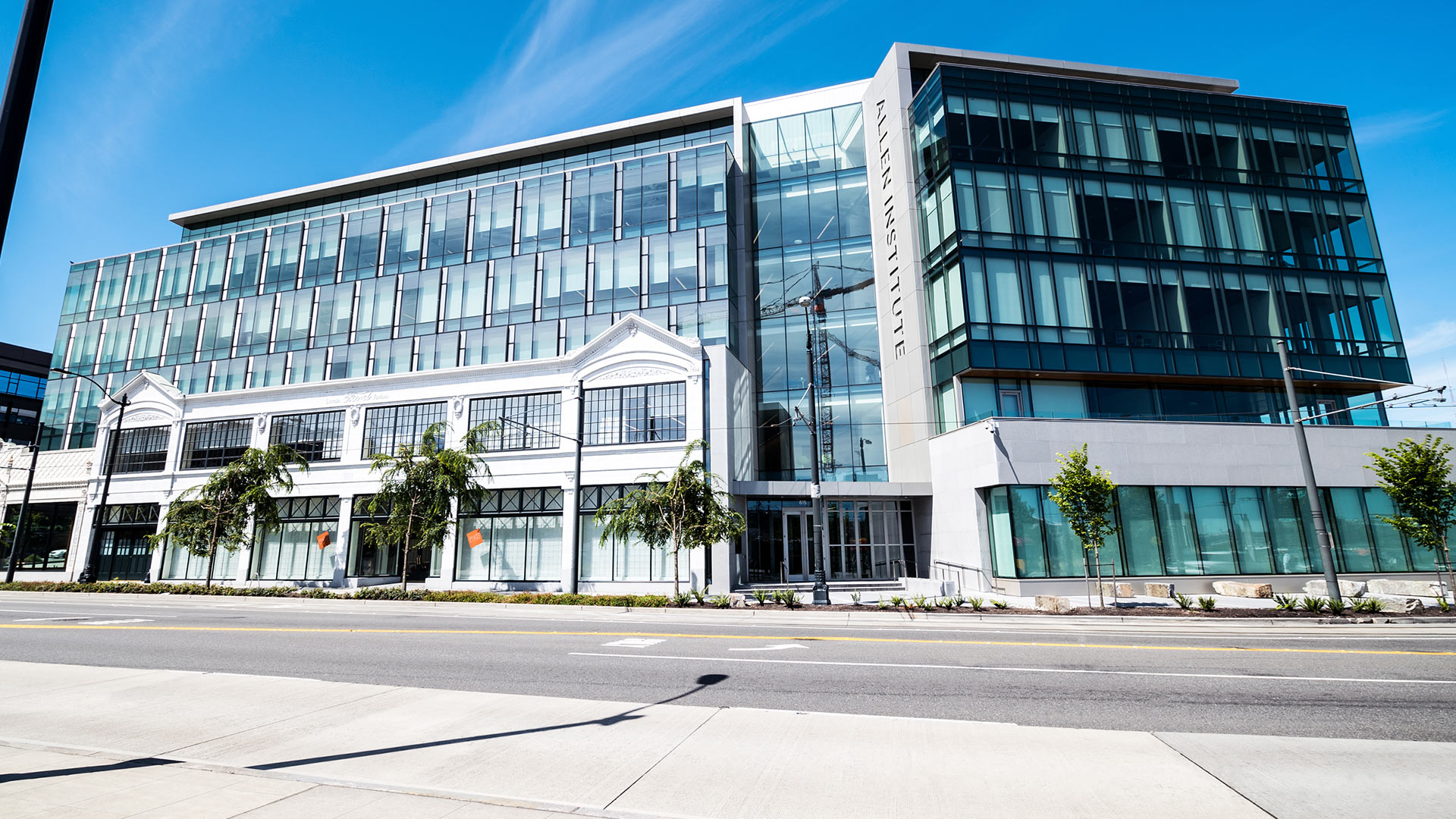
The Allen Institute has a new home. We have just opened the doors to our new headquarters in Seattle’s South Lake Union neighborhood, the city’s biotechnology hub. Located on the northwest corner of Mercer Street and Westlake Avenue North, the 270,000 square foot life sciences building is home to the Allen Institute for Brain Science and the Allen Institute for Cell Science.
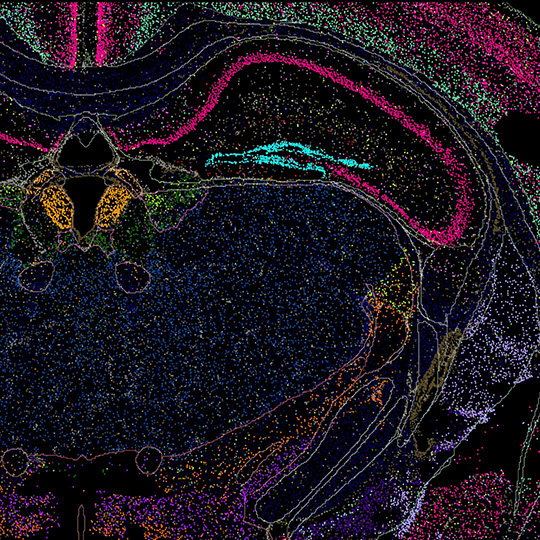
“Twelve years ago, we began as a small office building with big ambitions to understand how the brain works,” said Paul. G. Allen, philanthropist and founder of the Allen Institute. “We started by building a map of the locations where all the genes in the mouse brain are expressed –something that had never been done before—and since then, our scientific goals have expanded dramatically. The move to this new, state-of-the-art complex is the next step in our effort to make an even larger global impact on research into the brain. I’m incredibly excited for what lies ahead at the Allen Institute and proud of the ground-breaking work being done by our growing and dedicated team.”
“The architecture of this building reflects who we are as an organization,” says Allan Jones, Ph.D., Chief Executive Officer of the Allen Institute. “Our unique operating model of team science, big science and open science combines the best qualities from the worlds of academia and biotech, using goals and milestones to ensure that our scientific investigations turn into useful resources for scientists around the world. The atmosphere in this building encourages the kind of cross-disciplinary interaction and collaboration that is integral to our success as an organization.”
Citations
about the allen institute
The Allen Institute is an independent, 501(c)(3) nonprofit research organization founded by philanthropist and visionary, the late Paul G. Allen. The Allen Institute is dedicated to answering some of the biggest questions in bioscience and accelerating research worldwide. The Institute is a recognized leader in large-scale research with a commitment to an open science model. For more information, visit alleninstitute.org.