in this article
Philanthropist and entrepreneur Paul G. Allen today announced an initial commitment of $100 million to create The Paul G. Allen Frontiers Group, whose purpose will be to explore the landscape of bioscience and fund ideas at the frontier of knowledge to advance science and make the world better. As part of the launch, the Frontiers Group announces its first cohort of funded projects with four new Allen Distinguished Investigators (ADI) and two Allen Discovery Centers in partnership with Stanford University and Tufts University.
“To make the kind of transformational advances we seek and thus shape a better future, we must invest in scientists willing to pursue what some might consider out-of-the-box approaches at the very edges of knowledge,” says Mr. Allen. “This of course entails a risk of setbacks and failures. But without risk, there is rarely significant reward, and unless we try truly novel approaches, we may never find the answers we seek.”
The Paul G. Allen Frontiers Group, headquartered in Seattle, Wash., will engage in continuous dialogue with scientists, visionaries and innovators around the world via external listening tours, workshops, symposia and major events. The group will synthesize their findings to find the untapped areas of exploration that will lead to transformational insights and achievements in science.
There will be two paths for funding new ideas: the Allen Distinguished Investigators for frontier explorations with exceptional creativity and catalytic impact; and the Allen Discovery Centers at partner institutions for leadership-driven, compass-guided research.
Tom Skalak, Ph.D., is the founding Executive Director of The Paul G. Allen Frontiers Group. He was previously the Vice President for Research at the University of Virginia, where he conducted bioengineering research for 28 years, spanning topics from the cellular basis of microvascular adaptation to computational modeling of tissue pattern formation, and is a past-president of the American Institute of Medical and Biological Engineering and a fellow of the National Academy of Inventors.
“Over the next 50 years bioscience will undergo a radical transformation as advancements in life sciences converge with mathematics, physical sciences and engineering,” says Skalak. “The time is now to make this type of transformative investment in bioscience to advance the field and ultimately to make the world better.”
“Paul Allen is a visionary who has proven that it’s possible to tackle scientific advancements in new ways,” says Allan Jones, Ph.D., Chief Executive Officer of the Allen Institute. “The Frontiers Group will be identifying those breakthroughs yet to come, complementing his ongoing significant investments in the Allen Institute for Brain Science and Allen Institute for Cell Science.”
The Paul G. Allen Frontiers Group’s unique approach and landscape perspective are crucial to uncovering the creative ideas that span disciplines and will revolutionize scientific thinking.
David Baltimore, Ph.D., Nobel Laureate, former President of Caltech, and a member of the Advisory Council of the Frontiers Group, says, “Paul Allen has a compelling long-range vision and refreshing openness to new ideas, which is essential for exploration. The Frontiers Group is cultivating a special culture of creative involvement that will encourage the larger scientific community to continuously re-invent itself, a hallmark of great science.”
The Frontiers Group announces the first round of funded projects with four new Allen Distinguished Investigators and two inaugural Allen Discovery Centers. Additional Allen Discovery Centers and Allen Distinguished Investigators will be identified and named via both curation and open competitions periodically throughout a ten year period.
Allen Discovery Centers
Allen Discovery Centers are a new type of center for leadership-driven, compass-guided research in partnership with major research organizations and universities. The Frontiers Group will typically provide $20 million over eight years with $10 million in partner leverage, for a total scope of $30 million each. The new Allen Discovery Centers are:
- Stanford University, “Multiscale, Systems Modeling of Macrophage Infection,” led by Markus Covert, Ph.D.
Creating multiscale computer models that span from the inner workings of cells to the interactions between thousands of cells is a grand challenge of systems biology, and successful models are poised to have tremendous impact for researchers who study disease. The Allen Discovery Center at Stanford University will combine the expertise of computational modelers, bioengineers and bioscientists to create new models that comprehensively represent large systems of whole cells, as well as their dynamic environments and interactions. Researchers will begin by focusing on Salmonella infection of immune cells called macrophages: a system that provides insight not just into how bacteria interact with the immune system, but how drug resistance in populations of bacteria first arises. The team includes researchers at Stanford University and the University of Virginia, as well as former Google software engineers.
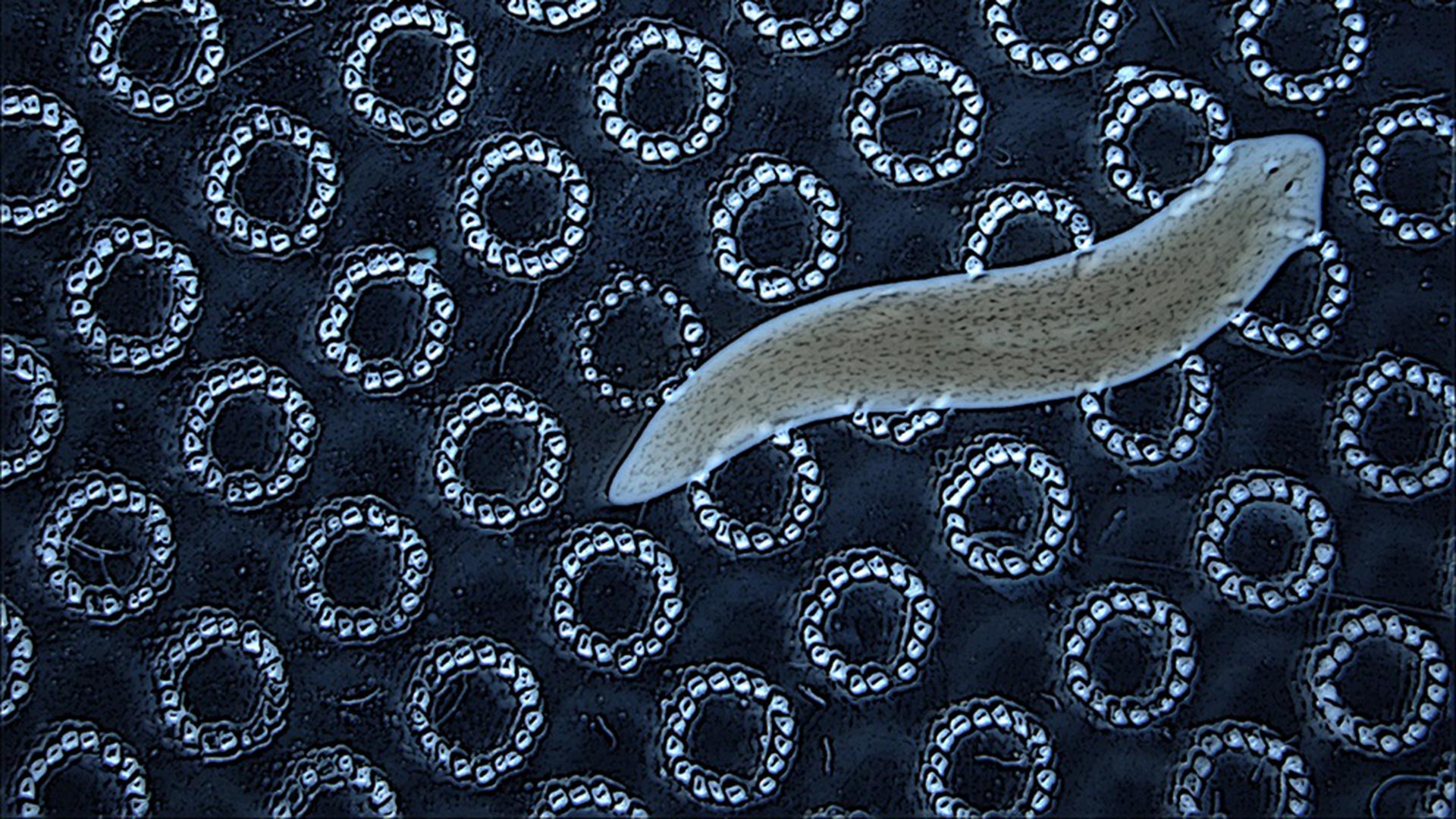
- Tufts University, “Reading and Writing the Morphogenetic Code,” led by Michael Levin, Ph.D.
Understanding how complex organ systems are created and repaired requires investigating the algorithms and computations performed by cell networks during pattern regulation. The Allen Discovery Center at Tufts University will seek to read, interpret and manipulate the biological code that determines anatomical structure and function during embryogenesis, regeneration and tumor suppression. A unique focus area is the processing of instructive patterning information via bioelectric signaling among cells. This work holds the potential to transform the fields of biology and medicine, as well as make crucial links in evolutionary theory and cancer biology by bridging the gap between molecular details and the larger-scale control of biological systems. The team includes researchers at Tufts University, Harvard University, Princeton University and others.
Allen Distinguished Investigators
The Allen Distinguished Investigator (ADI) program supports early-stage research with the potential to reinvent entire fields. Allen Distinguished Investigators are passionate thought leaders, explorers and innovators who seek world-changing breakthroughs. With grants typically between $1 million and $1.5 million each, the Frontiers Group provides these scientists with support to produce new directions in their respective fields. The new ADI recipients are:
- Ethan Bier, Ph.D., University of California, San Diego ($1.5 million), “Biological Innovation and Active Genetics”
A major unsolved mystery in evolutionary developmental biology is how biological innovation happens: where do new body forms come from? Using pioneering technology known as active genetics to produce large genetic modifications, Bier will seek to uncover the design principles used in evolution to make large-scale physical changes across species. The practical applications of this work promise to guide novel synthetic biology designs that could revolutionize medicine, agriculture and care of the environment.
- James J. Collins, Ph.D., Massachusetts Institute of Technology ($1.5 million), “Synthetic Biology Approaches to Antimicrobial Resistance”
The rise of antibiotic resistance has become a public health crisis. Collins will use principles of synthetic biology to engineer safe, frequently consumed bacteria to detect and kill dangerous bacteria such as those that cause MRSA infections, the most frequently identified drug-resistant pathogen in United States hospitals. His novel strategy of rapidly re-designing beneficial changes in bacterial genomes could usher in a new era of design-based medicine. This frontier research will also enable scientists to understand the root causes of antibiotic resistance and the mechanisms by which traditional antibiotics work to target disease.
- Jennifer Doudna, Ph.D., University of California, Berkeley ($1.5 million), “Antiviral Machinery and Cell Editing Platforms”
Nature has likely evolved multiple methods of host defense, and many remain unknown. Building on her pioneering work to develop CRISPR-Cas9 gene editing technology, Doudna will look beyond the typically employed bacterial proteins to similar proteins in diverse organism and also seek out new RNA-targeting strategies. Early research shows that archaea, which can be found in extreme environments with high temperatures, have proteins similar to Cas9 but that may be capable of reaching areas of the genome currently inaccessible in CRISPR methods. Targeting RNA would offer a way to edit cell behaviors without targeting the genome directly, opening up a vast new frontier. This work has the potential to introduce novel gene editing technologies to fight human disease, improve agriculture, and promote environmental health.
- Bassem Hassan, Ph.D., Institut du Cerveau et de la Moelle épinière ($1.5 million), “How Developmental Noise in Neural Circuit Development Determines the Unique Behavior of Individuals”
Even though we all share fundamental neurological properties, the details of individual neural circuits can vary dramatically among individuals. Hassan has pinpointed a neural circuit in flies that serves as an ideal testing ground for understanding how molecular noise sculpts individual neural circuits during maturation and development. Unraveling the causal link between the dynamic wiring of neural circuits during development and the emergence of behavioral variability will help determine the origin of individual differences within a population, and how individual variations contribute to the fitness of the entire population. The work ultimately will shed light on what makes each of us distinct.
Citations
about the allen institute
The Allen Institute is an independent, 501(c)(3) nonprofit research organization founded by philanthropist and visionary, the late Paul G. Allen. The Allen Institute is dedicated to answering some of the biggest questions in bioscience and accelerating research worldwide. The Institute is a recognized leader in large-scale research with a commitment to an open science model. For more information, visit alleninstitute.org.