in this article
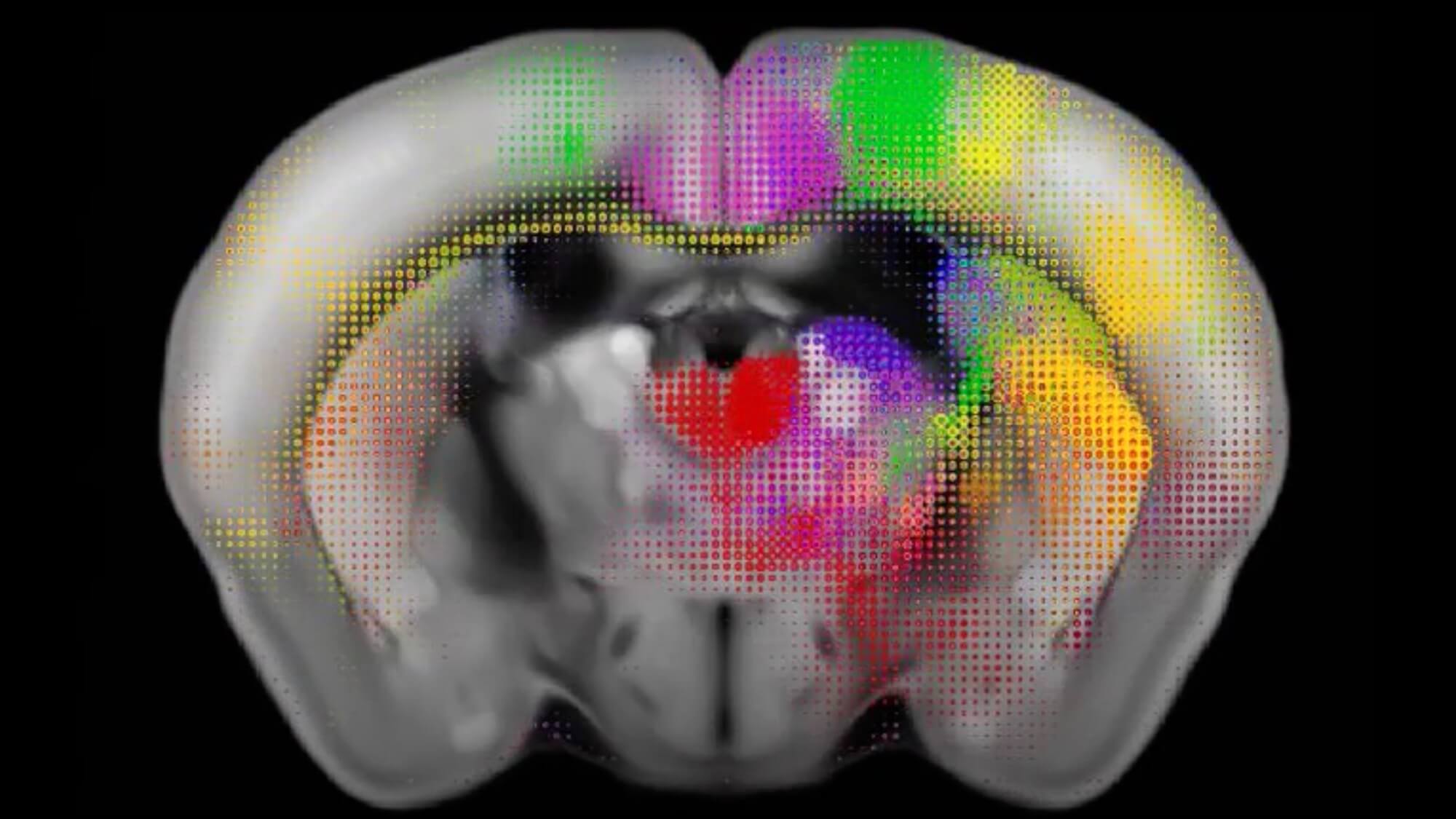
Researchers from the Allen Institute for Brain Science have published the first comprehensive, large-scale data set on how the brain of a mammal is wired, providing a groundbreaking data resource and fresh insights into how the nervous system processes information. Their landmark paper in this week’s issue of the journal Nature both describes the publicly available Allen Mouse Brain Connectivity Atlas, and demonstrates the exciting knowledge that can be gleaned from this valuable resource.
“Understanding how the brain is wired is among the most crucial steps to understanding how the brain encodes information,” explains Hongkui Zeng, Senior Director of Research Science at the Allen Institute for Brain Science. “The Allen Mouse Brain Connectivity Atlas is a standardized, quantitative, and comprehensive resource that will stimulate exciting investigations around the entire neuroscience community, and from which we have already gleaned unprecedented details into how structures are connected inside the brain.”
Using the data, Allen Institute scientists were able to demonstrate that there are highly specific patterns in the connections among different brain regions, and that the strengths of these connections vary with greater than five orders of magnitudes, balancing a small number of strong connections with a large number of weak connections. This publication comes just as the research team wraps up more than four years of work to collect and make publicly available the data behind the Allen Mouse Brain Connectivity Atlas project, with the completion of the Atlas announced in March 2014.
Creating a Roadmap for the Brain
The human brain is among the most complex structures in the entire universe, containing roughly 100 billion neurons—as many stars as are in the Milky Way. The mouse brain’s 75 million neurons, arranged in a roughly similar structure to the human brain, provide a powerful model system by which to understand how nerve cells of the human brain connect, process and encode information. Despite the foundational need to understand how areas of the brain are connected, the only species for which we have a complete wiring diagram is the simple microscopic worm C. elegans—a far simpler system, with only 302 neurons, compared to the human or any other mammalian nervous system.
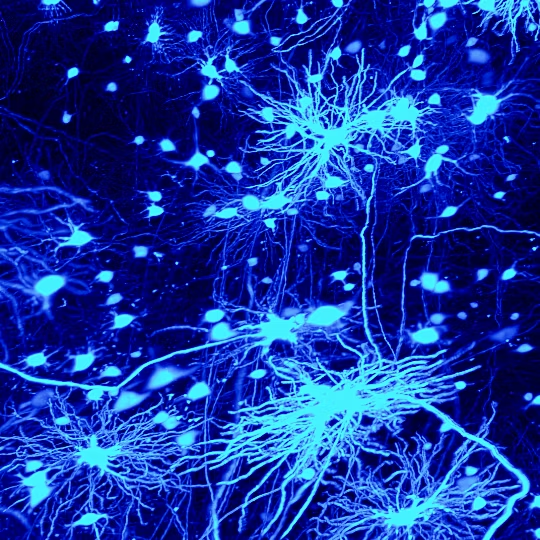
Scientists at the Allen Institute set out to create a wiring diagram of the brain—also known as a “connectome”—to illustrate short and long-range connections using genetically-engineered viruses that could trace and illuminate individual neurons. In order to get a truly comprehensive view, scientists collected imaging data at resolutions smaller than a micrometer from more than 1,700 mouse brains, each of which was divided into 140 serial sections. “The data for the Allen Mouse Brain Connectivity Atlas was collected in a way that’s never been done before,” says Zeng. “Standardizing the data generation process allowed us to create a 3D common reference space, meaning we could put the data from all of our thousands of experiments next to each other and compare them all in a highly quantitative way at the same time.”
The Allen Mouse Brain Connectivity Atlas contains more than 1.8 petabytes of data—the equivalent of 23.9 years of continuous HD video—all of which is freely available online to the entire community. The research team behind the Atlas has been steadily releasing new data since November 2011; and in March, they released the last major update to the Atlas, though the resource will continue to be updated as technology develops and researchers are able to add more new types of connectivity data. Like all of the Allen Brain Atlas resources, the data and the tools to browse and analyze them are freely available to the public at www.brain-map.org.
The Global Power of the Atlas
As a freely available resource, the Allen Mouse Brain Connectivity Atlas is an invaluable tool for neuroscientists with questions about the nature of the brain’s connections.
“The Allen Mouse Brain Connectivity Atlas provides an initial road-map of the brain, at the level of interstate highways and the major cities that they link,” explains David Anderson, Professor of Biology and Howard Hughes Medical Institute Investigator at the California Institute of Technology. “Smaller road networks and their intersections with the interstates will be the next step, followed by maps of local streets in different municipalities. This information will provide a framework for what we ultimately want to understand: ‘traffic patterns’ of information flow in the brain during various activities such as decision-making, mapping of the physical environment, learning and remembering, and other cognitive or emotional processes.”
With the Nature publication, Allen Institute scientists have already begun to demonstrate the power of analysis contained within the Atlas. By analyzing the data, Zeng and her team were able to discover several interesting properties of the mouse brain’s connectome. For example, there are extensive connections across the two hemispheres with mirror-image symmetry. Pathways belonging to different functional circuits in the brain can be identified and their relationships and intersections visualized in 3D. Finally, there is a great degree of variation in the strengths of all the connections–ranging beyond five orders of magnitude—and an intriguing balance between a small number of strong connections and a large number of weak connections.
These discoveries illustrate the need for a quantitative understanding and a global view of the brain’s connectivity patterns, since a quantitative approach can describe the relative strength of different connections instead of the simple presence or absence descriptions that are inherent to a more qualitative approach. These more accurate comparisons are uniquely enabled by the Atlas, Zeng says.
“The purpose of the Atlas is to create a new way to map the brain’s vast connections systematically and rapidly, and to develop a platform to present the data to users and help them navigate in the friendliest possible way,” explains Zeng. “But the kind of analysis we have done so far is just the beginning of the deep analysis of the wiring patterns of different brain circuits made possible by this unique collection of data.”
The Future of the Connectivity Atlas
Maintaining the Allen Mouse Brain Connectivity Atlas is a continuous effort. After the completion of the Atlas as originally scoped in March 2014, scientists will continue to update the Atlas with profiles of more individual nerve cell types as they become available. Researchers at the Allen Institute are also poised to dive more deeply into the data they have already collected, and will focus more intently on studying the connections between different types of neurons in the same or neighboring regions – the city roads and local streets that, together with the interstates, form the hierarchical neural networks.
The Atlas promises to serve as an invaluable tool for neuroscientists all over the world long into the future. “Previously, the scientific community had to rely on incomplete, fragmented data sets, like small pieces of a map but at different scales and resolutions, so it was impossible to see the bigger picture,” explains Ed Callaway, Professor in the Systems Neurobiology Laboratories at the Salk Institute for Biological Studies. “Now, we have instant access to complete and consistent data across the entire brain, and the suite of web-based analytic and display tools make it easy to find what you need and to see it in 3D.
“Who you are—all your thoughts and actions your entire life—is based on connections between neurons,” Callaway continues. “So if we want to understand any of these processes or how they go wrong in disease, we have to understand how those circuits function. Without an atlas, we couldn’t hope to gain that understanding.”
Citations
about the allen institute
The Allen Institute is an independent, 501(c)(3) nonprofit research organization founded by philanthropist and visionary, the late Paul G. Allen. The Allen Institute is dedicated to answering some of the biggest questions in bioscience and accelerating research worldwide. The Institute is a recognized leader in large-scale research with a commitment to an open science model. For more information, visit alleninstitute.org.