in this article
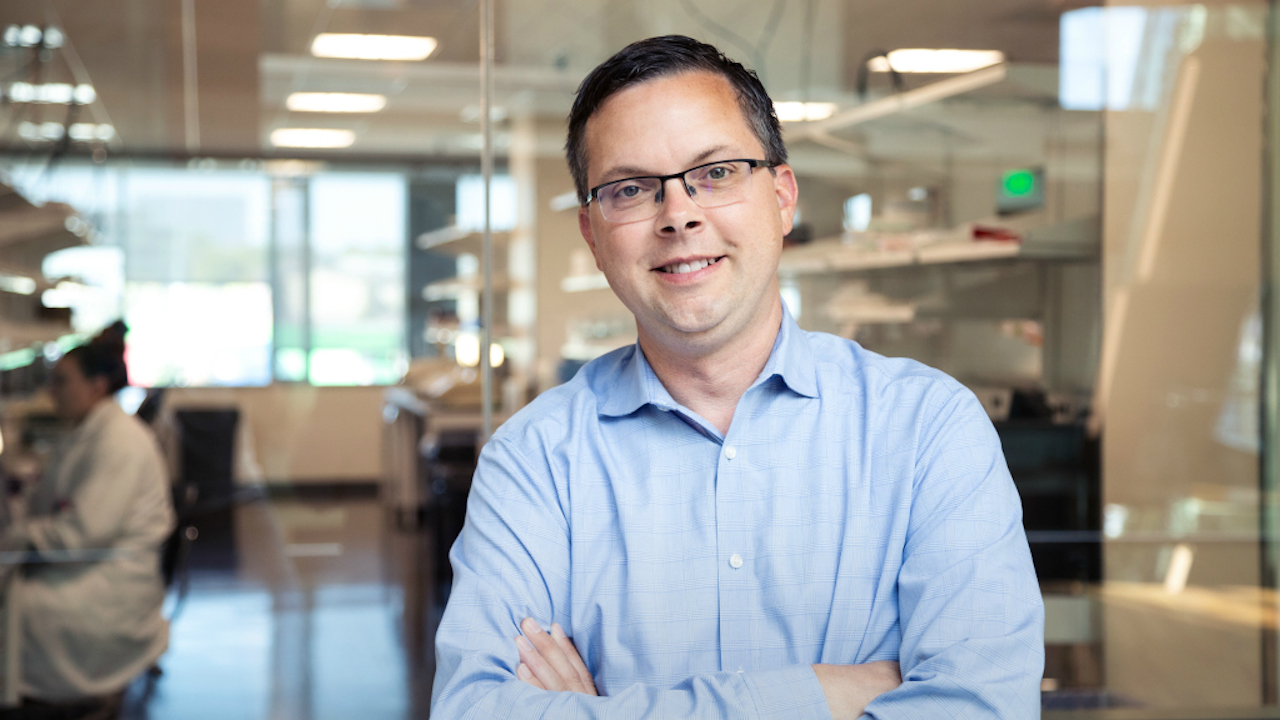
Ernie Coffey started his career in science with a bang. It was 1997 and he landed a job at one of the institutes participating in the sequencing of the first complete human genome as part of the Human Genome Project.
Things only got more interesting from there. After helping to load the many sequencing machines required to capture a full genome’s worth of information in the 1990s, he joined Rosetta Inpharmatics, a start-up biotech company in Seattle, to support the development of a new technology to study genomes.
His career evolved from there, eventually moving away from hands-on work at the laboratory bench to program management, to operations management, to client services. In parallel, companies and labs were changing hands — Rosetta was acquired by Merck, which later sold the lab unit that included Coffey’s group to Covance, a contract research organization.
In April 2017, Coffey joined the Allen Institute to be part of the planning, and eventually the operations, of a brand-new immunology research endeavor. He was the first employee hired for what would become the Allen Institute for Immunology, launched late last year.
We sat down with Coffey to learn more about his career path, how operations can help science, and what he finds most exciting about his job. The following conversation has been lightly edited for length and clarity.
What first drew you to biology?
I originally thought I would go to medical school, but once I started college, I realized that I wanted to start working right after getting my degree. I loved science and decided I wanted to pursue it as a career. I did a summer internship in a pharmaceutical company’s QC lab and found that work really interesting.
What was it like to work on the Human Genome Project?
As a young adult in my 20s, I didn’t truly appreciate how extraordinary that opportunity was, but it was really phenomenal. One of my favorite classes at school was genetics. Looking back on it, it was really cool that I got to be part of that.
What drew you to the Allen Institute?
In my last role at Covance, which was very commercial in nature, my connection with the science was growing a bit more distant. I wanted a position that would get me closer to research. This opportunity came up because I used to work with several current Allen Institute employees at Rosetta, including Allan Jones, and they reached out to me. The job had a lot of exciting elements. It was very science-oriented, and it was a start-up environment, which had been a great experience at Rosetta. Immunology was a new area of science for me, and I love learning new things and being involved with new projects. And I was certainly familiar with the Allen Institute.
What makes you the most excited about coming into work in the morning?
Professionally, we are working with cutting-edge technologies and we are building an incredible team to solve some unique and complex challenges, which I find really exciting. On a personal level, I look at what we are doing as having a real impact in the future on patients. We all have relatives or our own experiences with cancer or autoimmune disease. My sister-in-law has an autoimmune disease which has resulted in kidney failure over the past several years. I think about her when I come into work, about what this team is doing and the impact we could have on patients like her someday.
What does your team do?
I lead administration, lab operations and partner alliance management. The alliance work, led by Lynne Becker, is a really important aspect. Our partnerships with other research organizations are critical, because they are providing us access to these important clinical samples and they are also going to be generating data as well that will be contributing to our collective work. On the lab side, we are establishing a pipeline so that every sample that comes in will go through the same standardized assays. Tanja Smith is the Sr. Manager supporting that effort to ensure the lab runs smoothly and our scientists have everything they need to be successful in the lab.
Do you think the general public is aware of how many different kinds of roles it takes to make scientific research happen? It’s not just the people in lab coats doing the experiments.
It definitely takes a lot more than just the people working in the lab. Operations and program management are really important roles too. I view my job as helping to support the scientists so they can focus on their research and to facilitate that as much as possible. I have a degree in science, and I think that’s been helpful for me. I wasn’t particularly interested in an academic research career, but I love working in science and research operations.
Citations
about the allen institute
The Allen Institute is an independent, 501(c)(3) nonprofit research organization founded by philanthropist and visionary, the late Paul G. Allen. The Allen Institute is dedicated to answering some of the biggest questions in bioscience and accelerating research worldwide. The Institute is a recognized leader in large-scale research with a commitment to an open science model. For more information, visit alleninstitute.org.