
impact
impact
open science
subheadline
careers and opportunities
subheadline
people & teams
people & teams
subheadline
allenites
subheadline
allen institute advisors
subheadline
board of directors
subheadline
shanahan foundation fellowship
subheadline
next generation leaders
subheadline
research
overview
our approach
subheadline
publications
subheadline
open science
subheadline
accelerator
brain science
subheadline
cell science
subheadline
neural dynamics
subheadline
immunology
subheadline
synthetic biology
subheadline
education
education
science education
subheadline
education resources
subheadline
field trips
subheadline
open science
subheadline
open science quest
subheadline
news
news
stories
subheadline
podcast
subheadline
sign up for our newsletter
subheadline
events
events
all events
subheadline
conferences
subheadline
event code of conduct
subheadline
events
open science quest
subheadline
summer workshop on the dynamic brain
subheadline
open science week
subheadline
brain fest
subheadline
science resources
science resources
allencell.org
subheadline
allenimmunology.org
subheadline
allenneuraldynamics.org
subheadline
brain-bican.org
subheadline
brain-map.org
subheadline
microns-explorer.org
subheadline
impact
back to menu
impact
open science
subheading
careers and opportunities
subheading
people & teams
people & teams
subheading
allen institute advisors
subheading
board of directors
subheading
shanahan foundation fellowship
subheading
next generation leaders
subheading
research
back to menu
impact
Label
subheading
Label
subheading
people & teams
education
back to menu
research
Label
subheading
Label
subheading
Heading
news
back to menu
research
Label
subheading
Label
subheading
Heading
events
back to menu
research
Label
subheading
Label
subheading
Heading
science resources
back to menu
science resources
allencell.org
subheading
allenimmunology.org
subheading
allenneuraldynamics.org
subheading
brain-bican.org
subheading
brain-map.org
subheading
microns-explorer.org
subheading
search
stories
news

Scientists fix genetic defect in mice tied to brain disorders that include autism and epilepsy

Gene therapy successfully reduced epileptic activity, hyperactivity and risk-taking behaviors tied to SYNGAP1-related disorders

October 9, 2025
 min read
share/
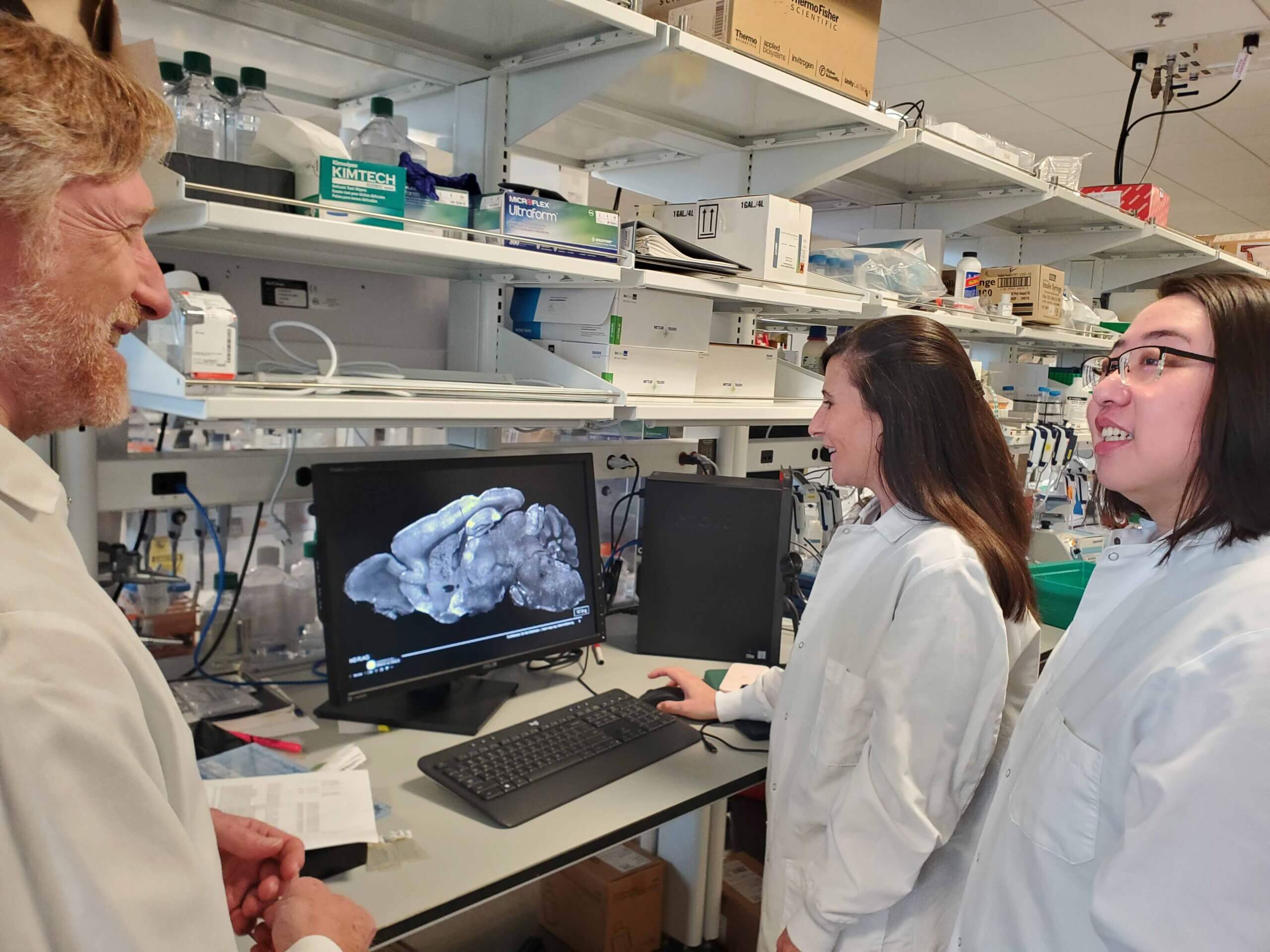
Allen Institute researchers Boaz Levi, Ph.D., associate investigator; Meagan Quinlan, Ph.D., scientist; and Rong Guo, Ph.D., scientist (Photo credit: Allen Institute/Peter Kim)
Gene therapy successfully reduced epileptic activity, hyperactivity and risk-taking behaviors tied to SYNGAP1-related disorders
Thank you! Your submission has been received!
Oops! Something went wrong while submitting the form.

in this article

table of contents will display on published page only
set h2 to populate the table of contents here

authors

Peter Kim
Associate Director, Communications & Media Relations

In an exciting scientific first, researchers at the Allen Institute successfully designed a new gene therapy that reversed symptoms related to SYNGAP1-related disorders (SRD) in mice. These are a class of brain disorders that can lead to severe and debilitating symptoms including intellectual disability, epilepsy, motor problems, and risk-taking behaviors in humans. In most cases, SRDs are caused when someone has only one working copy of the SYNGAP1 gene instead of the normal two.

The findings, recently published in the journal Molecular Therapy, represent the first successful gene supplementation therapy for SRDs in which an adeno associate virus (AAV) was used to deliver a working copy of the SYNGAP1 gene into brain cells. AAVs are non-replicating viruses that act like delivery trucks carrying therapeutic cargo, in this case the SYNGAP1 gene, into cells that need it.  

“Gene supplementation is providing a functional new copy of a defective gene, a strategy that has great potential for correcting diseases where a gene is completely missing or where a single copy of a gene is lost,” said Boaz Levi, Ph.D., associate investigator at the Allen Institute and senior author of the study. “This provides a clear demonstration that SYNGAP1-related disorders can be treated with a neuron-specific gene supplementation strategy. It’s an important milestone for the field that provides hope for those who suffer from this class of severe neurological diseases.”
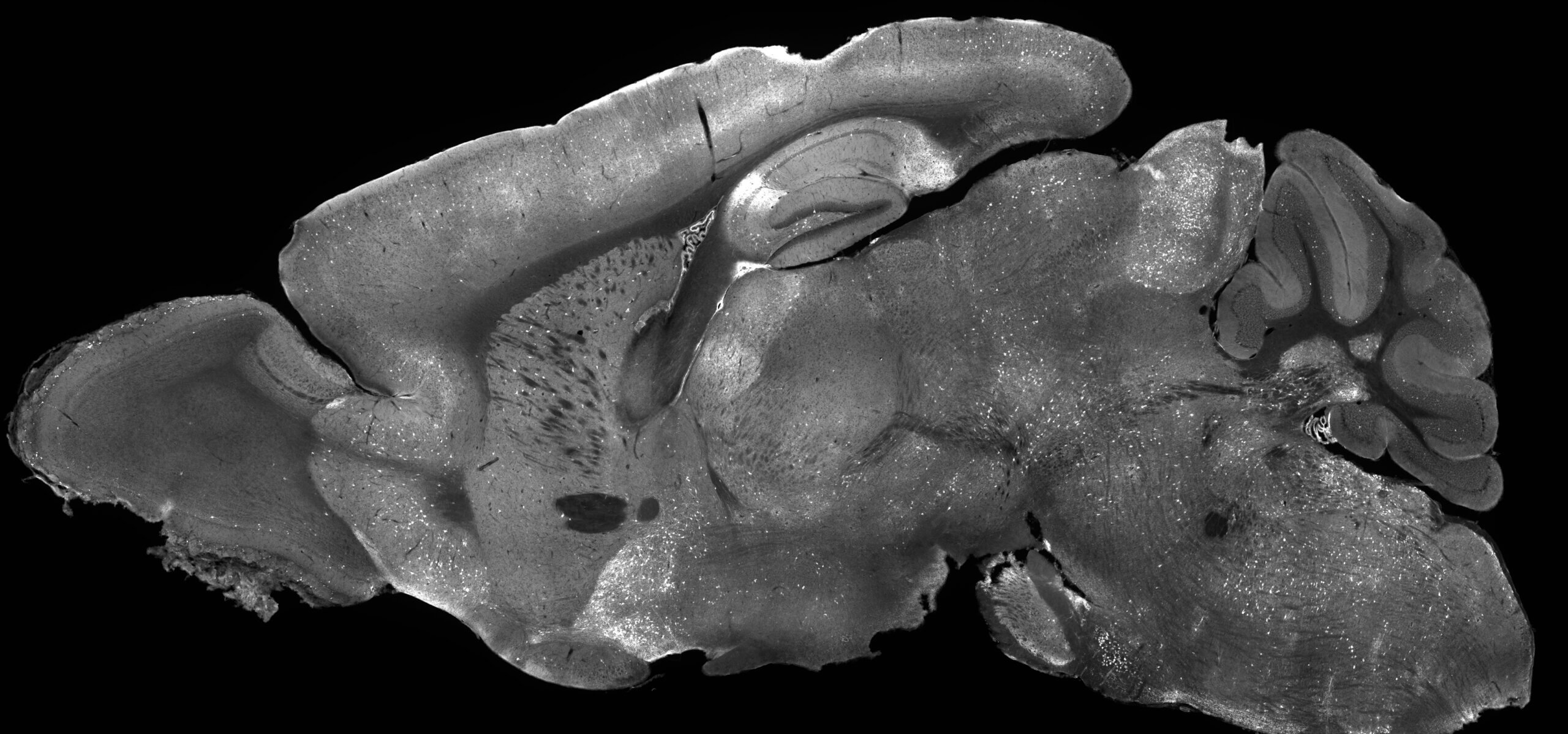
Microscopic organism or sea creature photographed in grayscale with detailed surface texture
Mouse brain image glowing with experimental gene supplementation therapy highlighting how AAV delivers treatment across the entire brain (Photo credit: Allen Institute/Andrew Clark)

What were the most important findings?

The new gene therapy improved a broad range of disease symptoms, nearly eliminating epileptic brain activity and correcting hyperactive behavior and risk-taking tendencies characterized by SRDs. The treatment also substantially restored normal brain wave patterns, which is significant because abnormal brain rhythms in SRD patients are tied to cognitive dysfunction affecting learning, memory, and attention.  

Notably, the study also revealed something important about the timing of when this therapy was given: Researchers treated juvenile mice, an age corresponding to when children are usually diagnosed. At this stage, the mice’s symptoms dramatically improved, suggesting that this gene therapy could still be effective even after symptoms begin. This encouraging finding offers hope that treatment may help restore normal brain function in children with SRDs.

What are the practical implications?

This discovery is an encouraging development for families affected by SRDs. Right now, there are few treatment options and drugs available for families to find relief, and those that are available are limited to managing severe symptoms without addressing the root cause. This new research, if successful in human trials, could lead to new therapies that alleviate symptoms by targeting the genetic origins of disease rather than addressing symptoms alone.
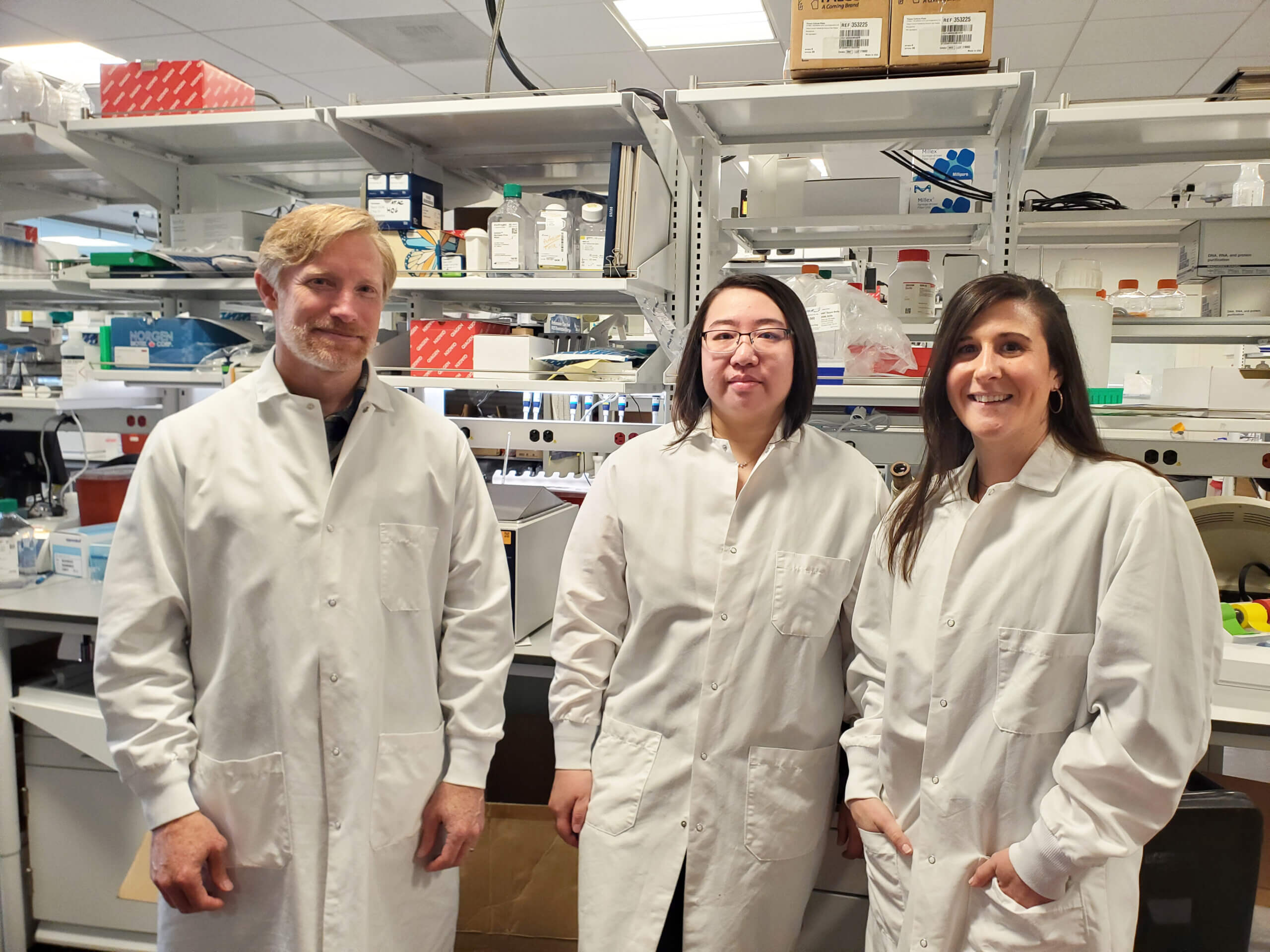
Three scientists in white lab coats standing together in a laboratory with shelves of equipment and supplies.
Allen Institute researchers Boaz Levi, Ph.D., associate investigator; Rong Guo, Ph.D., scientist; and Meagan Quinlan, Ph.D., scientist (Photo credit: Allen Institute/Peter Kim)

How did the researchers do it?

Scientists faced a technical barrier in designing the new therapy. The defective copy of the SYNGAP1 gene needs to be replaced, but this gene is too large to fit into AAV delivery systems. In this case, researchers built the oversized gene and packaged it into the AAV, much like loading a truck filled with more luggage than anyone thought it could hold. Surprisingly, it all fit, and the therapy was successfully delivered into targeted brain cells.

While clinical trials are still needed, the strong evidence and data in this study suggest that effective treatment for SRDs and their devastating symptoms may be within reach. The range of therapeutic benefits was also significant—addressing seizures, behavior, and brain function simultaneously.

This hopeful development for science represents the kind of transformative potential that patients and families desperately need for this debilitating class of brain diseases.

Citations
No items found.

about the allen institute

The Allen Institute is an independent, 501(c)(3) nonprofit research organization founded by philanthropist and visionary, the late Paul G. Allen. The Allen Institute is dedicated to answering some of the biggest questions in bioscience and accelerating research worldwide. The Institute is a recognized leader in large-scale research with a commitment to an open science model. For more information, visit alleninstitute.org.

explore related stories

explore more stories
news 
Autism Speaks spearheads collaborative grant with the Allen Institute for Brain Science and leading autism expert to analyze frontal lobe microstructure in autism
Research may provide insight into the biological causes of autism
we acceleratedevelopcatalyzeimpact

science done differently. shared with the world.

explore our accelerators

brain science

Mapping every cell, connection, and circuit in the brain—openly shared with the world.

cell science

Decoding how cells become tissues, then programming that knowledge into powerful new research tools.

neural dynamics

Revealing the brain's hidden algorithms that transform neural activity into real-world behavior.

immunology

Creating the deepest open reference for the healthy human immune system ever built.

synthetic biology

Engineering cells to record their own histories, transforming how we understand disease over time.

research

Big questions, open answers, and science built to be shared.

education

Inspiring the next generation of scientists through open science resources.

impact

Our science is empowering researchers and advancing health worldwide.
advancing science through open, collaborative research
Get the allen institute newsletter
Stay informed on the latest breakthroughs in neuroscience, bioscience, and AI-driven research.
allen institute
impactpeople & teamscareers & opportunitiesalumnihistory & founder
science resources
allencell.orgallenimmunology.orgallenneuraldynamics.orgbrain-bican.orgbrain-map.orgmicrons-explorer.org
research
brain sciencecell scienceneural dynamicsimmunologysynthetic biologypublications
education
science educationfield tripsprofessional developmenteducation resources
quick links
newseventsopen sciencepodcastscience resourceshuman brain donationvisit uscontact
follow us/

allen institute, 615 Westlake Ave North, Seattle, WA 98109 +12065487055

© 0000 allen institute. all rights reserved.
privacy policyterms of usecitation policyemployee portalpolicy & compliance