in this article
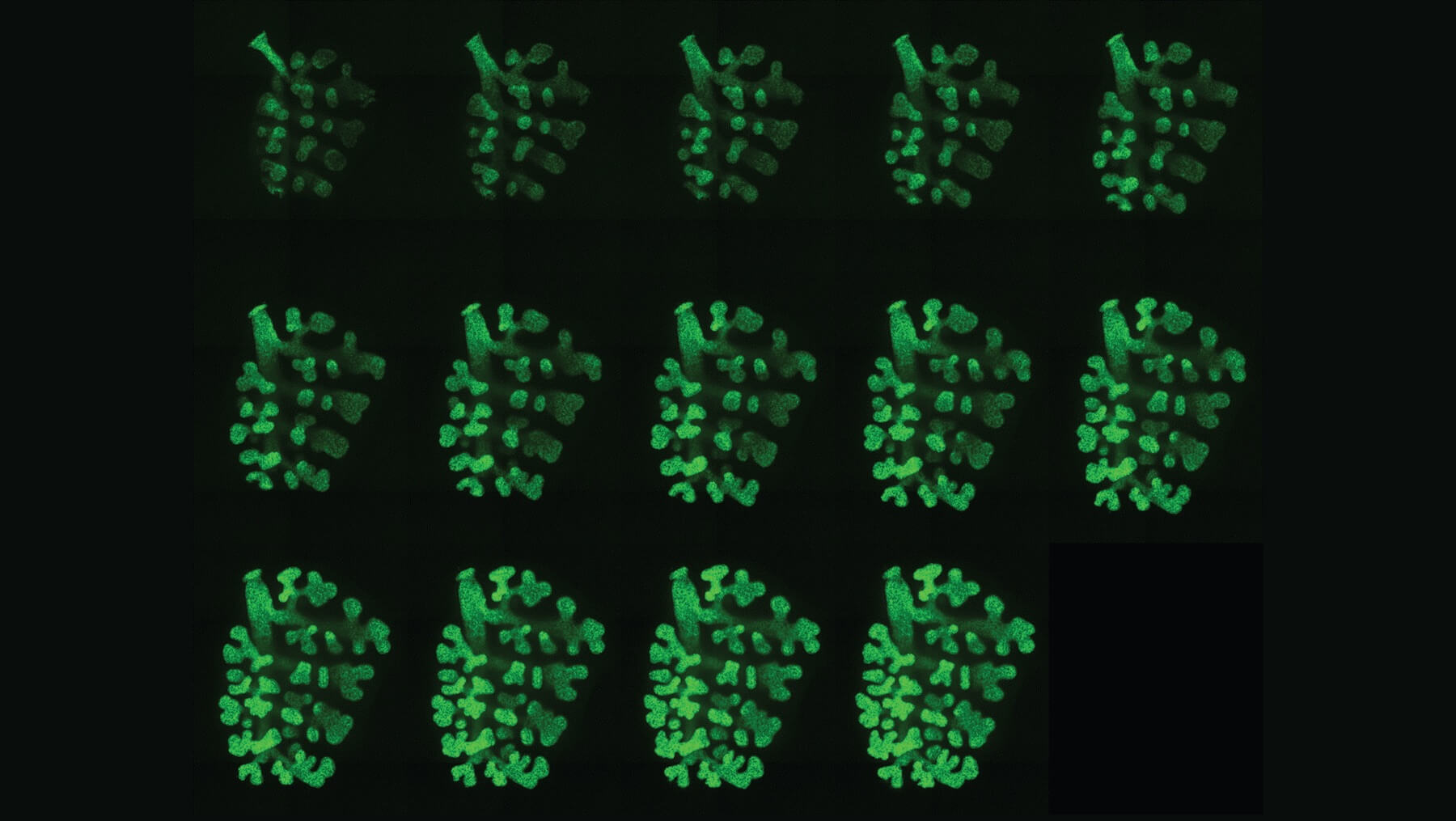
An embryonic lung transforms into a tree-like structure through a developmental process known as branching morphogenesis. How these delicate, complex structures form in a growing animal is still not well understood. Boston University postdoctoral fellow Ian Kinstlinger, Ph.D., captured the continuous growth of lungs taken from a developing mouse, taking microscope images every three hours to show lung growth over the course of several days. In these images, specialized epithelial cells on the lung’s surface express a green fluorescent protein. Between the branches, black spaces are filled with soft mesenchyme cells, not visible in these images. These cells send signals to epithelial cells, promoting their growth and migration. In response, the surface epithelial cells release their own molecules, creating a back-and-forth signaling system that guides the lung structure’s development. Allen Distinguished Investigators Darrell Kotton, Ph.D., Wilson Wong, Ph.D., and their teams at Boston University aim to explore this process to gain insights into lung development and develop strategies to improve lung health. – Haylee Jarrett
Microscopic viewpoints, computer-generated models, intricate tracings and more — see a new side of science with SciShots.
Citations
about the allen institute
The Allen Institute is an independent, 501(c)(3) nonprofit research organization founded by philanthropist and visionary, the late Paul G. Allen. The Allen Institute is dedicated to answering some of the biggest questions in bioscience and accelerating research worldwide. The Institute is a recognized leader in large-scale research with a commitment to an open science model. For more information, visit alleninstitute.org.