
SciShots: Cellular scaffolding
Computer animation techniques light up cells’ inner workings
02.04.2022
1 min read
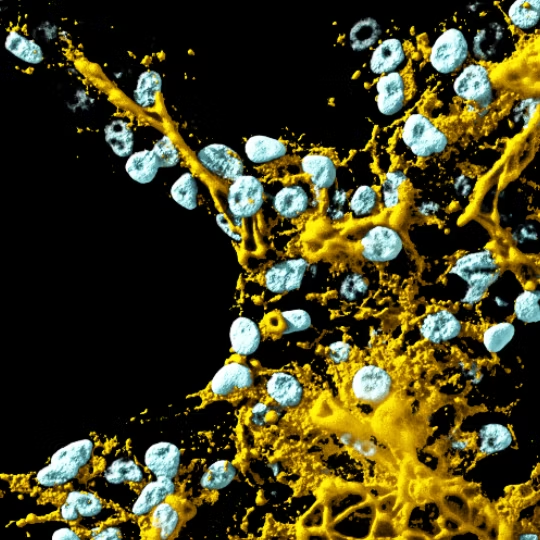
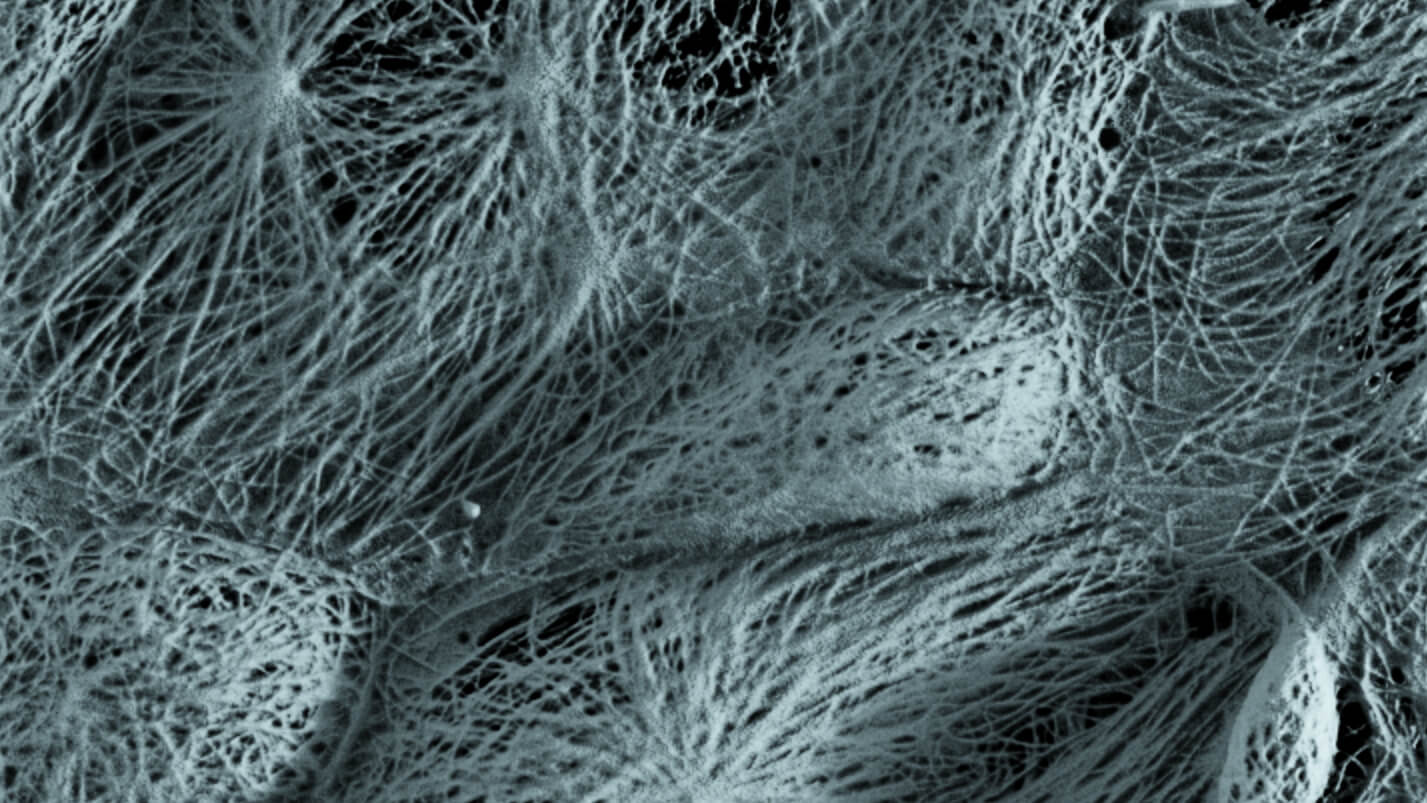
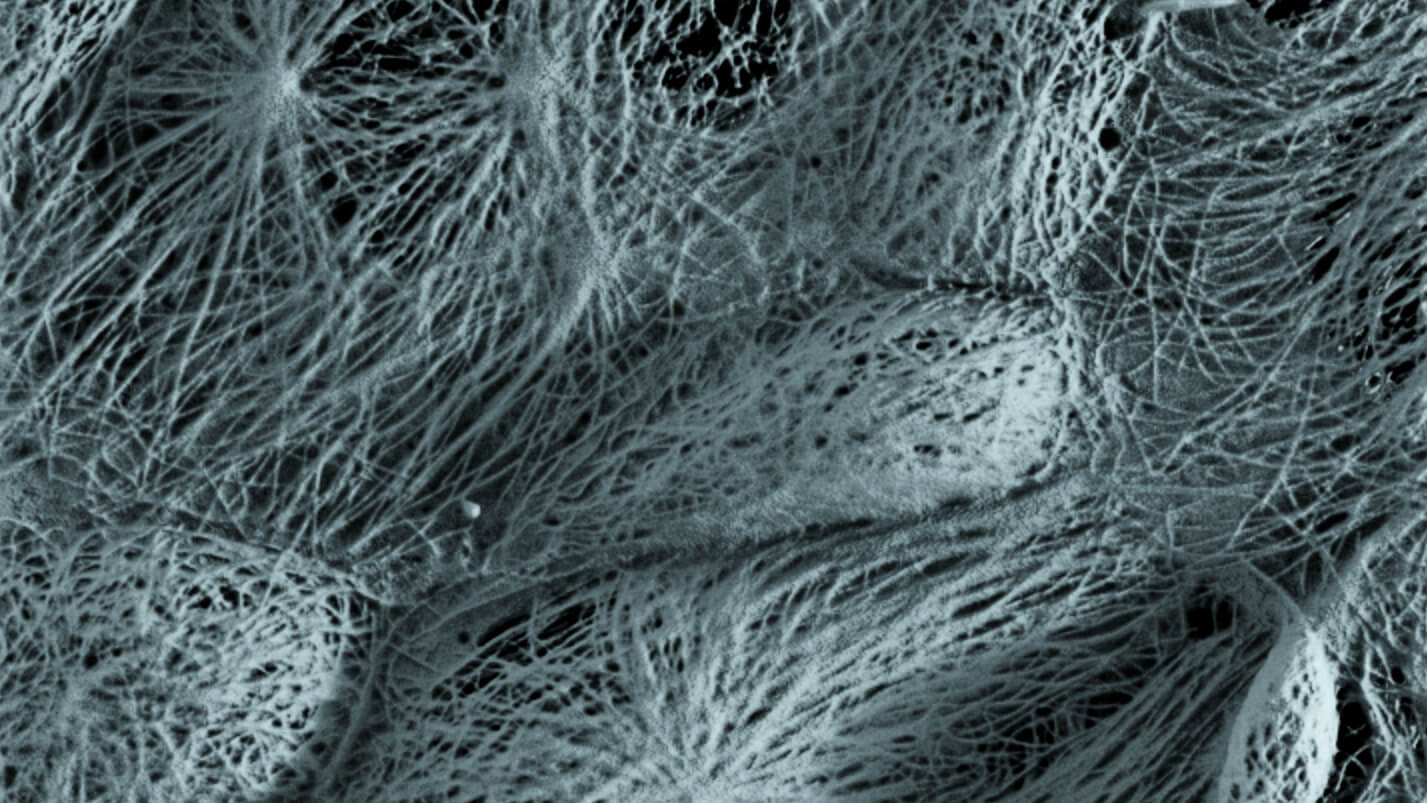
Like our bodies themselves, cells have a skeletal system. Known as the cytoskeleton, this network of support structures gives cells many of their physical attributes — it lets them hold their shape, move, grow and divide. Shown here, one of the key components of the cytoskeleton, microtubules. These dynamic, thin filaments are formed from many spiraling repeats of two different proteins. Microtubules are one of several cellular structures under study at the Allen Institute for Cell Science. Here, human stem cells derived from a donor’s skin cells have been gene edited to fluorescently label one of the proteins that make up microtubules, which is known as alpha-tubulin. Allen Institute for Cell Science Image Analyst Derek Thirstrup captured an image of these cells under the microscope, and Senior Software Engineer Dan Toloudis used an in-house graphics tool known as AGAVE to render more realistic shapes, light and shadow in the image.
Microscopic viewpoints, computer-generated models, intricate tracings and more — see a new side of science with SciShots.
About the author: Rachel Tompa
Rachel Tompa is a science and health writer and editor. A former molecular biologist, she’s been telling science stories since 2007 and has covered the gamut of science topics, including the microbiome, the human brain, pregnancy, evolution, science policy and infectious disease. During her tenure as Senior Editor at the Allen Institute, Rachel wrote stories and created podcast episodes covering all the Institute’s scientific divisions.
Get in touch at press@alleninstitute.org.
Citations
about the allen institute
The Allen Institute is an independent, 501(c)(3) nonprofit research organization founded by philanthropist and visionary, the late Paul G. Allen. The Allen Institute is dedicated to answering some of the biggest questions in bioscience and accelerating research worldwide. The Institute is a recognized leader in large-scale research with a commitment to an open science model. For more information, visit alleninstitute.org.