in this article
SciShots: Gentle imaging for delicate cells
Examining fine cellular details for longer time periods
04.15.2022
1 min read
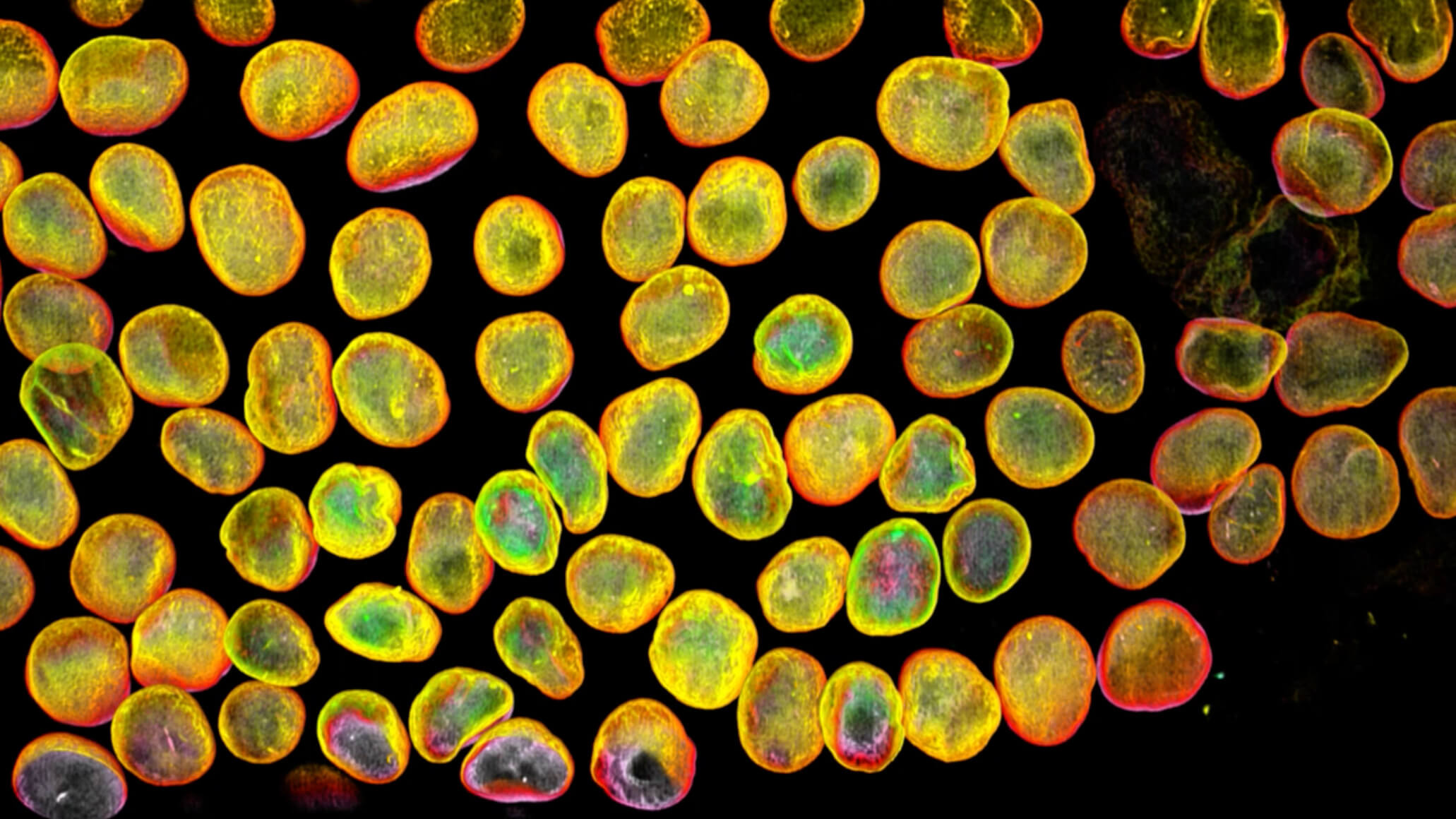
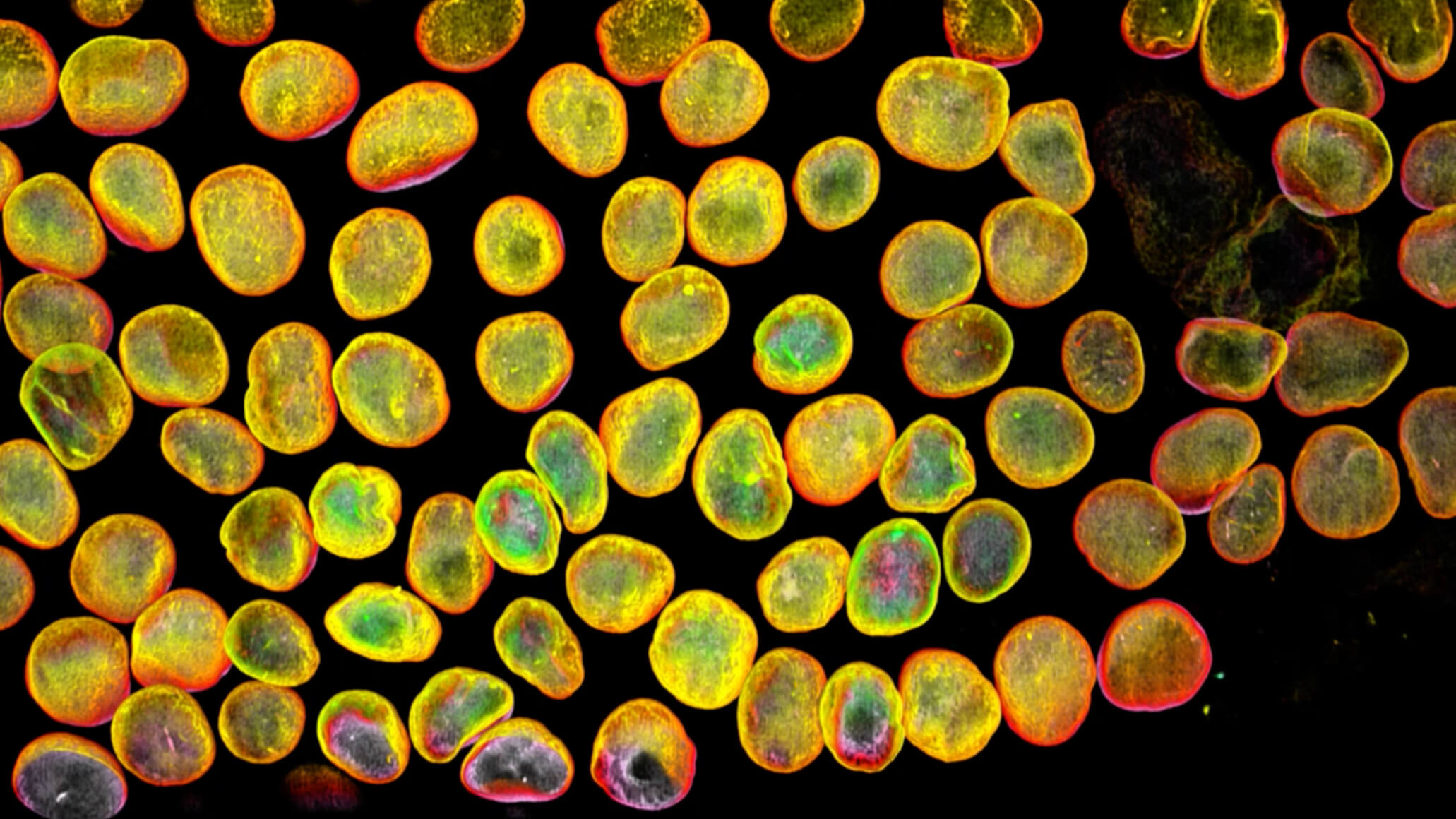
Divide, thrive, repeat. The trillions of cells that make up our eyes, heart, bones, skin — our entire body — have all, at some point, divided from a stem cell through a process called mitosis. Scientists at the Allen Institute for Cell Science are studying this process, and other stages of the cell life cycle, in fine detail to better understand what makes our cells healthy and what goes wrong in disease. But examining cells using traditional microscopes, especially for long periods of time, can stress them out and often leads to cell death. With a new kind of instrument known as a lattice light sheet microscope, recently adopted by Allen Institute scientists, researchers can gently spy on the tiny delicate structures in cells as they move about and organize throughout the many hours of a human cell cycle. This abbreviated video, captured by ZEISS Microscopy, shows the nuclear envelope, the thin membrane that surrounds the cell’s nucleus, illuminated in human induced pluripotent stem cells from the Allen Cell Collection and imaged with a lattice light sheet microscope. For this experiment, the microscope imaged for over 10 hours — the time it takes for the human genome to duplicate. As cells divide, a process known as mitosis, the nuclear envelope disappears and reforms around the chromosomes of each new daughter cell. — Jenny Burns
Microscopic viewpoints, computer-generated models, intricate tracings and more — see a new side of science with SciShots.
Citations
about the allen institute
The Allen Institute is an independent, 501(c)(3) nonprofit research organization founded by philanthropist and visionary, the late Paul G. Allen. The Allen Institute is dedicated to answering some of the biggest questions in bioscience and accelerating research worldwide. The Institute is a recognized leader in large-scale research with a commitment to an open science model. For more information, visit alleninstitute.org.




