in this article
SciShots: How the brain plugs leaks
A delicate molecular dance maintains the blood-brain barrier, protecting the brain while allowing transport of necessary resources
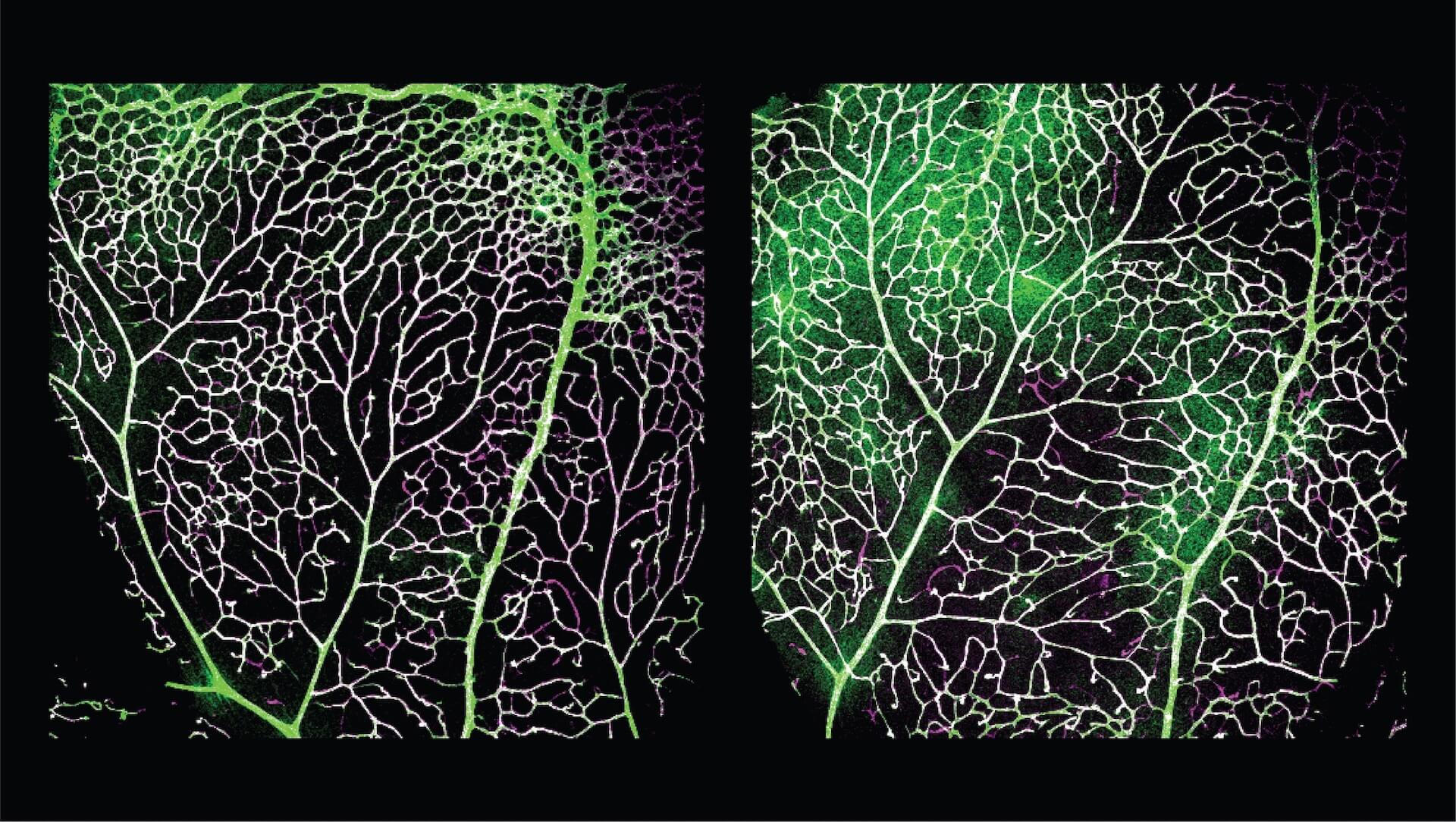
The blood-brain barrier is somewhat of a misnomer. Far from an impermeable barrier, this dynamic cellular network regulates the transport of many important molecules to and from the brain. Two specialized cell types that line blood vessels in the brain, known as endothelial cells and pericytes, help maintain this delicate balance. Allen Distinguished Investigator Chenghua Gu, Ph.D., and her colleagues at Harvard Medical School are working to understand how these two kinds of cells interact to maintain a healthy blood-brain barrier. In a recent study published in the journal Neuron, they found that a protein known as vitronectin, which is secreted by pericytes and in turn sensed by endothelial cells, is integral to stop unwanted leaks from the blood vessels into the brain. In these images taken by Swathi Ayloo, Ph.D., a postdoctoral fellow working with Gu at Harvard Medical School, brain blood vessels are shown in magenta and a fluorescent tracer is shown in green. On the left, blood vessels from a normal brain show that the tracer is contained to the blood vessels themselves. On the right, brain blood vessels taken from a mouse genetically engineered to lack the vitronectin protein; these animals show leakage of the fluorescent tracer out of the blood vessels. Get in touch at press@alleninstitute.org.
Citations
about the allen institute
The Allen Institute is an independent, 501(c)(3) nonprofit research organization founded by philanthropist and visionary, the late Paul G. Allen. The Allen Institute is dedicated to answering some of the biggest questions in bioscience and accelerating research worldwide. The Institute is a recognized leader in large-scale research with a commitment to an open science model. For more information, visit alleninstitute.org.