
SciShots: Lighting up neurons to combat ALS
Scientists have found a way to selectively target neurons damaged in spinal motor diseases.
Researchers at the Allen Institute for Brain Science are developing a new weapon against neurological diseases like ALS: an engineered virus that could potentially deliver future therapies directly to the affected neurons, offering new hope for targeted treatment.
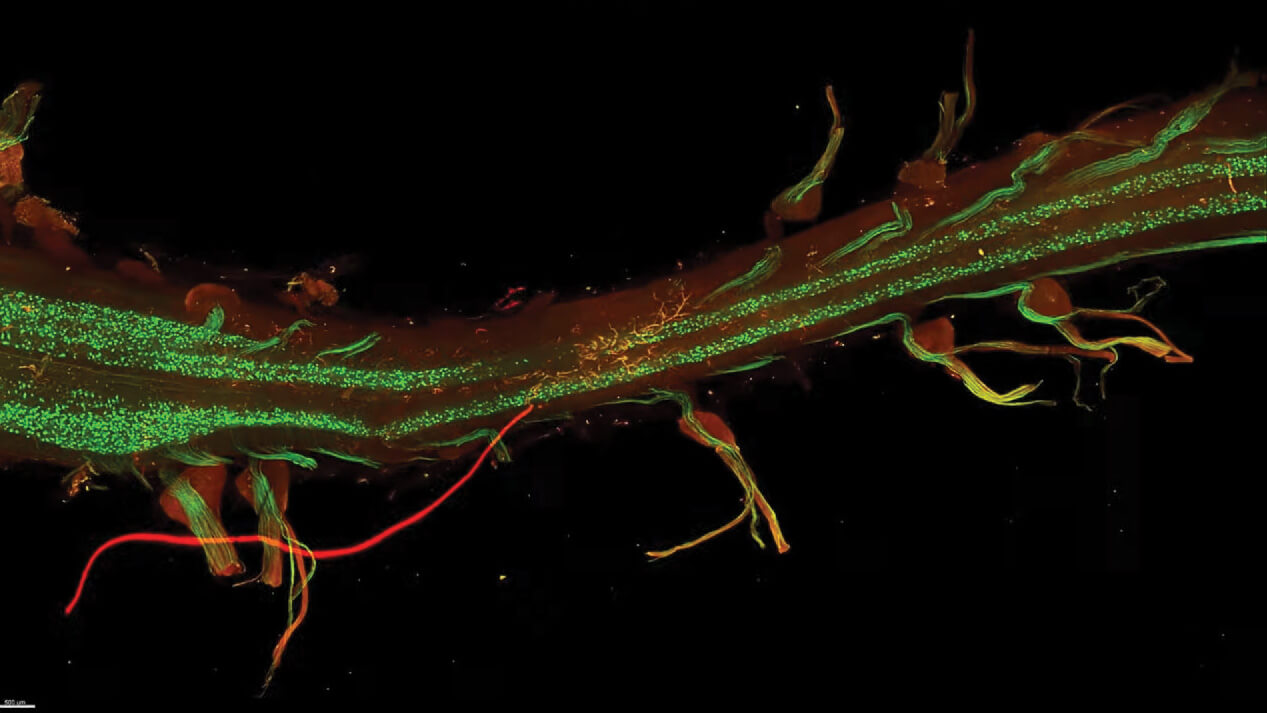
This striking video, created by Tanya Daigle, Ph.D., assistant investigator, and Emily Kussick, research associate, showcases that effort. Each green dot represents a spinal motor neuron—crucial but rare cells, making up just 1% of neurons in the spinal cord. They relay information from the brain to the body, enabling movement. These neurons are selectively damaged in neurodegenerative diseases like ALS, but targeting them specifically has been a challenge—until now.
Daigle, Kussick, and others developed a harmless virus that infects only these neurons. The first part of this video, captured through advanced light-sheet microscopy, shows an entire spinal column from a mouse. Their virus only infected the spinal motor neurons, causing them to express a green fluorescent protein.
The second half of the video, which won second place in the NIH’s 2024 BRAIN Initiative photo contest, is a flythrough of razor-thin sections of the spinal column. Notably, the round structures to the sides of the spine, called dorsal root ganglia, show no green dots. This absence of fluorescence demonstrates the lack of off-target effects with their viral tool. Such precision suggests the potential for this approach to serve as a safe and effective delivery vehicle for new therapies in motor neuron diseases.
“We could use these types of (genetic tools) to drive expression of a therapeutic cargo in this population selectively,” Daigle said. “These are early but important steps toward developing new gene therapy approaches for these devastating diseases.”
Citations
about the allen institute
The Allen Institute is an independent, 501(c)(3) nonprofit research organization founded by philanthropist and visionary, the late Paul G. Allen. The Allen Institute is dedicated to answering some of the biggest questions in bioscience and accelerating research worldwide. The Institute is a recognized leader in large-scale research with a commitment to an open science model. For more information, visit alleninstitute.org.