
SciShots: Tracking immune cells’ digestion
Scientists are watching cells swallow microscopic beads in the hopes of better understanding the autoimmune disorder rheumatoid arthritis
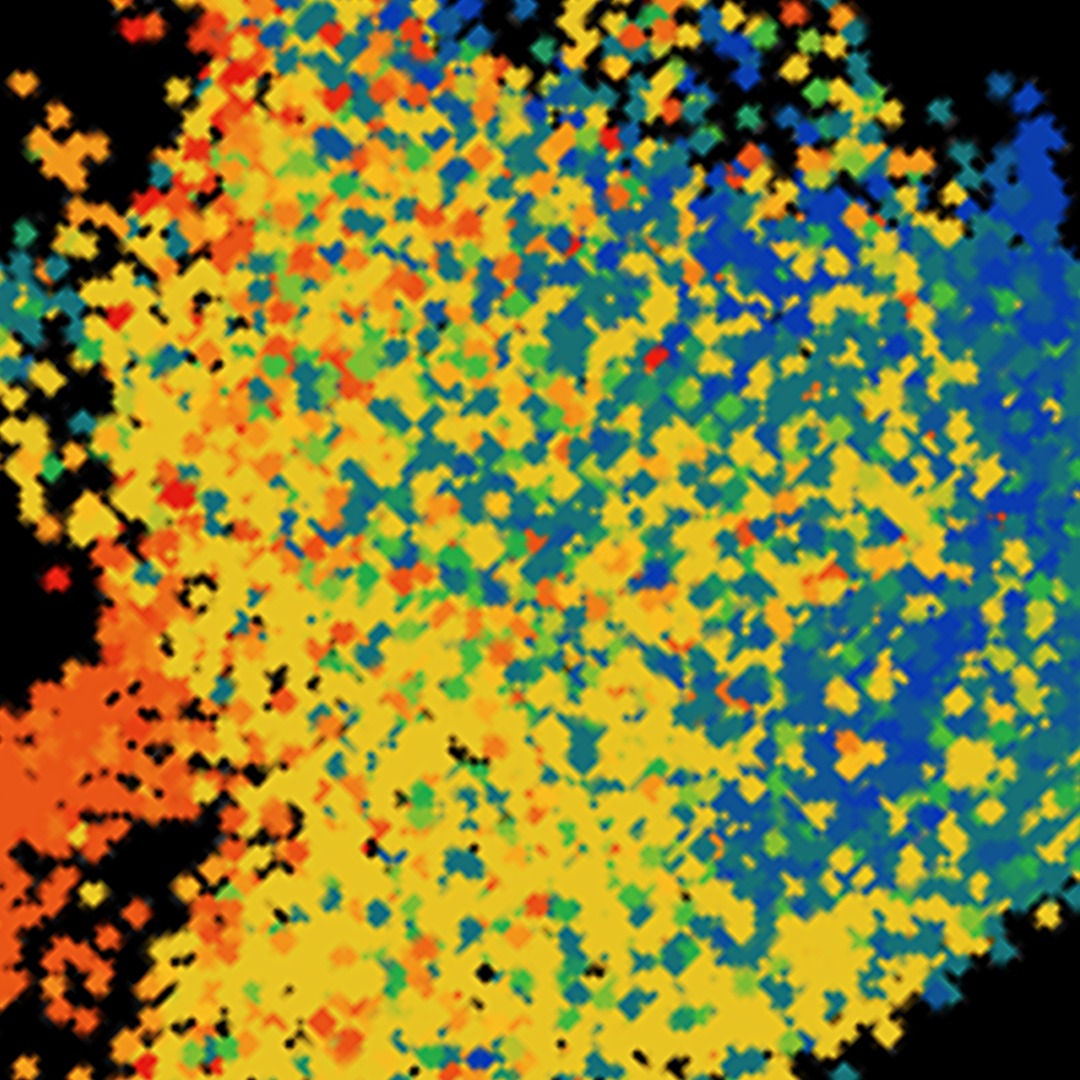
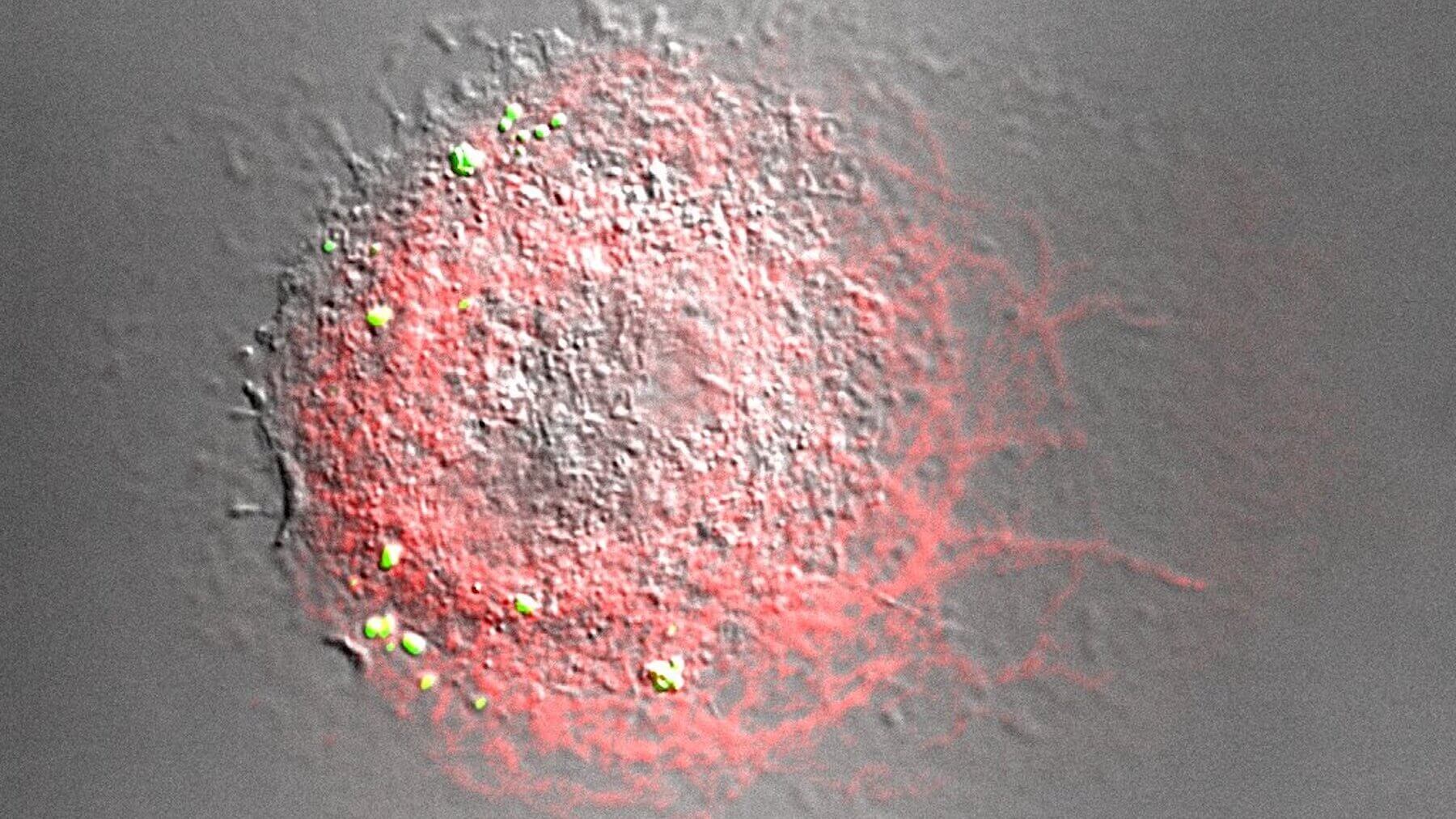
There’s a kind of cell in your blood whose name sounds like something out of a horror movie: The word macrophage, translated from Greek, means “large eater.” These white blood cells crawl through your tissues looking for anything that doesn’t belong and then literally eating it. During that digestion process, the macrophages signal the presence of foreign invaders to other parts of the immune system. This pair of images captured by Sue Ludmann, M.S., an imaging specialist at the Allen Institute for Immunology, shows a single human macrophage that has just swallowed a handful of microscopic beads labeled fluorescent yellow. The black and white image in the slider on the left and the red fluorescent dye on the right show the macrophage’s internal scaffolding system, labeling a protein known as f-actin, letting Ludmann know that the immune cells have succeeded in fully engulfing the yellow beads. She’s currently establishing this imaging test using healthy human macrophages; ultimately, the team will study macrophages from patients with rheumatoid arthritis to study whether these large eaters are failing to do their job in this autoimmune disease.
SciShots
Microscopic viewpoints, computer-generated models, intricate tracings and more — see a new side of science with SciShots.
Citations
about the allen institute
The Allen Institute is an independent, 501(c)(3) nonprofit research organization founded by philanthropist and visionary, the late Paul G. Allen. The Allen Institute is dedicated to answering some of the biggest questions in bioscience and accelerating research worldwide. The Institute is a recognized leader in large-scale research with a commitment to an open science model. For more information, visit alleninstitute.org.