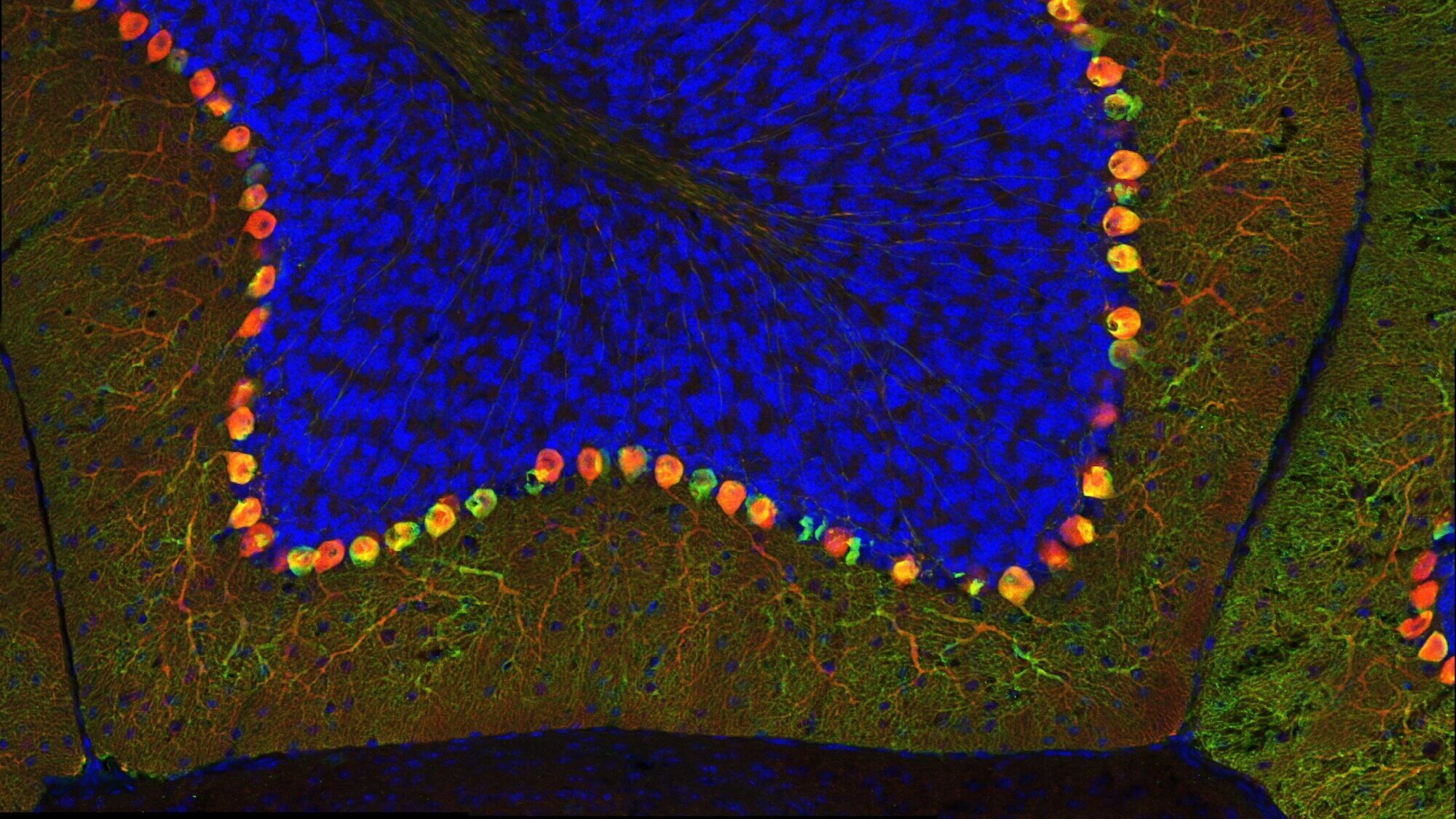

For neuroscientists who study our own brains, the quest to understand the human brain contains many paradoxes. We still don’t understand the features that give human brains their unique cognitive abilities.
The human brain is larger compared to our body size than that of many other animals, but it’s nowhere near the largest brain out there — the largest brain by absolute mass belongs to the sperm whale, while the tiny tree shrew has the highest brain-to-body size ratio of any mammal. And the “parts list” of the kinds of neurons and other cells that make up our brains is very similar to that of a mouse brain.
A new study that explores genetic changes unique to the human branch of evolution has found another paradox: Sifting through our uniquely quickly evolving DNA, which scientists have dubbed “human accelerated regions” of the genome, a team of researchers found a human-specific effect on one gene that slows down the pace of our brain cells’ growth early in development.
“You might think that if you’re making such a big brain, you’d want the cells to divide faster. But we see the opposite,” said Christopher Walsh, M.D., Ph.D., director of the Allen Discovery Center for Human Brain Evolution at Boston Children’s Hospital and Harvard Medical School, who led a study published last week in the journal Neuron describing the human accelerated regions and their effects on human brain evolution. “In retrospect, it makes some sense — with such a big brain, maybe you want to be really careful about making sure that the DNA is copied very accurately as the cells divide. But it’s just endlessly surprising the way nature works.”
Scientists define these “accelerated regions” of the genome as those that are the same, or conserved, among other mammals but different in humans. This human-specific rapid evolution in certain pieces of DNA implies that those genetic changes led to the physical and mental features that set humans apart from other animals. It’s likely that all species have their own version of these accelerated regions — but how these DNA changes lead to species-specific differences in evolution is not clear.
Why are we different from chimps?
In the 1970s, the geneticist Mary-Claire King, Ph.D., most famous for discovering the breast cancer-related genes BRCA1 and 2, made a surprising finding: The proteins of humans and chimpanzees are virtually indistinguishable. Decades later, once the human and chimp genomes were sequenced, that finding held up. The genes that code for our proteins are almost identical to chimp genes. King proposed that our differences must arise from other parts of our DNA, the regions that regulate our genes.
Walsh and his colleagues, nearly 50 years later, have found that to be true. It turned out that of the known 3,171 human accelerated regions, 99 percent of these human-specific mutations fall into “non-coding” regions of DNA, or regions of DNA that don’t contain instructions for making a protein. Many of them are in stretches of our genome known as enhancers, regions which regulate nearby genes, and about half of those are nestled in enhancers that are active in the developing human brain.
“This study ties back into this concept that’s been around for several decades, that changes in gene regulation are driving novel aspects of human development,” said Andrew Stergachis, M.D., Ph.D., Assistant Professor of Medical Genetics at the University of Washington and one of the study’s co-first authors. “When we look at these special portions of the genome through an evolutionary lens or a genetic lens, they do appear to be involved in gene regulation, and specifically in gene regulation as it relates to brain development.”
The scientists also collated the known 3,171 human accelerated regions into a single, open-access dataset that they hope will be of use to other scientists interested in human evolution.
Slowly growing a complex brain
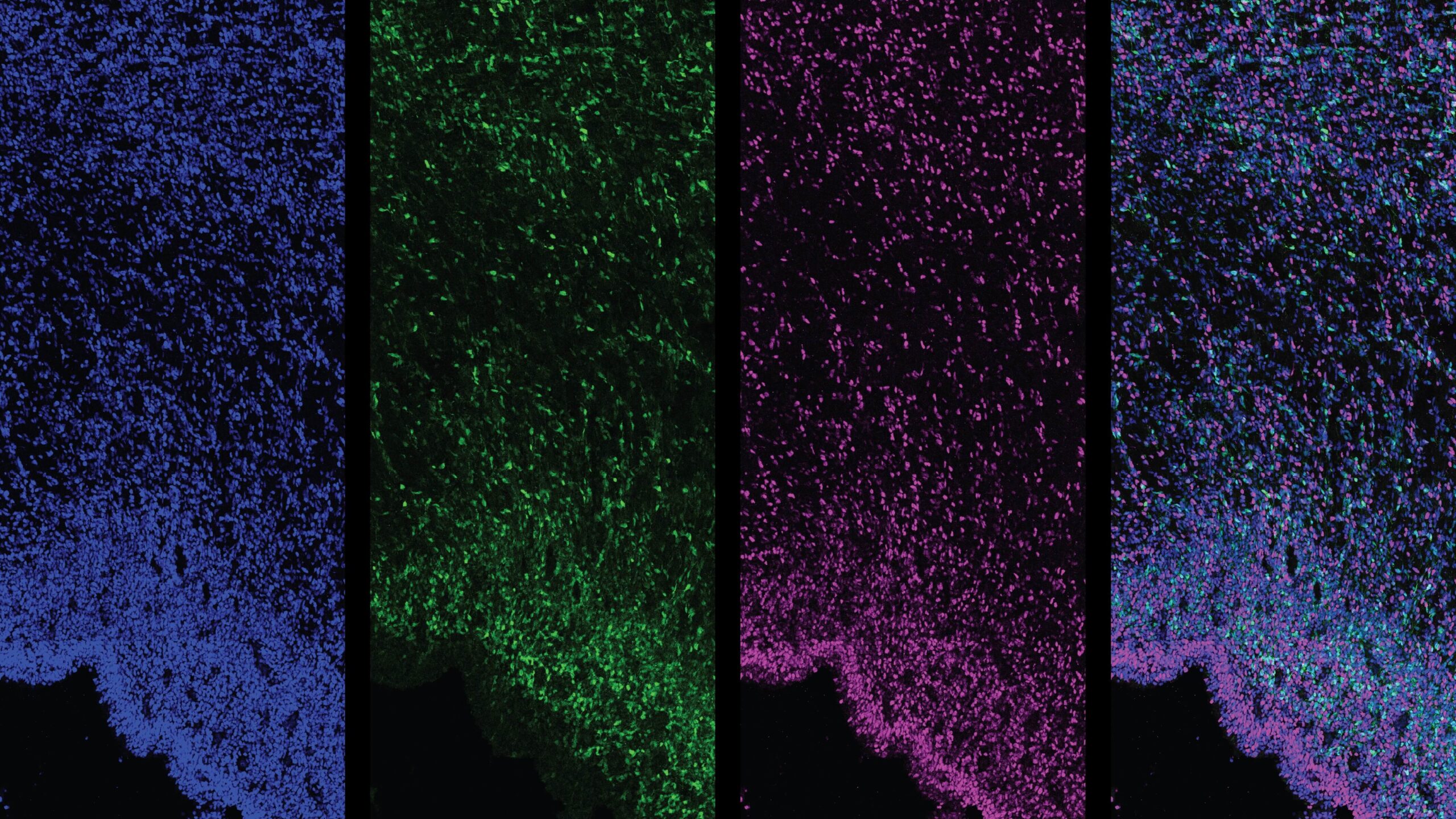
The study identified several dozen human accelerated regions that seem to play a role in early human brain development. The scientists looked at a single human gene, PPP1R17, that sits next to two of these human accelerated regions and is active in the stem cells that give rise to neurons as the brain develops during pregnancy. The team looked at developing human, macaque, ferret and mouse brains and found that PPP1R17 is switched on in different regions of the brain and in different types of brain cells in humans as compared to the other animals.
When they added extra amounts of the gene product to mouse brain cells, the cells’ growth and division slowed. It’s known that primates, and humans specifically, have a slower cell cycle than other animals, especially in development. This slower cell growth is likely tied to humans’ longer pregnancies, which are thought to be important to support the growth of our large and complex brains.
“We have this longer gestational period where cells are taking even longer to actually divide,” said Ellen DeGennaro, a doctoral student at MIT and Harvard and one of the study’s co-first authors. “It makes a lot of sense that genes involved in regulating brain development would be affected in human evolution.”
Citations
about the allen institute
The Allen Institute is an independent, 501(c)(3) nonprofit research organization founded by philanthropist and visionary, the late Paul G. Allen. The Allen Institute is dedicated to answering some of the biggest questions in bioscience and accelerating research worldwide. The Institute is a recognized leader in large-scale research with a commitment to an open science model. For more information, visit alleninstitute.org.




