


impact
impact
open science
subheadline
careers and opportunities
subheadline
people & teams
people & teams
subheadline
allenites
subheadline
allen institute advisors
subheadline
board of directors
subheadline
shanahan foundation fellowship
subheadline
next generation leaders
subheadline
research
overview
our approach
subheadline
publications
subheadline
open science
subheadline
accelerator
brain science
subheadline
cell science
subheadline
neural dynamics
subheadline
immunology
subheadline
synthetic biology
subheadline
education
education
science education
subheadline
education resources
subheadline
field trips
subheadline
open science
subheadline
open science quest
subheadline
news
news
stories
subheadline
podcast
subheadline
sign up for our newsletter
subheadline
events
events
all events
subheadline
conferences
subheadline
event code of conduct
subheadline
events
open science quest
subheadline
summer workshop on the dynamic brain
subheadline
open science week
subheadline
brain fest
subheadline
science resources
science resources
allencell.org
subheadline
allenimmunology.org
subheadline
allenneuraldynamics.org
subheadline
brain-bican.org
subheadline
brain-map.org
subheadline
microns-explorer.org
subheadline
impact
back to menu
impact
open science
subheading
careers and opportunities
subheading
people & teams
people & teams
subheading
allen institute advisors
subheading
board of directors
subheading
shanahan foundation fellowship
subheading
next generation leaders
subheading
research
back to menu
impact
Label
subheading
Label
subheading
people & teams
education
back to menu
research
Label
subheading
Label
subheading
Heading
news
back to menu
research
Label
subheading
Label
subheading
Heading
events
back to menu
research
Label
subheading
Label
subheading
Heading
science resources
back to menu
science resources
allencell.org
subheading
allenimmunology.org
subheading
allenneuraldynamics.org
subheading
brain-bican.org
subheading
brain-map.org
subheading
microns-explorer.org
subheading
search
education

Primary literature analysis | Long COVID

A full module exploring proteomics and long COVID through a scaffolded, in-depth analysis of a primary literature article

resource type / 
Module
published / February 10, 2026
education level / 
Graduate
Undergraduate
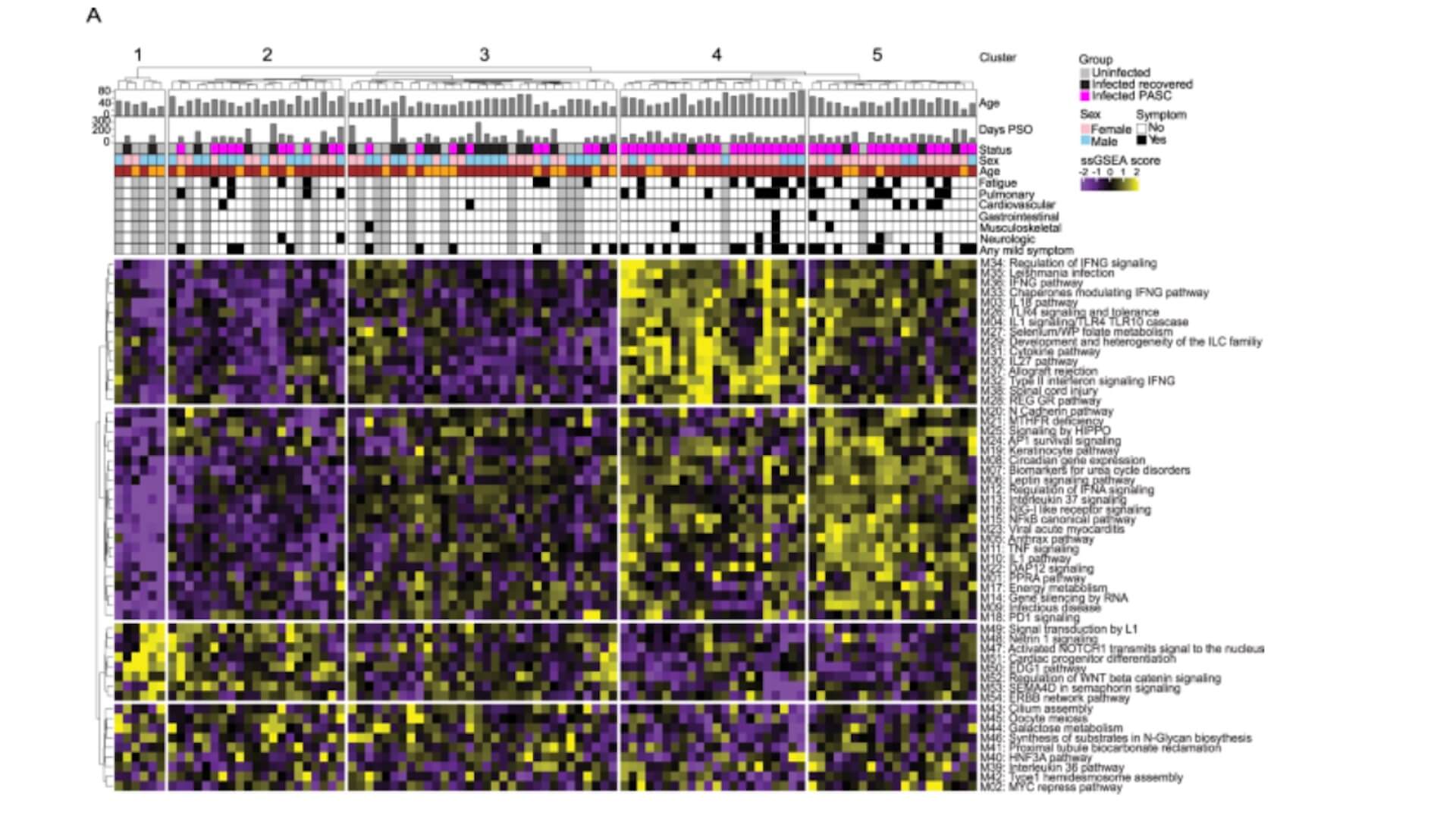
Heatmap showing five patient clusters with gene expression patterns, clinical symptoms, and disease status data.
share/
This is some text inside of a div block.

in this lesson

table of contents will display on published page only
set h2 to populate the table of contents here
lesson
additional links

contributors

Rachel Penton
Education and Engagement Supervisor
Madison Meuler
Education and Engagement Specialist II
Troy Torgerson
Director, Experimental Immunology

Module Overview

Topic: Immunology

Audience: Advanced undergraduate students, introductory graduate students

Resource type: Full module, CREATE Method

Module outline: 12 lessons over ~ 4 weeks

Primary literature analyzed: Persistent serum protein signatures define an inflammatory subcategory of long COVID by Talla et al. (2023)

‍

CREATE Method:

This 4-week module uses the CREATE method (Hoskins et al., 2007) to walk students through a scaffolded approach to reading Persistent serum protein signatures define an inflammatory subcategory of long COVID by Talla et al. (2023). Rather than read the paper in its entirety all at once, students walk through the paper section-by-section, completing worksheets and discussing with their peers along the way.

Throughout the module, students analyze the following methods:

  • Olink proteomics for the detection of 1500+ proteins in participant serum samples
  • Proximity Extension Analysis (PEA)
  • Next Generation Sequencing (NGS)
  • ELISAs
  • K-means clustering
  • Validation of results with an independent open dataset
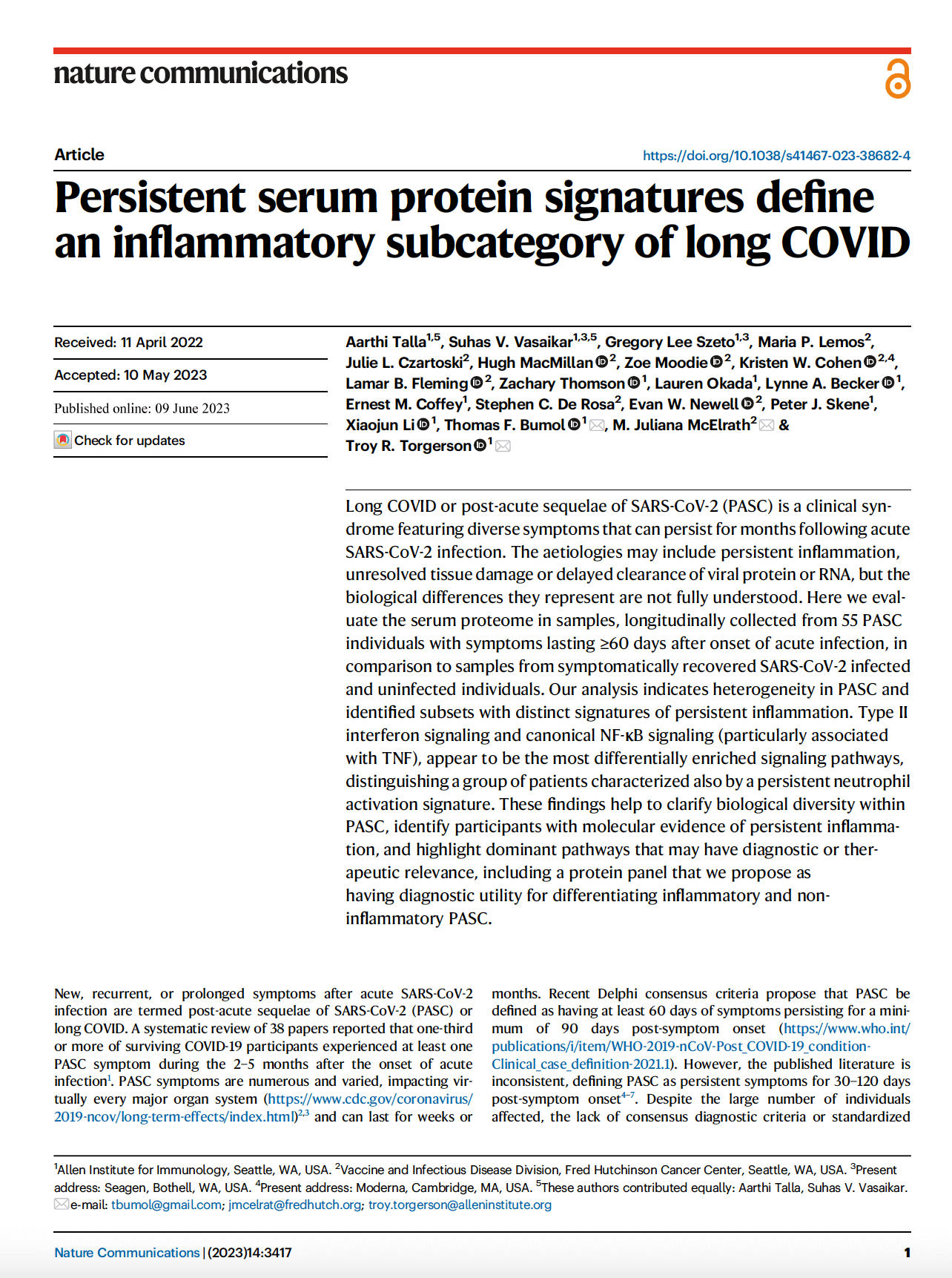
A screenshot of the first page of the Talla et al. 2023 article.

More Information

Module Timeline

This module consists of 12 lessons. We encourage you to remix and customize these lessons to fit the needs of your course. See the instructor guide for more details about alternative ways to teach this module, including abridged versions. Several lessons contain worksheets for students to walk through different sections of the paper.

A table showing the activities and topics of each lesson of the module.

Data Analysis Sheets (DAS): For each figure in the paper, students are asked to complete a data analysis sheet. These worksheets ask students specific questions about the figure and their interpretation of the data. Some questions featured within DAS worksheets include:

  • What is your simplified, decoded, in regular language title for this figure?
  • What is the specific hypothesis being tested, or specific question being asked in the experiment represented in panel A?
  • Do you think that the data in panel B support a difference in RBD IgG between the groups? Provide evidence for why or why not.

Methods Worksheets: This module contains two methods worksheets where students are asked in-depth questions about the methods used in the paper. Some examples include:They measured analytes from inflammation, oncology, cardiometabolic, and neurology panels. What is a “panel” and how do these different panels differ from one another?

  • They measured analytes from inflammation, oncology, cardiometabolic, and neurology panels. What is a “panel” and how do these different panels differ from one another?
  • The paper states: “Protein expression values were first normalized across wells using an internal extension control (IgG antibodies conjugated with a matching oligo pair).  Draw a cartoon of IgG antibodies conjugated with a matching oligo pair.

Learning Goals
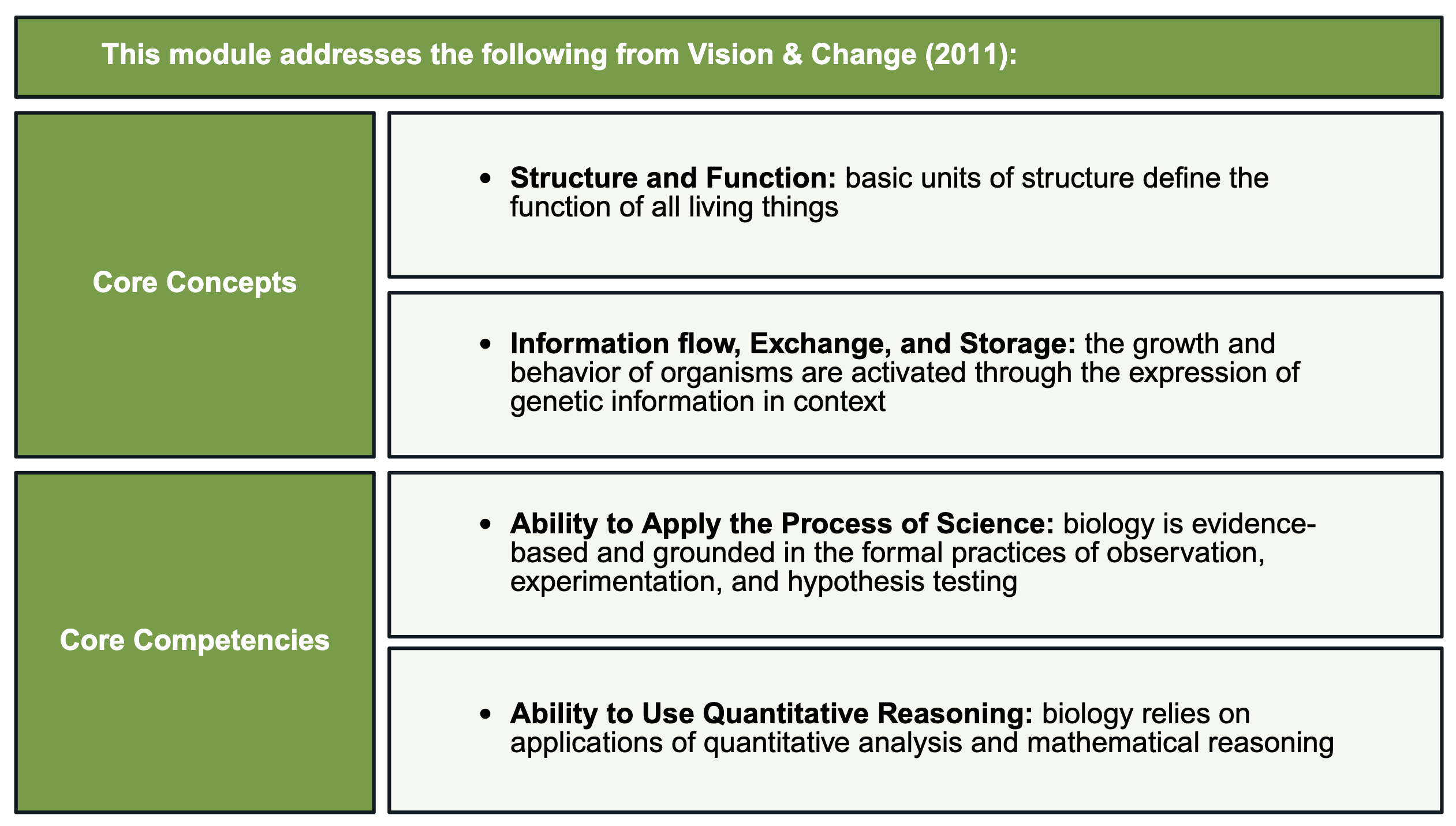
Vision & Change (2011):

Table listing the core concepts and core competencies from Vision and Change (2011) that are addressed in the module. This module addresses the core concepts of structure and function and information flow, exchange, and storage. It addresses the core competencies of the ability to apply the process of science and the ability to use quantitative reasoning.

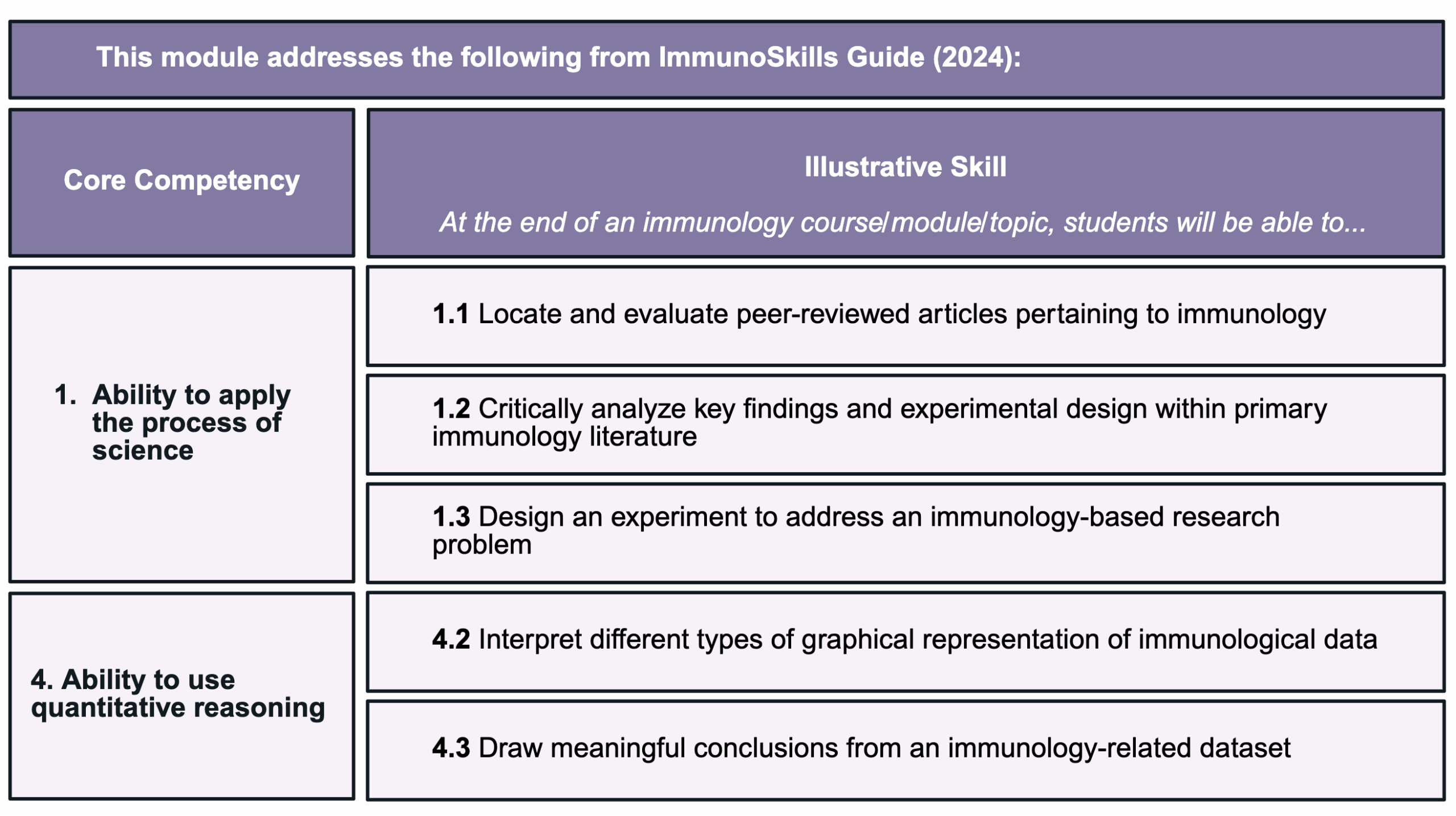
ImmunoSkills Guide (2024):

Table listing the core competencies and illustrative skills from the Immuno Skills Guide (2024) that this module addresses.

‍

Version History & Terms of Use

  • Last updated May 2025
  • Terms of use: This work is licensed under the Creative Commons Attribution-NonCommercial–ShareAlike 4.0 International (CC BY-NC-SA 4.0). To view a copy of this license, visit https://creativecommons.org/licenses/by-nc-sa/4.0/.

Materials

  • Instructor Guide
  • Slide decks (with discussion prompts and embedded polling questions)
  • Student worksheets
  • Example Learning Management Services (LMS) pages for each lesson
  • Note: See the Instructor guide for alternative approaches to teaching the module, including abridged versions

‍

CREATE Method:

This 4-week module uses the CREATE method (Hoskins et al., 2007) to walk students through a scaffolded approach to reading Persistent serum protein signatures define an inflammatory subcategory of long COVID by Talla et al. (2023). Rather than read the paper in its entirety all at once, students walk through the paper section-by-section, completing worksheets and discussing with their peers along the way.

Throughout the module, students analyze the following methods:

  • Olink proteomics for the detection of 1500+ proteins in participant serum samples
  • Proximity Extension Analysis (PEA)
  • Next Generation Sequencing (NGS)
  • ELISAs
  • K-means clustering
  • Validation of results with an independent open dataset

‍

A screenshot of the first page of the Talla et al. 2023 article.

‍

‍

‍

featured education resources

explore more resources
brain science
cell science
immunology
neural dynamics
synthetic biology
Early Career Scientists
Health Care Providers
Students
Doctors
Teachers
Postdocs
Scientists
Educators
General Public
Middle School
High School
Undergraduate
Graduate
Thank you! Your submission has been received!
Oops! Something went wrong while submitting the form.
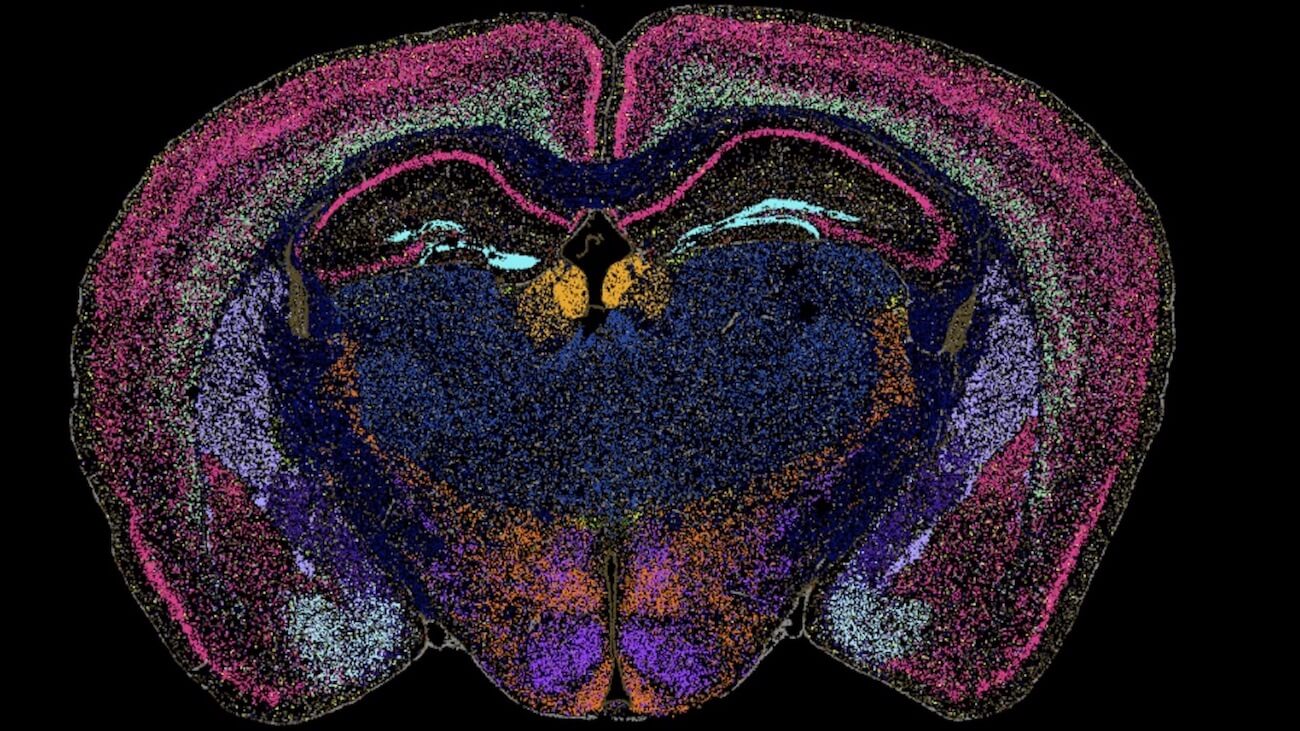
Colorful cross-section of a mouse brain showing neural tissue with pink, blue, and orange regions.
Database Guide 
Database Guide | Allen Brain Cell (ABC) Atlas
An in-depth guide on how to use the ABC Atlas to ask and evaluate research questions
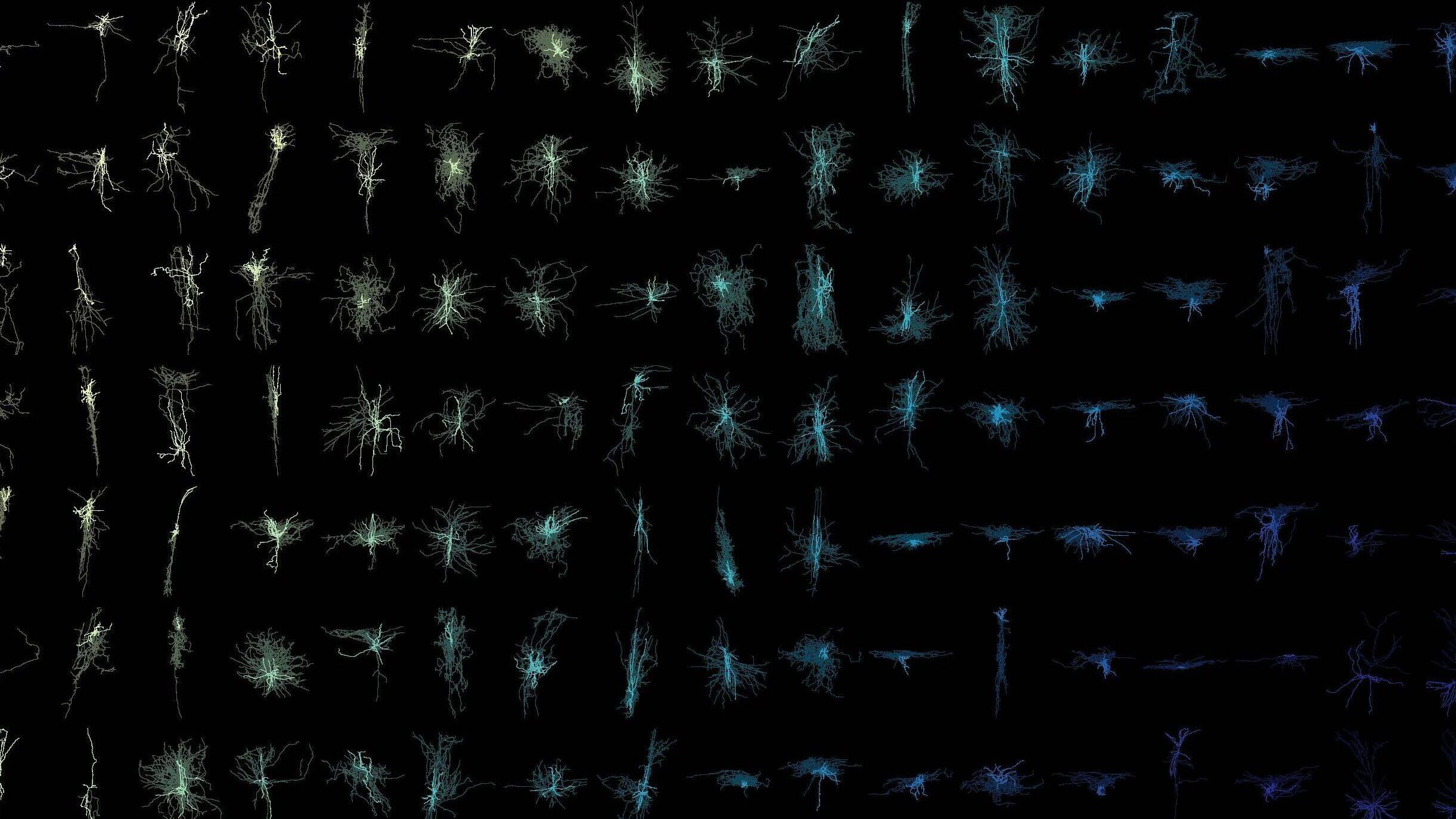
Grid of digitally generated neurons with branching dendrites in white, green, cyan, and blue colors
Lesson(s) 
Building realistic neurons with pipe cleaners
Create authentic models of neurons using low-cost craft materials
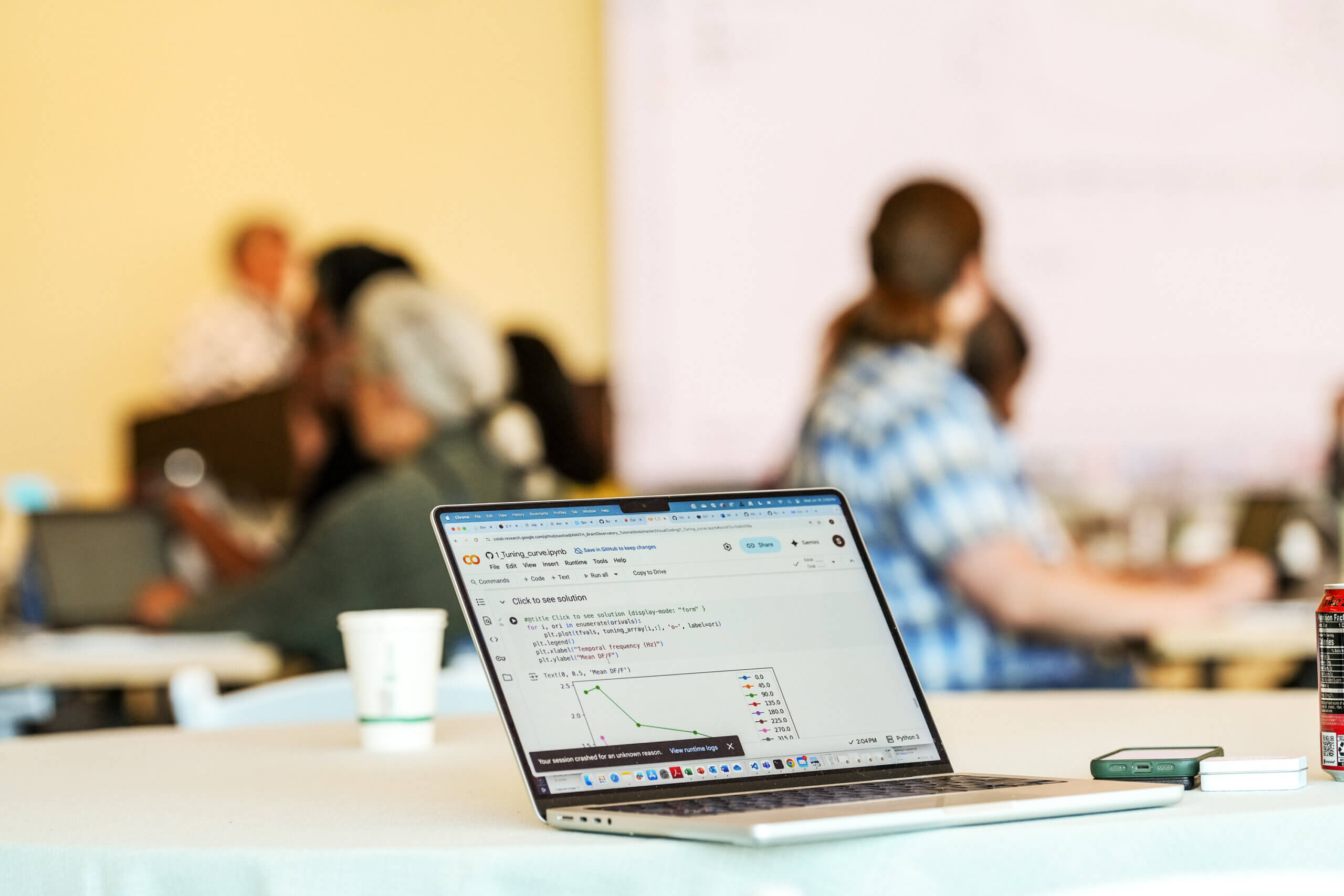
Laptop displaying code on desk with blurred people collaborating in background office setting.
Interactive Activity 
Teaching and learning with python
Explore resources to introduce undergraduate students in the life sciences to Python programming
Black and white microscopic view of interconnected cells and particles in dark space
Video 
How scientists see neurons fire with 2-photon calcium imaging
Join our scientists in the lab to walk through the 2-photon calcium imaging pipeline
Colorful pixelated grid pattern with purple, yellow, black, and olive tones in mosaic layout
Explainer 
What is omics?
Explore the branch of research known as “omics“– including genomics, transcriptomics, and proteomics
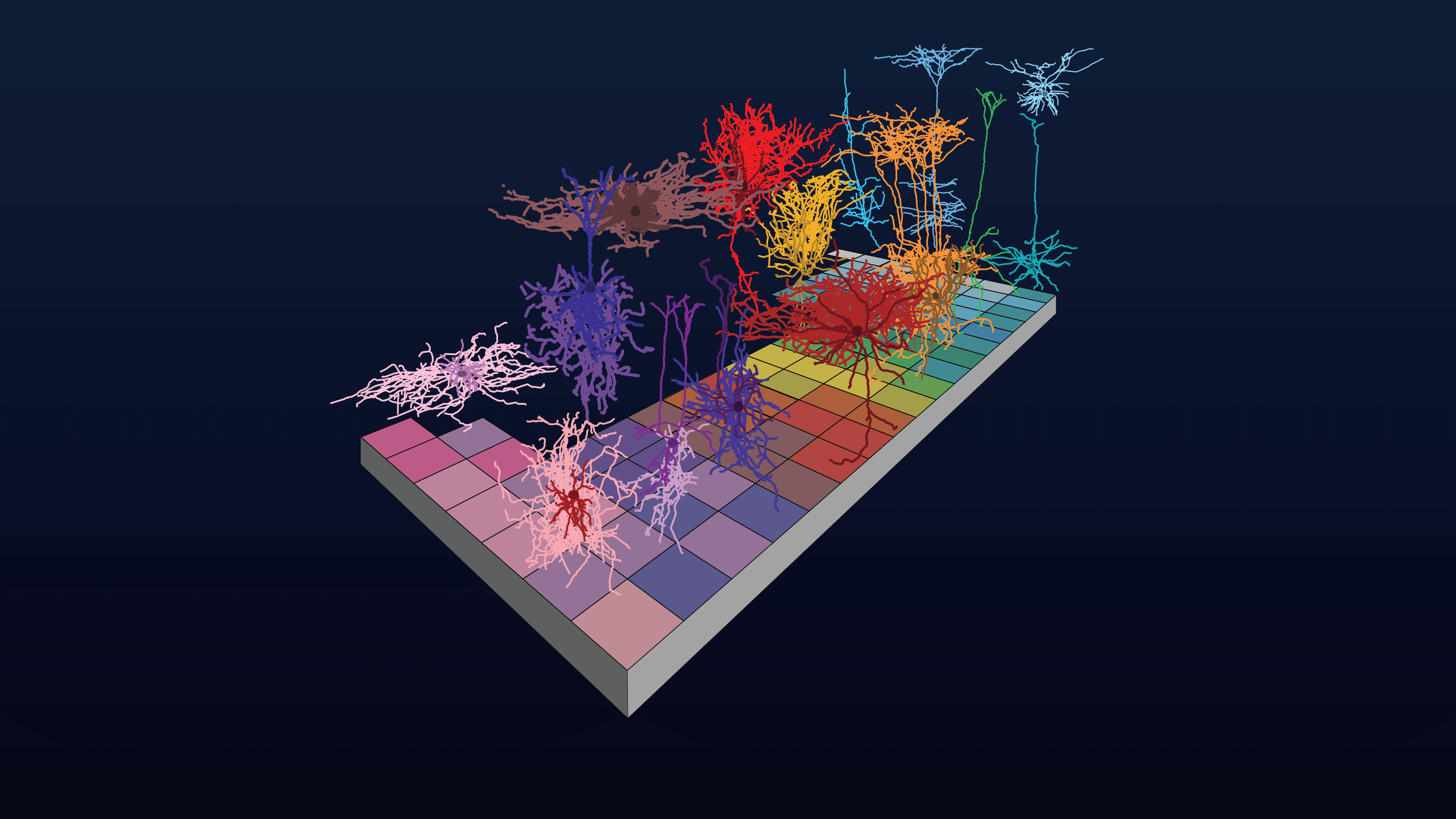
Colorful neural network visualization with branching patterns on gradient grid surface.
Lesson(s) 
Defining cell types using transcriptomics, morphology, and electrophysiology
Overview of how multi-modal data is gathered to define cell types in the brain
load more resources
1 / 5
we acceleratedevelopcatalyzeimpact

science done differently. shared with the world.

explore our accelerators

brain science

Mapping every cell, connection, and circuit in the brain—openly shared with the world.

cell science

Decoding how cells become tissues, then programming that knowledge into powerful new research tools.

neural dynamics

Revealing the brain's hidden algorithms that transform neural activity into real-world behavior.

immunology

Creating the deepest open reference for the healthy human immune system ever built.

synthetic biology

Engineering cells to record their own histories, transforming how we understand disease over time.

research

Big questions, open answers, and science built to be shared.

education

Inspiring the next generation of scientists through open science resources.

impact

Our science is empowering researchers and advancing health worldwide.
advancing science through open, collaborative research
Get the allen institute newsletter
Stay informed on the latest breakthroughs in neuroscience, bioscience, and AI-driven research.
allen institute
impactpeople & teamscareers & opportunitiesalumnihistory & founder
science resources
allencell.orgallenimmunology.orgallenneuraldynamics.orgbrain-bican.orgbrain-map.orgmicrons-explorer.org
research
brain sciencecell scienceneural dynamicsimmunologysynthetic biologypublications
education
science educationfield tripsprofessional developmenteducation resources
quick links
newseventsopen sciencepodcastscience resourceshuman brain donationvisit uscontact
follow us/

allen institute, 615 Westlake Ave North, Seattle, WA 98109 +12065487055

© 0000 allen institute. all rights reserved.
privacy policyterms of usecitation policyemployee portalpolicy & compliance