impact
about
our story
explore our impact
careers and opportunities
join us
open science
sharing science to speed discovery
open science week
celebrating open science
team science
people & teams
discovery is a team effort
allenites
the people who make our work possible
advisors
their input shapes our science
board of directors
they help us fulfill our mission
shanahan foundation fellowship
at the interface of data and neuroscience
next generation leaders
fostering emerging leaders in bioscience
research
overview
our approach
science at the scale of greatest impact
publications
explore our publications
open science
sharing science to speed discovery
science accelerators
brain science
building a blueprint of the brain
cell science
understanding how cells become organs
neural dynamics
revealing the brain’s hidden algorithms
immunology
creating the ultimate immune system reference
synthetic biology
seattle hub for synthetic biology
education
overview
science education
science is for everyone
open science
sharing science speeds discovery
engagement
education resources
real science. real skills.
field trips
experience science where it happens
educator development
empowering educators
news
overview
all news
explore the latest news
podcast
the human stories behind discovery
sign up for our newsletter
stay connected to our science
events
overview
all events
public engagement, workshops, seminars and more
conferences
connect with us
science resources
science resources
allencell.org
allenimmunology.org
allenneuraldynamics.org
brain-bican.org
brain-map.org
microns-explorer.org
impact
back to menu
team science
our story
explore our impact
careers and opportunities
join us
open science
sharing science to speed discovery
open science week
celebrating open science
team science
people & teams
discovery is a team effort
allenites
the people who make our work possible
advisors
their input shapes our science
board of directors
they help us fulfill our mission
shanahan foundation fellowship
at the interface of data and neuroscience
next generation leaders
fostering emerging leaders in bioscience
research
back to menu
overview
our approach
science at the scale of greatest impact
publications
explore our publications
open science
sharing science to speed discovery
science accelerators
brain science
building a blueprint of the brain
cell science
understanding how cells become organs
neural dynamics
revealing the brain’s hidden algorithms
immunology
creating the ultimate immune system reference
synthetic biology
seattle hub for synthetic biology
education
back to menu
overview
science education
science is for everyone
open science
sharing science speeds discovery
engagement
education resources
real science. real skills.
field trips
experience science where it happens
educator development
empowering educators
news
back to menu
overview
all news
explore the latest news
podcast
the human stories behind discovery
newsletter
stay connected to our science
events
back to menu
overview
all events
public engagement, workshops, seminars and more
conferences
connect with us
science resources
back to menu
science resources
allencell.org
allenimmunology.org
allenneuraldynamics.org
brain-bican.org
brain-map.org
microns-explorer.org
search
news

Allen Institute for Immunology unveils landmark Human Immune Health Atlas

Comprehensive dataset maps the landscape of healthy immune cells across the human lifespan

September 19, 2024
 min read
share/
Comprehensive dataset maps the landscape of healthy immune cells across the human lifespan
Thank you! Your submission has been received!
Oops! Something went wrong while submitting the form.

in this article

table of contents will display on published page only
set h2 to populate the table of contents here

The Allen Institute for Immunology today announced the release of its first Human Immune Health Atlas, a comprehensive single-cell reference dataset that offers unprecedented insight into the landscape of healthy human immune cells from childhood through adulthood.

This comprehensive single-cell resource will be invaluable for immunology research, helping us better understand how the immune system evolves with age and advancing research into immune-related diseases.‍

Ananda Goldrath, Ph.D., Executive Vice President and Director of the Allen Institute for Immunology‍

The atlas provides detailed profiles of 71 distinct immune cell subsets, based on the analysis of 1.8 million cells taken from over 100 healthy volunteers. This high-resolution view addresses a critical need in immunology research for a resource that accurately reflects the immune system’s complexity and diversity.  

“Building the Immune Health Atlas was truly a labor of love for our team,” said Ananda Goldrath, Ph.D., executive vice president and director of the Allen Institute for Immunology. “We meticulously studied millions of individual cells from more than 100 people aged 11 to 65. This comprehensive single-cell resource will be invaluable for immunology research, helping us better understand how the immune system evolves with age and advancing research into immune-related diseases.”

Colorful abstract animal shapes with grainy texture against black background

This visualization, called a UMAP, shows human immune cells from the dataset organized and color-coded based on cell type determined by their gene expression.

The full dataset and a suite of interactive visualization tools are freely available online. These tools include:

  • A UMAP viewer for 2D visualization of cell relationships and gene expression
  • An expression reference tool for exploring gene expression across cell types and age groups
  • A clinical data explorer for basic health parameters

The Atlas was developed through collaborations with the Benaroya Research Institute (BRI) and the University of Pennsylvania. These clinical partners collected blood samples from healthy volunteers spanning three age groups: 11-13, 25-35, and 55-65. The Allen Institute then conducted deep single-cell RNA sequencing analysis on these samples, using advanced computational tools to define an unprecedented level of immune cell diversity and age-related dynamics.

Dive deeper into the Immune Health Atlas

“Creating a picture of what a healthy immune system looks like is fundamental to advancing the science around diseases of the immune system and part of our mission at BRI,” says Jane Buckner, M.D., president of Benaroya Research Institute. “Using our expertise in biorepositories and clinical trial recruitment to create the atlas is something we are proud to have contributed to and are excited to see the advancements that will come from it.”
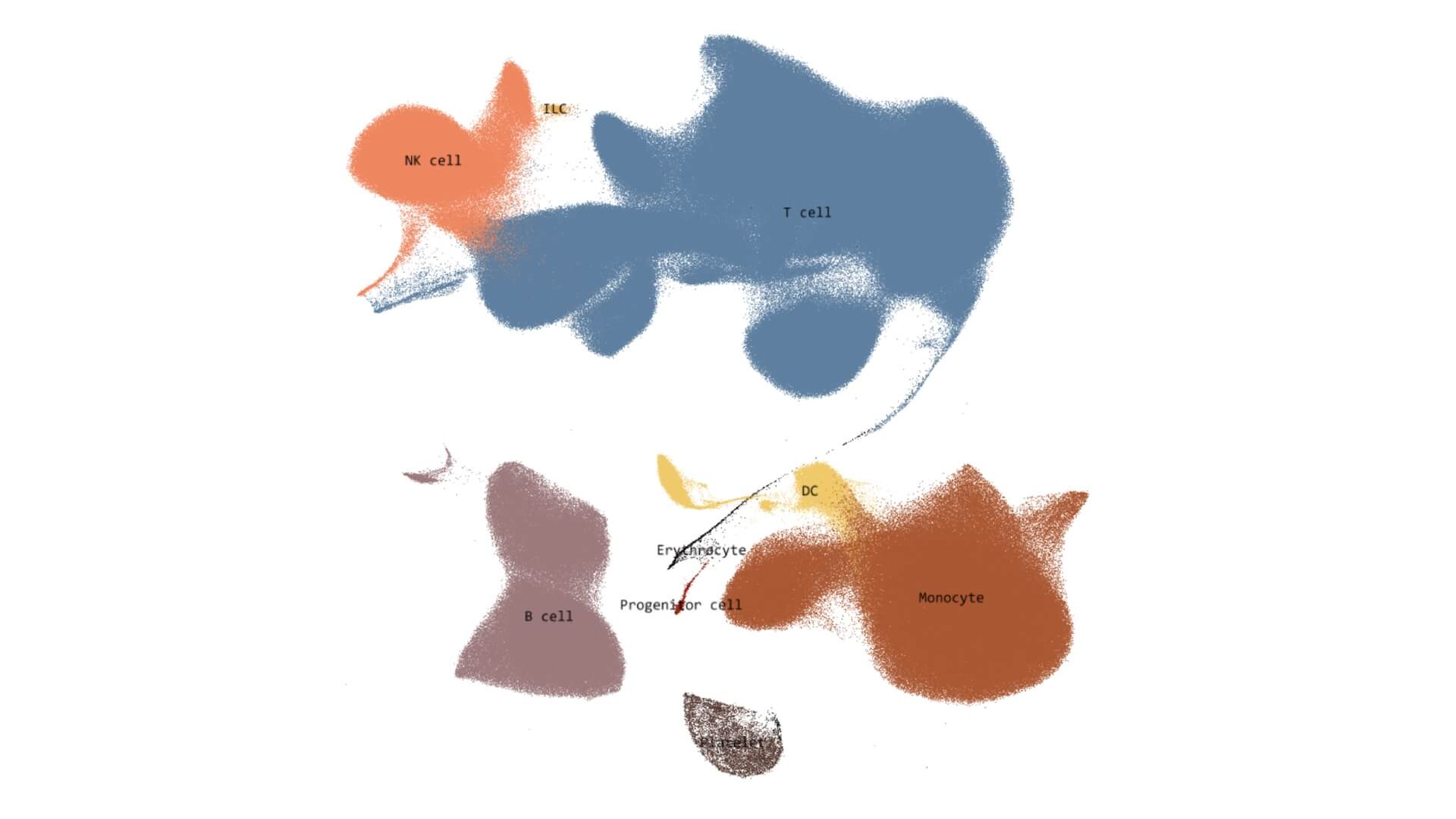
Diagram showing various immune cells: NK cell, T cell, ILC, B cell, dendritic cell, erythrocyte, progenitor cell, and monocyte.
This immunology data resource is openly available to advance research and discovery. Access the Immune Health Atlas

”Claire Gustafson, Ph.D., an assistant investigator at the Allen Institute for Immunology, emphasized the atlas’s potential impact: “Our Atlas provides a full picture of the (peripheral) immune system’s complexity. By making this resource widely available, we’re enabling new discoveries that could lead to transformative advances in immunology and medicine.”

Building on this resource, Allen Institute scientists are now examining how immune cells change over time to uncover detailed mechanisms of immune system aging. This ongoing research, combined with the Immune Health Atlas, could pave the way for more targeted treatments and preventative strategies in the future, Gustafson said.
Woman holding rock sample and vial of mineral or sediment outdoors
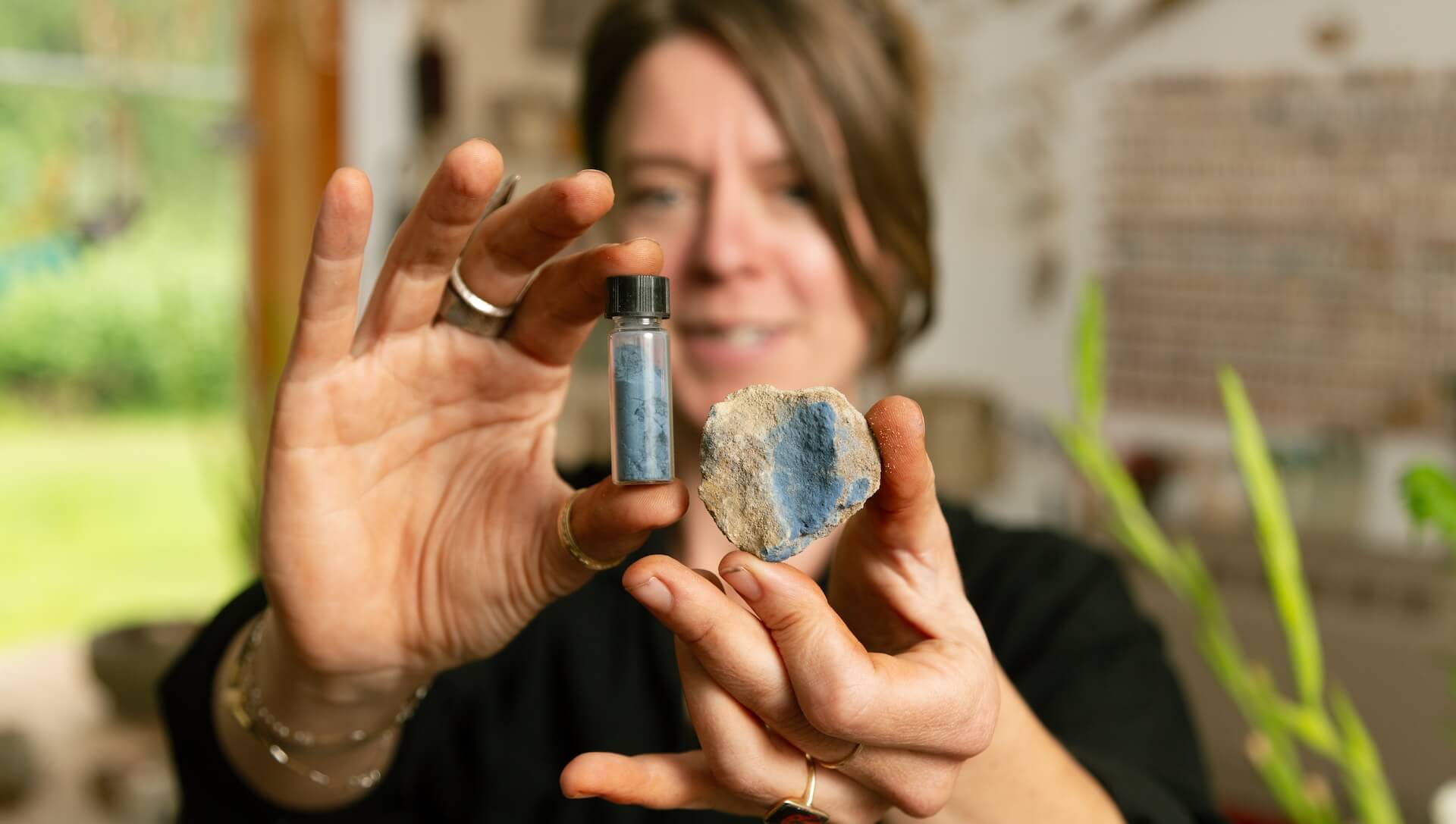
Claire Gustafson, Ph.D., and her sister Heidi joined forces in a unique collaboration to visualize the healthy aging immune system. Explore the natural color palette used to visualize the data.

‍

Citations
No items found.

about the allen institute

The Allen Institute is an independent, 501(c)(3) nonprofit research organization founded by philanthropist and visionary, the late Paul G. Allen. The Allen Institute is dedicated to answering some of the biggest questions in bioscience and accelerating research worldwide. The Institute is a recognized leader in large-scale research with a commitment to an open science model. For more information, visit alleninstitute.org.
related news

all news
news
Designing better weapons to fight prostate cancer
New study unlocks key insights that could help develop next-generation immunotherapies
news
SciShots: Nervous and immune systems team up to take on parasites
Pain-sensing neurons in the intestine give marching orders to the immune system to kick off an attack against parasites
news
How age affects vaccine responses and how to make them better
Age-related shifts in T cells weaken vaccine response in older adults, but new findings pave the way for next generation of vaccines.
news
Susan Kaech, Ph.D., named next leader of Allen Institute’s Immunology accelerator
Leader in immunology to advance the Institute’s next frontier in understanding the immune system’s role across health and disease
news
New study reveals rheumatoid arthritis begins long before symptoms, opening door to prevention
The seven-year study reveals early-warning signs that could help doctors catch the disease before it starts, potentially saving patients years of pain and disability.
news
CryoSCAPE: Allen Institute scientists develop ‘suspended animation’ technique for blood draws that will aid research for underserved populations
A new approach that keeps blood cells alive in deep freeze promises to expand reach of cutting-edge single-cell technologies to underserved...
we acceleratedevelopcatalyzeimpact

science done differently. shared with the world.

explore our accelerators

brain science

Mapping every cell, connection, and circuit in the brain—openly shared with the world.

cell science

Decoding how cells become tissues, then programming that knowledge into powerful new research tools.

neural dynamics

Revealing the brain's hidden algorithms that transform neural activity into real-world behavior.

immunology

Creating the deepest open reference for the healthy human immune system ever built.

synthetic biology

Engineering cells to record their own histories, transforming how we understand disease over time.

research

Big questions, open answers, and science built to be shared.

education

Inspiring the next generation of scientists through open science resources.

impact

Our science is empowering researchers and advancing health worldwide.
advancing science through open, collaborative research
Get the allen institute newsletter
Stay informed on the latest breakthroughs in neuroscience, bioscience, and AI-driven research.
allen institute
impactpeople & teamscareers & opportunitiesalumnihistory & founder
science resources
allencell.orgallenimmunology.orgallenneuraldynamics.orgbrain-bican.orgbrain-map.orgmicrons-explorer.org
research
brain sciencecell scienceneural dynamicsimmunologysynthetic biologypublications
education
science educationfield tripsprofessional developmenteducation resources
quick links
newseventsopen sciencepodcastscience resourceshuman brain donationvisit uscontact
follow us/

allen institute, 615 Westlake Ave North, Seattle, WA 98109 +12065487055

© 0000 allen institute. all rights reserved.
privacy policyterms of usecitation policyemployee portalpolicy & compliance