
impact
about
our story
explore our impact
careers and opportunities
join us
open science
sharing science to speed discovery
open science week
celebrating open science
team science
people & teams
discovery is a team effort
allenites
the people who make our work possible
advisors
their input shapes our science
board of directors
they help us fulfill our mission
shanahan foundation fellowship
at the interface of data and neuroscience
next generation leaders
fostering emerging leaders in bioscience
research
overview
our approach
science at the scale of greatest impact
publications
explore our publications
open science
sharing science to speed discovery
science accelerators
brain science
building a blueprint of the brain
cell science
understanding how cells become organs
neural dynamics
revealing the brain’s hidden algorithms
immunology
creating the ultimate immune system reference
synthetic biology
seattle hub for synthetic biology
education
overview
science education
science is for everyone
open science
sharing science speeds discovery
engagement
education resources
real science. real skills.
field trips
experience science where it happens
educator development
empowering educators
news
overview
all news
explore the latest news
podcast
the human stories behind discovery
sign up for our newsletter
stay connected to our science
events
overview
all events
public engagement, workshops, seminars and more
conferences
connect with us
science resources
science resources
allencell.org
allenimmunology.org
allenneuraldynamics.org
brain-bican.org
brain-map.org
microns-explorer.org
impact
back to menu
team science
our story
explore our impact
careers and opportunities
join us
open science
sharing science to speed discovery
open science week
celebrating open science
team science
people & teams
discovery is a team effort
allenites
the people who make our work possible
advisors
their input shapes our science
board of directors
they help us fulfill our mission
shanahan foundation fellowship
at the interface of data and neuroscience
next generation leaders
fostering emerging leaders in bioscience
research
back to menu
overview
our approach
science at the scale of greatest impact
publications
explore our publications
open science
sharing science to speed discovery
science accelerators
brain science
building a blueprint of the brain
cell science
understanding how cells become organs
neural dynamics
revealing the brain’s hidden algorithms
immunology
creating the ultimate immune system reference
synthetic biology
seattle hub for synthetic biology
education
back to menu
overview
science education
science is for everyone
open science
sharing science speeds discovery
engagement
education resources
real science. real skills.
field trips
experience science where it happens
educator development
empowering educators
news
back to menu
overview
all news
explore the latest news
podcast
the human stories behind discovery
newsletter
stay connected to our science
events
back to menu
overview
all events
public engagement, workshops, seminars and more
conferences
connect with us
science resources
back to menu
science resources
allencell.org
allenimmunology.org
allenneuraldynamics.org
brain-bican.org
brain-map.org
microns-explorer.org
search
news

New study reveals rheumatoid arthritis begins long before symptoms, opening door to prevention

The seven-year study reveals early-warning signs that could help doctors catch the disease before it starts, potentially saving patients years of pain and disability.

September 24, 2025
 min read
share/
The seven-year study reveals early-warning signs that could help doctors catch the disease before it starts, potentially saving patients years of pain and disability.
Thank you! Your submission has been received!
Oops! Something went wrong while submitting the form.

in this article

table of contents will display on published page only
set h2 to populate the table of contents here

authors

Liz Dueweke
Communications and Media Relations Specialist

Scientists have discovered that rheumatoid arthritis (RA) doesn’t start when the pain begins. It silently starts years earlier. RA is a debilitating autoimmune disease that causes painful joint inflammation and damage. The new research reveals that people at risk for RA experience dramatic immune system changes long before they feel symptoms. During this early phase, their bodies fight an autoimmune battle invisibly.

Researchers at the Allen Institute, in collaboration with the CU Anschutz, University of California San Diego, and Benaroya Research Institute made the discovery. The study, published in the journal Science Translational Medicine delivers the most detailed look available into how rheumatoid arthritis develops, mapping immune changes in at-risk individuals long before symptoms appear and paving the way for earlier treatment and prevention.

“Overall, we hope this study raises awareness that rheumatoid arthritis begins much earlier than previously thought and that it enables researchers to make data-driven decisions on strategies to disrupt disease development,” said Mark Gillespie, Ph.D., assistant investigator at the Allen Institute and co-senior author with Kevin Deane (CU Anschutz), M.D./Ph.D.; Adam Savage (Allen Institute), Ph.D.; Troy Torgerson (Allen Institute), M.D./Ph.D.; and Gary S. Firestein (UC San Diego), M.D. During the seven-year study, researchers tracked people carrying ACPA antibodies, which are known biomarkers for individuals at-risk for developing RA, and identified previously unknown factors associated with disease development, including widespread inflammation, immune cell dysfunction, and cellular reprogramming.

“We expect that going forward the findings from this study will support additional studies to identify ways to better predict who will get RA, identify potential biologic targets for preventing RA as well as identify ways to improve treatments for those with existing RA.,” said Kevin Deane, M.D./Ph.D.
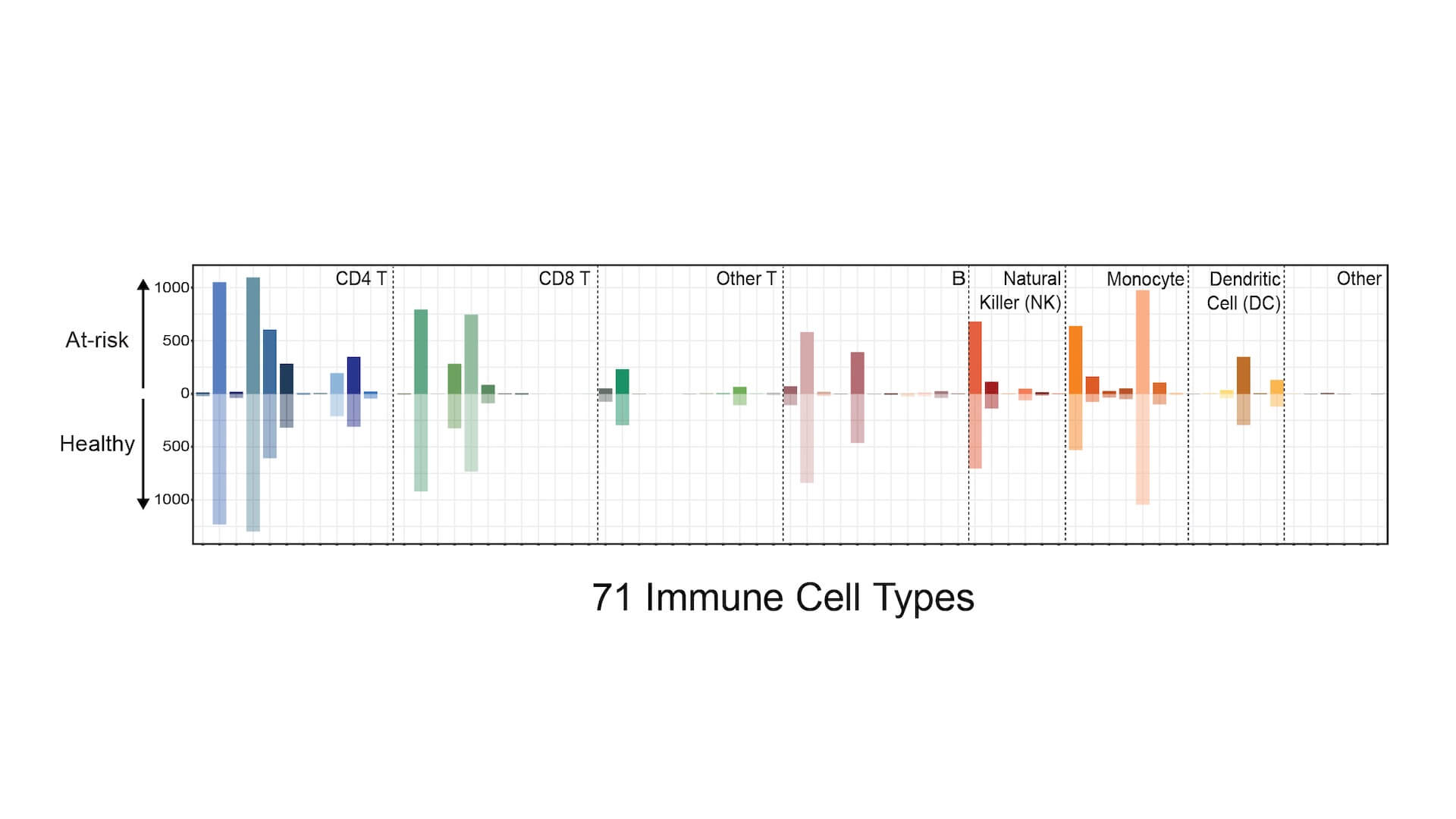
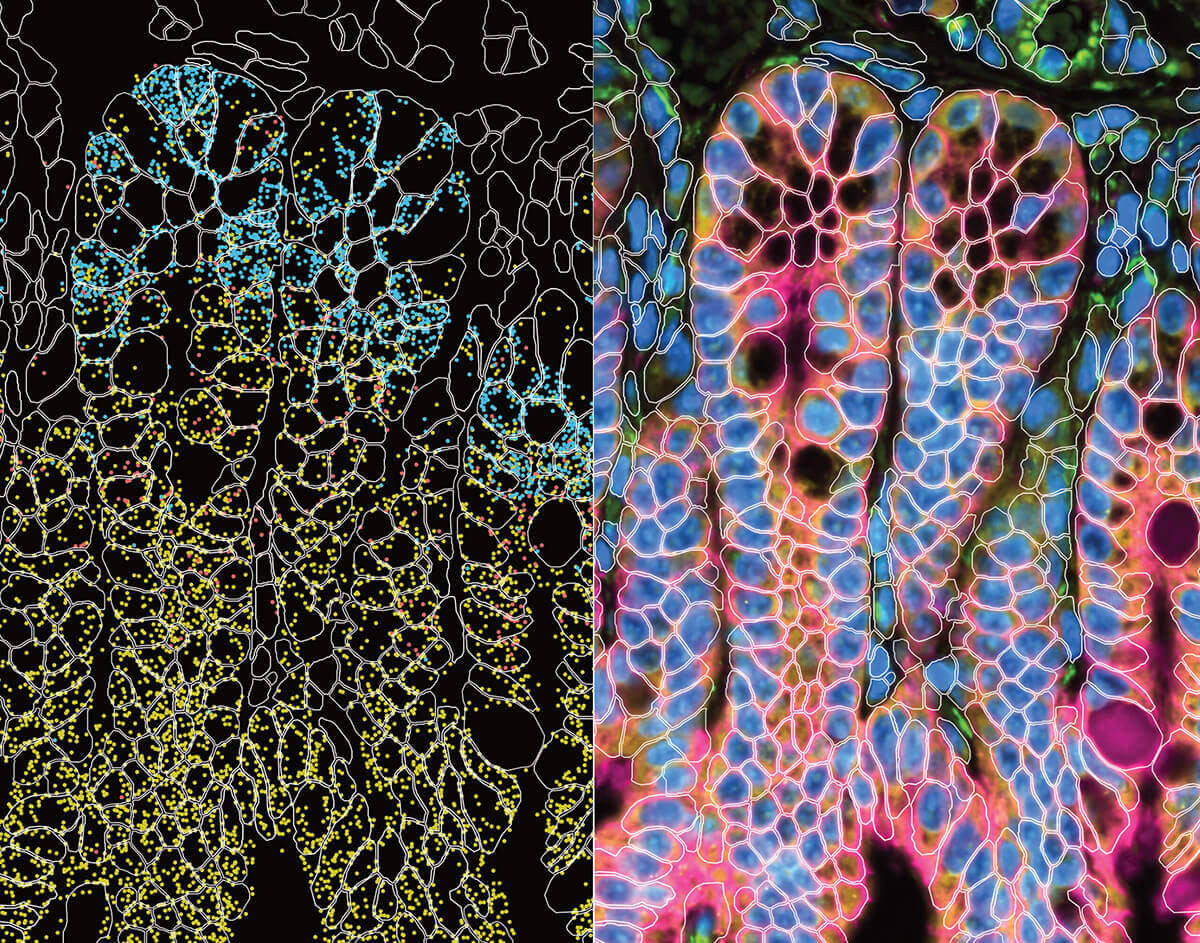
Figure showing gene expression differences in healthy and at-risk patients
Widespread gene expression changes in immune cells from individuals at-risk for RA. Colors represent 71 different immune cell types.

Key findings

  • Widespread inflammation: Researchers discovered that systemic inflammation was already present throughout the body in at-risk individuals. This wasn’t localized joint inflammation, but rather a body-wide inflammatory state that resembles what’s seen in people with active RA.
  • Immune cell dysfunction: Several types of immune cells showed significant abnormalities.
    • B cells, which normally produce protective antibodies, had shifted toward a pro-inflammatory state.
    • T helper cells, particularly a subset resembling Tfh17 cells, were dramatically expanded beyond normal levels. These cells play crucial roles in directing immune responses, including autoantibody (antibodies that attack the body’s own tissue) production and their overactivity helps explain why the immune system begins attacking healthy tissue.
  • Cellular reprogramming: Perhaps most remarkably, the study found that even “naive” T cells—immune cells that haven’t encountered threats before—showed epigenetic changes. This means the cells’ DNA wasn’t mutated, but the way genes were turned on and off had been altered, essentially reprogramming these cells before they even encountered their first threat.
  • Joint-like inflammation in blood: The researchers identified monocytes (a type of white blood cell) in the bloodstream that were producing high levels of inflammatory molecules. Significantly, these blood cells closely resembled the macrophages found in the inflamed joint tissue of RA patients, suggesting the disease process was already preparing to target joints.

ACCESS DATA & TOOLS

The study reveals new early-warning signs (biomarkers and immune signatures) that could help doctors identify who among at-risk individuals is most likely to develop RA, enabling more targeted monitoring and earlier intervention. If caught early, RA could be stopped before it starts – saving patients years of pain and disability. This research may enable a major shift away from reactive treatments that rely on the appearance of joint damage and towards proactive prevention.

Citations
No items found.

about the allen institute

The Allen Institute is an independent, 501(c)(3) nonprofit research organization founded by philanthropist and visionary, the late Paul G. Allen. The Allen Institute is dedicated to answering some of the biggest questions in bioscience and accelerating research worldwide. The Institute is a recognized leader in large-scale research with a commitment to an open science model. For more information, visit alleninstitute.org.
related news

all news
news
Designing better weapons to fight prostate cancer
New study unlocks key insights that could help develop next-generation immunotherapies
news
SciShots: Nervous and immune systems team up to take on parasites
Pain-sensing neurons in the intestine give marching orders to the immune system to kick off an attack against parasites
news
How age affects vaccine responses and how to make them better
Age-related shifts in T cells weaken vaccine response in older adults, but new findings pave the way for next generation of vaccines.
news
Susan Kaech, Ph.D., named next leader of Allen Institute’s Immunology accelerator
Leader in immunology to advance the Institute’s next frontier in understanding the immune system’s role across health and disease
news
CryoSCAPE: Allen Institute scientists develop ‘suspended animation’ technique for blood draws that will aid research for underserved populations
A new approach that keeps blood cells alive in deep freeze promises to expand reach of cutting-edge single-cell technologies to underserved...
news
Allen Institute for Immunology unveils landmark Human Immune Health Atlas
Comprehensive dataset maps the landscape of healthy immune cells across the human lifespan
we acceleratedevelopcatalyzeimpact

science done differently. shared with the world.

explore our accelerators

brain science

Mapping every cell, connection, and circuit in the brain—openly shared with the world.

cell science

Decoding how cells become tissues, then programming that knowledge into powerful new research tools.

neural dynamics

Revealing the brain's hidden algorithms that transform neural activity into real-world behavior.

immunology

Creating the deepest open reference for the healthy human immune system ever built.

synthetic biology

Engineering cells to record their own histories, transforming how we understand disease over time.

research

Big questions, open answers, and science built to be shared.

education

Inspiring the next generation of scientists through open science resources.

impact

Our science is empowering researchers and advancing health worldwide.
advancing science through open, collaborative research
Get the allen institute newsletter
Stay informed on the latest breakthroughs in neuroscience, bioscience, and AI-driven research.
allen institute
impactpeople & teamscareers & opportunitiesalumnihistory & founder
science resources
allencell.orgallenimmunology.orgallenneuraldynamics.orgbrain-bican.orgbrain-map.orgmicrons-explorer.org
research
brain sciencecell scienceneural dynamicsimmunologysynthetic biologypublications
education
science educationfield tripsprofessional developmenteducation resources
quick links
newseventsopen sciencepodcastscience resourceshuman brain donationvisit uscontact
follow us/

allen institute, 615 Westlake Ave North, Seattle, WA 98109 +12065487055

© 0000 allen institute. all rights reserved.
privacy policyterms of usecitation policyemployee portalpolicy & compliance