
impact
about
our story
explore our impact
careers and opportunities
join us
open science
sharing science to speed discovery
open science week
celebrating open science
team science
people & teams
discovery is a team effort
allenites
the people who make our work possible
advisors
their input shapes our science
board of directors
they help us fulfill our mission
shanahan foundation fellowship
at the interface of data and neuroscience
next generation leaders
fostering emerging leaders in bioscience
research
overview
our approach
science at the scale of greatest impact
publications
explore our publications
open science
sharing science to speed discovery
science accelerators
brain science
building a blueprint of the brain
cell science
understanding how cells become organs
neural dynamics
revealing the brain’s hidden algorithms
immunology
creating the ultimate immune system reference
synthetic biology
seattle hub for synthetic biology
education
overview
science education
science is for everyone
open science
sharing science speeds discovery
engagement
education resources
real science. real skills.
field trips
experience science where it happens
educator development
empowering educators
news
overview
all news
explore the latest news
podcast
the human stories behind discovery
sign up for our newsletter
stay connected to our science
events
overview
all events
public engagement, workshops, seminars and more
conferences
connect with us
science resources
science resources
allencell.org
allenimmunology.org
allenneuraldynamics.org
brain-bican.org
brain-map.org
microns-explorer.org
impact
back to menu
team science
our story
explore our impact
careers and opportunities
join us
open science
sharing science to speed discovery
open science week
celebrating open science
team science
people & teams
discovery is a team effort
allenites
the people who make our work possible
advisors
their input shapes our science
board of directors
they help us fulfill our mission
shanahan foundation fellowship
at the interface of data and neuroscience
next generation leaders
fostering emerging leaders in bioscience
research
back to menu
overview
our approach
science at the scale of greatest impact
publications
explore our publications
open science
sharing science to speed discovery
science accelerators
brain science
building a blueprint of the brain
cell science
understanding how cells become organs
neural dynamics
revealing the brain’s hidden algorithms
immunology
creating the ultimate immune system reference
synthetic biology
seattle hub for synthetic biology
education
back to menu
overview
science education
science is for everyone
open science
sharing science speeds discovery
engagement
education resources
real science. real skills.
field trips
experience science where it happens
educator development
empowering educators
news
back to menu
overview
all news
explore the latest news
podcast
the human stories behind discovery
newsletter
stay connected to our science
events
back to menu
overview
all events
public engagement, workshops, seminars and more
conferences
connect with us
science resources
back to menu
science resources
allencell.org
allenimmunology.org
allenneuraldynamics.org
brain-bican.org
brain-map.org
microns-explorer.org
search
news

Computer model predicts aspects of cognitive performance

The Allen Human Brain Atlas helped researchers design a model that looked at “intrinsic neural timescales”

January 28, 2026
 min read
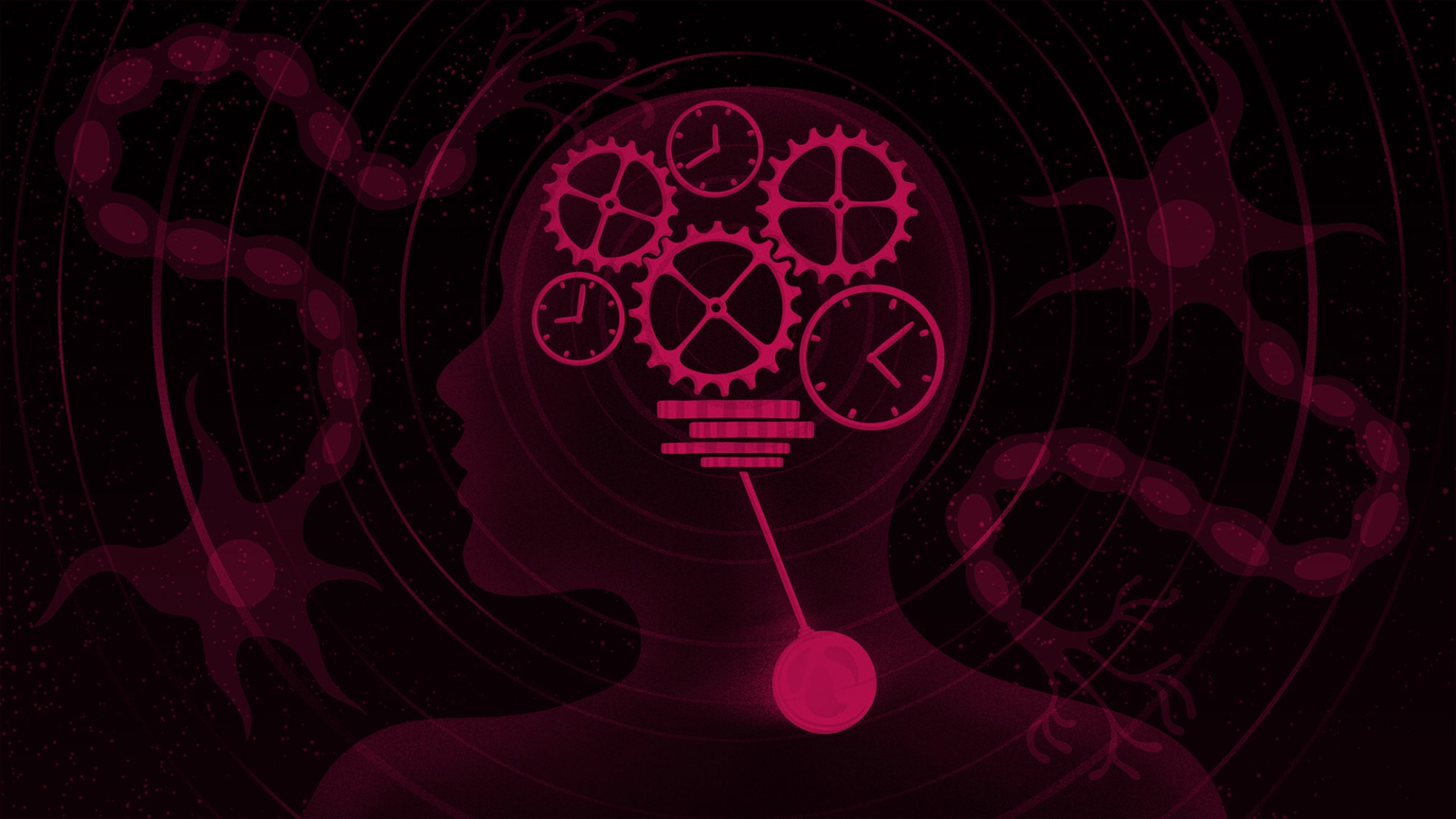
art by Gabriel Rodriguez
share/
The Allen Human Brain Atlas helped researchers design a model that looked at “intrinsic neural timescales”
Thank you! Your submission has been received!
Oops! Something went wrong while submitting the form.

in this article

table of contents will display on published page only
set h2 to populate the table of contents here

authors

Peter Kim
Associate Director, Communications & Media Relations

Different regions of our brains process information at different speeds. Some walk, others jog, while others can sprint when processing data from the world around us and when we think and reason. This baseline speed also determines how long it takes for that brain region to process information—something called the intrinsic neural timescale, or INT. Some are long; others are short. But they all work together like a finely tuned orchestra to give humans our exceptional brain power.  

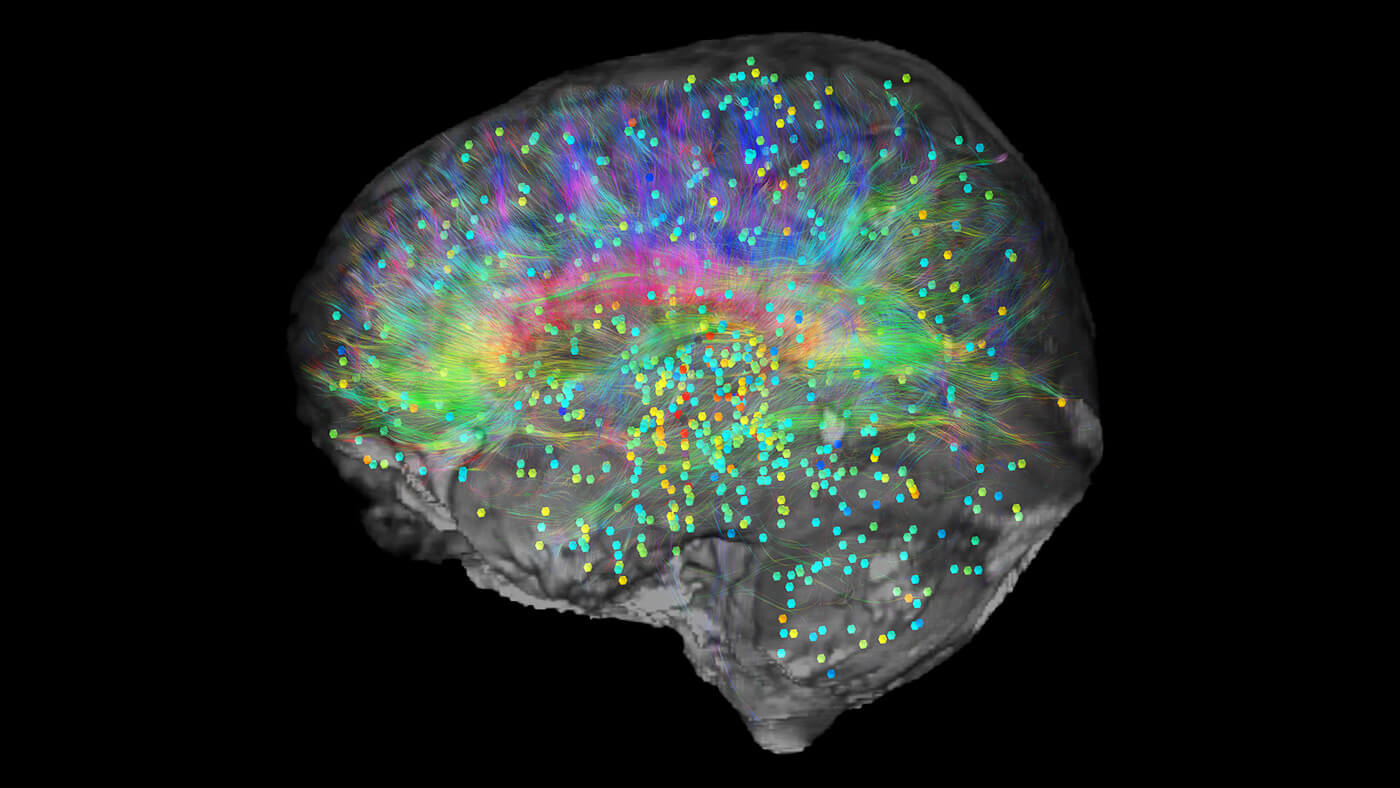
Researchers at Rutgers Health and Cornell University created a powerful computer model that was able to predict the “processing speeds” (INTs) of these various brain regions from connectivity data—data that reveals the labyrinth-like connection patterns of billions of brain cells that branch out and form networks. They discovered that brain regions can change how fast they process information in order to tackle complex cognitive tasks—some can start running while others can slow down—and the effort required to make these state transitions correlated with certain aspects of cognition; namely, the less effort needed to make a state transition was linked to higher performance in cognitive tasks.

“People whose brain wiring is better matched to the way different regions handle fast and slow information tend to show higher cognitive capacity,” said Linden Parkes, Ph.D., assistant professor of psychiatry at Rutgers Robert Wood Johnson Medical School and senior author of a recent study in Nature Communications that presented the findings.

Researchers looked specifically at the brain’s ability to:  

    • abstractly reason and recognize patterns;
    • mentally visualize three-dimensional space and position; and
    • perform list sorting, the ability to remember and reorganize list items based on their qualities.

“Brain regions both tune their INTs and talk to each other in complex ways to make these state transitions happen when performing tasks. Our model takes a data-driven approach by listening carefully to how each region is changing its speed in the context of the whole conversation,” said Jason Z. Kim, Ph.D., a Schmidt AI in Science postdoctoral fellow at Cornell University and lead author of the study.

Researchers used the openly available Allen Human Brain Atlas to validate the accuracy of their model and provide a neurobiological foundation for its predictions. The Atlas reveals gene expression data based on specific brain regions, in other words, what RNA molecules these regions produce. They compared these data with their own, which reflected connectivity and INT data for those same regions. Overlaying those two datasets allowed them to look for regional patterns between gene expression, connectivity, and brain processing speed (INTs). These three measures synced up.  

I've been using the Allen Institute resources in various projects for the better part of ten years since the start of my Ph.D. It's been transformative to my research.

Linden Parkes, Ph.D., Assistant Professor of Psychiatry at Rutgers Robert Wood Johnson Medical School 

Smiling bald man with dark beard wearing glasses and gray blazer
Linden Parkes, Ph.D.

“Working with the Allen Institute data helps us ground our analysis in neurobiology, which is super important to us because otherwise we’re just computational scientists playing with models. It’s really helpful for us to say, ‘well, okay, do the outputs of the mathematical models that we build and tinker with link to the neurobiological foundations of the brain,’ which is where the Allen Institute data is super powerful.”  

Researchers also found the same patterns in both human and mouse brains, suggesting it is a basic evolutionary feature of how brains are built. This important foundational understanding of neural dynamics advances our understanding of the brain’s adaptability.

“Our work sheds light on the complex relationship between the brain’s intricate connectivity and the spatial pattern of cortical INTs. We uncover how the brain can leverage its connectivity to reorganize INTs across the cortex in response to cognitively relevant brain states,” said Parkes. “This shifts our understanding of INTs from a static property to a flexible and adaptive one and shows that we can capture this flexibility in a data-driven way.”

Citations
No items found.

about the allen institute

The Allen Institute is an independent, 501(c)(3) nonprofit research organization founded by philanthropist and visionary, the late Paul G. Allen. The Allen Institute is dedicated to answering some of the biggest questions in bioscience and accelerating research worldwide. The Institute is a recognized leader in large-scale research with a commitment to an open science model. For more information, visit alleninstitute.org.
related news

all news
news
“Computational crystal ball” helps predict cell behavior
New technology could lead to better treatments for cancer by allowing scientists to perform virtual experiments
news
Mind trip: How psilocybin changes the brain
New research may help improve psychedelic therapy for neuropsychiatric disorders
news
Scientists unveil the world's most comprehensive AI-powered tool for neuroscience: Brain Knowledge Platform
Massive, first-of-its-kind data resource aims to accelerate medical breakthroughs in brain diseases like Alzheimer’s and Parkinson's
news
Scientists shoot lasers into brain cells to uncover how illusions work
Supported by the Allen Institute's OpenScope program, the findings could help us better understand neuropsychiatric disorders like schizophrenia and...
news
Collaboration Expands Research Tool to Help Crack the Code on Parkinson’s and Other Neurodegenerative Diseases
A new view of Parkinson's Disease
news
Landmark experiment sheds new light on the origins of consciousness
Findings suggest it may be about sensory processing and perception, with possible implications for diagnosing and treating comas or vegetative states.
we acceleratedevelopcatalyzeimpact

science done differently. shared with the world.

explore our accelerators

brain science

Mapping every cell, connection, and circuit in the brain—openly shared with the world.

cell science

Decoding how cells become tissues, then programming that knowledge into powerful new research tools.

neural dynamics

Revealing the brain's hidden algorithms that transform neural activity into real-world behavior.

immunology

Creating the deepest open reference for the healthy human immune system ever built.

synthetic biology

Engineering cells to record their own histories, transforming how we understand disease over time.

research

Big questions, open answers, and science built to be shared.

education

Inspiring the next generation of scientists through open science resources.

impact

Our science is empowering researchers and advancing health worldwide.
advancing science through open, collaborative research
Get the allen institute newsletter
Stay informed on the latest breakthroughs in neuroscience, bioscience, and AI-driven research.
allen institute
impactpeople & teamscareers & opportunitiesalumnihistory & founder
science resources
allencell.orgallenimmunology.orgallenneuraldynamics.orgbrain-bican.orgbrain-map.orgmicrons-explorer.org
research
brain sciencecell scienceneural dynamicsimmunologysynthetic biologypublications
education
science educationfield tripsprofessional developmenteducation resources
quick links
newseventsopen sciencepodcastscience resourceshuman brain donationvisit uscontact
follow us/

allen institute, 615 Westlake Ave North, Seattle, WA 98109 +12065487055

© 0000 allen institute. all rights reserved.
privacy policyterms of usecitation policyemployee portalpolicy & compliance