impact
about
our story
explore our impact
careers and opportunities
join us
open science
sharing science to speed discovery
open science week
celebrating open science
team science
people & teams
discovery is a team effort
allenites
the people who make our work possible
advisors
their input shapes our science
board of directors
they help us fulfill our mission
shanahan foundation fellowship
at the interface of data and neuroscience
next generation leaders
fostering emerging leaders in bioscience
research
overview
our approach
science at the scale of greatest impact
publications
explore our publications
open science
sharing science to speed discovery
science accelerators
brain science
building a blueprint of the brain
cell science
understanding how cells become organs
neural dynamics
revealing the brain’s hidden algorithms
immunology
creating the ultimate immune system reference
synthetic biology
seattle hub for synthetic biology
education
overview
science education
science is for everyone
open science
sharing science speeds discovery
engagement
education resources
real science. real skills.
field trips
experience science where it happens
educator development
empowering educators
news
overview
all news
explore the latest news
podcast
the human stories behind discovery
sign up for our newsletter
stay connected to our science
events
overview
all events
public engagement, workshops, seminars and more
conferences
connect with us
science resources
science resources
allencell.org
allenimmunology.org
allenneuraldynamics.org
brain-bican.org
brain-map.org
microns-explorer.org
impact
back to menu
team science
our story
explore our impact
careers and opportunities
join us
open science
sharing science to speed discovery
open science week
celebrating open science
team science
people & teams
discovery is a team effort
allenites
the people who make our work possible
advisors
their input shapes our science
board of directors
they help us fulfill our mission
shanahan foundation fellowship
at the interface of data and neuroscience
next generation leaders
fostering emerging leaders in bioscience
research
back to menu
overview
our approach
science at the scale of greatest impact
publications
explore our publications
open science
sharing science to speed discovery
science accelerators
brain science
building a blueprint of the brain
cell science
understanding how cells become organs
neural dynamics
revealing the brain’s hidden algorithms
immunology
creating the ultimate immune system reference
synthetic biology
seattle hub for synthetic biology
education
back to menu
overview
science education
science is for everyone
open science
sharing science speeds discovery
engagement
education resources
real science. real skills.
field trips
experience science where it happens
educator development
empowering educators
news
back to menu
overview
all news
explore the latest news
podcast
the human stories behind discovery
newsletter
stay connected to our science
events
back to menu
overview
all events
public engagement, workshops, seminars and more
conferences
connect with us
science resources
back to menu
science resources
allencell.org
allenimmunology.org
allenneuraldynamics.org
brain-bican.org
brain-map.org
microns-explorer.org
search
news

Hope for kids with IBD: New trial aims to improve treatment

Allen Institute for Immunology and Seattle Children's Research Institute launch study to unravel the molecular mysteries of pediatric IBD.

May 13, 2024
 min read
share/
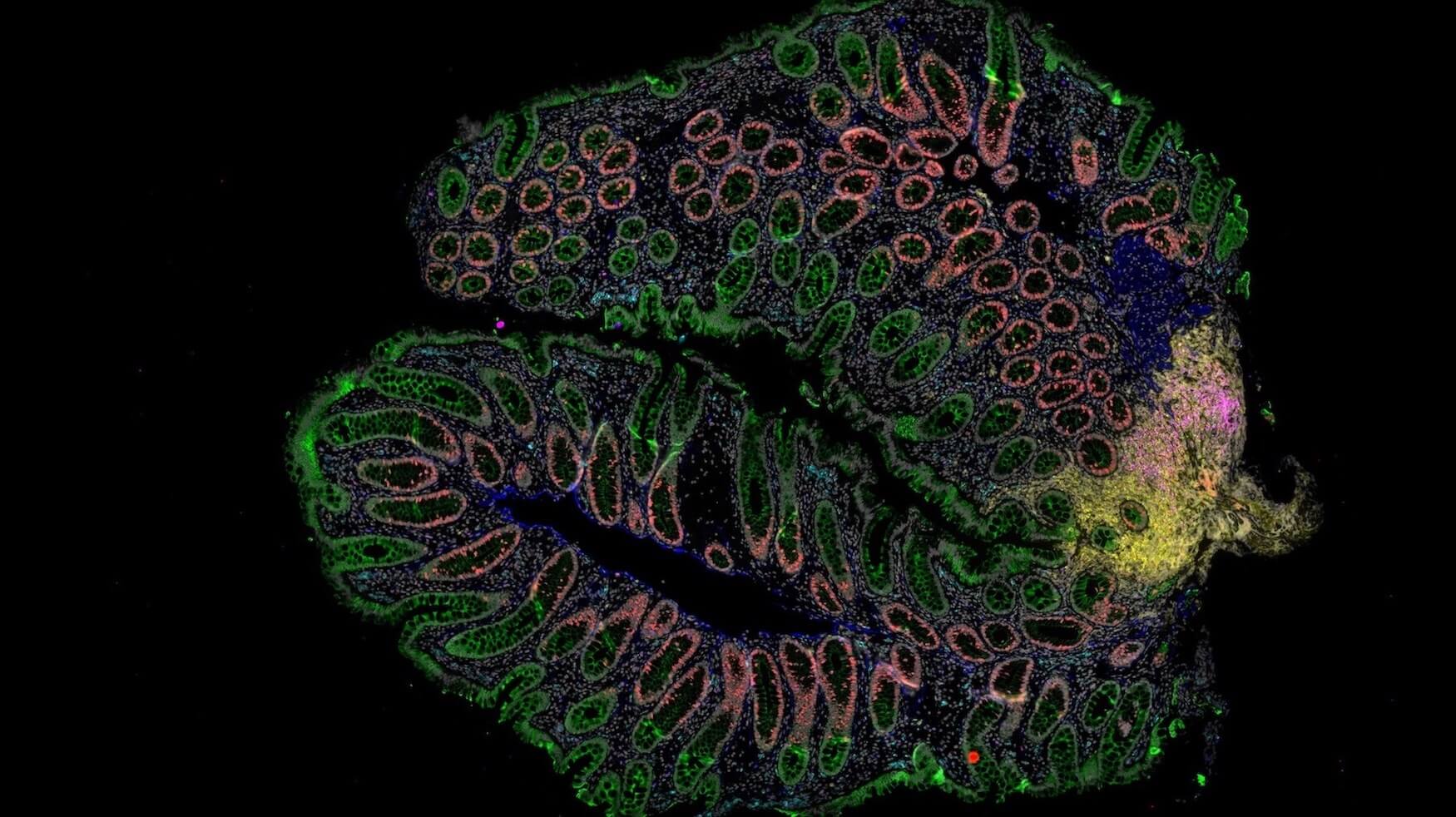
A piece of large intestine, biopsied from a pediatric IBD patient, has been processed to reveal cellular and molecular features that can help scientists understand disease activity. These include epithelial cells (green), muscle (dark blue), T cells (lavender and purple), B cells (yellow), monocytes and macrophages (cyan), and cells that are actively dividing (red). Image by Jocelin Malone / Allen Institute.
Seattle Children's Research Institute and the Allen Institute for Immunology launch study to unravel molecular mysteries of pediatric IBD.
Thank you! Your submission has been received!
Oops! Something went wrong while submitting the form.

in this article

table of contents will display on published page only
set h2 to populate the table of contents here

authors

Jake Siegel

With pediatric inflammatory bowel disease (IBD) diagnoses on the rise globally, a clinical trial in Seattle aims to transform treatment approaches through deep molecular profiling.

Recruitment is underway for the Seattle STRIDE study, a joint effort by Seattle Children’s Research Institute and the Allen Institute for Immunology. The trial aims to enroll 200 volunteers and follow them over three years. It will employ an arsenal of genomic tools to analyze intact tissue samples from routine tests. These single-cell analysis methods will provide a detailed look at how the immune system behaves in patients with IBD and how it responds over time to specific drug treatments.

Deep immune profiling could offer an unprecedented view of the disease, paving the way for new and improved treatments, said Betty Zheng, MD, an assistant professor of pediatrics at Seattle Children’s and the study’s principal investigator.

“IBD is a very complex disease, and we only have a rough understanding of what is happening at a molecular level,” she said. “By partnering with the Allen Institute, we want to get a detailed view of the disease’s molecular mechanisms to find better ways of treating the patients we see in the clinic.”

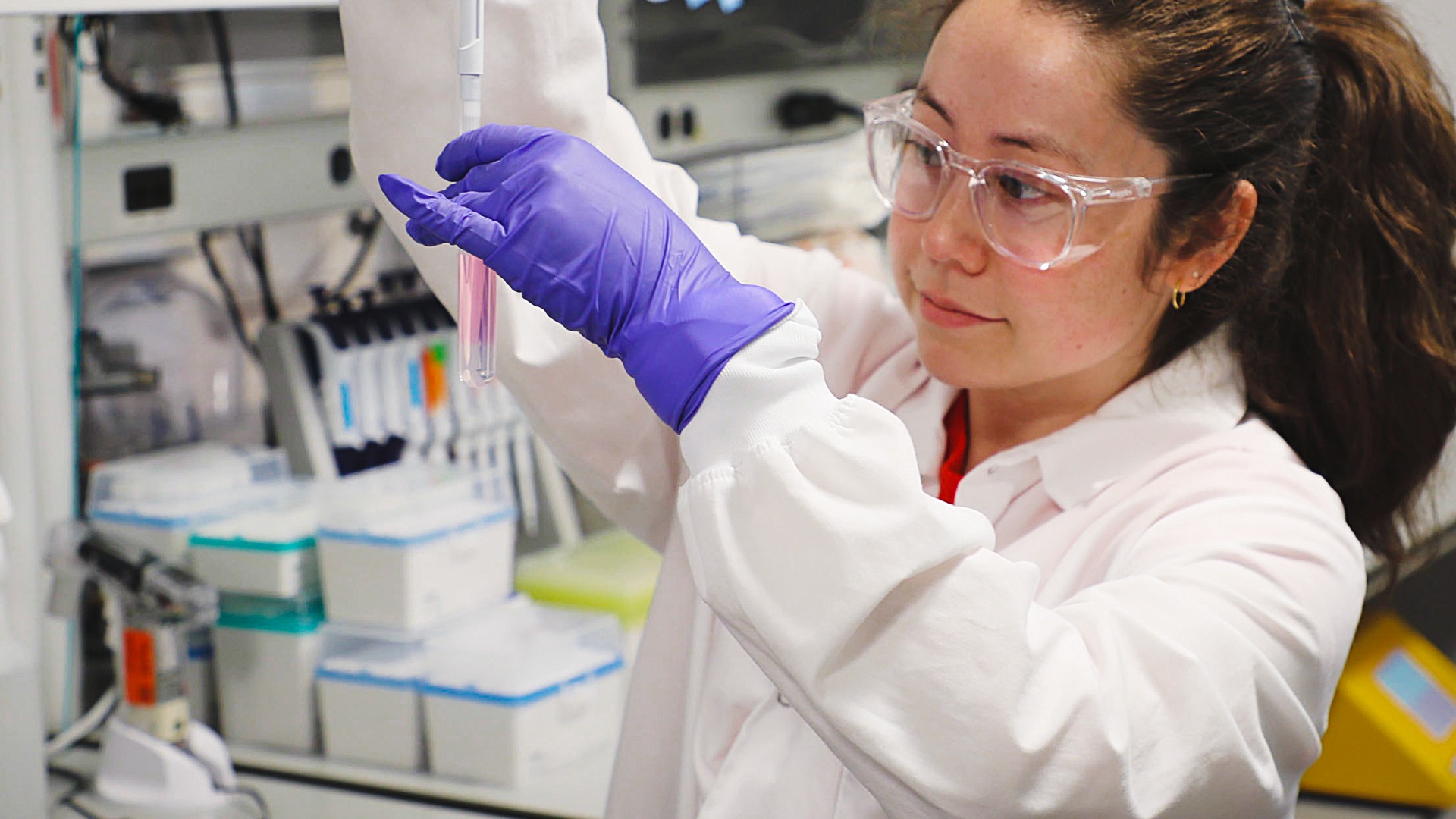
Allen Institute scientists will analyze some study samples with help from the TECAN liquid handler, a robotic system designed for automating liquid handling tasks in laboratories.

Unraveling molecular mysteries

The exact causes and progression of IBD, a chronic inflammatory condition affecting the digestive tract, have remained elusive, Zheng said. It likely involves some combination of genes, immune dysregulation, and environmental and dietary factors.

In children, IBD is both more aggressive and harder to treat. Around 30% of pediatric IBD patients do not respond to initial treatments. Furthermore, nearly half of the remaining patients will find their treatments becoming ineffective over time. These children face risks like impaired growth, mental health issues, and missed educational and social activities.

Professional headshot of a man with dark hair wearing gray shirt
Adam Savage, Ph.D., an Assistant Investigator at the Allen Institute for Immunology

A deeper molecular understanding of the disease could enable personalized treatment strategies, moving away from less effective one-size-fits-all approaches, Zheng said.

A deep dive into the molecular workings of the disease could also uncover unknown pathways of inflammation. These pathways could potentially serve as targets for the development of new drugs.

“There is a universe of information that is not being seen,” said Adam Savage, Ph.D., an Assistant Investigator at the Allen Institute for Immunology.

To explore that universe, Savage and other scientists will deploy a suite of advanced technologies refined at the Allen Institute for Immunology that can identify and pinpoint immune cells and molecules inside tissues collected during routine hospital visits. By analyzing patient samples over time, these tools can offer a window into how the disease progresses and how patients respond to treatment.

Asian woman with long dark hair smiling at camera, wearing green shirt
Betty Zheng, MD, an assistant professor of pediatrics at Seattle Children’s and the STRIDE study’s principal investigator

Behind the data and the advanced technologies, the ultimate goal remains clear: improving the lives of patients.

“We look at data on computers, or head into the labs, and we can get a little detached,” Savage said. “But when we visit and see the patients we’re trying to help, it’s a powerful reminder of why we come to work—to have a real impact on patients’ lives.”

Families interested in joining the Seattle STRIDE study can learn more here.

Citations
No items found.

about the allen institute

The Allen Institute is an independent, 501(c)(3) nonprofit research organization founded by philanthropist and visionary, the late Paul G. Allen. The Allen Institute is dedicated to answering some of the biggest questions in bioscience and accelerating research worldwide. The Institute is a recognized leader in large-scale research with a commitment to an open science model. For more information, visit alleninstitute.org.
related news

all news
news
Designing better weapons to fight prostate cancer
New study unlocks key insights that could help develop next-generation immunotherapies
news
“Computational crystal ball” helps predict cell behavior
New technology could lead to better treatments for cancer by allowing scientists to perform virtual experiments
news
Allen Institute scientists igniting curiosity of young minds
Students at the University of Puget sound are gaining valuable real-world insight and training using the Allen Institute's cutting edge resources and...
news
How age affects vaccine responses and how to make them better
Age-related shifts in T cells weaken vaccine response in older adults, but new findings pave the way for next generation of vaccines.
news
New study reveals rheumatoid arthritis begins long before symptoms, opening door to prevention
The seven-year study reveals early-warning signs that could help doctors catch the disease before it starts, potentially saving patients years of pain and disability.
news
No lab? No problem for this neuroscience student
How open science tools helped a personal journey into Alzheimer’s research
we acceleratedevelopcatalyzeimpact

science done differently. shared with the world.

explore our accelerators

brain science

Mapping every cell, connection, and circuit in the brain—openly shared with the world.

cell science

Decoding how cells become tissues, then programming that knowledge into powerful new research tools.

neural dynamics

Revealing the brain's hidden algorithms that transform neural activity into real-world behavior.

immunology

Creating the deepest open reference for the healthy human immune system ever built.

synthetic biology

Engineering cells to record their own histories, transforming how we understand disease over time.

research

Big questions, open answers, and science built to be shared.

education

Inspiring the next generation of scientists through open science resources.

impact

Our science is empowering researchers and advancing health worldwide.
advancing science through open, collaborative research
Get the allen institute newsletter
Stay informed on the latest breakthroughs in neuroscience, bioscience, and AI-driven research.
allen institute
impactpeople & teamscareers & opportunitiesalumnihistory & founder
science resources
allencell.orgallenimmunology.orgallenneuraldynamics.orgbrain-bican.orgbrain-map.orgmicrons-explorer.org
research
brain sciencecell scienceneural dynamicsimmunologysynthetic biologypublications
education
science educationfield tripsprofessional developmenteducation resources
quick links
newseventsopen sciencepodcastscience resourceshuman brain donationvisit uscontact
follow us/

allen institute, 615 Westlake Ave North, Seattle, WA 98109 +12065487055

© 0000 allen institute. all rights reserved.
privacy policyterms of usecitation policyemployee portalpolicy & compliance