impact
about
our story
explore our impact
careers and opportunities
join us
open science
sharing science to speed discovery
open science week
celebrating open science
team science
people & teams
discovery is a team effort
allenites
the people who make our work possible
advisors
their input shapes our science
board of directors
they help us fulfill our mission
shanahan foundation fellowship
at the interface of data and neuroscience
next generation leaders
fostering emerging leaders in bioscience
research
overview
our approach
science at the scale of greatest impact
publications
explore our publications
open science
sharing science to speed discovery
science accelerators
brain science
building a blueprint of the brain
cell science
understanding how cells become organs
neural dynamics
revealing the brain’s hidden algorithms
immunology
creating the ultimate immune system reference
synthetic biology
seattle hub for synthetic biology
education
overview
science education
science is for everyone
open science
sharing science speeds discovery
engagement
education resources
real science. real skills.
field trips
experience science where it happens
educator development
empowering educators
news
overview
all news
explore the latest news
podcast
the human stories behind discovery
sign up for our newsletter
stay connected to our science
events
overview
all events
public engagement, workshops, seminars and more
conferences
connect with us
science resources
science resources
allencell.org
allenimmunology.org
allenneuraldynamics.org
brain-bican.org
brain-map.org
microns-explorer.org
impact
back to menu
team science
our story
explore our impact
careers and opportunities
join us
open science
sharing science to speed discovery
open science week
celebrating open science
team science
people & teams
discovery is a team effort
allenites
the people who make our work possible
advisors
their input shapes our science
board of directors
they help us fulfill our mission
shanahan foundation fellowship
at the interface of data and neuroscience
next generation leaders
fostering emerging leaders in bioscience
research
back to menu
overview
our approach
science at the scale of greatest impact
publications
explore our publications
open science
sharing science to speed discovery
science accelerators
brain science
building a blueprint of the brain
cell science
understanding how cells become organs
neural dynamics
revealing the brain’s hidden algorithms
immunology
creating the ultimate immune system reference
synthetic biology
seattle hub for synthetic biology
education
back to menu
overview
science education
science is for everyone
open science
sharing science speeds discovery
engagement
education resources
real science. real skills.
field trips
experience science where it happens
educator development
empowering educators
news
back to menu
overview
all news
explore the latest news
podcast
the human stories behind discovery
newsletter
stay connected to our science
events
back to menu
overview
all events
public engagement, workshops, seminars and more
conferences
connect with us
science resources
back to menu
science resources
allencell.org
allenimmunology.org
allenneuraldynamics.org
brain-bican.org
brain-map.org
microns-explorer.org
search
news

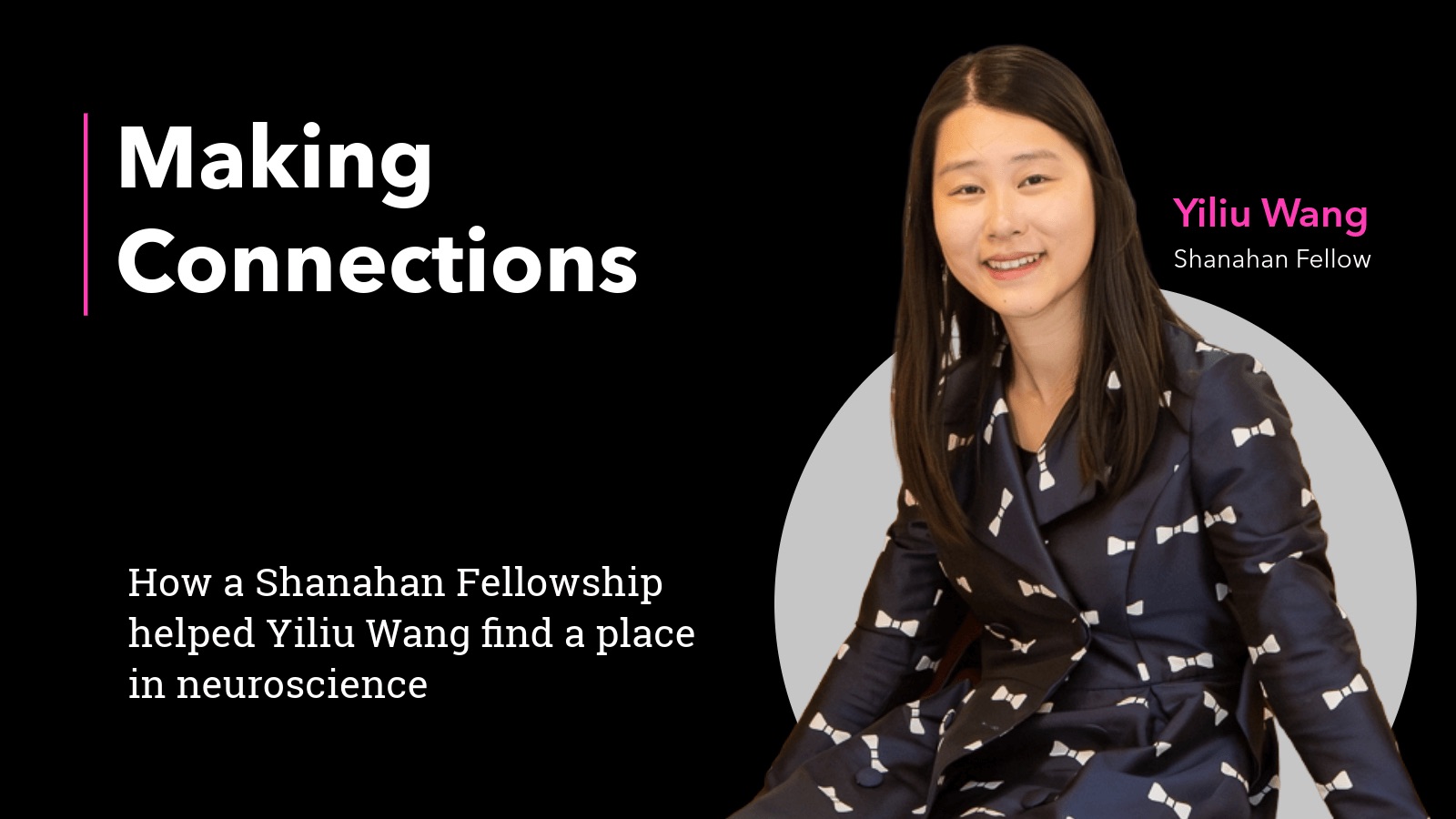
Making connections

How Yiliu Wang's found her place in neuroscience during the Shanahan Fellowship.

October 29, 2025
4 min read
Shanahan fellow feature
share/
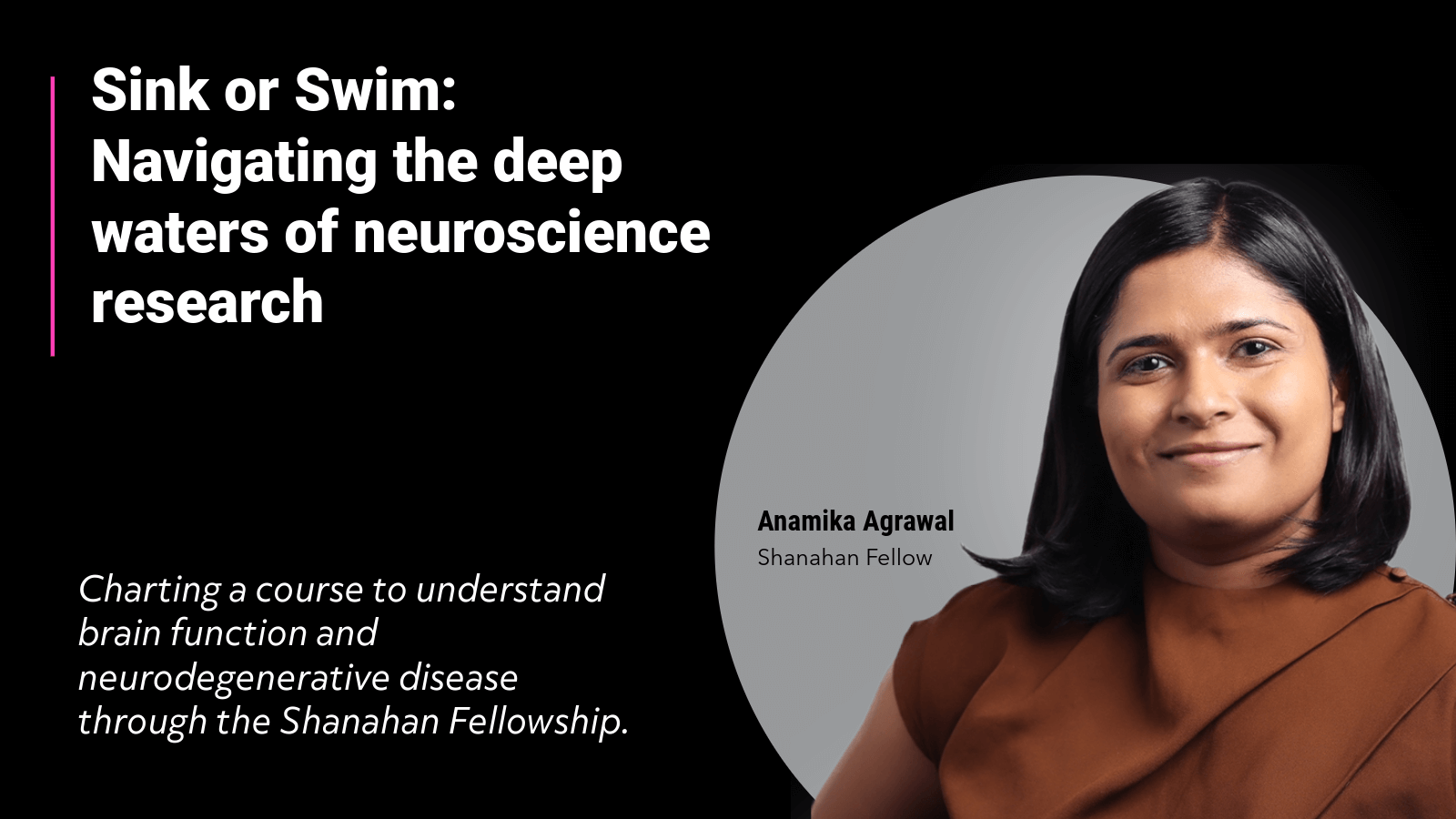
Charting a course to understand brain function and neurodegenerative disease – learn how the Shanahan Fellowship helped Anamika Agrawal navigate the deep waters of neuroscience research.
Thank you! Your submission has been received!
Oops! Something went wrong while submitting the form.

in this article

table of contents will display on published page only
set h2 to populate the table of contents here

authors

Liz Dueweke
Communications and Media Relations Specialist

Neurons don’t work alone. They cluster into cell types, forming intricate networks where collaboration, not isolation, allows us to think, feel, and live. It’s a principle that Yiliu Wang, Ph.D., appreciates not only in her research, but in the very structure of her Shanahan Fellowship experience at the Allen Institute.

When Wang began work as a Shanahan Fellow, her background in theory, data, and artificial intelligence seemed worlds away from hands-on neuroscience; however, she quickly realized they are deeply connected. At the Allen Institute, she found something equally important: a collaborative culture that mirrors the neural networks she studies.

Diving into how neurons work

“During my Ph.D., I focused on relational learning, like learning in contexts where we have a set of items connected by relationships,” Wang explains. “Neuroscience provides an ideal testing ground for such methods and is also a rich source of inspiration for advancing them. After all, neurons work in groups to support cognitive functions.”

This perspective led to five major research projects, each tackling a different dimension of how neurons organize and interact. The first two explored how different cell types arrange and connect across the brain.

Working with associate investigator Uygar Sümbül, Ph.D., and meritorious investigator Christof Koch, Ph.D., Wang tested a theory that different cell types are evenly spread across the brain’s outer layer, accounting for its curved, folded shape. By developing advanced methods to map the exact locations of genetically-tagged brain cells in mouse brains, they found evidence supporting this theory. Then, with Shanahan Fellowship research associate Yuhong Li and assistant investigator Mariano Gabitto, Ph.D., Wang investigated how cell patterns change in Alzheimer’s disease, revealing how the disease disrupts the brain’s carefully organized structure.
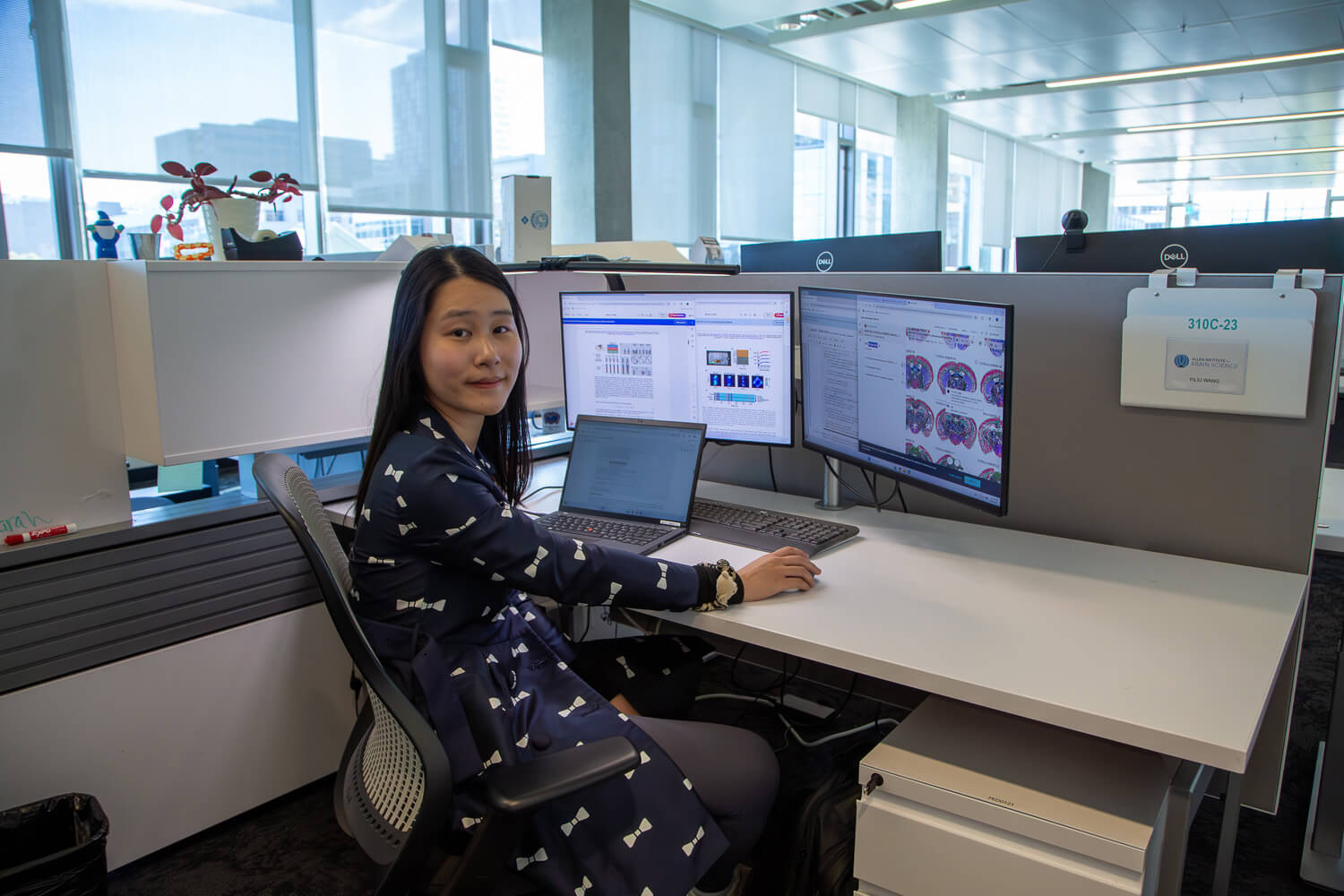
Woman seated at modern office desk with multiple monitors and laptop overlooking city skyline
Yiliu Wang, Ph.D. reviews research data and code at the Allen Institute.
This fellowship serves as a proving ground for the next generation of fearless and interdisciplinary scientists and opens the doors for people from diverse backgrounds to join the world of neuroscience.

Three other projects examined how neurons fire and interact differently as the brain transitions between states, like being awake or asleep, a process that reveals the brain’s remarkable flexibility.

Working with Shanahan Fellow and collaborator Timothy Kim, PhD., Sümbül and UW professor Eric Shea-Brown, Ph.D., the team proposed a new mathematical approach to study complex patterns in brain activity over time, to decode the hidden rhythms of neural activity.

Wang then worked to understand how psychedelics change patterns of activity in multiple brain regions and cell types, tackling how they fundamentally alter how the brain works.  

A massive scale of discovery

The transition from theoretical work to hands-on neuroscience data analysis brought unexpected challenges. “The scale of the dataset really surprised me,” Wang admits.

That’s also why the Institute’s collaborative culture proved invaluable for Wang. Mentors and colleagues helped navigate massive amounts of data and vast landscape of possibilities, identifying important directions and projects. “People are always willing to help and explain concepts clearly, even if they are not directly involved in my project,” Wang said.

Above all, Wang says she has grown as a scientist. Unlike Ph.D. working closely with an advisor and pen-and-paper calculations, the Shanahan Fellowship required Wang to move into her next step of her career, starting up multiple projects with different scientists and massive data mining. She supervised a research associate in her second year, which she says helped her become a better leader, gaining confidence in project management.

Her advice for future fellowship applicants? Take the chance and go for it. “Don’t worry if you come from a primarily theoretical background,” she said. “This is a great opportunity to broaden the horizons of your current field of study. Here, we apply mathematics to tackle challenging problems and then bring those insights back into fundamental science.”

Her inspiring work is a testament to what happens when we work the way neurons do: together.

“This experience has shaped me into an independent and collaborative researcher with a broader perspective on the research landscape,” said Wang. “This fellowship serves as a proving ground for the next generation of fearless and interdisciplinary scientists and opens the doors for people from diverse backgrounds to join the world of neuroscience.”

Citations
No items found.

about the allen institute

The Allen Institute is an independent, 501(c)(3) nonprofit research organization founded by philanthropist and visionary, the late Paul G. Allen. The Allen Institute is dedicated to answering some of the biggest questions in bioscience and accelerating research worldwide. The Institute is a recognized leader in large-scale research with a commitment to an open science model. For more information, visit alleninstitute.org.
related news

all news
news
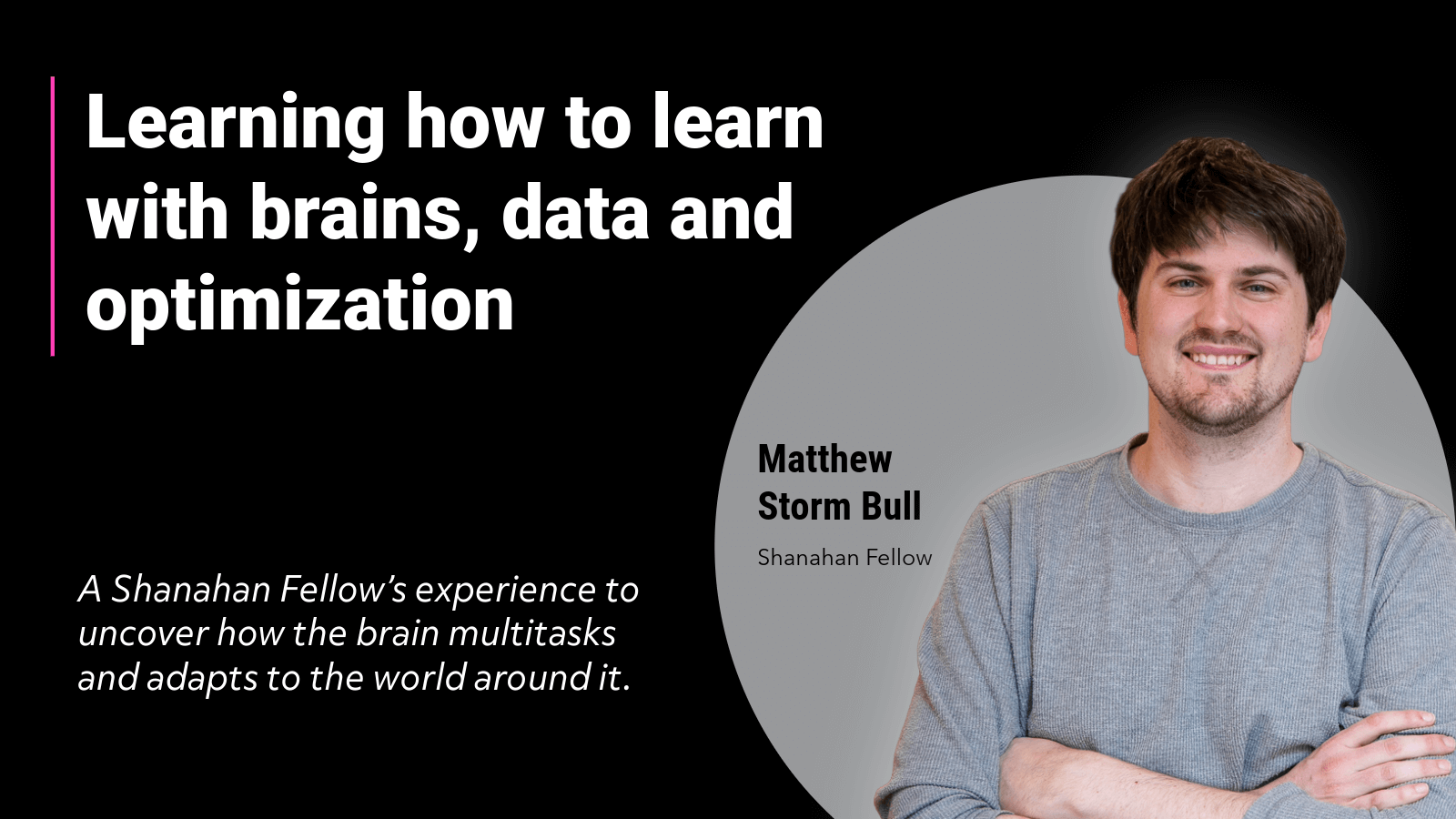
Learning how to learn with brains, data and optimization
A Shanahan Fellow’s experience to uncover how the brain multitasks and adapts to the world around it.
news
Sink or Swim: Navigating the deep waters of neuroscience research
Charting a course to understand brain function and neurodegenerative disease through the Shanahan Fellowship.
news
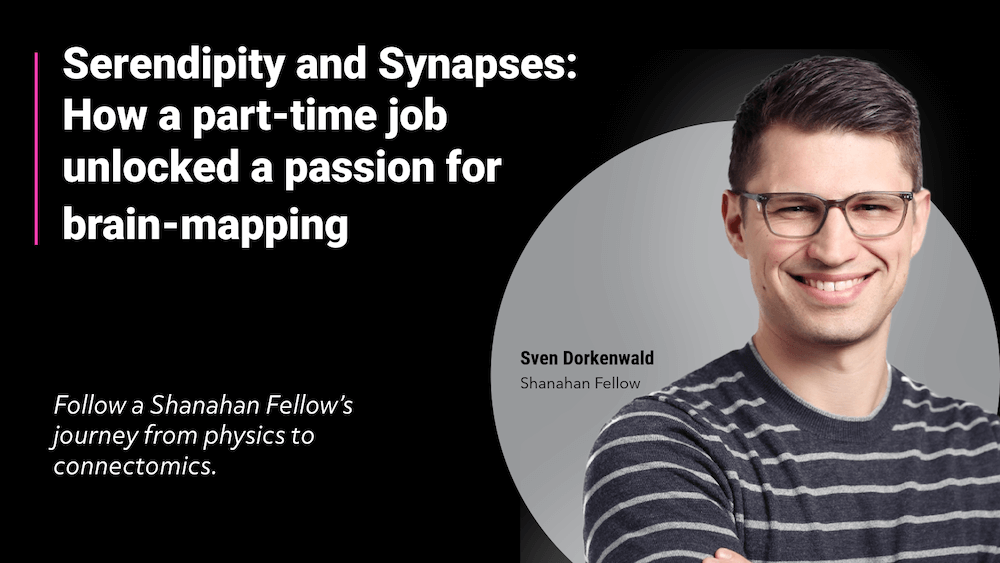
Serendipity and Synapses: How a part-time job unlocked a passion for brain-mapping
For Sven Dorkenwald, Ph.D., mapping the brain's connections was more than a job; it became a passion sparked by a simple twist of fate.
we acceleratedevelopcatalyzeimpact

science done differently. shared with the world.

explore our accelerators

brain science

Mapping every cell, connection, and circuit in the brain—openly shared with the world.

cell science

Decoding how cells become tissues, then programming that knowledge into powerful new research tools.

neural dynamics

Revealing the brain's hidden algorithms that transform neural activity into real-world behavior.

immunology

Creating the deepest open reference for the healthy human immune system ever built.

synthetic biology

Engineering cells to record their own histories, transforming how we understand disease over time.

research

Big questions, open answers, and science built to be shared.

education

Inspiring the next generation of scientists through open science resources.

impact

Our science is empowering researchers and advancing health worldwide.
advancing science through open, collaborative research
Get the allen institute newsletter
Stay informed on the latest breakthroughs in neuroscience, bioscience, and AI-driven research.
allen institute
impactpeople & teamscareers & opportunitiesalumnihistory & founder
science resources
allencell.orgallenimmunology.orgallenneuraldynamics.orgbrain-bican.orgbrain-map.orgmicrons-explorer.org
research
brain sciencecell scienceneural dynamicsimmunologysynthetic biologypublications
education
science educationfield tripsprofessional developmenteducation resources
quick links
newseventsopen sciencepodcastscience resourceshuman brain donationvisit uscontact
follow us/

allen institute, 615 Westlake Ave North, Seattle, WA 98109 +12065487055

© 0000 allen institute. all rights reserved.
privacy policyterms of usecitation policyemployee portalpolicy & compliance