impact
about
our story
explore our impact
careers and opportunities
join us
open science
sharing science to speed discovery
open science week
celebrating open science
team science
people & teams
discovery is a team effort
allenites
the people who make our work possible
advisors
their input shapes our science
board of directors
they help us fulfill our mission
shanahan foundation fellowship
at the interface of data and neuroscience
next generation leaders
fostering emerging leaders in bioscience
research
overview
our approach
science at the scale of greatest impact
publications
explore our publications
open science
sharing science to speed discovery
science accelerators
brain science
building a blueprint of the brain
cell science
understanding how cells become organs
neural dynamics
revealing the brain’s hidden algorithms
immunology
creating the ultimate immune system reference
synthetic biology
seattle hub for synthetic biology
education
overview
science education
science is for everyone
open science
sharing science speeds discovery
engagement
education resources
real science. real skills.
field trips
experience science where it happens
educator development
empowering educators
news
overview
all news
explore the latest news
podcast
the human stories behind discovery
sign up for our newsletter
stay connected to our science
events
overview
all events
public engagement, workshops, seminars and more
conferences
connect with us
science resources
science resources
allencell.org
allenimmunology.org
allenneuraldynamics.org
brain-bican.org
brain-map.org
microns-explorer.org
impact
back to menu
team science
our story
explore our impact
careers and opportunities
join us
open science
sharing science to speed discovery
open science week
celebrating open science
team science
people & teams
discovery is a team effort
allenites
the people who make our work possible
advisors
their input shapes our science
board of directors
they help us fulfill our mission
shanahan foundation fellowship
at the interface of data and neuroscience
next generation leaders
fostering emerging leaders in bioscience
research
back to menu
overview
our approach
science at the scale of greatest impact
publications
explore our publications
open science
sharing science to speed discovery
science accelerators
brain science
building a blueprint of the brain
cell science
understanding how cells become organs
neural dynamics
revealing the brain’s hidden algorithms
immunology
creating the ultimate immune system reference
synthetic biology
seattle hub for synthetic biology
education
back to menu
overview
science education
science is for everyone
open science
sharing science speeds discovery
engagement
education resources
real science. real skills.
field trips
experience science where it happens
educator development
empowering educators
news
back to menu
overview
all news
explore the latest news
podcast
the human stories behind discovery
newsletter
stay connected to our science
events
back to menu
overview
all events
public engagement, workshops, seminars and more
conferences
connect with us
science resources
back to menu
science resources
allencell.org
allenimmunology.org
allenneuraldynamics.org
brain-bican.org
brain-map.org
microns-explorer.org
search
news

Serendipity and Synapses: How a part-time job unlocked a passion for brain-mapping

For Sven Dorkenwald, Ph.D., mapping the brain's connections was more than a job; it became a passion sparked by a simple twist of fate.

May 28, 2025
 min read
share/
At the Allen Institute, Raut took full advantage of the opportunities and independence provided by the three-year-long Shanahan Foundation Fellowship to better understand the mysteries of the brain.
Thank you! Your submission has been received!
Oops! Something went wrong while submitting the form.

in this article

table of contents will display on published page only
set h2 to populate the table of contents here

For Sven Dorkenwald, Ph.D., mapping the brain’s connections was more than a job; it became a passion sparked by a simple twist of fate. His journey into connectomics, which is the study of the connections between neurons in nervous systems, essentially its map or wiring diagram, began during his undergraduate years at the University of Heidelberg, Germany, where he was completing a physics degree. Early on, he realized a career in physics wouldn’t be his long-term path, leaving him to search for a new scientific trajectory.  

Dorkenwald found that path in computer science, but the decision that begat his current trajectory came somewhat accidentally. Like many students trying to make ends meet, Dorkenwald sought part-time work and eventually landed a job at the Max Planck Institute for Medical Research. There, he manually reconstructed microscopic neural circuits from electron microscopy images—piecing together the tiny connections between brain cells. The tediousness of the task led him to wonder: “Why is this process not automated yet?” While his first attempts at automating his task proved unsuccessful, they opened a door to a programmer position within the group. This role immersed him in the application of machine learning and computer vision to the institute’s high-resolution neural imagery. His undergraduate thesis, which focused on using neural networks to find synaptic connections, not only resulted in his first publication, but also spurred a lasting fascination with connectomics.  
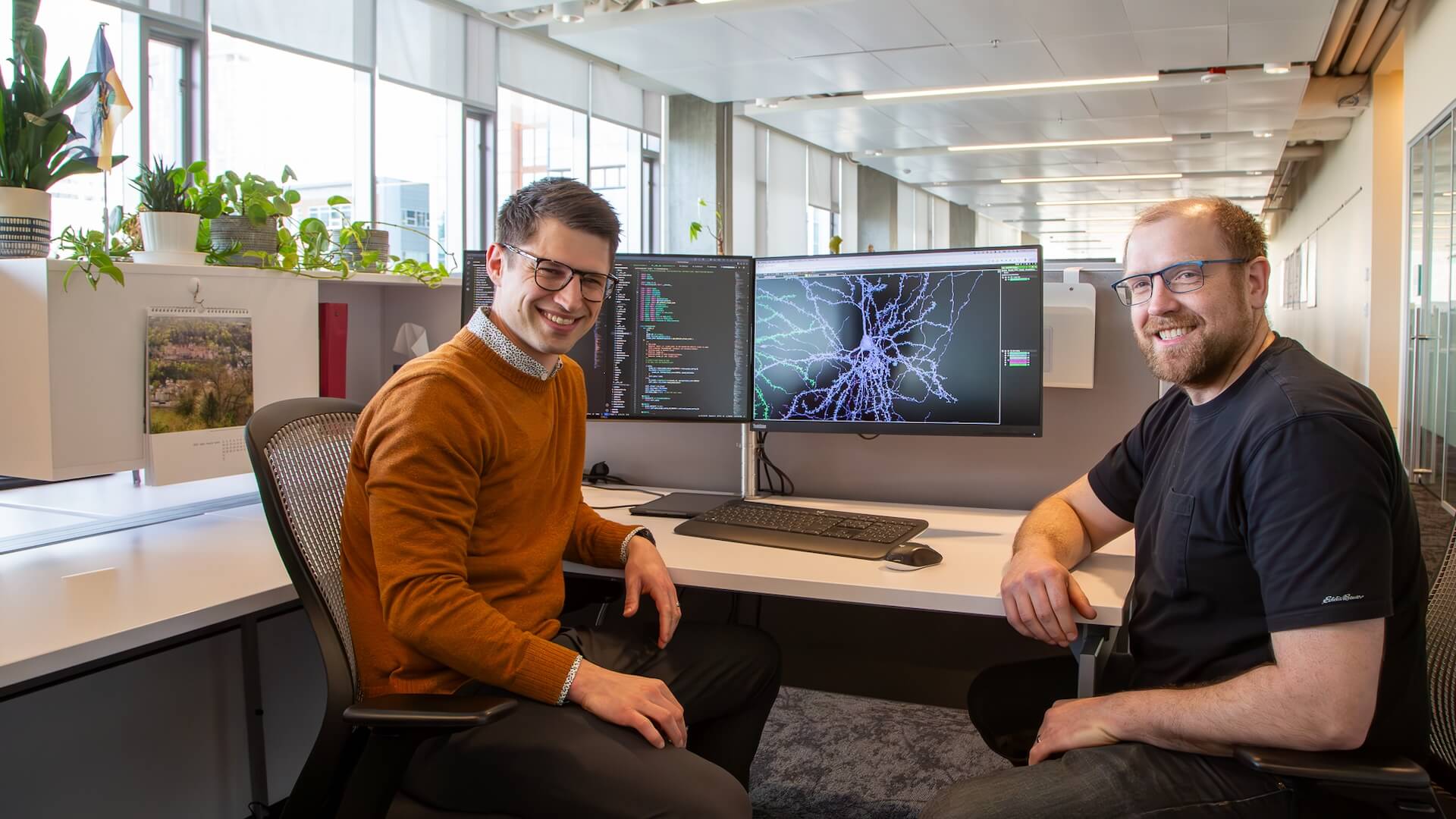
Two smiling men in modern office with code monitors and plants visible behind them.
“As a [Shanahan] fellow, I have the independence I hoped for, allowing me to pursue my research and prepare for faculty applications with the help of many mentors,” said Dorkenwald.

Dorkenwald’s growing computational skills, combined with his drive to understand the brain’s mysteries, led him to Princeton University where he earned a Ph.D. in computer science and neuroscienceand developed new techniques for reconstructing neural circuits from electron microscopy. He also spearheaded the groundbreaking FlyWire project, which mapped every connection between neurons in the tiny fly brain. Later, at Google Research, he further expanded his expertise by developing AI tools for efficient neural annotation, identifying, labeling, and characterizing components of the nervous system

In September 2023, upon suggestion from Clay Reid, M.D., Ph.D., senior investigator at the Allen Institute, Dorkenwald began his Shanahan Foundation Fellowship at the Allen Institute and University of Washington. This prestigious fellowship, which supports independent research at the crucial intersection of data science and neuroscience, gave Sven the freedom to explore his research interests in computer science and neuroscience.

“As a fellow, I have the independence I hoped for, allowing me to pursue my research and prepare for faculty applications with the help of many mentors,” says Dorkenwald.

Dorkenwald’s work was also a key component of the MICrONS Project, the largest wiring diagram of the animal brain to date, where he played a leading role building the computing infrastructure necessary for making the complex connectomics data accessible for analysis and for correcting errors in the data. This vital work, which allows scientists to collaborate more efficiently and analyze neural circuit data, is described in Nature Methods and includes the development and application of the Connectome Annotation Version Engine (CAVE).  “As my work shifted towards analyzing large circuits, I realized I needed to improve my theoretical and modelling skills,” Dorkenwald acknowledges.  

Through the Shanahan Fellowship, he found mentors who were instrumental in his crucial development of theoretical and modeling skills. Dorkenwald says that this mentorship, coupled with the opportunities the fellowship provided, were a significant catalyst for his career: “The Shanahan Fellowship offers a unique opportunity in a great environment.”  

“For those pursuing a career in academia, it allows time to build a research program and explore new areas. For computational neuroscientists, being close to experimentalists at the Allen Institute is crucial for a positive feedback loop,” explains Dorkenwald. And he was right, as he just accepted a position as an assistant professor in the Department of Brain and Cognitive Sciences (BCS) and investigator at the McGovern Institute for Brain Research at the Massachusetts Institute of Technology (MIT).

Dorekenwald is preparing to launch his lab this fall to continue his work in connectomics. His story not only illustrates the Allen Institute’s commitment to innovative and collaborative brain science but also underscores the vital role of initiatives like the Shanahan Foundation Fellowship in cultivating future scientific leaders.

Citations
No items found.

about the allen institute

The Allen Institute is an independent, 501(c)(3) nonprofit research organization founded by philanthropist and visionary, the late Paul G. Allen. The Allen Institute is dedicated to answering some of the biggest questions in bioscience and accelerating research worldwide. The Institute is a recognized leader in large-scale research with a commitment to an open science model. For more information, visit alleninstitute.org.
related news

all news
news
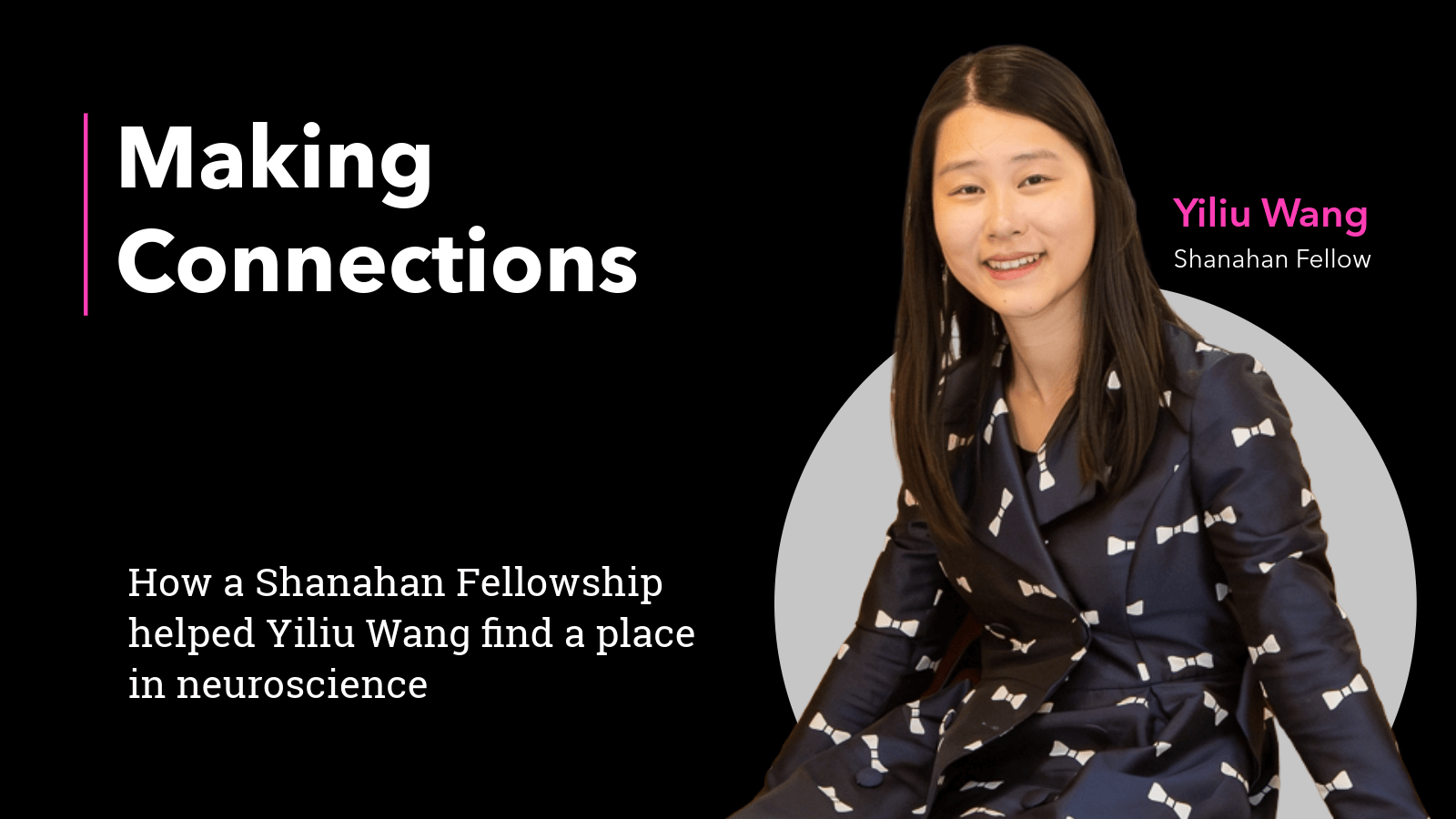
Making connections
How Yiliu Wang's found her place in neuroscience during the Shanahan Fellowship.
news
Learning how to learn with brains, data and optimization
A Shanahan Fellow’s experience to uncover how the brain multitasks and adapts to the world around it.
news
Sink or Swim: Navigating the deep waters of neuroscience research
Charting a course to understand brain function and neurodegenerative disease through the Shanahan Fellowship.
we acceleratedevelopcatalyzeimpact

science done differently. shared with the world.

explore our accelerators

brain science

Mapping every cell, connection, and circuit in the brain—openly shared with the world.

cell science

Decoding how cells become tissues, then programming that knowledge into powerful new research tools.

neural dynamics

Revealing the brain's hidden algorithms that transform neural activity into real-world behavior.

immunology

Creating the deepest open reference for the healthy human immune system ever built.

synthetic biology

Engineering cells to record their own histories, transforming how we understand disease over time.

research

Big questions, open answers, and science built to be shared.

education

Inspiring the next generation of scientists through open science resources.

impact

Our science is empowering researchers and advancing health worldwide.
advancing science through open, collaborative research
Get the allen institute newsletter
Stay informed on the latest breakthroughs in neuroscience, bioscience, and AI-driven research.
allen institute
impactpeople & teamscareers & opportunitiesalumnihistory & founder
science resources
allencell.orgallenimmunology.orgallenneuraldynamics.orgbrain-bican.orgbrain-map.orgmicrons-explorer.org
research
brain sciencecell scienceneural dynamicsimmunologysynthetic biologypublications
education
science educationfield tripsprofessional developmenteducation resources
quick links
newseventsopen sciencepodcastscience resourceshuman brain donationvisit uscontact
follow us/

allen institute, 615 Westlake Ave North, Seattle, WA 98109 +12065487055

© 0000 allen institute. all rights reserved.
privacy policyterms of usecitation policyemployee portalpolicy & compliance