in this article
Ever since Alyssa Clements can remember, she’s wanted to be a doctor. Her father is a chiropractor in south New Jersey, and his business partner was Clements’ own doctor when she was younger.
“I grew up hanging out in their office,” Clements said. “My father’s patients always felt like part of our family. I always imagined myself being able to treat the patients I grew up with.”
Clements never considered any other career. Everything she did was a step toward medical school. She worked hard in high school and college and got straight As. But when the now 28-year-old finally started at the Philadelphia College of Osteopathic Medicine in 2013, she was surprised to find herself struggling. She was exhausted all the time and her whole body hurt.
The first doctor she saw suggested it was anxiety due to the rigors of medical school. Clements duly tried the antidepressants he prescribed. They did nothing to help her symptoms.
Clements places a lot of trust in the medical system. But it would be several months before a doctor took her mystery pain seriously enough to run the right tests. Clements has Crohn’s disease, it turned out, an autoimmune condition that causes chronic inflammation of the digestive tract. By the time she found out, she was walking around with a bowel obstruction severe enough that it could have killed her, she said.
Before she got to that point, she visited three different emergency rooms as her pain worsened, seeing numerous doctors, many of whom told her that her symptoms were in her head. When she was finally diagnosed, having taken a leave of absence from medical school, the doctor told her to give up on her dream of ever practicing medicine herself.
A disease with mysterious origins
Approximately 780,000 Americans suffer from Crohn’s disease, which is part of a group of conditions known as inflammatory bowel diseases, or IBD. Crohn’s is incurable, and usually requires a lifetime of immune-suppressing drugs. For some patients, even with medication, their intestines become so damaged from inflammation that they need surgery to repair or remove parts of their digestive tract.
Researchers still don’t fully understand what triggers the disorder — let alone how to best treat or even cure it. In the last decade, new, more targeted therapies have come on the market, but even the latest treatments often don’t halt all the symptoms of the disease, or they stop working after a while.
“If you talk to any patients with Crohn’s disease, you really understand the issues they feel all the time. They get stylized in drug commercials with scenes like running to the bathroom, but that’s just a minor piece of the pain, discomfort and systemic issues they have,” said Tom Bumol, Ph.D., Executive Director of the recently launched Allen Institute for Immunology, a division of the Allen Institute. “The current therapies are a start, but we think it’s the tip of the iceberg of what could be.”
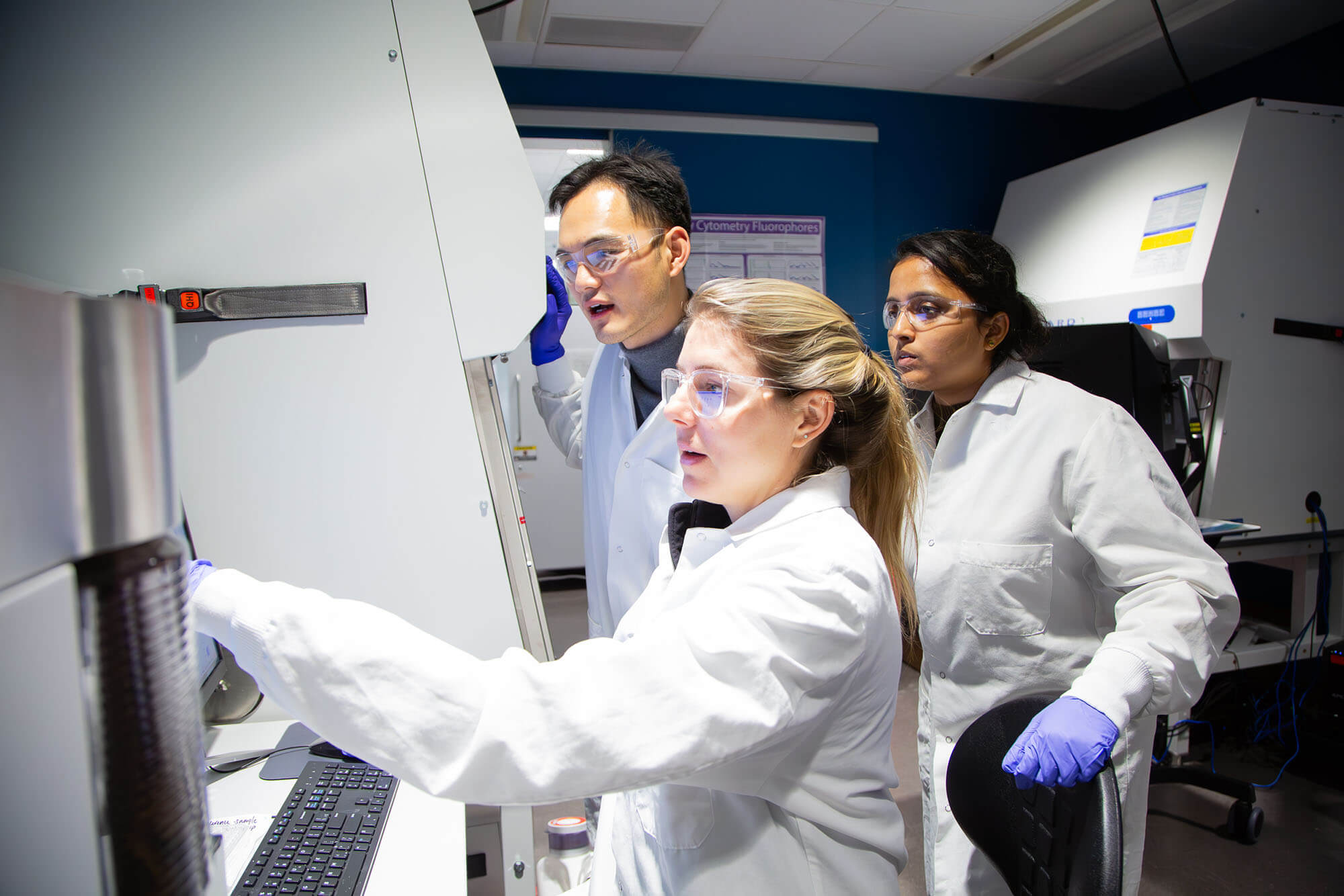
The mysteries behind Crohn’s disease — and why current therapies don’t completely work for many patients — is the motivation for Bumol and his colleagues to study this disease in greater depth. The Allen Institute for Immunology plans to work with researchers at the University of Pennsylvania to study the immune mechanisms that drive the various stages of IBD, when people are diagnosed with the disease and start to receive initial, and often unsuccessful, therapies. Their goal is to find new targets to better treat or even prevent the disease in the future.
‘I was just doing what I had to do to survive’
For Clements, the early period of her disease was frustratingly vague. She didn’t have the abdominal pain or severe GI issues more commonly associated with Crohn’s — at least, not initially. But her full-body pain just kept getting worse.
When the antidepressants Clements’ first doctor prescribed her didn’t work, she had other tests run, but everything came back negative. The pain and fatigue got worse, and Clements was barely scraping by in her classes, passing exams by just one or two points.
“I was just doing what I had to do to survive, which wasn’t like me at all,” she said. “I started to think, maybe I’m not cut out for this, maybe I’m not smart enough. I had never felt like that before.”
By mid-winter she was starting to get horrible stomach pain on top of the full-body aches. On Valentine’s Day, her boyfriend wanted to take her to her favorite restaurant but Clements canceled because she was in too much pain to eat. The two realized something was really wrong — “this girl would never turn down her favorite meal!” Clements joked — and went to the emergency room.
A different misdiagnosis — urinary tract infection — and a different prescription that again didn’t work. But Clements was too sick to go back to school this time. Her boyfriend drove her from Philadelphia to her parents’ house in New Jersey.
“I didn’t think there was room for the pain to get worse, but it got worse,” Clements said.
She was in and out of two different ERs in the following weeks before someone finally ordered a CAT scan and found the bowel obstruction. Not long after, she had a colonoscopy and was groggily waking up from the anesthesia when a specialist gave her the news that she had Crohn’s disease.
The doctor told her that she was facing a serious lifelong illness. She’d need to take immune-suppressing drugs for the rest of her life, leaving her susceptible to infections. She could never be a physician, he said.
“I’m by myself in the recovery room, waking up from anesthesia, told I have this disease and I’ll never be a doctor,” Clements said. “I was just sobbing.”
A turning point
Clements later found her way to a specialist at the University of Pennsylvania. Her current doctor is one of the first who really listened to her, Clements said.
Her diagnosis was the beginning of a year in and out of hospitals with a series of bowel obstructions. Her doctors wanted her to start on relatively gentle medications because she was so young (Clements was 23 when she was diagnosed), but they didn’t really work.
Clements bounced between New Jersey and Philadelphia and got to know the hospitals in both areas well. She took a leave of absence from school. Toward the end of 2014, she and her family went to Disney World — Clements’ happy place, she said. The trip ended up being a turning point, or maybe a breaking point. Clements had been feeling well before they left, although she was too weak to walk around the park and had to rent a scooter. But one night she couldn’t get off the floor of her hotel bathroom, vomiting bile. She and her father took the next flight they could get out of Florida and went straight to the hospital in Philadelphia from the airport.
Her intestines were a mess. She had multiple abscesses and fistulas (connections between organs that should be separate, caused by inflammation). It was time for surgery.
Clements spent six weeks getting all her nutrition and fluids by IV. She wasn’t even allowed water, but this let the inflammation in her body calm down enough that the doctors could save more of her intestines, avoiding the need for an ostomy bag.
The surgery was successful — Clements hasn’t had an obstruction since. She’s on a weekly dose of a stronger medication, Humira, that seems to be working. She’s back in medical school now, planning to graduate in 2020. She has no plan to give up on her dream of being a doctor.
Her current physician is the polar opposite of the one who first diagnosed her, Clements said. He listens to her when she describes her symptoms. He makes sure she’s doing OK in school, physically and mentally.
Her experience as a patient helped shape the kind of doctor she wants to be, Clements said.
“I probably learned more as a patient than I have in medical school, about how to treat people well,” she said. “One of the worst parts of all this was being dismissed because I didn’t look like I was sick.”
‘I didn’t look like I was sick’
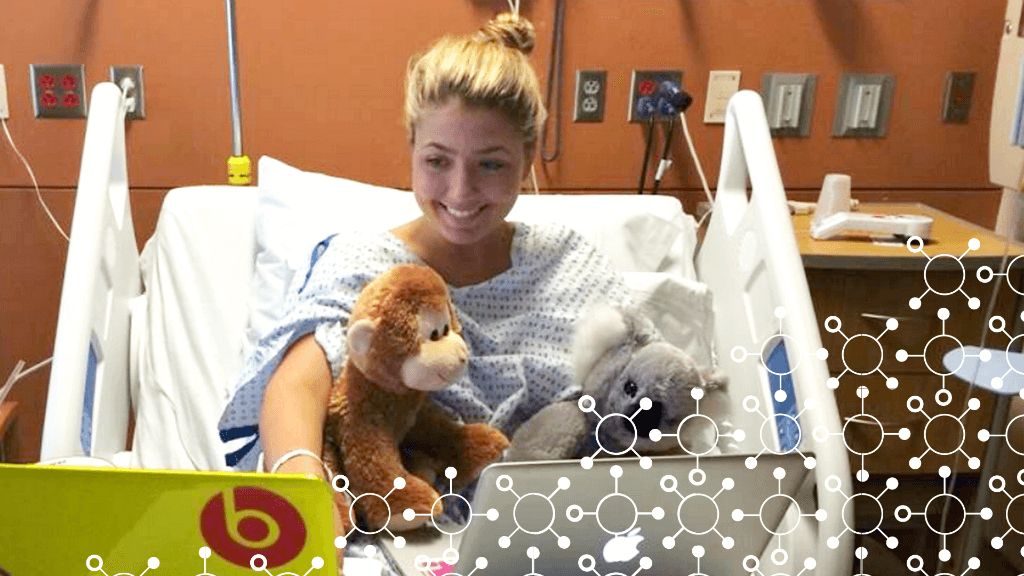
One of the nurses she encountered mistook Clements’ scars on her arms from repeated IVs for track marks and thought she was in the hospital seeking painkillers. Another told her she couldn’t possibly be at a 9 out of 10 on the pain scale because she was smiling and making small talk. One doctor told her she was suffering from “medical students’ syndrome,” where doctors-in-training imagine they have symptoms of all the diseases they learn about.
‘We need to be able to do more’
Clements is doing well now, but she knows continued medical research is the only way to improve long-term chances for patients like her. Her medications are working, but they leave her susceptible to infections and increase her risk of certain cancers.
“Autoimmune conditions are so complex, and they affect so many people around the world,” she said. “We need to be able to do more.”
At the Allen Institute for Immunology, Bumol and his colleagues plan to track in great detail the immune changes that happen in patients diagnosed with either Crohn’s disease or ulcerative colitis as they progress from early to more advanced-stage disease. By following their response to therapy — whether positive or no effect — the researchers hope to better understand options for future treatments.
“We’re going to take a deep immune profile of all these features and combine that with patient data and outcomes,” Bumol said. “We have a lot of possibilities to understand normal gastrointestinal health and disease in these studies. By following these patients along their disease journey with our partners at the University of Pennsylvania we are confident we will have important new research directions to help patients find a better, healthy state in this important set of diseases.”
“We’re in such an exciting time,” Clements said. “Research is going to change the game. It’s going to change everything.”
Citations
about the allen institute
The Allen Institute is an independent, 501(c)(3) nonprofit research organization founded by philanthropist and visionary, the late Paul G. Allen. The Allen Institute is dedicated to answering some of the biggest questions in bioscience and accelerating research worldwide. The Institute is a recognized leader in large-scale research with a commitment to an open science model. For more information, visit alleninstitute.org.